
Detailed Guide to Practical Moving Organization Tips

Moving Tips That Make Moving Day Easier
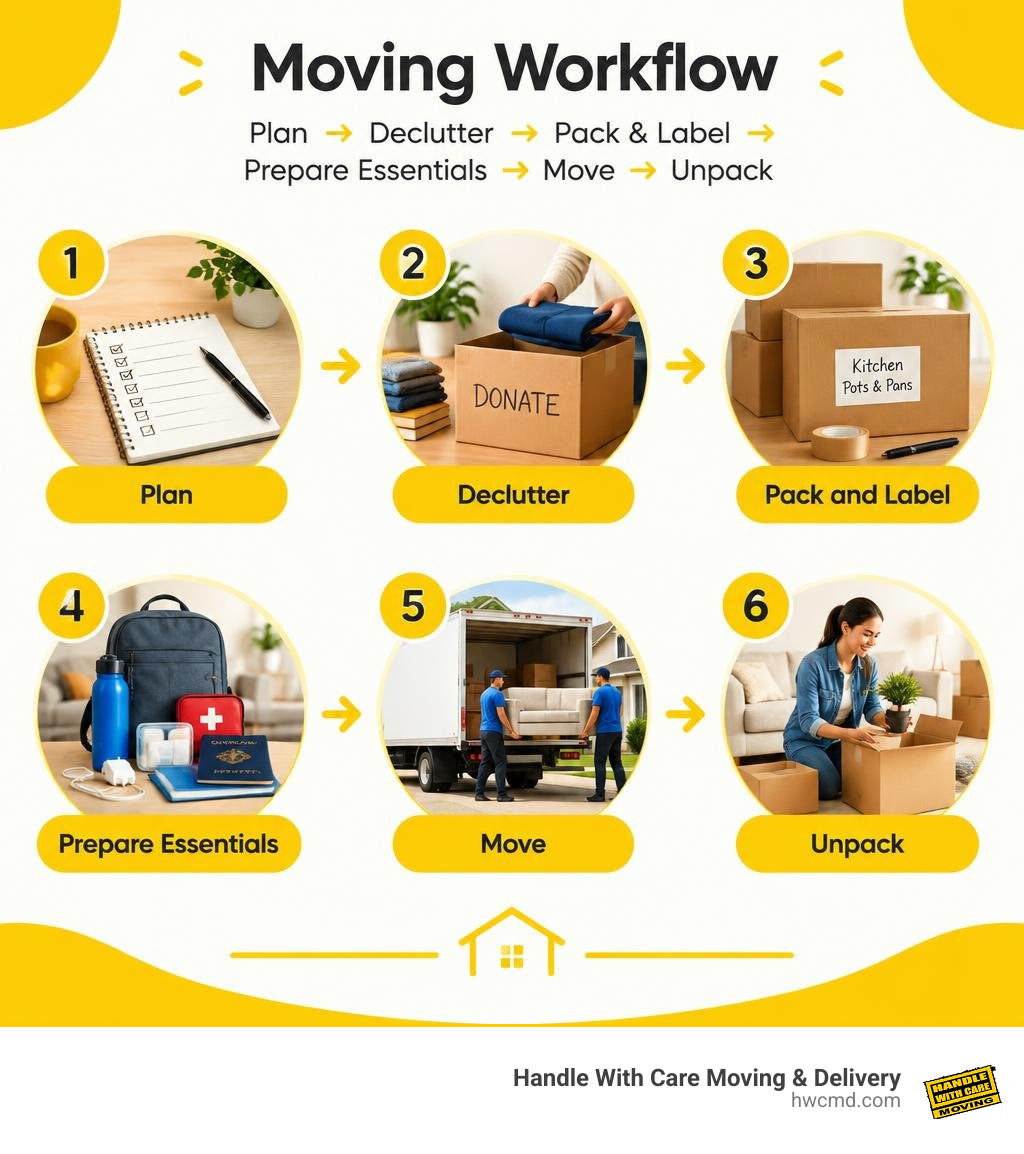
The most useful moving tips are simple: start planning six to eight weeks ahead, sort out what you no longer need, and pack items you rarely use three to four weeks before the move. Label each box with its destination room and contents. Keep medications, documents, chargers, and first-night supplies with you so you can find them right away.
I’m Anthony Denha, President of Handle With Care Moving & Delivery. My moving tips come from hands-on work planning moves, protecting belongings, and keeping customers informed from start to finish.
Learn more about moving tips:
Comprehensive Timeline and Preparation Moving Tips
Relocating an entire household without structure is an easy way to burn out before moving day arrives. We always recommend building an eight-week timeline to break overwhelming tasks into manageable, daily achievements. Setting up a comprehensive budget early—with a 10% to 15% contingency buffer for unexpected supply runs or utility deposits—keeps financial stress from clouding your move.
Following a structured week-by-week moving checklist provides the accountability needed to stay ahead of the clock. Six weeks out, begin researching your utility transfer windows. Contact water, gas, electricity, and internet providers to schedule shut-offs at the old location for the day after you leave, and activation at the new address for the day before you arrive.
Submit your change-of-address form with the postal service at least two weeks before your moving date. If you live in a dense neighborhood or condo building, secure parking permits or reserve elevator bays well in advance so the moving truck can pull up directly to your entryway without causing neighborhood gridlock. Gathering this type of essential moving information early prevents last-minute surprises.
Practical Decluttering and Packing Moving Tips
Every item you pack costs you time, physical effort, and transport space. Packing things you no longer use or want simply makes your move harder than it needs to be. Go room by room and divide your belongings into distinct categories: keep, sell, donate, and discard. Implementing effective decluttering strategies will lighten your truckload and lower your moving costs.
- Online Sales and Garage Sales: List valuable furniture or appliances on local digital marketplaces at least six weeks prior to moving day.
- Charity Donations: Schedule donation pickups two weeks in advance with local organizations for bulky furniture and boxed household goods.
- Hazardous Materials: Safely dispose of leftover paint cans, lawn chemicals, lighter fluid, gasoline, propane tanks, and loose batteries. Professional movers are prohibited by law from transporting hazardous materials.
Protecting Valuables, Documents, and Essential Hardware
Never toss personal documentation or loose assembly hardware into generic cardboard boxes. Establish a dedicated moving binder to hold birth certificates, passports, financial paperwork, medical records, leases, and mover contracts.
Apply practical packing methods to small hardware: when disassembling bed frames, dining tables, or entertainment units, place screws, bolts, and washers into clear zip-lock bags. Label the bag with a permanent marker and securely tape it directly to the corresponding furniture piece.
To eliminate post-move wiring headaches, snap clear photos of the back of your television, sound system, and desktop computer before unplugging anything. Roll individual cords and slide them into cardboard tubes labeled with their corresponding devices.

Efficient Packing Supplies and Room-by-Room Techniques
Choosing proper supplies makes the difference between intact heirlooms and damaged belongings. Review our practical guide to packing materials before buying supplies. Pick standard box sizes rather than hunting for odd-shaped grocery cartons, which collapse under pressure.
Keep boxes under 50 pounds to maintain box integrity and prevent strain. Use small boxes for heavy goods like books and cookware, medium boxes for general household items, and large cartons for lightweight, bulky items like pillows and blankets. Reinforce every box seam using the “H-tape” method across both center and side flaps.
Create a straightforward labeling system: write the destination room and a short contents summary on the top and side of every box. Assign color-coded tape or stickers to each room so helpers know where to set down boxes instantly.
Packing Kitchen Fragiles, Glassware, and Major Appliances
The kitchen typically requires the most packing time due to delicate dinnerware and heavy appliances. Never stack plates flat like pancakes; pack plates vertically on edge like vinyl records inside heavy-duty dish packs lined with crumpled unprinted packing paper.
Using smart packing ideas keeps fragile items safe without unnecessary costs. Insert cell dividers for stemware and mugs, or slide clean socks over everyday drinking glasses for fast, scratch-free cushioning.
For major appliances:
- Disconnect washing machine hoses and drain residual water completely.
- Empty, unplug, and thoroughly defrost your refrigerator and freezer at least 24 hours before moving day.
- Wipe all interior moisture dry to prevent mold growth during transit, and secure interior shelving with stretch wrap.
Wardrobe, Furniture, and Electronics Organization
Keep hanging garments directly on their hangers by bundling them inside wardrobe boxes equipped with metal hanging bars. Alternatively, group ten hangers together and pull a heavy-duty trash bag over the bottom up to the hooks, tying the drawstrings at the top for an easy DIY garment cover.
Use proven furniture protection techniques to keep wooden surfaces and upholstery clean and dent-free. Remove couch legs, wrap wood frames in padded moving blankets, and secure the padding with durable stretch film. You can also utilize clever space-saving packing ideas by tucking soft linens, towels, and throw pillows into dresser drawers before sealing them shut with stretch wrap.
Choosing the Right Moving Method and Avoiding Scams
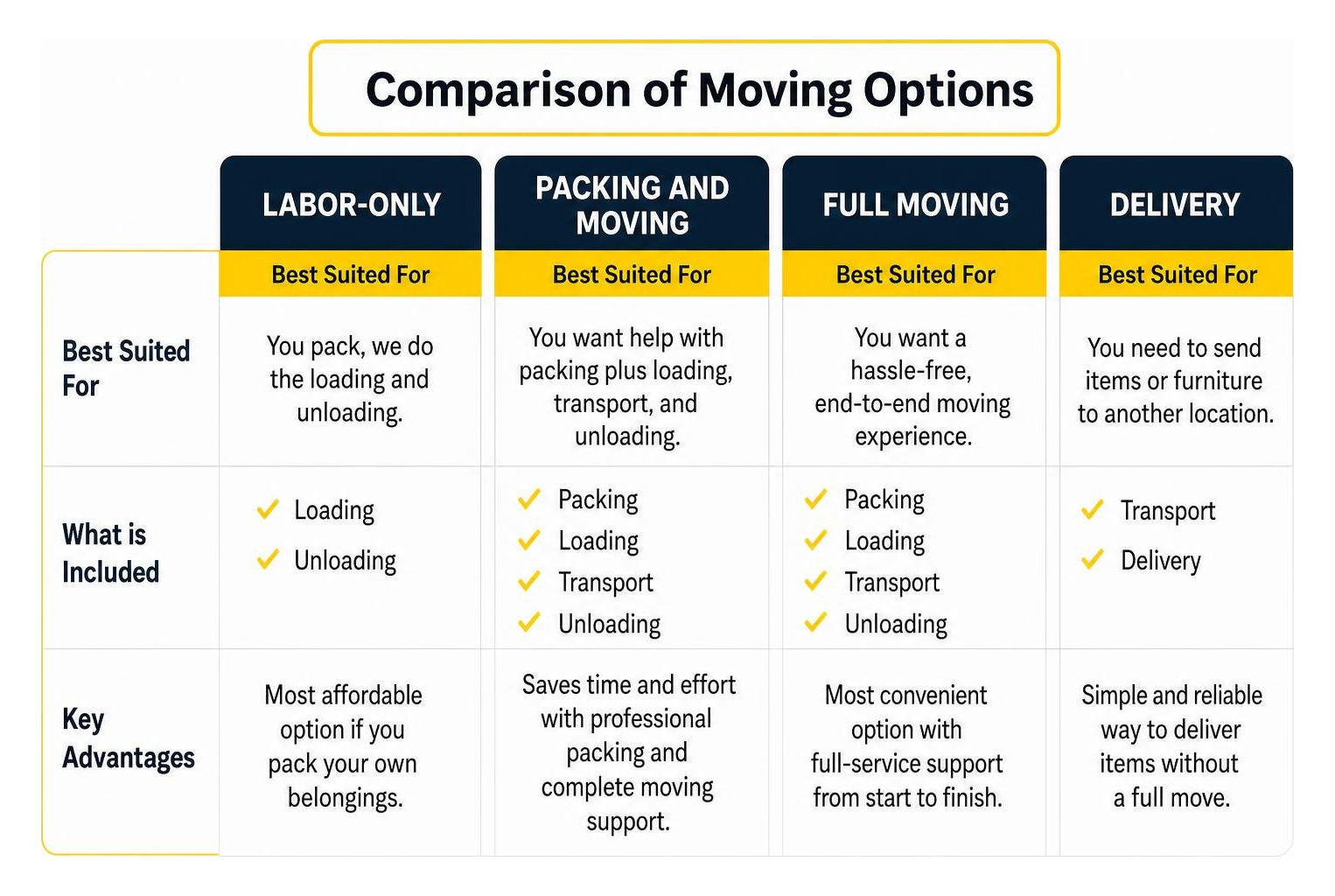
Selecting the appropriate service depends on your budget, physical capabilities, and schedule. Reviewing expert moving tips for reducing stress will help you assess your logistical needs. Exploring budget-friendly moving approaches can also help you balance affordability with practical convenience.
| Moving Method | Best Suited For | What is Included | Key Advantages |
|---|---|---|---|
| Labor-Only Services | DIY moves, rental trucks, portable containers | Heavy lifting, loading, and unloading | Eliminates personal physical strain at an affordable rate |
| Packing and Moving | Busy households, fragile collections | Complete boxing, wrapping, and loading | Saves weeks of personal prep time with professional packing |
| Moving and Delivery | Complete household relocations | Pad wrapping, transport, delivery, and placement | End-to-end relocation management without truck driving |
Before hiring any transport service, consult the official guidance provided in Tips for a Successful Move – FMCSA to understand your legal rights and standard carrier obligations.
Spotting Red Flags and Moving Fraud
Protect yourself from illegitimate operators by verifying their credentials through state and federal databases. Legitimate interstate carriers must hold active USDOT and FMCSA registrations. Be wary of companies that offer low estimates over the phone without reviewing an itemized inventory or conducting an in-home or virtual survey.
Look out for these classic warning signs:
- Demanding large cash deposits prior to moving day.
- Arriving in unmarked rental trucks without company uniforms or commercial branding.
- Refusing to provide a written Bill of Lading or official estimate.
- Asking you to sign blank or incomplete paperwork.
Understand the difference between binding estimates (fixed prices that cannot increase unless inventory changes) and non-binding estimates. Know your liability coverage options: standard Released Value Protection covers only $0.60 per pound per item, while Full Value Protection ensures damaged goods are repaired or replaced at fair market value. Combining this vigilance with proven moving efficiency hacks keeps your move smooth and secure.

Moving Day Execution and Post-Move Settling In
When moving day arrives, clear all pathways inside and outside your home. Roll up throw rugs, prop open main doors, and remove hanging artwork near entryways to prevent snags.
Coordinate with your moving crew by providing a brief walkthrough before loading starts. Point out fragile boxes, high-value furniture, and items staying behind. Using professional furniture moving hacks—like laying cardboard along hardwood floors and using shoulder dollies—will protect both your home and your belongings.
Once the truck is packed, do a final walkthrough of every closet, attic space, basement corner, and cabinet. Check that all windows are locked, lights are switched off, the thermostat is set appropriately, and return your keys according to your lease or sale agreement.
Preparing the First-Night Essentials Box
The first-night box is the single most important container you will pack. This transparent bin or suitcase should ride in your personal vehicle, not on the moving truck. Following an established checklist for packing essentials ensures you won’t have to search through a dozen sealed cartons just to find a toothbrush or phone charger.
Pack these items in your first-night kit:
- Prescription medications and basic first-aid supplies.
- Phone chargers, laptop cables, and portable power banks.
- Essential toiletries: toilet paper, hand soap, toothbrushes, toothpaste, and bath towels.
- Box cutter, scissors, flashlight, and a multi-bit screwdriver.
- Fresh change of clothes and basic bedding or sleeping bags for everyone in the home.
- Paper plates, cups, bottled water, and high-protein snacks.
Essential Moving Tips for Children, Pets, and Emotional Transitions
Relocations can be stressful for younger family members and pets. Keep routines consistent by maintaining regular meal, nap, and walking schedules throughout moving week.
- Children: Give kids age-appropriate packing tasks, like filling and decorating a box with their favorite toys. Set up their bedrooms first at the new home to create an immediate sense of comfort and familiarity.
- Pets: Keep pets in a quiet, closed room with food, water, and their favorite bed while movers are loading. Place a sign on the door to prevent accidental escapes, or arrange for boarding or a pet sitter on moving day.
- Emotional Closure: Take time to say goodbye to your old home. Walking through empty rooms together and sharing favorite memories helps bring positive closure before starting your next chapter.
Frequently Asked Questions About Moving
How far in advance should I start packing for a move?
Start sorting, decluttering, and packing non-essential items three to four weeks before moving day. Begin with seasonal clothing, holiday decorations, books, and formal dinnerware, packing a few boxes each evening so you aren’t overwhelmed at the end.
What is the most secure way to pack fragile dishes and glassware?
Pack dishes vertically on edge inside heavy-duty, double-walled dish pack boxes lined with crumpled unprinted packing paper. Wrap each plate individually in newsprint or bubble wrap, use cardboard dividers for stemware, and fill all empty space with paper so nothing shifts.
What items should never be loaded onto a moving truck?
Never load hazardous materials, including paint, lighter fluid, fireworks, propane tanks, gasoline, and harsh cleaning chemicals. You should also transport personal documents, expensive jewelry, cash, laptops, and daily medications in your personal vehicle.
Conclusion
A successful relocation comes down to smart timing, steady decluttering, and careful packing. Breaking your move into manageable steps lets you focus on the excitement of settling into your new space rather than dealing with moving chaos.
If you are planning an upcoming transition, Handle With Care Moving & Delivery is here to help. We provide transparent 15-minute increment billing with no minimum labor hours, complimentary protective pad wrapping and shrink wrap, and discounts for students, seniors, and veterans. Explore our professional moving and delivery services to see how our team makes your moving day straightforward, safe, and stress-free.
— Anthony Denha, President, Handle With Care Moving & Delivery