
Furniture Packing 101: Simple Steps to Protect Your Stuff

How to Pack Furniture for Moving Without Damage
The best way to pack furniture for moving is to clean and dry each piece, remove parts that could bend or break, then cover it with padding. Secure the padding with stretch wrap, but keep plastic and tape off wood and leather finishes. Label loose parts, and strap furniture in the truck so it cannot shift.
I’m Anthony Denha, president of Handle With Care Moving & Delivery, where I oversee the details of how crews prepare and handle furniture. I’ll walk you through the best way to pack furniture for moving, from deciding what to take apart to protecting each surface.
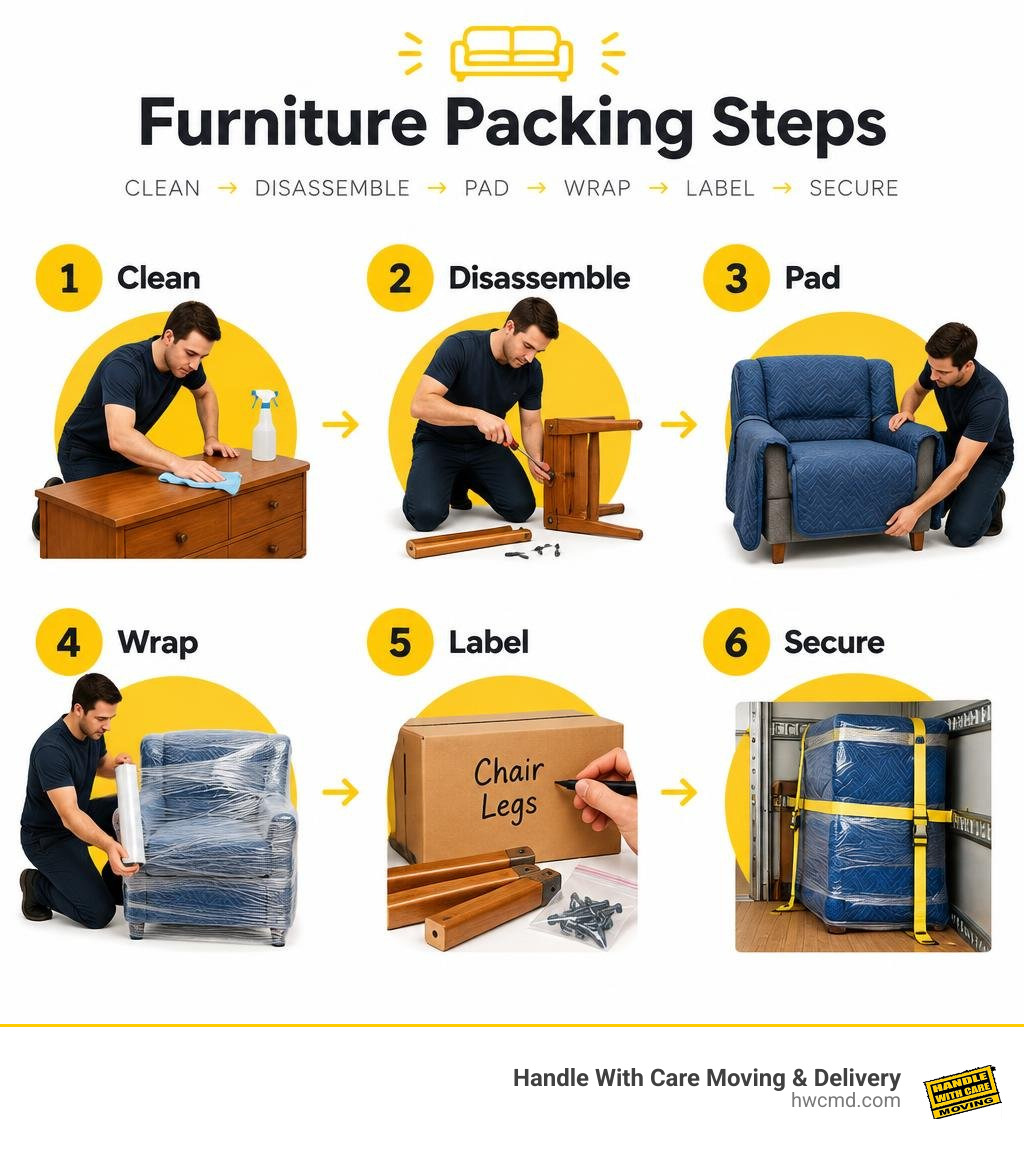
Easy best way to pack furniture for moving word list:
Evaluating Your Furniture: Move, Sell, or Disassemble?
Before grabbing a single roll of tape, take a complete room-by-room inventory of your furniture. Moving is the ultimate reality check for your floor plan. A massive sectional or an oversized armoire might look fantastic in a spacious suburban living room, but trying to squeeze those pieces into a historic apartment with narrow staircases is a recipe for frustration.
Start by measuring the height, width, and depth of your largest items. Next, measure every doorway, hallway corner, staircase clearance, and elevator interior along your moving path. Protective padding adds 1 to 2 inches to every dimension. Checking clearances ahead of time helps you avoid getting stuck halfway through a doorway on moving day. Reviewing 10 great moving tips to make your move efficient and easy will help you organize your inventory well ahead of schedule.
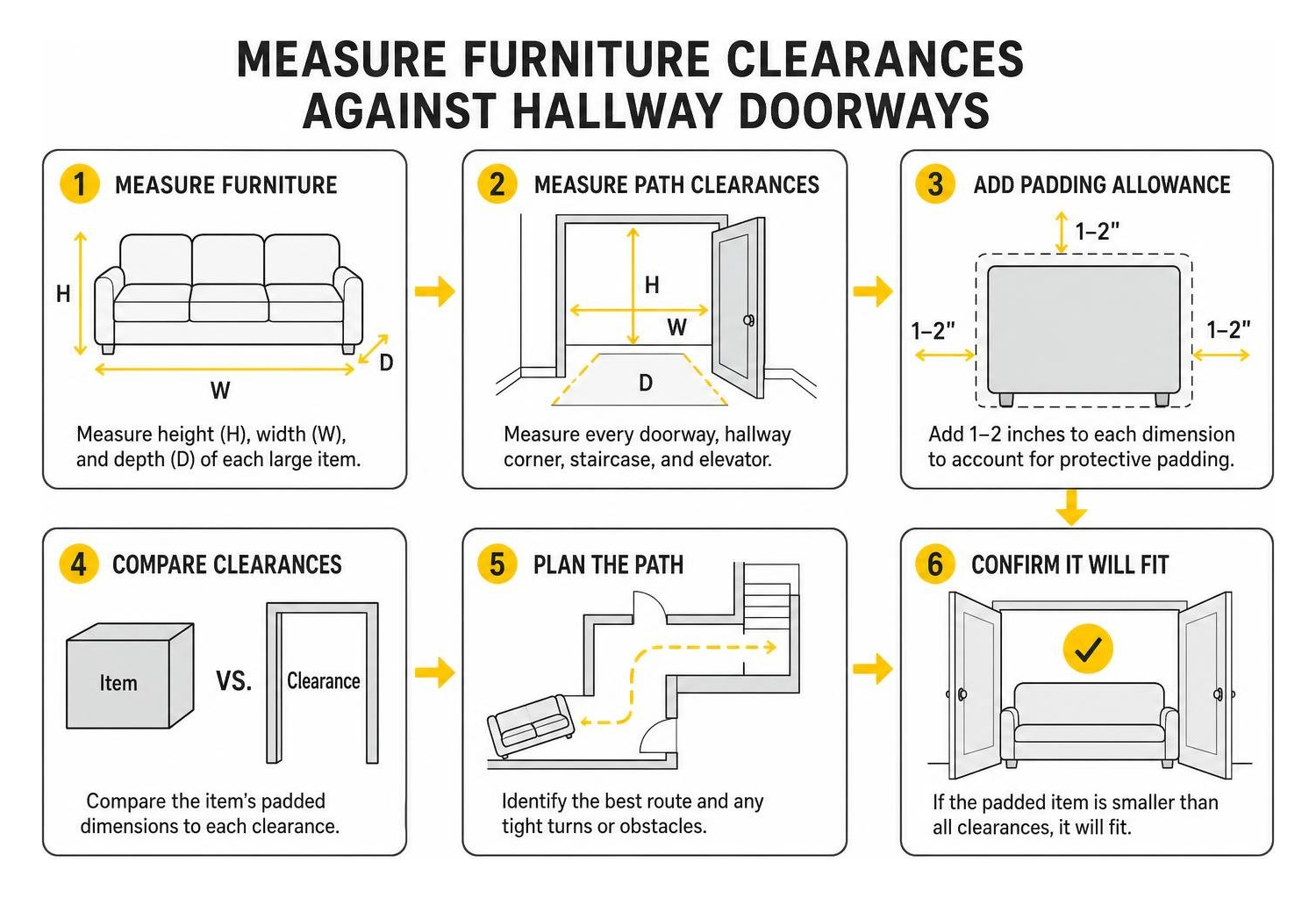
Beyond physical dimensions, assess each item’s structural integrity. Natural solid hardwoods like oak, walnut, and cherry hold up well during transport. In contrast, flat-pack furniture constructed from particleboard or pressed composite wood lacks internal grain structure. Particleboard joints often crumble or pull loose when loaded onto a bouncing truck bed. Identifying which items can withstand the trip lets you make smart choices before loading starts.
The Cost-vs-Value Framework for Long-Distance Moves
Long-distance moves are typically billed based on overall cargo weight and transit distance, with freight rates often averaging between $0.50 and $0.70 per pound. Under this pricing model, heavy, low-cost furniture can easily cost more to haul across the country than it would to replace at your new home. For instance, hauling a 250-pound flat-pack bedroom set could add $125 to $175 in freight charges—money often better spent buying a new set on arrival.
When deciding whether to keep or discard an item, weigh the replacement cost against its transport price tag. Sentimental family heirlooms and custom hardwood pieces are worth moving and protecting. Inexpensive, easily replaceable items are prime candidates for selling locally before you leave. Following a clear guide to deciding whether to sell or ship furniture will help keep your moving budget on track.
| Furniture Category | Typical Weight Range | Moving Feasibility | Recommended Action |
|---|---|---|---|
| Solid Hardwood Sets | 150 – 300+ lbs | High durability; high replacement value | Disassemble, pad, and move |
| Particleboard / Flat-Pack | 60 – 140 lbs | High risk; joints loosen in transit | Sell locally or replace |
| Sectional Sofas | 200 – 350 lbs | Bulky; moderate freight cost | Move if high quality; sell if worn |
| Antique / Fragile Pieces | 80 – 220 lbs | High historical / sentimental value | Move with custom crating & pads |
| Basic Metal Bed Frames | 30 – 50 lbs | Low weight; easy disassembly | Disassemble, bundle, and move |
The Best Way to Pack Furniture for Moving: Disassembly Rules and Hardware Safety
Taking furniture apart before moving makes heavy items easier to carry, reduces the risk of joint breakage, and allows you to pack your moving truck tightly without wasting space. Any component that protrudes awkwardly or bears structural stress should be removed prior to loading.
- Dining & Accent Tables: Invert the table onto a clean moving blanket, unscrew the legs from the corner brackets, and wrap each leg separately.
- Bed Frames & Headboards: Strip mattresses and box springs, unbolt headboards and footboards, and break down side rails and center slats into a compact bundle.
- Modular Sectionals: Unhook modular sections, unscrew protruding wooden or plastic feet from the base, and bag individual cushions.
- Desks & Dressers: Remove pull-out keyboard trays, unfasten detachable hutches, and slide out heavy drawers to lighten the main carcass.
Applying practical furniture disassembly techniques keeps delicate joints from snapping when maneuvering through tight spots.
Never toss loose bolts, nuts, washers, and shelf pins loosely into a random box. Place the hardware for each item into a sealable, heavy-duty plastic freezer bag. Write the exact item name on the bag with a permanent marker, and tape the sealed bag securely to an inconspicuous interior surface of the matching furniture piece. For intricate setups, snap quick photos on your phone as you disassemble each step to make reassembly seamless.
Essential Supplies and Surface Protection Guidelines
High-quality packing supplies protect your furniture against scuffs, pressure dents, road vibration, and shifting. Skimping on materials often leads to costly repairs later.
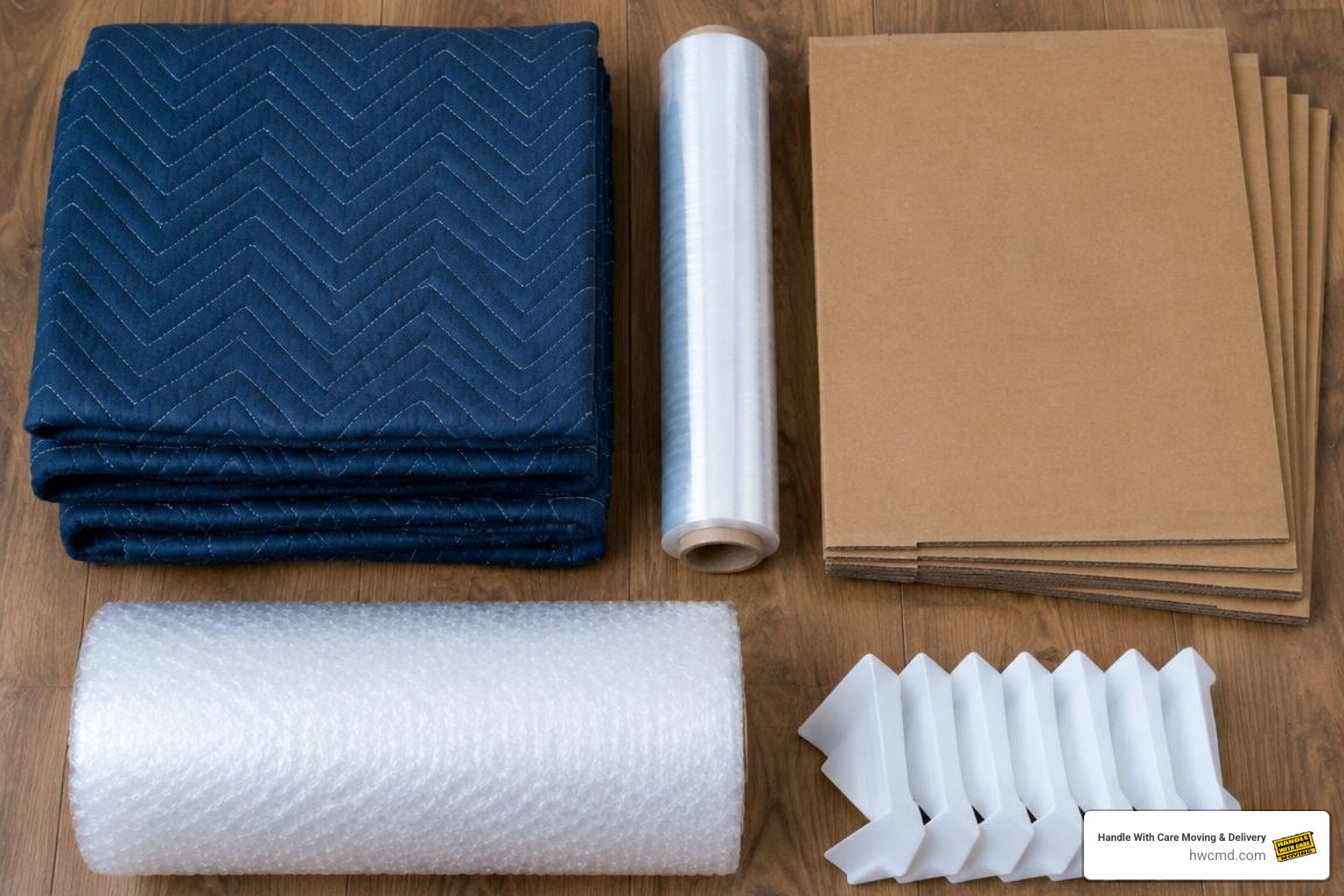
Stock up on these professional-grade supplies:
- Woven Moving Blankets (Padded Quilts): Thick, multi-layer cotton/polyester pads that absorb shocks and shield finished surfaces from friction.
- Corrugated Cardboard Sheets & Corner Guards: Rigid protective layers that prevent impact damage along delicate edges.
- Heavy-Duty Stretch Film (20-Gauge Elastic Wrap): Used solely to bind protective blankets in place and keep moving parts shut.
- Bubble Wrap (Medium to Large Cell): Shock-absorbing protection for glass tabletops, polished marble, and fragile ornaments.
- Heavy-Gauge Plastic Mattress Bags: Tear-resistant bags that keep mattresses and box springs clean from dirt, grease, and rain.
- High-Grade Packaging Tape: Strong adhesive tape for sealing boxes and wrapping layers. Keep tape away from finished furniture surfaces.
Choosing the Right Padding and Avoiding Moisture Damage
A common DIY moving mistake is wrapping bare wood or genuine leather directly with plastic stretch film. Plastic creates a non-breathable seal. When ambient temperatures fluctuate inside a closed cargo hold, moisture condenses beneath the film, causing wood veneers to warp, clouding lacquer finishes, and trapping mold against genuine leather.
Review our breakdown on packing materials for furniture protection to pick the safest wrap for every surface. The rule of thumb: always place a soft, breathable barrier—such as a thick cotton moving quilt or clean packing paper—directly against wood, leather, or painted surfaces. Use plastic stretch wrap only on the outside of the blanket to hold the padding secure.
For items heading into long-term transit or storage, follow our guide on protecting stored furniture from trapped moisture to preserve your pieces in any climate.
Best Way to Pack Furniture for Moving by Material Type
Different materials face distinct transit hazards. Wood scratches and dents under pressure, upholstery absorbs dust and moisture, and glass breaks easily from torsion. Tailoring your wrapping technique to each specific material ensures your items arrive in showroom condition.
Wood, Antique, and Leather Care
Natural wood finishes and antique veneers need protection against both surface friction and excessive pressure.
- Dust and Clean: Wipe down all surfaces with a soft, dry microfiber cloth. Gritty dust trapped under tight padding acts like sandpaper over bumpy roads.
- Apply Edge and Corner Protectors: Fit pre-formed corrugated or foam corner guards onto table edges, dresser corners, and decorative moldings.
- Wrap in Moving Quilts: Drape thick moving blankets across the entire piece, overlapping the seams by at least 6 inches.
- Secure the Padding: Wind plastic stretch wrap firmly around the outside of the moving blankets, keeping tension high while preventing the film from touching the bare wood finish.
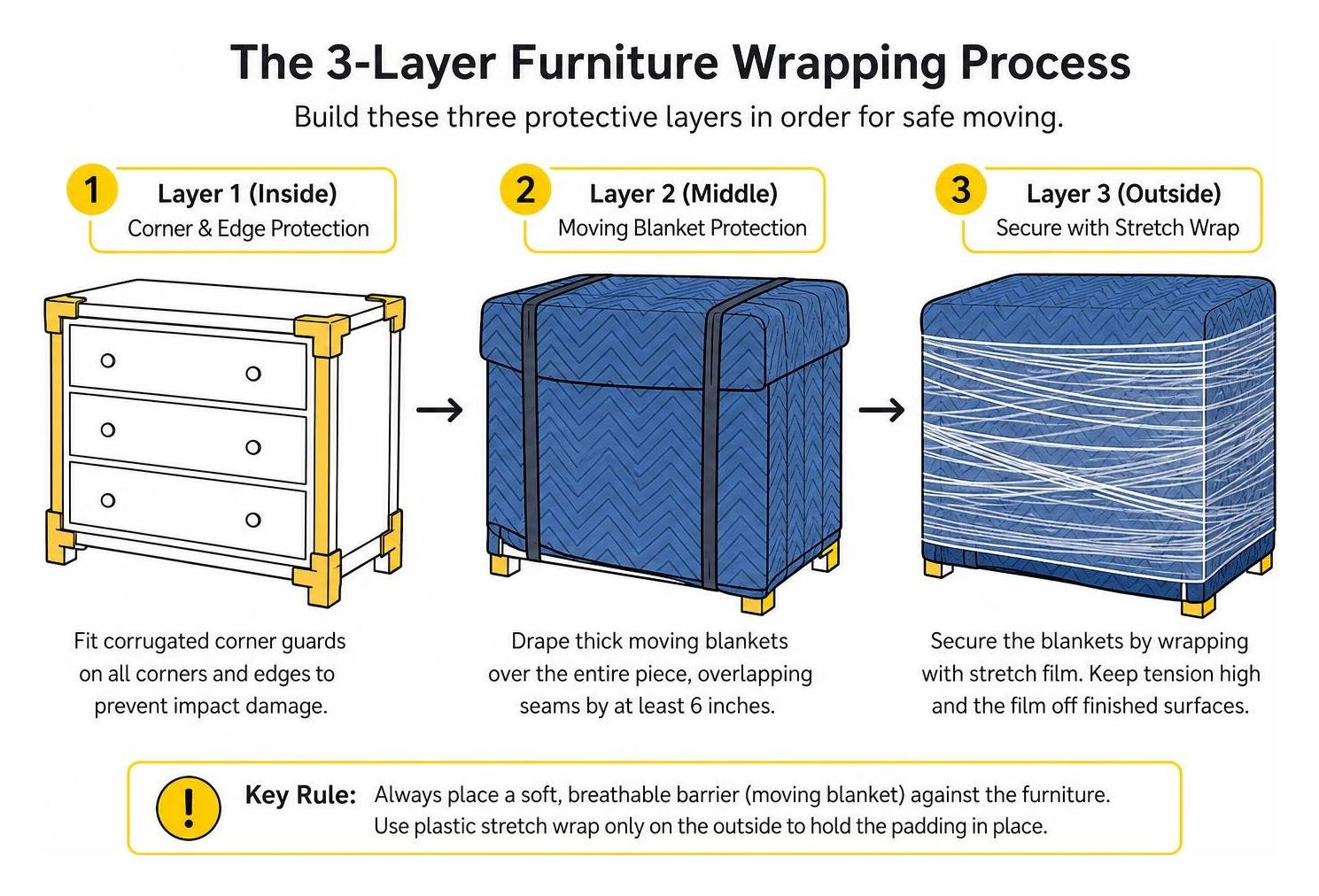
For fine leather sofas and armchairs, avoid tight plastic wrapping altogether, as it can suffocate the hide and cause permanent creasing. Wrap leather pieces entirely in breathable moving pads or soft furniture covers, securing the padding with packing tape attached strictly from pad to pad.
Upholstered Couches, Mattresses, and Cushions
Fabrics easily pick up dirt, road grime, and moisture during transport if left unprotected.
- Couches and Sofas: Remove all loose seat cushions and back pillows, placing them into large, clean bags. Vacuum the couch base thoroughly to eliminate loose crumbs that could stain fabric during travel. Wrap the sofa base in heavy moving blankets, then seal the entire outer layer in stretch wrap. To protect bottom fabrics when sliding or tilting, tape corrugated cardboard along the bottom frame.
- Mattresses: Slip mattresses and box springs into tear-resistant, heavy-duty mattress bags before moving them through your home. Seal the open flap tightly with packing tape to block out dust, water, and exhaust fumes. Never store or transport a foam mattress folded in half for extended periods, as this can permanently ruin its internal support core.
Glass Tabletops, Mirrors, and Fragile Components
Glass tabletops, beveled mirror panels, and curio cabinet inserts are fragile and must be packed with care.
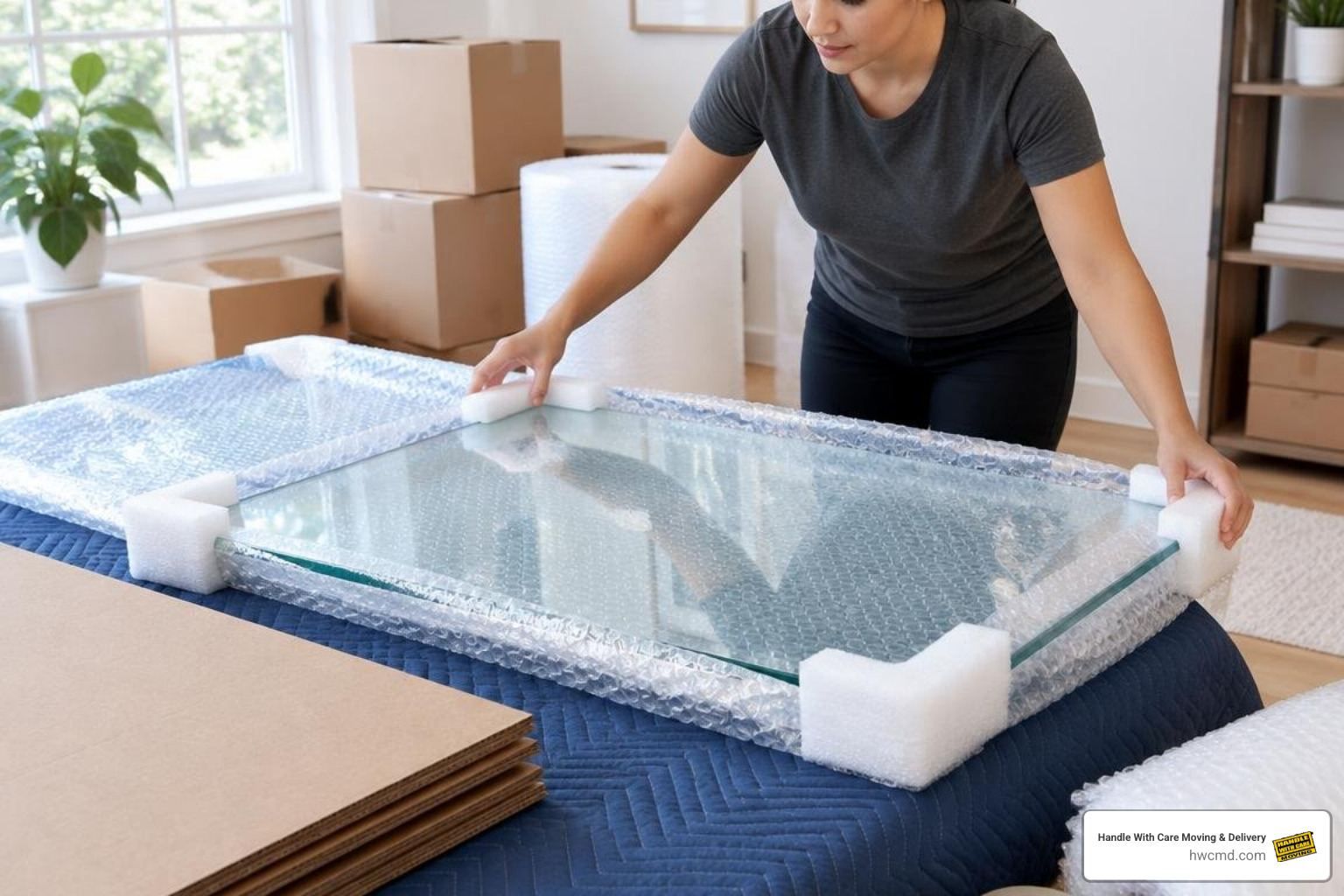
- Tape an X-Pattern: Lay painters tape diagonally from corner to corner across the face of the glass. While this will not stop glass from breaking, it dampens road vibrations and holds shards together if a fracture occurs.
- Protect the Edges: Fasten slotted foam edge guards or folded cardboard channels around the entire perimeter of the glass pane.
- Bubble Wrap: Wrap the pane in two full layers of large-cell bubble wrap, sealing all seams with tape.
- Cardboard Sandwich Method: Place the bubble-wrapped glass panel between two sheets of heavy, corrugated cardboard cut slightly larger than the glass itself. Tape the outer cardboard edges firmly together to create a rigid, protective shell.
- Pack in Telescoping Boxes: Slide the sandwiched glass panel upright into an adjustable, heavy-duty picture/mirror carton, filling any empty voids with crumpled packing paper. Clearly mark the box as “FRAGILE – GLASS – KEEP UPRIGHT.”
Moving Ergonomics and Safe Loading Order in the Truck
Packing your furniture securely is only half the job; lifting, carrying, and loading those pieces safely protects both your furniture and your body. Loading in the wrong order wastes truck space and increases the risk of items shifting and breaking in transit.
Preventing Back Injury with Proper Lifting and Moving Tools
The National Institute for Occupational Safety and Health (NIOSH) outlines a baseline lifting limit of 51 pounds under ideal two-handed conditions. Heavy furniture like oak credenzas, double dressers, and sofa beds far exceed this limit and require proper equipment and teamwork.
- Lifting Mechanics: Bend deeply at your knees and hips while keeping your spine straight and chest lifted. Power through your legs, never twisting your torso while carrying a load.
- Forearm Forklift & Shoulder Straps: Leverage lifting straps to redistribute heavy weight off your hands and lower back onto stronger shoulder and core muscle groups.
- 4-Wheel Furniture Dollies: Use flat, carpeted dollies to easily roll dressers, stacked chairs, and desks across flat floors.
- Furniture Sliders: Place smooth plastic sliders under furniture legs on carpet (or felt-bottomed sliders on hardwood) to glide heavy items without scratching floors.
If your move involves multi-level homes or tight stairwells, master safe techniques for moving heavy furniture up stairs to protect your back and your walls.
The Best Way to Pack Furniture for Moving onto the Truck Tier by Tier
Achieving safe weight distribution requires placing roughly 60% of your total cargo weight in the front half of the truck bed (closest to the truck cab). This keeps the vehicle balanced, ensuring responsive steering and stable braking during highway travel.
Follow a strict loading order:
- Cab-Wall Tier: Place heavy appliances (refrigerators, washers) and bulky, solid-wood dressers upright against the cab wall to build a stable base across the truck’s full width.
- Vertical Furniture & Long Items: Stand mattresses, box springs, long dining tabletops, and sectional frames on their ends along the truck’s interior sidewalls. Secure them tightly to the wall e-track rails using ratchet straps.
- Box Tiers: Build tight rows of boxes, stacking heavy cartons on the bottom and lighter, fragile boxes on top.
- Void Filling: Fill empty gaps between furniture pieces using soft goods—like bagged pillows, rolled rugs, and rolled blankets—to lock items in place and prevent shifting.
- Door Tier: Reserve the final space near the roll-up door for essentials boxes, a basic tool set, cleaning supplies, and folding chairs.
Review the complete proper moving truck loading order to ensure every cubic foot of cargo space is utilized safely.
Inventory Documentation, Valuation, and Unpacking Setup
Before loading, document the condition of your furniture. Take clear, well-lit photos and short video clips of every item from multiple angles, focusing on corners, table tops, and upholstery seams. Note any pre-existing dings, scratches, or wear.
If you are hiring a professional moving service, review your carrier’s valuation coverage options:
- Released Value Protection: Basic carrier coverage provided at no extra cost, offering minimal reimbursement calculated strictly by weight (typically $0.60 per pound per item).
- Full Value Protection (FVP): Comprehensive coverage where the moving company is responsible for repairing damaged items, replacing them with like items, or offering a cash settlement for their current market value.
Once you arrive at your new home, unpack methodically:
- Position large furniture pieces in their final room locations before bringing in boxes.
- Unpack hardware bags and reassemble tables, bed frames, and desks using your original reference photos.
- Check and tighten all bolts after the initial setup.
- Install anti-tip safety anchors to secure tall bookcases, dressers, and display cabinets firmly to wall studs—a simple step that keeps your home safe.
Frequently Asked Questions About Packing Furniture
Can I leave clothes inside dresser drawers when moving?
You can leave lightweight, soft items (like t-shirts, socks, and linens) inside dresser drawers for short, local moves, provided the furniture is solid wood. However, remove heavy jeans, sweaters, and books, as excess weight can crack drawer bottoms or bend internal slide tracks during transit. For long-distance moves or lighter flat-pack furniture, empty all drawers completely, remove them from the dresser frame to lighten the load during lifting, and wrap the components separately.
How do I prevent moisture condensation under plastic stretch wrap?
To prevent moisture buildup, never apply plastic stretch film directly against unfinished wood, polished lacquer, or genuine leather. Always wrap the piece in a breathable, thick cotton moving blanket first. The fabric absorbs humidity changes and prevents condensation, while the outer layer of stretch film keeps the protective padding secure.
What items will professional movers refuse to transport?
Moving companies operate under safety regulations that prohibit the transit of hazardous, flammable, or perishable goods. Crews will not load propane tanks, paint cans, lighter fluid, aerosol cans, fireworks, ammunition, open food items, or live houseplants. Keep high-value personal items—such as passports, legal documents, fine jewelry, cash, and essential medications—with you in your personal vehicle throughout moving day.
Conclusion
Knowing how to pack furniture for moving turns an overwhelming relocation into a smooth, manageable process. By evaluating your inventory, gathering the right packing supplies, disassembling tricky pieces, wrapping each material properly, and loading your truck with safe weight distribution, you can protect your furniture from scuffs, scratches, and structural damage.
If you are planning an upcoming relocation in Michigan and prefer expert assistance, our team at Handle With Care Moving & Delivery is here to help. We provide complete professional moving and packing services with complimentary pad wrapping, flexible scheduling with no minimum labor hours, and clear, 15-minute-increment billing. Contact us today to schedule your move and let our experienced team handle the heavy lifting.