
How to Move House Cheaply with Smart Moving Ideas

Start With the Cheap Moving Ideas That Save the Most
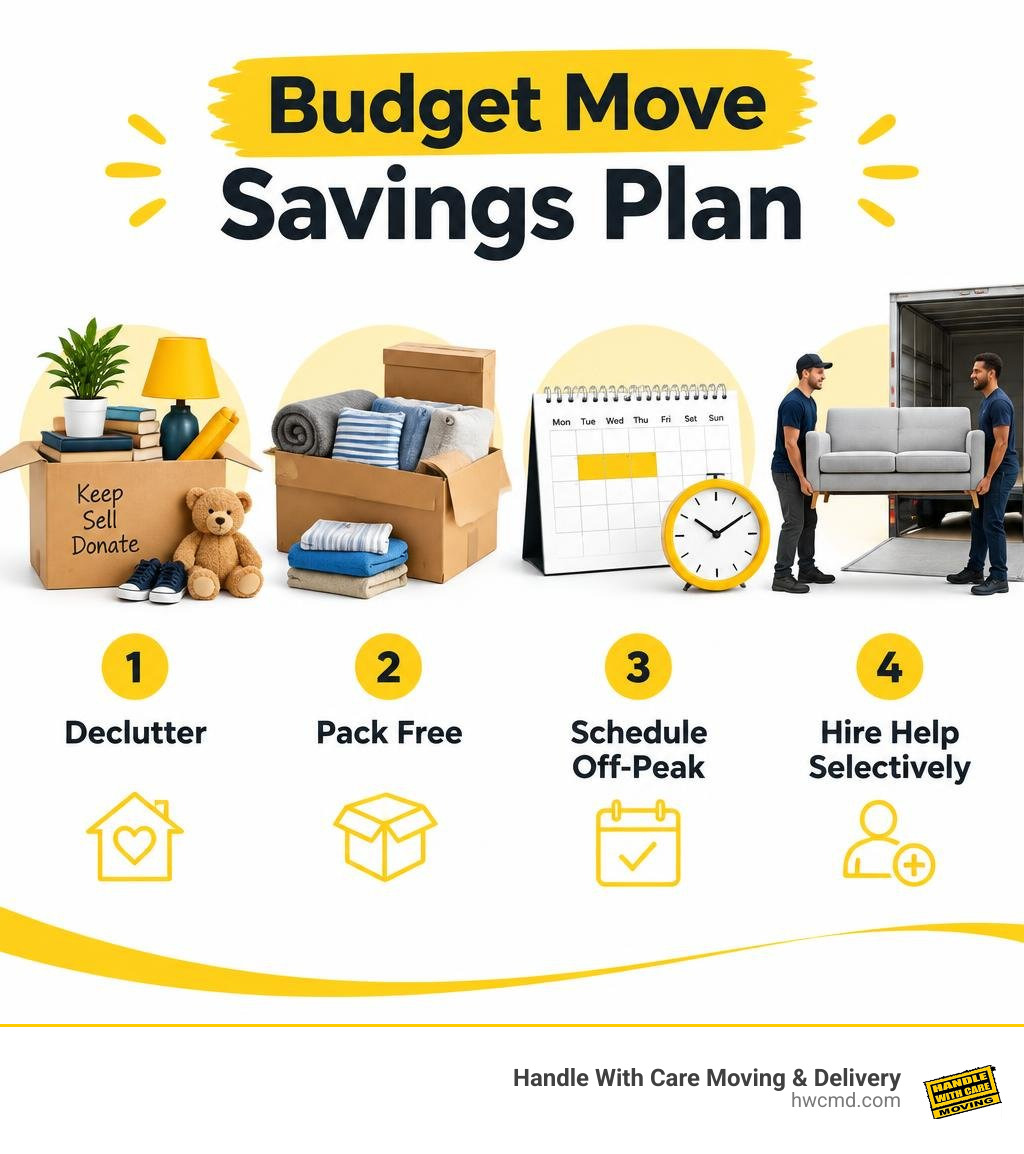
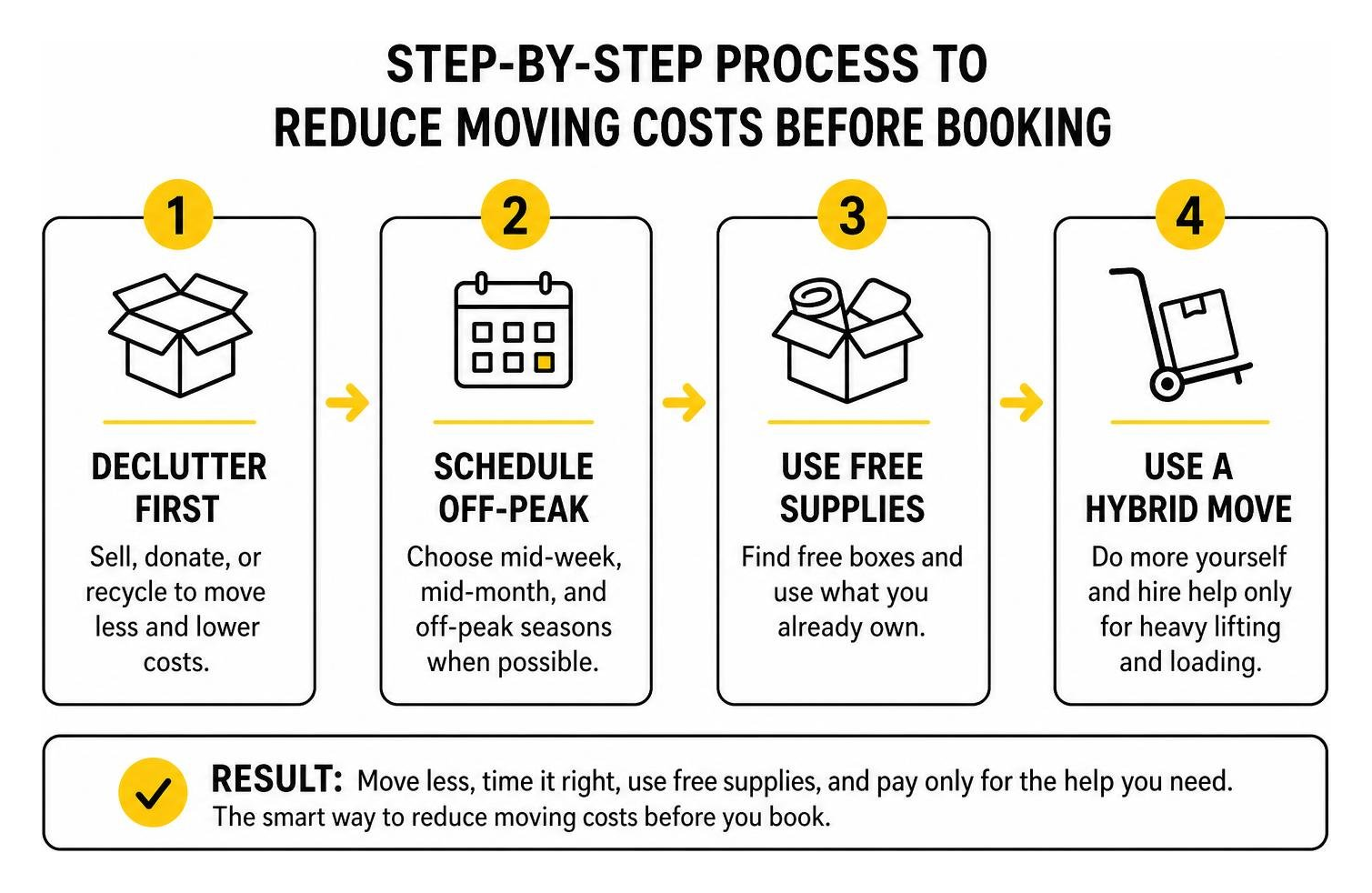
The best cheap moving ideas are simple: move less, move on a slower day, pack yourself with free materials, and only pay professionals for work you cannot safely do. For a local or short-distance Michigan move, start with these high-impact steps:
- Declutter before getting quotes. Selling, donating, or recycling bulky items can lower moving costs by 20-30%.
- Book mid-week and off-peak when possible. Tuesday through Thursday, mid-month dates, and fall or winter moves often cost less than weekend or summer moves.
- Find free boxes and use what you own. Grocery and liquor stores, community groups, towels, blankets, sheets, and clothing can replace many purchased supplies.
- Use a hybrid move. Rent or use your own vehicle, pack in advance, and hire labor-only help for heavy lifting and loading.
A local move often costs $800-$2,500, but planning around volume, timing, and labor can make a meaningful difference. The goal is not to cut corners on safety or care. It is to avoid paying for services, supplies, and truck space you do not truly need.
I am Anthony Denha, President of Handle With Care Moving & Delivery, and I have helped oversee moves ranging from small apartments to full homes with a focus on careful handling and clear pricing. These cheap moving ideas come from the practical decisions that help people reduce costs while keeping their move organized and safe.
Quick cheap moving ideas definitions:
Proven Cheap Moving Ideas to Slash Relocation Costs
The biggest mistake people make when planning a budget relocation is focusing entirely on small savings—like shaving $5 off packing tape—while ignoring the massive cost drivers. In the moving industry, pricing boils down to three primary variables: weight/volume, transit timing, and physical labor.
If you control how much weight you transport, when you put it on the road, and who carries the heavy items, you can effortlessly lower your moving costs by 20% to 40%. Starting with a structured inventory audit allows you to understand the exact scope of your belongings before spending a single dollar on supplies or deposits. When you know how to declutter before moving, you establish the foundation for an affordable relocation.
Downsizing and Selling Belongings Before Packing
Every pound of cargo you eliminate directly reduces fuel usage, truck size requirements, and physical loading time. On long-distance relocations, shipping rates are heavily tied to weight:
- Shedding 500 lbs can save between $200 and $500.
- Eliminating 1,500 lbs can keep $600 to $1,500 in your pocket.
Beyond lowering your moving quote, downsizing generates an immediate moving fund. By hosting garage sales or listing furniture, electronics, and tools on local online marketplaces, many movers recoup anywhere from $500 to $2,000.
For items that do not sell, donate them to registered charities and keep the itemized donation receipts for tax season. Discarding broken or worn-out items before packing ensures you never pay anyone to move literal trash into your new living space.
Cheap Moving Ideas for Timing and Scheduling
Timing dictates pricing across the entire moving industry. Professional crews and truck rental companies experience massive demand spikes during peak season (May through September), on weekends, and at the beginning and end of each month when residential leases turn over.
Rates can surge by 20% to 30% during peak windows. For example, a three-bedroom move that costs $7,500 on a mid-month Wednesday in February can easily reach $9,500 on a Saturday in late June. You can explore calculating moving costs and seasonal rate differences to pinpoint exact tier variations for your route.
To secure the lowest available rates:
- Target Mid-Week: Schedule your moving day for a Tuesday or Wednesday.
- Target Mid-Month: Avoid the rush of the 1st and the 30th/31st.
- Move in Fall or Winter: Off-peak moving rates (mid-October through mid-April) offer the deepest discounts.
How to Pack Efficiently on a Zero-Dollar Supply Budget
Full-service packing typically accounts for roughly 25% of your total moving bill—adding $1,500 to $3,000 on a standard three-bedroom home. Taking on the packing yourself is one of the quickest ways to protect your budget, but buying brand-new retail boxes can easily cost $200 to $300.
By gathering free containers and incorporating proven smart home shifting packing ideas, you can completely eliminate packing supply expenses without endangering your delicate items.

Zero-Cost Packing Supplies and Cheap Moving Ideas
You do not need to buy brand-new cardboard kits. Sturdy, clean, commercial-grade boxes are thrown away daily by local retailers.
To source free, high-integrity cardboard:
- Liquor Stores: Wine and spirit cartons feature thick, corrugated walls and built-in cardboard cell dividers that are ideal for glassware, stemware, and fragile decor.
- Bookstores and Copy Centers: These locations regularly recycle dense, small-to-medium cartons designed to hold heavy reams of paper without buckling.
- Grocery and Big-Box Retailers: Ask department managers for clean apple boxes or egg crates, which offer reinforced handles and heavy-duty structural corners.
- Community Groups: Check neighborhood exchange boards, where recent movers give away stacks of used moving boxes for free.
Before packing, inspect used boxes for structural integrity to ensure they hold up well during transport. Review our overview of suitable packing materials to pair the right box types with your heavier household goods.
Turning Linens, Towels, and Clothes into Protective Padding
Commercial bubble wrap, packing foam, and packing paper can add hundreds of dollars to your moving bill. You can replace all of them with items you already own:
- The Linen Nest: Line the bottom of every fragile box with a bath towel, fleece blanket, or sweatshirt to absorb road shocks.
- The “Vinyl Record” Plate Technique: Wrap ceramic plates in cloth napkins or t-shirts and pack them vertically on their edges like records in a crate, rather than stacking them flat. Flat plates crack easily under vertical pressure.
- Burrito Wraps for Drinkware: Roll mugs, wine glasses, and tumblers tightly inside thick athletic socks or kitchen dish towels.
- Gap Fillers: Fill all empty air pockets inside packed boxes with socks, pillowcases, or winter scarves to prevent contents from shifting.
For a deeper dive into repurposing household items safely, consult our practical guide to packing materials options before wrapping your valuables.
Choosing the Most Cost-Effective Transportation Method
Transportation is typically the single largest line item in a DIY move. The ideal strategy depends on the total distance, the physical volume of your goods, and whether you are comfortable driving a commercial vehicle.
Whether you are completing a quick studio relocation or handling a multi-room house, you can read about moving for under $200 to see how low-mileage DIY vehicle strategies work in practice.
Comparing Self-Managed Transportation Options
Choosing the right transport method requires comparing equipment costs, fuel usage, and mileage fees:
| Transportation Method | Typical Local Cost | Typical Long-Distance Cost | Best Used For |
|---|---|---|---|
| Personal Vehicle / SUV | $20 – $50 (Gas only) | Not practical for full loads | Small studio or dorm moves across town |
| DIY Rental Truck | $130 – $300 / day + mileage | $1,500 – $3,500 | Medium-to-large moves where you can drive |
| Freight / Truck-Share | Not applicable | $800 – $2,500 | Cross-country moves with flexible delivery |
| Portable Storage Container | $300 – $700 / month | $2,000 – $4,500 | Moves requiring temporary storage |
For long-haul moves, freight sharing (splitting space on a commercial trailer) can save 20% to 40% compared to renting a dedicated truck. If you are comparing broader DIY methods, checking DIY moving budget strategies will help you balance vehicle costs against physical effort.
Mastering the Hybrid Move with Labor-Only Help
A full DIY move can leave you physically exhausted and puts you at risk of personal injury or property damage. A full-service move, on the other hand, comes with heavy markups for equipment and travel time.
The most cost-effective compromise is the hybrid move:
- You source free packing supplies and pack all non-fragile belongings yourself.
- You secure the rental truck or transport vehicle.
- You hire professional, hourly labor-only movers to tackle heavy lifting, tight stairwells, and secure truck loading.
Labor-only crews generally charge $50 to $100 per person per hour. A professional two-person team can load a typical 1,500-square-foot home in 3 to 4 hours for roughly $400 to $800—far below the $2,000 to $4,000 charged by full-service moving companies.
When you need affordable furniture moving help, this strategy protects your back and your walls while keeping your overall budget intact. Review these tips to find affordable local movers to pick the right crew for your hybrid move.
Protecting Your Budget from Hidden Fees and Moving Scams
A moving budget can be derailed by hidden fees, surprise stair charges, fuel markups, and unverified broker pricing. Protecting your money requires careful planning, written agreements, and a firm grasp of moving contracts. Following these efficient moving tips helps keep your transition smooth and your expenses predictable.
Comparing Written Quotes and Avoiding Cost Surcharges
Never accept a moving estimate delivered over the phone without an itemized inventory or physical/virtual survey. Shady operators often offer artificially low initial rates, only to hold belongings hostage until an inflated balance is paid on delivery.
To protect yourself:
- Obtain Three Written Estimates: Review three detailed quotes on official company letterhead. The middle quote usually represents the realistic market rate.
- Insist on Binding-Not-To-Exceed Terms: This contract clause ensures that even if your shipment weighs more than projected, your price cannot exceed the agreed ceiling.
- Watch Out for Broker Fees: Book directly with the carrier handling your goods rather than a third-party booking agent who adds a 20% to 30% markup.
- Audit Every Surcharge Line: Look out for fees related to long carries, flight stairs, heavy appliances, or fuel index surcharges.
For straightforward advice on structuring moving day expenses, reading about how to budget moving day costs can help you avoid expensive last-minute add-ons.
Managing Emergency Costs and Unexpected Moving Day Expenses
Surprise moving expenses can pop up unexpectedly: sudden security deposit adjustments, truck refueling requirements, utility activation charges, or last-minute hardware needs.
To manage these costs without falling into high-interest credit card debt:
- Time Utility Setups: Arrange your power, water, and internet connections two weeks ahead of time to avoid same-day rush activation fees.
- Document Property Condition: Photograph every room, baseboard, and appliance in your old residence before leaving to safeguard your full security deposit refund.
- Maintain an Emergency Buffer: Set aside a 10% to 15% cash contingency fund for moving day. If short-term gaps arise, low-cost fee-free cash advance tools can serve as a budget bridge for temporary moving day costs without incurring hefty credit charges.
Frequently Asked Questions About Moving on a Budget
What is the cheapest day of the week and month to move?
The cheapest days to move are Tuesdays and Wednesdays during the second or third week of the month. Moving companies and rental truck agencies experience their lowest demand during mid-week, mid-month windows, allowing you to secure rates 20% to 30% lower than weekend or month-end dates. Scheduling your move during the winter off-peak window (November through February) yields the highest possible savings.
How can I move heavy furniture cheaply without hiring a full-service crew?
You can move heavy furniture affordably by booking labor-only movers for a short 2-to-3-hour window solely to manage loading and unloading. To minimize their billable hours:
- Disassemble all bed frames, table legs, and modular desks before the crew arrives.
- Remove all cushions, drawers, and contents from dressers and armoires.
- Keep clear, unobstructed pathways from your rooms to the loading door.
Review our guide to budget-friendly furniture moving to ensure your bulky items are transported safely without the cost of full-service packages.
Is it cheaper to sell my furniture or pay to move it?
If you are moving long-distance, it is often cheaper to sell inexpensive, heavy, flat-pack furniture (such as particleboard bookcases, dressers, and desks) and repurchase replacements after you arrive. Moving costs are heavily influenced by total cargo weight and volume. If the cost to transport an item exceeds 50% of its replacement value, sell it locally and add the proceeds directly to your moving fund.
Conclusion
A successful, low-cost relocation comes down to preparation, not cutting corners on safety. By aggressively decluttering your home, sourcing free boxes, using your own linens for padding, and timing your move for mid-week, you can cut moving expenses dramatically.
At Handle With Care Moving & Delivery, we believe in transparent, stress-free relocations. Serving Ann Arbor, Michigan, we offer no-minimum labor hours, 15-minute pricing increments, complimentary pad and shrink wrapping, and discounts for students, seniors, and veterans.
When you want the perfect balance of budget control and professional care, explore our professional moving and delivery services to request an upfront, transparent quote for your next move.