
A Practical Guide to Packing Services Materials Options

Choose the Right Packing Services Materials for a Safer Move
The best packing services materials combine a sturdy box, a protective wrap, and enough void fill to stop items from moving. For fragile belongings, use clean packing paper or foam pouches against the surface, add bubble wrap for impact protection, and fill every open space in the box with crumpled paper or biodegradable peanuts.
For a budget-conscious local move, start with the supplies that prevent the most common damage:
- Packing paper: Wrap dishes, glasses, and decor without ink transfer.
- Bubble wrap: Add shock protection around breakables and electronics. Place the bubble side toward the item.
- Foam pouches and dividers: Speed up packing for plates, stemware, and other kitchen items.
- Strong boxes and tape: Keep weight contained and cartons closed during carrying and loading.
- Furniture pads and stretch wrap: Protect large furniture from scratches, dust, and scuffs.
The right materials do more than fill boxes. They protect sentimental items, reduce breakage, and make loading in apartments, stair-heavy homes, offices, and tight entryways far more manageable. This guide explains what each material does, when professional packing is worth considering, and how to buy only what your move needs.
I am Anthony Denha, President of Handle With Care Moving & Delivery, where I oversee residential and office moves with a focus on careful wrapping, clear planning, and reliable crews. My experience with packing services materials comes from helping customers prepare everything from studio apartments to full office relocations for safe transport.
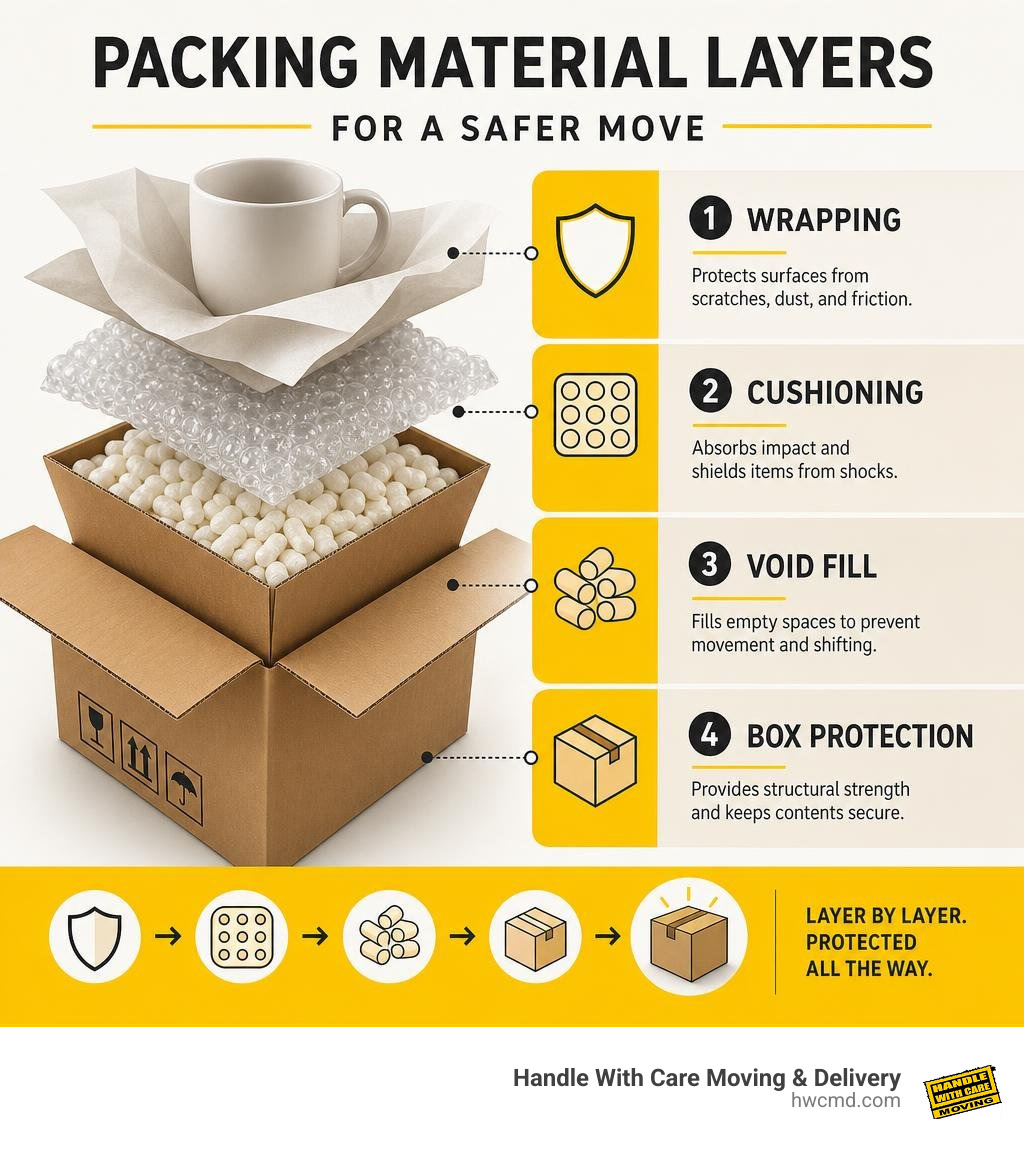
Essential Packing Services Materials for Residential and Commercial Moves
When packing any home or commercial facility, proper protection relies on a deliberate, four-layer system: surface defense, shock absorption, interior void fill, and structural containment. Relying solely on a cardboard box without internal immobilization leaves items vulnerable to shifting, crushing, and friction damage during transit.
| Material Type | Primary Purpose | Best Used For | Key Strength / Specification |
|---|---|---|---|
| Unprinted Newsprint Paper | Surface protection & light void fill | Dishes, glassware, porcelain figurines | 24″ x 30″ sheets, ink-free, 100% recyclable |
| Small Bubble Cushioning | Surface abrasion prevention & tight wrap | Delicate decor, small electronics, cosmetics | 3/16″ bubble height, flexible contouring |
| Large Bubble Cushioning | Heavy shock absorption & structural padding | Heavy artwork, audio receivers, vases | 1/2″ bubble height, high impact resistance |
| Dish Foam Sleeves | Rapid abrasion barrier | Everyday plates, bowls, saucer sets | Non-abrasive polyethylene, quick slide-in use |
| Biodegradable Peanuts | Anti-static interior void fill | Irregular decor, boxed electronics, hollow gaps | Organic plant starches, naturally anti-static |
| Corrugated Dunnage | Rigid partition & load stabilization | Custom cell dividers, vertical box support | Single-wall or double-wall fluted kraft board |
| Heavy-Duty Double-Wall Boxes | Crushing resistance & outer defense | Books, heavy kitchenware, fragile china | Edge Crush Test (ECT) 48–51, holds up to 80 lbs |
| Water-Activated Paper Tape | Permanent tamper-evident carton seal | Heavy cartons, long-distance shipments | Fiberglass-reinforced, bonds directly to fibers |
Protective Wraps, Cushioning, and Void Fill Options
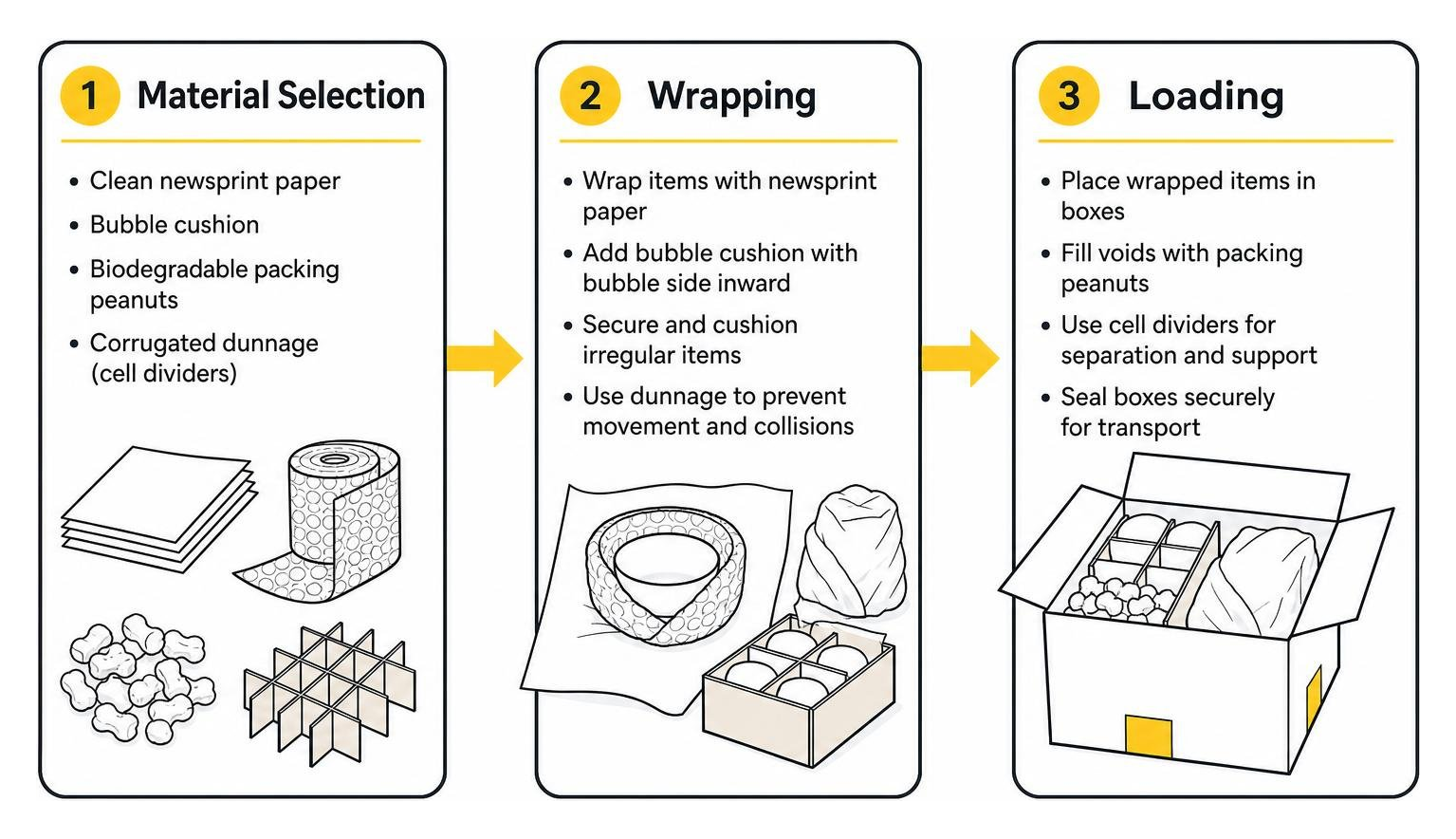
Understanding basic packing 101 principles begins with selecting the proper protective wrap. Clean, ink-free newsprint paper—typically supplied in convenient 24-inch x 30-inch sheets—serves as the foundational wrapping layer for kitchenware and delicate surfaces. Unlike printed daily newspapers, unprinted newsprint paper will not bleed toxic inks onto porous ceramics, china, or cookware. Bundles of 100% recyclable newsprint paper offer versatile utility; crumpled sheets serve as dependable void fill to immobilize contents inside moving cartons.
When selecting protective packing materials, bubble cushion is essential for impact absorption. For maximum protection, always place the bubble side facing inward against the object. This orientation cushions the item directly within the air pockets while presenting a smooth exterior surface that resists snags. Small bubble rolls excel at wrapping intricate shapes, while large bubble rolls absorb heavy vibrations and fill large empty spaces.
For filling voids around irregularly shaped items, biodegradable packing peanuts made from natural starches offer exceptional dust-free protection. Unlike traditional polystyrene foam that generates static charges, starch peanuts are naturally anti-static, making them safe for sensitive electronics. Furthermore, corrugated dunnage—scrap cardboard scored and folded into custom cell dividers—provides rigid support between fragile items to prevent lateral collisions.
Sustainable and Eco-Friendly Packing Services Materials
Modern moves do not have to generate piles of non-recyclable plastic trash. Sustainable packing starts with renewable paper products and compostable plant-based materials. Clean newsprint paper, kraft corrugated cartons, and starch-based peanuts can be composted, dissolved in water, or recycled through curbside municipal programs.
For smaller household items, books, and delicate electronics, engineered paper mailers provide an eco-friendly alternative to plastic wraps and small boxes. Solutions like Recyclable Padded Mailers utilize paper-based cushioning to deliver up to 45% greater shock absorption than plastic bubble mailers. These gusseted mailers pass rigorous ISTA 6 Amazon Overbox drop and vibration testing, demonstrating that sustainable paper packaging can outperform traditional single-use plastics while remaining 100% curbside recyclable.
Specialty Containers, Reinforced Tapes, and Surface Protection
Standard boxes are not always sufficient for specialized items. Professional moves require specialty containers engineered to handle specific structural loads:
- Dish Barrels: Extra-thick, double-wall corrugated cartons designed to withstand heavy stacking and protect fragile dinnerware.
- Telescoping Picture Boxes: Two-piece interlocking cartons that adjust to safely enclose framed artwork, mirrors, and flat-panel screens.
- Wardrobe Boxes: Heavy-duty vertical cartons equipped with integrated metal hanging bars, allowing clothing to move directly from closet to box without folding or wrinkling.
Securing these containers requires high-tensile adhesives. While pressure-sensitive plastic tape is common for lightweight boxes, water-activated reinforced paper tape provides superior security for heavier loads. Featuring embedded fiberglass strands, water-activated tape forms an immediate, permanent bond with corrugated fibers that supports box weights up to 30 lbs with a single strip.
Finally, comprehensive surface protection safeguards your home’s entryways. Self-adhesive carpet protection films, heavy paper runner rolls, and padded neoprene floor runners shield hardwood and carpeted floors from dirt, scuffs, and dollies on moving day.
Professional Packing Services vs. DIY Packing: Cost, Labor, and Safety
Choosing between professional packing and DIY preparation involves balancing financial costs against time, labor efficiency, and the physical safety of your belongings. While self-packing may seem less expensive initially, purchasing individual retail supplies and dedicating dozens of personal hours quickly adds up.
Hiring experienced movers who pack for you provides dedicated crews who pack an entire household in hours rather than weeks. Professional teams bring industrial-grade supplies, apply systematic room-by-room packing methods, and assume clear transit liability—reducing moving-related stress and protecting high-value assets.
Professional Packing Services Materials vs. DIY Supply Costs
When purchasing packing supplies individually from retail centers, costs accumulate rapidly. Bubble rolls, specialty dish kits, tape rolls, and assorted boxes carry retail markups. In contrast, working with local packing services near you streamlines material acquisition.
At Handle With Care Moving & Delivery, we simplify these costs by providing free protective pad wrapping and stretch wrap for every move, along with transparent, 15-minute-increment billing. This transparent structure eliminates hidden supply fees, ensuring you only pay for the exact time and specialty materials needed to protect your home.
Convenience, Packing Speed, and Transit Security
The greatest benefit of professional packing is operational speed and transit security. A team of three professional packers can carefully wrap, pack, and label a standard three-bedroom home in 4 to 6 hours—a process that often takes a family several weekends to complete.
Systematic labeling systems ensure that every box is marked with its destination room and contents, which streamlines the unloading and unpacking process. Combining structured labeling with expert packing strategies, such as the advice found in our 10 great moving tips, helps ensure your move remains organized and efficient from start to finish.
Material Recommendations and Techniques for Specialized Household Items
Every room in a home presents unique packing challenges. Using generic wrapping methods across different item types often leads to preventable damage. Matching specialized materials to specific household goods ensures every item arrives at your new home intact.
Safeguarding Kitchenware, Dishes, and Fragile Glass
Kitchen items account for a high percentage of transit breakages due to improper weight distribution and lack of internal dividers. Reviewing the best way to pack dishes for shipping safely and learning how to avoid cracks by discovering how to pack dishes for a move will save your fine china:
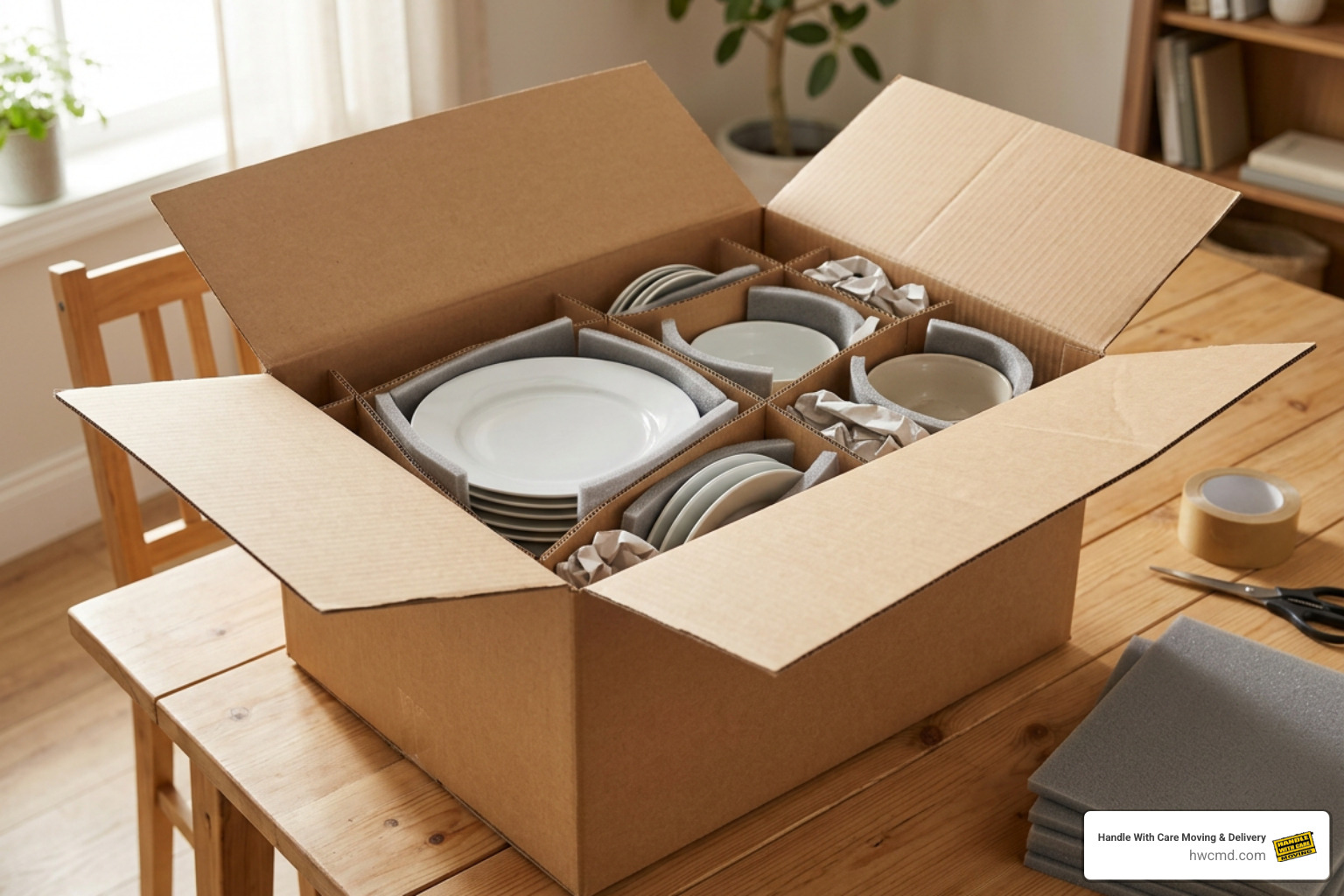
- Line the Box Bottom: Create a 3-inch shock-absorbing base inside a heavy-duty dish barrel using tightly crumpled unprinted newsprint paper.
- Wrap Plates Individually: Enclose each plate within a dish foam sleeve or wrap it securely with newsprint paper.
- Pack Plates Vertically: Never stack plates flat on top of one another. Pack them vertically on edge like records in a crate, as their rims are engineered to absorb vertical shock far better than flat ceramic faces.
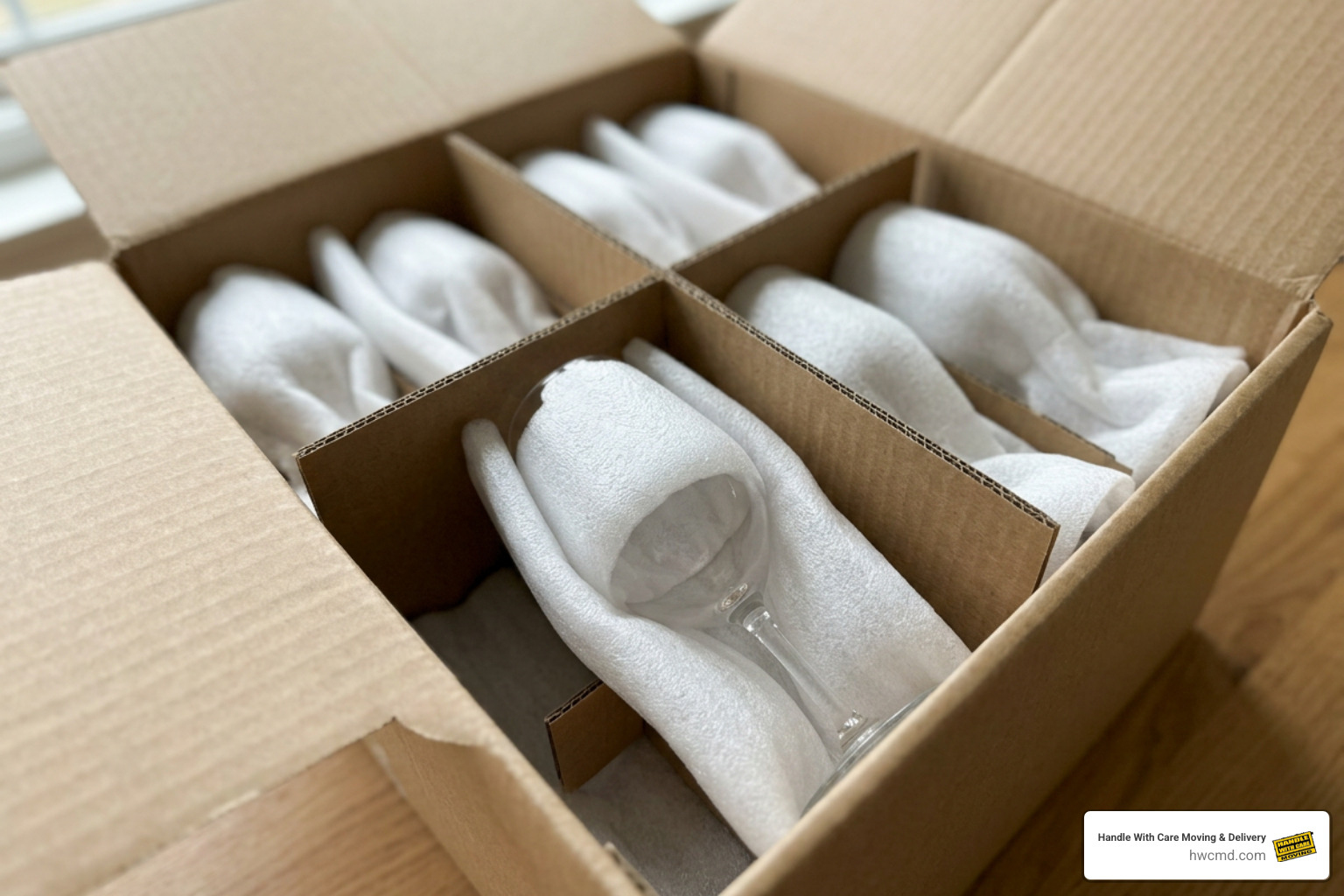
- Isolate Stemware with Dividers: Place corrugated cell dividers inside the box, fill the hollow bowls of wine glasses with crumpled paper to reinforce structural integrity, and place each glass upright in its own cell.
- Eliminate Void Spaces: Fill all remaining space at the top and sides of the box with crumpled paper so nothing shifts when shaken.
Protecting Electronics, Fine Art, and Wardrobe Items
Sensitive consumer electronics and flat-panel televisions require anti-static materials. Standard bubble wrap can generate static electrical charges that damage internal circuit boards. Always wrap televisions, computers, and audio equipment in anti-static foam wraps or pink anti-static bubble cushion before placing them in heavy-duty telescoping cartons with custom foam corner blocks.
For fine art, framed family photographs, and mirrors, start by applying low-tack artist tape in an “X” pattern across the glass to minimize shifting if broken. Wrap the frame in moisture-resistant glassine paper, protect the corners with rigid cardboard edge protectors, wrap the entire piece in large bubble wrap, and slide it into a telescoping picture box.
For clothing, wardrobe boxes allow garments to remain on their hangers, keeping fabrics clean, organized, and ready to hang in your new closets immediately.
How to Calculate Supplies and Navigate Complex Moving Logistics
Estimating moving materials accurately helps prevent mid-packing supply runs or over-purchasing surplus materials. Supply requirements scale based on room count, overall square footage, and home lifestyle.
Managing logistics becomes especially critical when navigating unique architectural layouts. Moving out of multi-story urban walk-ups, historic homes with narrow stairwells, or commercial high-rises requires specialized equipment and planning. Reviewing comprehensive moving information and establishing professional moving protocols helps crews navigate tight corners, freight elevator schedules, and steep street parking without damaging property or belongings.
Frequently Asked Questions About Packing Materials and Services
What is the most effective packing material for fragile items?
The most effective method is a multi-layered packing system rather than a single material. Begin with an unprinted, acid-free newsprint paper or non-abrasive foam pouch directly against the item’s surface to prevent scratches and ink transfer.
Next, wrap the item in small or large bubble cushion with the bubbles facing inward to absorb physical shock. Finally, place the wrapped item into a heavy-duty double-wall box and fill all open voids with crumpled kraft paper or biodegradable peanuts to eliminate internal movement.
How do recyclable padded mailers compare to traditional shipping boxes?
Engineered paper mailers, such as curbside recyclable padded mailers, provide superior protection for small goods, books, and accessories while eliminating the need for bulky outer cartons.
They provide up to 45% greater shock absorption than plastic bubble mailers and meet stringent ISTA 6 Amazon Overbox drop and vibration testing standards. They also reduce dimensional weight (DIM weight) and cut down on waste by utilizing paper-based interior cushioning.
How many moving boxes and packing supplies are needed for a typical apartment?
A typical 1-to-2-bedroom apartment generally requires 30 to 45 assorted corrugated boxes (a mix of small 1.5 cu. ft., medium 3.0 cu. ft., and large 4.5 cu. ft. cartons), 2 to 3 wardrobe boxes, 2 specialty dish barrels, roughly 200 to 300 sheets of clean packing paper (10 to 15 lbs), 100 feet of bubble cushion, and 4 to 6 rolls of pressure-sensitive packing tape.
Conclusion
Selecting high-grade materials and applying structured packing methods is essential for protecting your belongings during any relocation. Handle With Care Moving & Delivery provides professional residential, commercial, and student moving services throughout Ann Arbor, Michigan, and the surrounding areas.
Our experienced, fully insured crews use commercial-grade materials to safeguard your belongings. With transparent 15-minute-increment billing, complimentary protective pad and shrink wrap, no minimum labor hours, and dedicated discounts for students, seniors, and military veterans, we make relocation seamless and stress-free.
Contact us today to receive your custom free quote and explore our complete range of packing services materials to ensure a safe, efficient moving experience.