
How to Declutter Before Moving Without Losing Your Mind

Decluttering Before Moving House: Start With Less to Move
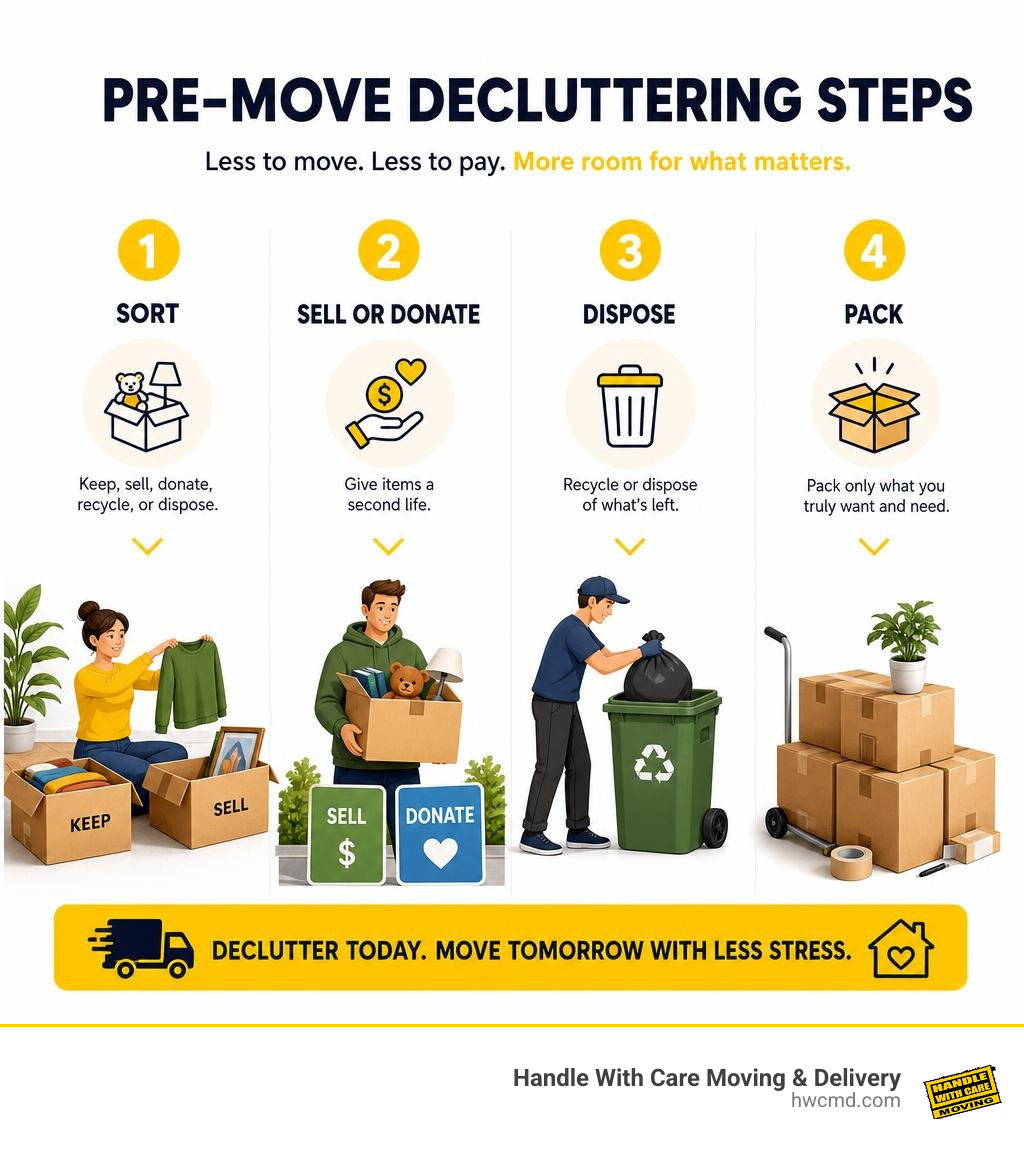
Decluttering before moving house means sorting every nonessential item into keep, sell, donate, recycle, or dispose of before you pack. Start as soon as your move is confirmed – ideally 6 to 8 weeks ahead – and work from low-use spaces, such as storage closets, the garage, or spare rooms, toward the rooms you use every day.
A quick rule makes decisions easier: Would I pay to pack, carry, and unpack this item in my new home? If the answer is no, give it an exit plan instead of putting it in a box.
Moving forces you to handle each possession several times: when packing, loading, unloading, and unpacking. Cutting the items you do not use, need, or truly value can mean fewer boxes, less labor, and a simpler first week in your new place. For budget-conscious local movers, that can make a real difference to the final bill.
I am Anthony Denha, President of Handle With Care Moving & Delivery, and I have helped oversee moves of every size with careful planning and clear communication. Through that work, I have seen how decluttering before moving house helps people avoid rushed packing, reduce the load, and begin their next chapter with more room to breathe.
Why Decluttering Before Moving House Saves Time and Money
When you prepare for a move, every item you own has a physical and financial cost attached to it. Professional moving costs depend heavily on the overall shipment volume, transport weight, required labor hours, and the size of the moving truck needed. Carrying broken furniture, duplicate kitchenware, or clothes you haven’t worn since the late 2010s directly inflates your final moving bill.

When you practice decluttering before moving house, you cut down the total weight and cubic volume of your shipment. This directly translates to needing fewer moving boxes, less packing tape, a smaller truck, and fewer labor hours for loading and unloading. For long-distance moves where charges depend on exact weight, packing clutter guarantees hundreds of dollars in wasted transport costs. Even for local moves billed on hourly rates, moving unnecessary boxes lengthens crew loading times.
| Household Size | Estimated Pre-Purge Volume | Savings from 30–40% Decluttering | Estimated Money Saved |
|---|---|---|---|
| 1-2 Bedroom Apartment | 150–250 Cubic Feet | 10–15 Boxes Saved | $300 – $600 |
| 3 Bedroom House | 400–600 Cubic Feet | 20–35 Boxes Saved | $600 – $1,200 |
| 4+ Bedroom House | 800+ Cubic Feet | 40–60 Boxes Saved | $1,200 – $2,000+ |
Taking time to review our comprehensive Moving Information helps clarify how truck capacity and crew timing work together. The lighter and more streamlined your move is, the faster our crew can wrap, load, and deliver your belongings.
Financial Impact of Decluttering Before Moving House
The financial case for purging before packing is undeniable. Research shows that thorough pre-move decluttering can reduce overall removal and transport fees by up to 40%. Movers who maintain a disciplined 6 to 8 week timeline cut packed volume by an average of 30% to 40%, saving between 15 and 20 boxes on a typical apartment move and up to 50 boxes on a larger family home.
Beyond the direct costs of hiring moving professionals, consider the secondary savings:
- Packing Supplies: Fewer items mean buying fewer specialty boxes, rolls of tape, bubble wrap, and packing paper.
- Destination Storage Expenses: Unpacking in a home free of excess junk eliminates the need to buy extra shelving, plastic storage tubs, or pay for long-term offsite self-storage space.
- Cash Back in Your Pocket: Selling usable, high-value items online or at a garage sale creates extra cash to offset moving expenses.
Key Mistakes to Avoid During Your Pre-Move Purge
Even with the best intentions, it is easy to get derailed during a home purge. We frequently observe several common pitfalls:
- Packing First and Purging Later: This is the single biggest mistake you can make. Taping up boxes full of junk with the intention of sorting through them at your new home simply transfers your clutter and stress across town. You pay to move trash, only to throw it away during unpacking.
- Delay Tactics and Procrastination: Waiting until the week before moving day causes decision fatigue and last-minute panic. Rushed movers inevitably throw everything into boxes without sorting.
- Creating “Maybe” Piles: A “maybe” pile is usually just a box you end up paying someone to move. Indecision slows down your momentum. Enforce definitive decisions: keep, sell/donate, recycle, or toss.
- Guilt Hoarding: Keeping an item solely because a relative gave it to you or because you spent money on it years ago adds emotional guilt to physical clutter. The item’s financial value was spent when you bought it; keeping it now costs you extra space and moving fees.
Proven Frameworks and the 8-Week Timeline
A successful pre-move purge runs on a structured schedule, not on random bursts of motivation. Attempting to clear a three-bedroom house in a single weekend leads to burnout. By spreading the process across a 6 to 8 week timeline and using focused 20-minute sessions, you prevent decision fatigue and keep your home functional right up until moving day.
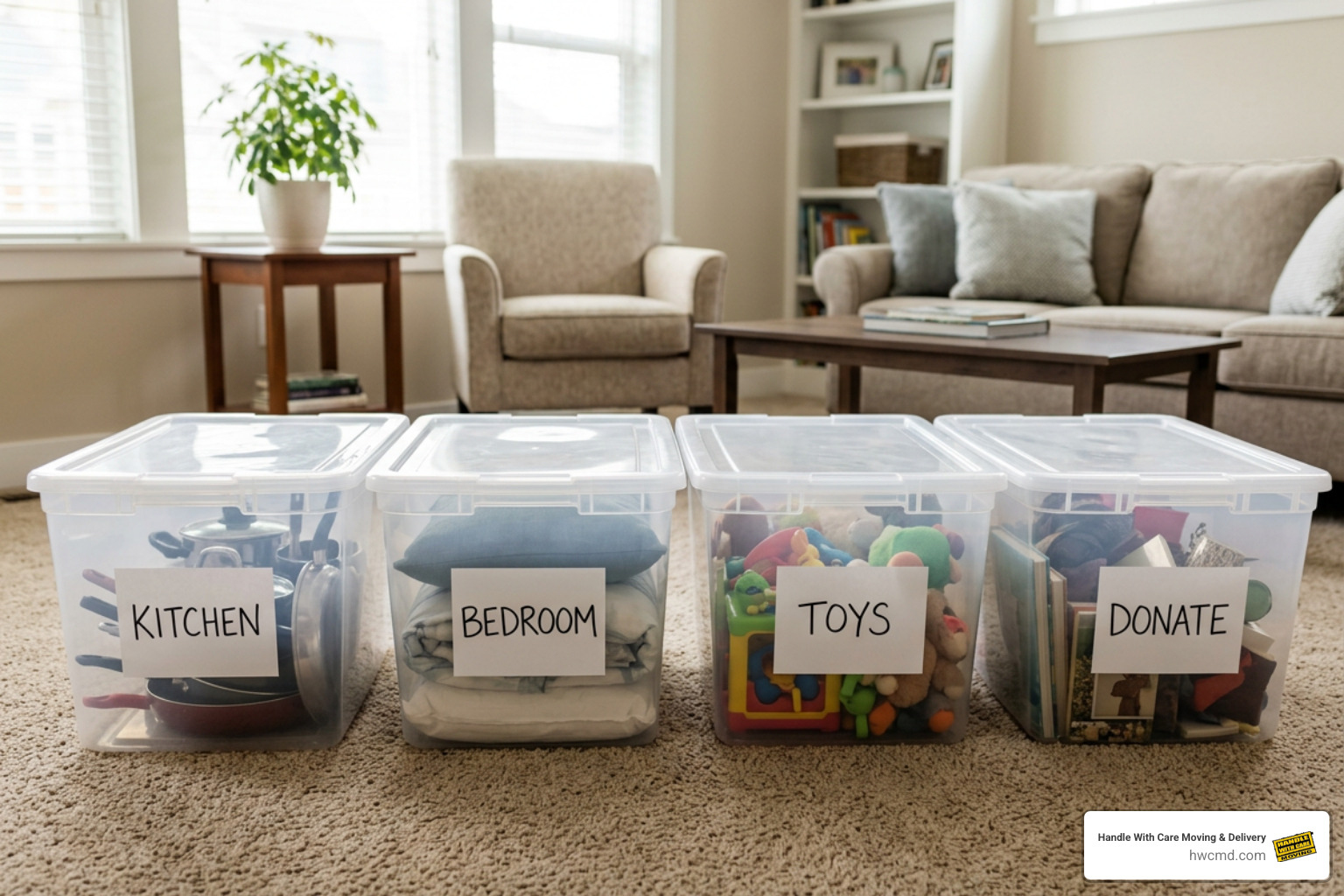
Always begin in low-emotion, low-utility rooms like the attic, basement, garage, or spare room. Starting where sentimental attachment is low lets you make quick, logical decisions and builds momentum before tackling personal spaces like bedrooms or family living rooms.
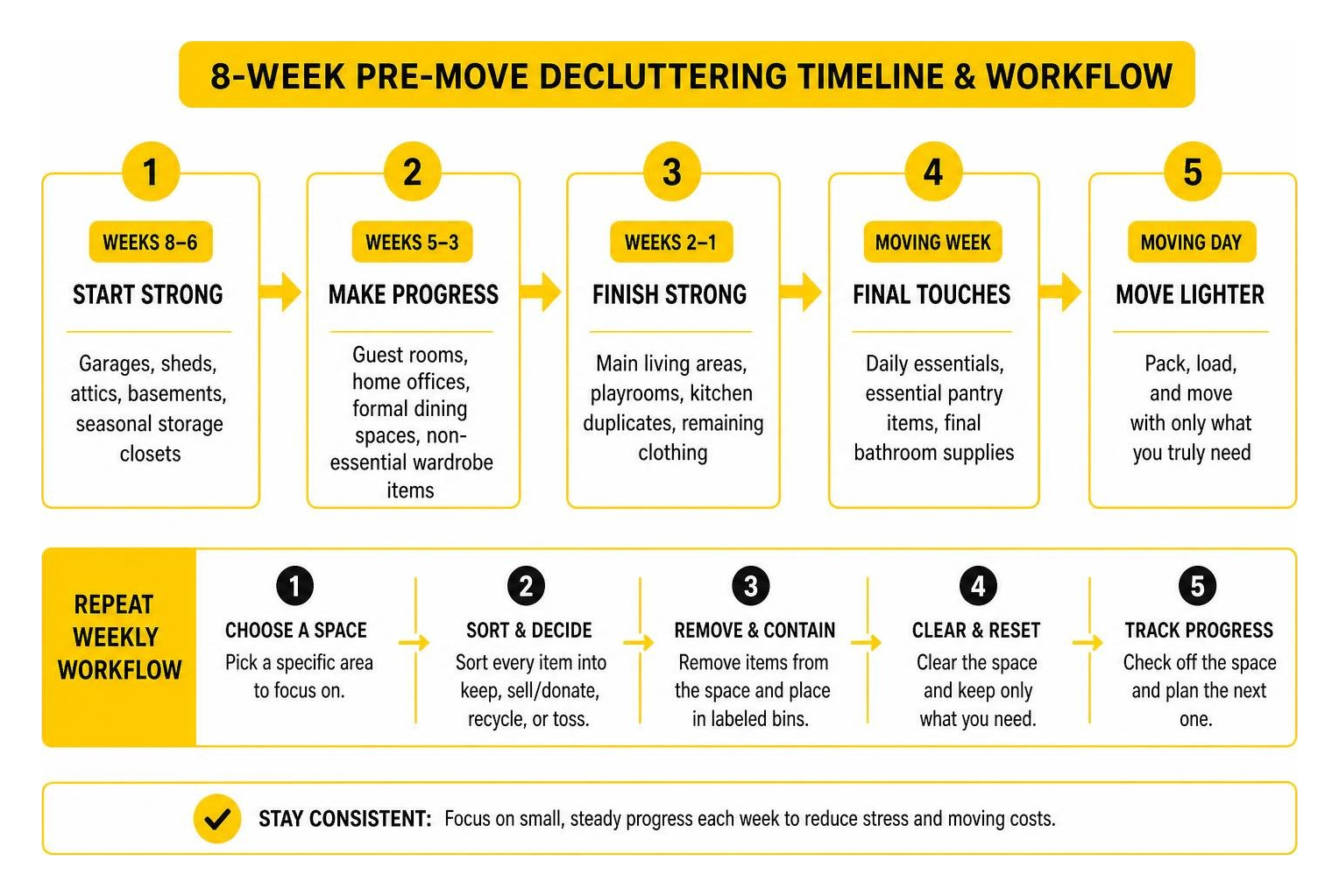
Here is a practical timeline structure you can follow:
- Weeks 8–6: Garages, sheds, attics, basements, and seasonal storage closets.
- Weeks 5–3: Guest rooms, home offices, formal dining spaces, and non-essential wardrobe items.
- Weeks 2–1: Main living areas, playrooms, kitchen duplicates, and remaining clothing.
- Moving Week: Daily essentials, essential pantry items, and final bathroom supplies.
Effective Sorting Systems for Decisive Purging
To keep your momentum strong, use tested decision-making frameworks rather than relying on guesswork. Expert insights from Houex’s room-by-room system guide emphasize that practical decision rules cut moving costs far faster than complicated flowcharts.
Here are the most effective sorting frameworks:
- The Four-Box Method: Set up four clearly labeled containers or designated floor spaces in the room you are clearing: Keep, Sell/Donate, Recycle/Dispose, and Store. Every single object you pick up must go into one of these four areas before you move on to the next.
- The 5-5-5 Rule: When you feel stuck or overwhelmed, set a goal to find 5 items to toss, 5 items to donate, and 5 items to relocate to their proper room. This rapid-fire approach reduces mental friction and can quickly reduce household contents by 25% to 35%.
- The 12-Month Rule: If you haven’t used, worn, or looked at an item in the past 12 months, ask yourself if it really warrants a spot in your new life. Seasonal gear is the exception, but everyday goods, tools, and clothing passed over for a full year should be strongly reconsidered.
- The “Move Test”: Ask yourself the fundamental question: “Would I pay out of my own pocket to put this on a truck, transport it across town, and carry it into my new home?” If the answer is no, give it away.
- The Reverse Hanger Technique: For wardrobes, turn all clothes hangers backward 4 to 6 weeks before moving. When you wear and wash an item, hang it back up normally. By moving week, any hanger still facing backward highlights clothing you never touched.
- A Pre-Move Declutter Checklist: Keep a physical or digital checklist pinned to your fridge, checking off specific drawers, closets, or shelves each day.
For additional room-by-room tips, refer to Surewise’s pre-move decluttering guide to ensure no corner of your home is missed.
Managing Sentimental Items and Undecided Belongings
Sentimental items—like childhood memorabilia, family heirlooms, old photo albums, and handmade kids’ artwork—are notoriously difficult to purge. Emotional attachment can stall your entire move if you tackle them too early.
To manage sentimental items without losing your mind, apply these practical strategies:
- Digitize Physical Items: Scan old letters, children’s school projects, and family photos. Storing high-resolution digital copies on a cloud drive saves valuable physical space while preserving memories.
- Cap Your Sentimental Storage: Limit physical memorabilia to a strict boundary—such as one or two sturdy plastic tubs per family member. Once the bin is full, you must swap items out if you want to add something new.
- Take Photos of Bulky Items: If you are holding onto large items (like an old family desk or vintage decor) purely for memory’s sake, take a beautiful photograph of it, write down the memory in a journal, and let the physical object go to someone who will use it.
- Use Temporary Storage as a Decision Buffer: If you are truly torn on specific items, placing them into temporary storage can provide a cooling-off period. Storing non-essential belongings offsite keeps your moving day manageable and gives you time to evaluate your new space before making a final commitment.
Practical Room-by-Room Pre-Move Execution
Executing a room-by-room purge requires working methodically through the house from least-used spaces to daily living areas. Tackling one room at a time prevents the chaotic feeling of having your entire home upside down at once.
When working through each room, finish the sorting process completely before reaching for packing tape. Mixing sorting and packing creates confusion and leads to mislabeled boxes.
Room-by-Room Checklist for Decluttering Before Moving House
Here is a practical breakdown of what to target in each room of your house:
Kitchen and Pantry
- Duplicates: Keep only your primary set of pots, pans, chef knives, and cutting boards. Donate extra waffle irons, duplicate blenders, and excess travel mugs.
- Storage Containers: Toss mismatched plastic food containers, lids without bottoms, and stained takeout tubs.
- Pantry Goods: Throw out expired canned goods, stale spices, open bags of baking supplies, and half-used pantry items.
Bedrooms and Wardrobes
- Outgrown or Worn Clothing: Donate clothes that no longer fit, garments needing repairs you won’t make, and outdated styles.
- Excess Linens: Keep a maximum of two sets of bed sheets per bed and two bath towels per family member. Donate old towels and blankets to local animal shelters.
- Mismatched Accessories: Purge single socks, worn-out belts, and shoes that cause discomfort.
Living Room and Entertainment Areas
- Outdated Electronics: Safely recycle ancient DVD players, broken remotes, tangled power cords, and obsolete gaming consoles.
- Media Collections: Donate physical DVDs, CDs, magazines, and unread books, transitioning to digital formats or public libraries.
- Unmatched Decor: Pass along lamps, picture frames, and throw pillows that will not fit the color scheme or layout of your new space.
Bathroom and Laundry
- Expired Toiletries: Dispose of expired prescription medications (via pharmacy drop-off boxes), old sunscreens, dried-up nail polish, and ancient cosmetics.
- Sample Bottles: Toss accumulated hotel shampoo bottles, trial samples, and dried-up sponges.
Garage, Shed, and Home Office
- Hazardous Materials: Dispose of old paint cans, motor oil, lawn chemicals, and batteries according to local waste rules (moving companies cannot transport hazardous goods by law).
- Paper Records: Shred outdated tax returns (older than 7 years), old utility bills, and junk paper.
- Broken Tools: Toss rusted hand tools, non-working lawn equipment, and leftover hardware project scraps.
If you are moving with four-legged family members, ensure you keep their essentials accessible. Review our specialized guidance on Relocating With Pets to keep your pets safe and calm throughout the transition.
Selling, Donating, and Disposing of Unwanted Stuff
Once you have sorted your items, execute an exit plan quickly so unwanted items don’t creep back into your living space.
- Selling Items Online: Focus on listing higher-value items like quality furniture, working electronics, or name-brand outdoor gear. Use local online marketplaces and set realistic prices—pricing items at roughly 10% to 20% of original retail value ensures quick sales. Set a hard deadline (e.g., 2 weeks); if an item does not sell by then, convert it to a donation immediately.
- Donating to Local Charities: Group usable clothing, housewares, and furniture together for local thrift stores or charity pickups. Many charitable organizations offer free pickup services for heavy furniture items, saving you transport effort. Always collect tax-deductible receipts for eligible goods.
- Responsible Disposal and Strata Compliance: For broken goods, e-waste, and hazardous waste, schedule a pickup with local municipal waste services or drop them off at designated recycling depots. If you live in an apartment or condominium complex, follow strata and building disposal rules strictly; illegal dumping in shared dumpsters or loading bays can result in heavy municipal or HOA fines (which can reach up to $5,000 in strict strata jurisdictions).
To understand local community removal guidelines and regulations, check with your local municipal waste department for structured advice on waste disposal.
Frequently Asked Questions About Moving and Decluttering
How far in advance should you start decluttering before a move?
You should begin decluttering 6 to 8 weeks before your moving date. Starting early allows you to work through storage areas like garages and attics without stress, list items for sale, arrange charity pickups, and handle unexpected delays without affecting your final packing schedule.
What should you do with items you want to keep but don’t need immediately?
For seasonal items, holiday decorations, or belongings you want to hold onto while staging your home or settling in, consider using temporary offsite storage. Secure self-storage acts as a decision buffer, keeping your main living spaces clear while protecting your possessions until you are ready for them.
How do you decide what to keep vs discard when packing?
Apply the “Move Test”: ask yourself if the item is worth the physical effort and financial cost to pack, transport, and unpack. If an item has not been used in the past 12 months, is damaged, is a duplicate, or costs less to replace at your destination than to move on the truck, it should be sold, donated, or recycled.
Conclusion
Decluttering before moving house is the single most effective action you can take to lower your moving costs, streamline packing, and protect your peace of mind. By starting early, following an 8-week schedule, and using clear sorting frameworks, you turn what could be a overwhelming chore into a rewarding reset for your home.
When you are ready to wrap up your preparations, gathering the right Packing Services Materials ensures your kept belongings travel safely.
At Handle With Care Moving & Delivery, based in Ann Arbor, Michigan, we specialize in delivering expert, careful handling with complete transparency. We offer transparent 15-minute increment pricing, complimentary protective materials like free pad and shrink wrapping, and no-minimum labor hour requirements—along with dedicated discounts for students, seniors, and veterans.
Contact our friendly team today to request a quote for our professional moving services, and let us handle the heavy lifting while you enjoy a fresh, clutter-free start in your new home!