
The Best Easy Packing Ideas to Save Space and Time

Easy Packing Ideas That Save Space and Time
The best easy packing ideas start with a simple system: sort first, pack by purpose, and label everything clearly. For travel, plan mix-and-match outfits, roll soft clothes, use packing cubes, and keep medication, documents, chargers, and one change of clothes in your carry-on. For a move, declutter before buying boxes, pack heavy items in small boxes, protect fragile items with soft padding, and label each box by room and number.
These small choices prevent the two biggest packing problems: bringing too much and losing track of what you packed. They also make unpacking faster, whether you are opening a suitcase at a hotel or settling into a new Michigan home.
I am Anthony Denha, President of Handle With Care Moving & Delivery. I help oversee local and short-distance moves where practical easy packing ideas, careful wrapping, and clear box organization make move day less stressful.
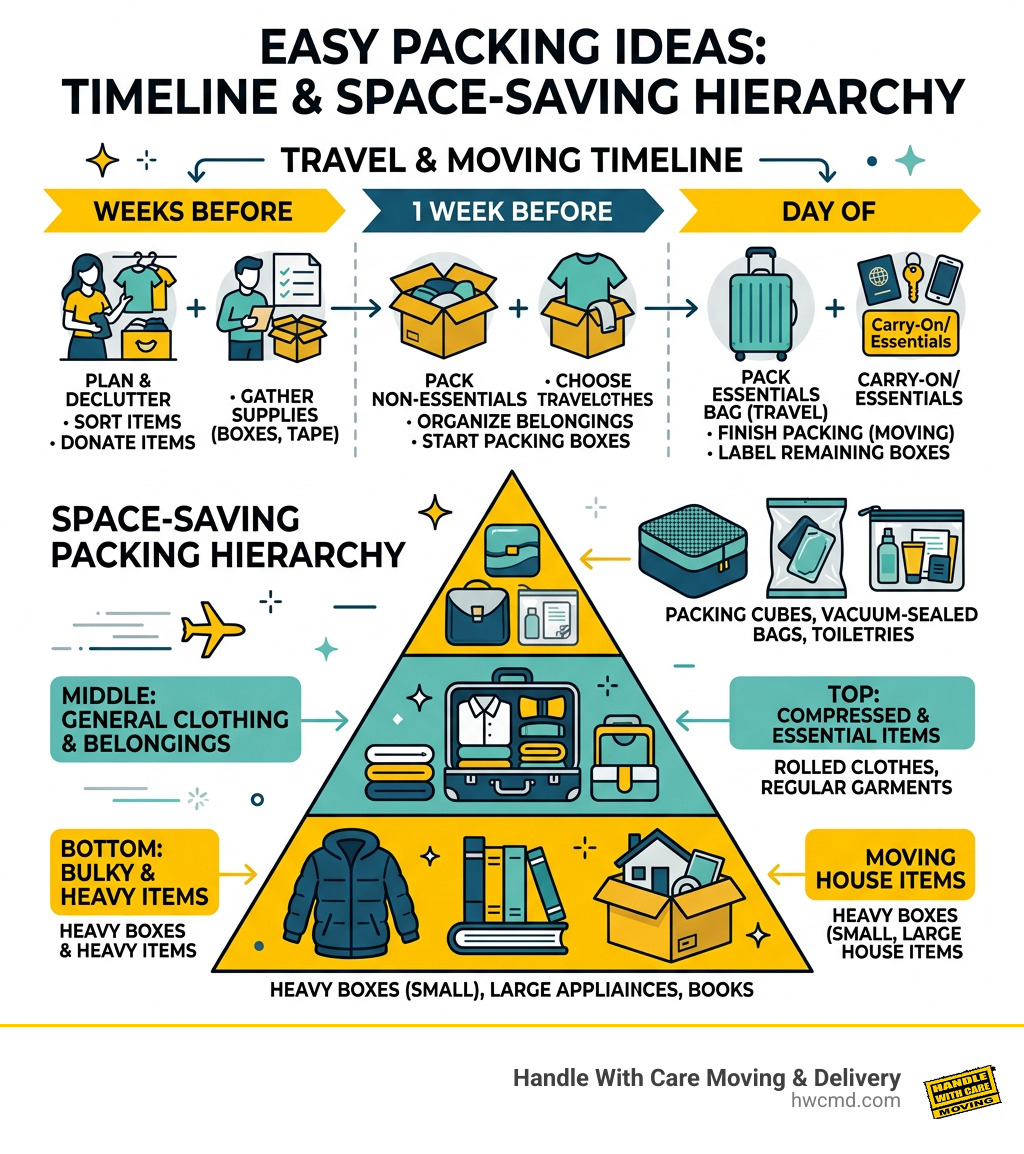
Simple guide to easy packing ideas terms:
- best way to pack dishes for shipping
- best way to pack dishes for storage
- best way to pack dishes to move
Smart Pre-Packing Strategies for Travel and Home Relocation
Whether preparing for a week-long flight or packing up an entire household, chaos happens when you start tossing items into containers without a clear roadmap. Approaching the task with a systematic workflow prevents last-minute panic, saves physical energy, and eliminates unnecessary luggage fees or moving truck space.
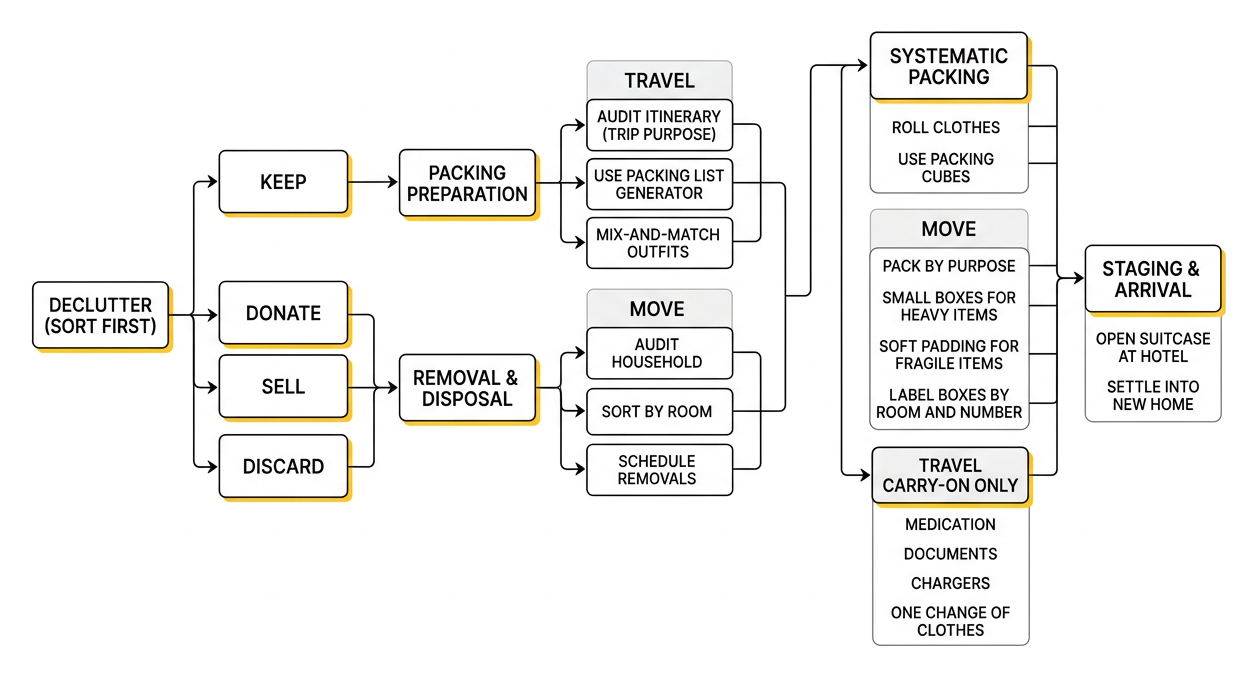
Early Decluttering and Inventory Planning
The most effective way to save space is simply not packing items you do not need. For travel, audit your itinerary to ensure you do not bring extra clothing for hypothetical scenarios that will never happen. For a relocation, knowing how to declutter before moving lets you sort your household items into distinct piles: keep, donate, sell, and discard.
Start this sorting process at least four to six weeks before a move. Purging unwanted decor, expired pantry goods, and unworn clothing cuts down on the volume of boxes required. For travelers, using a digital packing list generator helps tailor wardrobe selections to real-time weather forecasts and trip duration, ensuring every packed item serves a practical purpose.
Sourcing the Right Supplies and Sizing Guidelines
Having the right containers and tools transforms packing from a frustrating chore into an efficient process. Matching the weight and fragility of your goods to the right container size avoids broken items and pulled muscles:
- Small Containers (1.5 cu ft): Ideal for dense, heavy goods like books, tools, canned food, and liquid toiletries.
- Medium Containers (3.0 cu ft): Best for kitchen cookware, small appliances, toys, and folded clothing.
- Large Containers (4.5 cu ft): Designed for lightweight, bulky goods such as pillows, linens, towels, and winter jackets.
- Specialty Wardrobe Boxes: Allow clothes to remain on hangers, preserving their shape and making closet transfers effortless.
Mastering these packing 101 basics prevents boxes from collapsing under weight. Select commercial-grade corrugated cardboard boxes, heavy-duty packing tape, and unprinted newsprint. Exploring a guide to suitable packing materials provides deeper insight into which materials best absorb shock during transit.
For flight travel, double-check standard airline restrictions: carry-on luggage generally must fit within 22″ × 14″ × 9″ dimensions, while checked bags must stay below the standard 50-pound (23 kg) limit. Keeping a handheld digital luggage scale nearby lets you verify your bag’s weight before heading out the door.
Easy Packing Ideas for Luggage and Travel Efficiency
Fitting everything into personal luggage requires strategic organization and an understanding of garment geometry. Applying simple space-saving habits allows you to travel light without sacrificing style or utility.
Wardrobe Capsule Coordination and the 3-3-3 Formula
Overpacking often stems from packing individual pieces of clothing rather than cohesive outfits. Building a travel capsule wardrobe around a unified color palette—such as neutrals paired with two coordinating accent tones—allows every top to work seamlessly with every bottom.
Selecting the right textiles also minimizes luggage bulk while maximizing wearability:
- Merino Wool: Naturally odor-resistant, temperature-regulating, and quick-drying, making it perfect for multi-day wear.
- Synthetic Performance Blends: Lightweight, moisture-wicking, and wrinkle-resistant.
- Structured Linens and Cottons: Require minimal folding and can be easily layered for varying temperatures.
To streamline your bag for a week-long journey, try the 3-3-3 carry-on method. By packing three versatile tops, three coordinating bottoms, and three functional pairs of shoes, you create up to 27 distinct outfit combinations from just nine core pieces. Planning a quick mid-trip sink wash or booking accommodations with laundry access keeps your luggage compact and manageable.
Space-Saving Luggage Techniques: Rolling, Bundling, and Compression Cubes
How you fold and arrange your clothes significantly alters the amount of usable luggage space. Rolling casual, soft garments like t-shirts, athletic wear, and jeans into tight cylinders eliminates air pockets and reduces fabric creasing. For structured garments, combine rolling with compression cubes or try bundle wrapping, which wraps tailored garments around a soft core to prevent sharp folds.
| Packing Method | Best Suited For | Space Savings | Wrinkle Prevention | Packing Speed |
|---|---|---|---|---|
| Tight Rolling | T-shirts, casual pants, knits, activewear | High (saves ~30% space) | Moderate to High | Fast (10–15 sec per roll) |
| Compression Cubes | Bulky sweaters, down jackets, fleece | Very High (reduces 30–40% bulk) | Moderate | Very Fast (pack & zip) |
| Bundle Wrapping | Tailored suits, dress shirts, slacks | Moderate | Exceptional | Slower (requires careful layering) |
| Flat Folding | Structured blazers, stiff linens, formal wear | Low to Baseline | Fair (prone to fold lines) | Moderate |
Using an efficient 20-minute suitcase packing method helps establish a reliable loading sequence: place heavy items near the wheels, stack rolled clothing in the center, and lay flat-folded structured pieces across the top.
Carry-On Essentials, Liquid Rules, and Tangle-Free Accessories

Always assume checked baggage could be delayed. Packing critical necessities in your carry-on or personal item guarantees that a lost bag does not disrupt your trip. Keep prescription medications, essential electronics, charging cables, travel documents, and a fresh change of clothes within arm’s reach.
When packing personal care items, remember the TSA 3-1-1 rule: all liquids, gels, and aerosols must be in containers of 3.4 ounces (100 ml) or less, stored together inside a single, transparent, quart-sized bag. You can also swap liquid formulas for solid alternatives, such as shampoo bars, toothpaste tablets, and solid deodorants.
Keep your small personal accessories neat with these simple organization steps:
- Jewelry Organization: Store small rings, stud earrings, and delicate chains inside a compact 7-day pillbox to prevent tangled messes.
- Necklace Protection: Thread delicate necklace chains through a reusable drinking straw before fastening to keep them completely knot-free.
- Cable Management: Secure charging cords with small velcro ties or rubber bands and store them together in a small zippered pouch alongside a portable power bank.
Easy Packing Ideas for Bulky Items and Footwear
Shoes and heavy outerwear occupy substantial suitcase real estate if packed carelessly. Limit footwear to a maximum of three pairs: one comfortable walking sneaker, one dressier option, and one activity-specific pair (such as hiking boots or sandals).
Save space by wearing your bulkiest shoes, heaviest coat, and thickest sweater during transit. For shoes inside your suitcase, arrange them heel-to-toe along the bottom perimeter near the wheels to balance the luggage weight. Fill the hollow inside of each shoe with rolled socks, underwear, or small accessories to preserve their structure and reclaim wasted space. Finally, slip shower caps or reusable shoe bags over the soles to keep dirty treads from touching clean clothes.
Streamlined Packing and Organization Techniques for Moving House
Relocating an entire home involves different challenges than packing a suitcase. The focus shifts toward heavy-duty physical protection, weight distribution, and a clear inventory system that simplifies move-in day.
Alphanumeric Box Labeling and Color-Coded Room Tracking
Opening unmarked, generic brown boxes in a new living room is a surefire way to cause confusion. Creating a numbered box inventory with color coding ensures every container arrives in its intended room without hesitation.
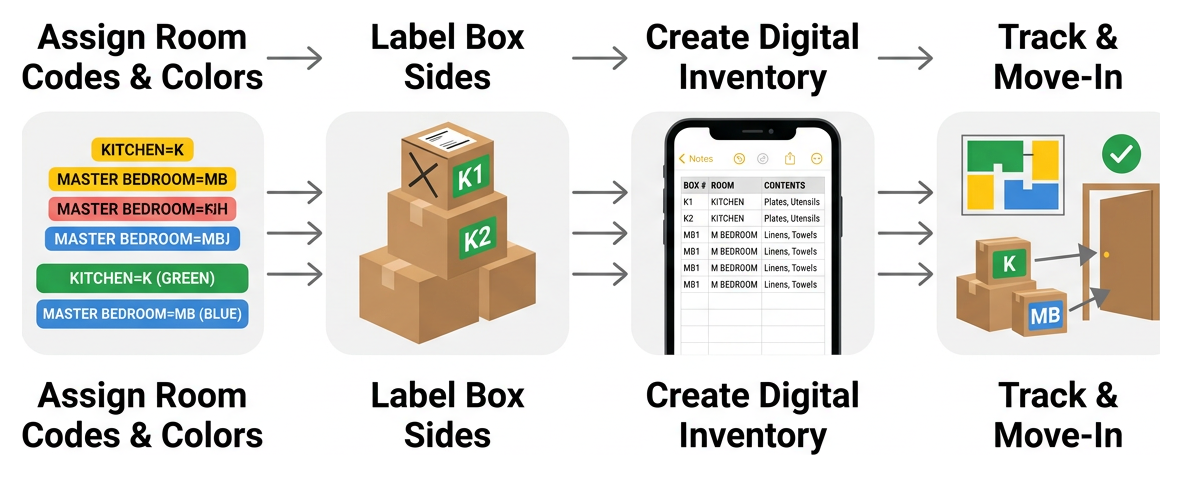
Assign an alphanumeric code and color to every room (for example, Kitchen = K1, K2; Master Bedroom = MB1, MB2). Use vibrant, color-coded tape or bold markers to write the code on the sides of every box rather than the top, keeping labels readable even when boxes are stacked. Maintaining a running inventory list in a notes app or digital spreadsheet lets you search for specific items in seconds. Following these moving tips keeps move day structured and stress-free.
Protecting Fragile Dishware, Electronics, and Awkward Decor
Breakables need intentional padding and proper positioning to survive road vibrations:
- Dishes and China: Never pack ceramic plates flat. Wrap each plate in unprinted newsprint or bubble wrap and place them vertically on edge, like records in a crate. Learn the best way to pack dishes for a move using dish barrels with corrugated cell dividers to keep stemware safe.
- Electronics: Photograph the back of your television, sound systems, and desktop computers before unplugging cords. Bundle each cord with painter’s tape and label its matching port. Wrap screens in thick anti-static bubble wrap and cushion them with specialized corner guards.
- High-Value Decor and Art: Wrap framed paintings and delicate mirrors in fitted glass-packs. For irreplaceable heirlooms, marble tabletops, or delicate antiques, exploring custom crating services offers tailored wooden support for maximum protection.
First-Night Essentials Box and Weight Management
Packing an “Open First” essentials box is one of the easiest ways to ensure a restful first night in your new home.
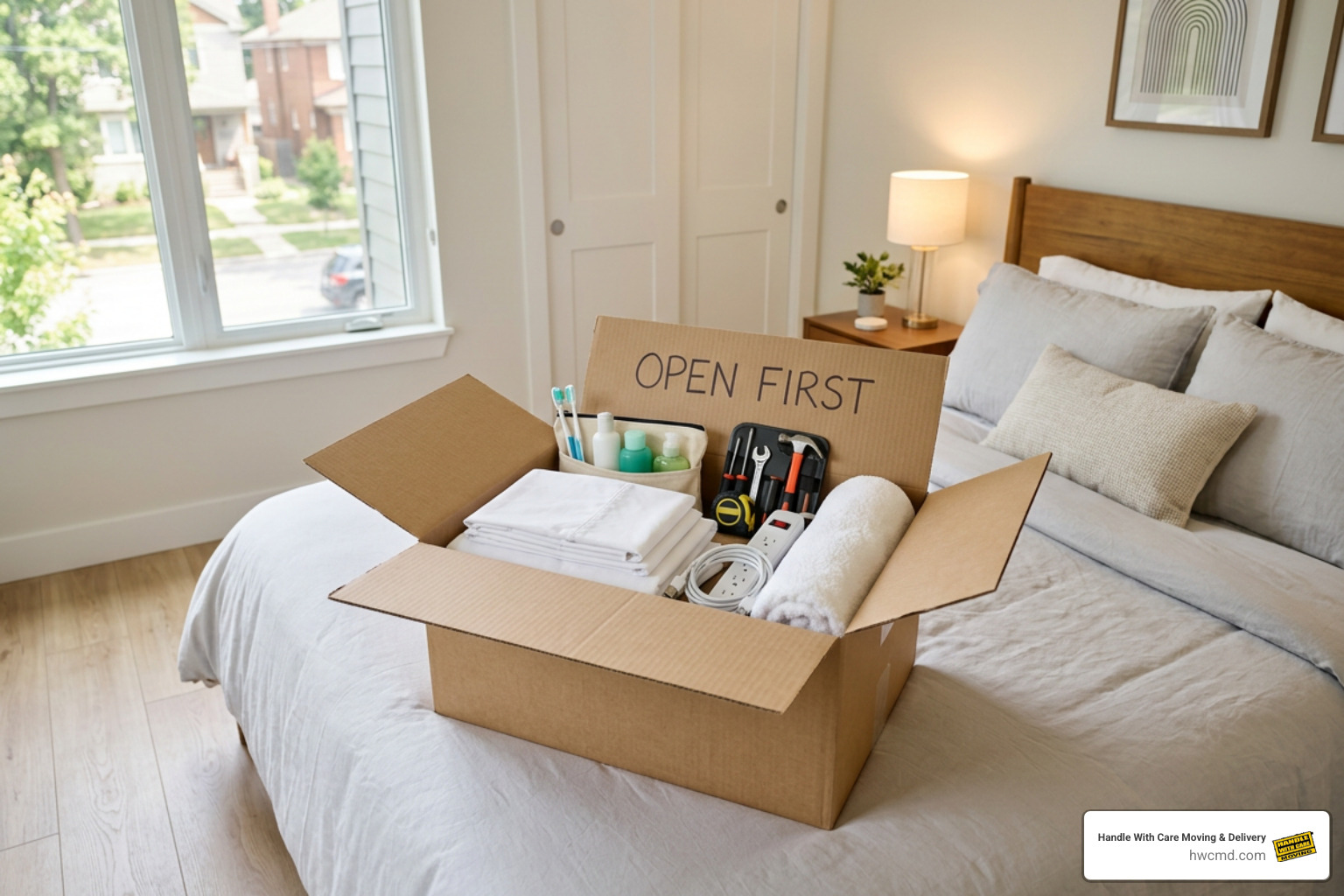
Your first-night essentials kit should include:
- Fresh bed linens, pillows, and basic bath towels
- Travel-size toiletries, hand soap, and toilet paper
- Basic toolkit (screwdriver, utility knife, adjustable wrench, tape measure)
- Phone chargers, power strips, and extension cords
- Pet food, bowls, and essential medications
- Disposable or camp-style dining utensils, paper plates, and bottled water
When filling standard boxes, adhere to the 50-pound weight ceiling. Always pack heavy items like books, cast iron pans, and hand tools into small boxes, reserving large containers for lightweight items like pillows, blankets, and lampshades.
Simple, Low-Cost Household Packing Hacks
You do not need to spend a fortune on specialty packaging supplies. Repurposing everyday items from around your home provides fast, protective, and budget-friendly alternatives.
Budget-Friendly and Easy Packing Ideas Using Household Items
Make use of household goods you already own to speed up packing and protect your belongings:
- Garbage Bag Wardrobe Trick: Group 10 to 15 hanging garments together on their hangers, pull a clean heavy-duty drawstring trash bag up over the clothes from the bottom, and tie the drawstrings around the metal hooks. Unpacking at your new place takes seconds.
- Plastic Wrap Bottle Seal: Unscrew the caps of shampoo bottles, body lotions, and cooking oils. Lay a small square of plastic cling wrap over the bottle’s neck and screw the cap back on tightly to prevent mid-transit leaks.
- Sock Padding for Glassware: Slip clean, thick winter socks over drinking glasses, ceramic mugs, or spice jars before packing them into boxes to provide instant cushioning without extra paper waste.
- Rolling Suitcase Book Transporter: Instead of lifting heavy cardboard boxes filled with hardcovers, load heavy books into your wheeled travel suitcases to roll them effortlessly to the truck.
- Contact Lens Cosmetic Cases: Fill clean contact lens cases with liquid foundation, night creams, or spot treatments for short weekend trips instead of packing full-sized bottles.
Many of these same domestic time-savers translate beautifully into an outfit-based packing system, where individual daily outfits are pre-assembled and rolled together for quick access.
When to Transition from DIY Hacks to Professional Packing Support
While household hacks are great for small tasks and light relocations, large-scale moves involving high-value belongings, tight timelines, or heavy furniture often benefit from dedicated hands. Choosing to hire full service packers eliminates physical exhaustion, minimizes damage risks, and frees up your schedule to focus on family and work.
Opting for reputable local packing services ensures your belongings are secured with professional-grade moving blankets, specialty boxes, and heavy-duty shrink wrap.
Frequently Asked Questions About Easy Packing Ideas
How do you pack a suitcase efficiently without wrinkling clothes?
To avoid wrinkles, choose garments made of wrinkle-resistant textiles like merino wool, jersey, or synthetic performance knits. Roll soft items tightly instead of folding them along sharp creases. For formal clothing such as dress shirts and tailored blazers, fold them flat using dry-cleaner plastic bags between garments to reduce friction, or lay them across the top of packed compression cubes.
What items should you pack first when moving to a new home?
Begin packing non-essential, decorative, and rarely used belongings four to six weeks before your move date. Start with wall art, framed photos, seasonal holiday decor, out-of-season wardrobes, guest bedroom linens, formal dishware, and stored book collections. Packing these areas early clears out space without disrupting your everyday living routine.
What is the 3-1-1 liquids rule for carry-on luggage?
The TSA 3-1-1 liquids rule states that all liquids, gels, creams, pastes, and aerosols brought in a carry-on bag must be stored in containers holding 3.4 ounces (100 ml) or less. All individual containers must fit comfortably inside one clear, transparent, quart-sized resealable plastic bag, with a limit of one bag per passenger. You can bypass this restriction by choosing solid toiletries like bar soaps and solid deodorants.
Conclusion
Packing efficiently is all about having a clear system. By decluttering in advance, adopting space-saving techniques like tight rolling and compression cubes, and using smart labeling methods, you can take the stress out of preparing for any journey or household relocation.
If you are planning an upcoming household move, our experienced crew at Handle With Care Moving & Delivery is ready to help. Based in Ann Arbor, Michigan, we offer complete moving and packing services with transparent 15-minute increment billing, no labor minimums, and complimentary pad and shrink wrap protection for your furniture. We also proudly provide dedicated discounts for seniors, students, and military veterans.
Contact our team today to learn more about our relocation and moving services and let our professionals handle the heavy lifting with the care you deserve.