
A Realistic Guide to Household Goods Packing Services Before You Move
Choosing Household Goods Packing Services for Your Move
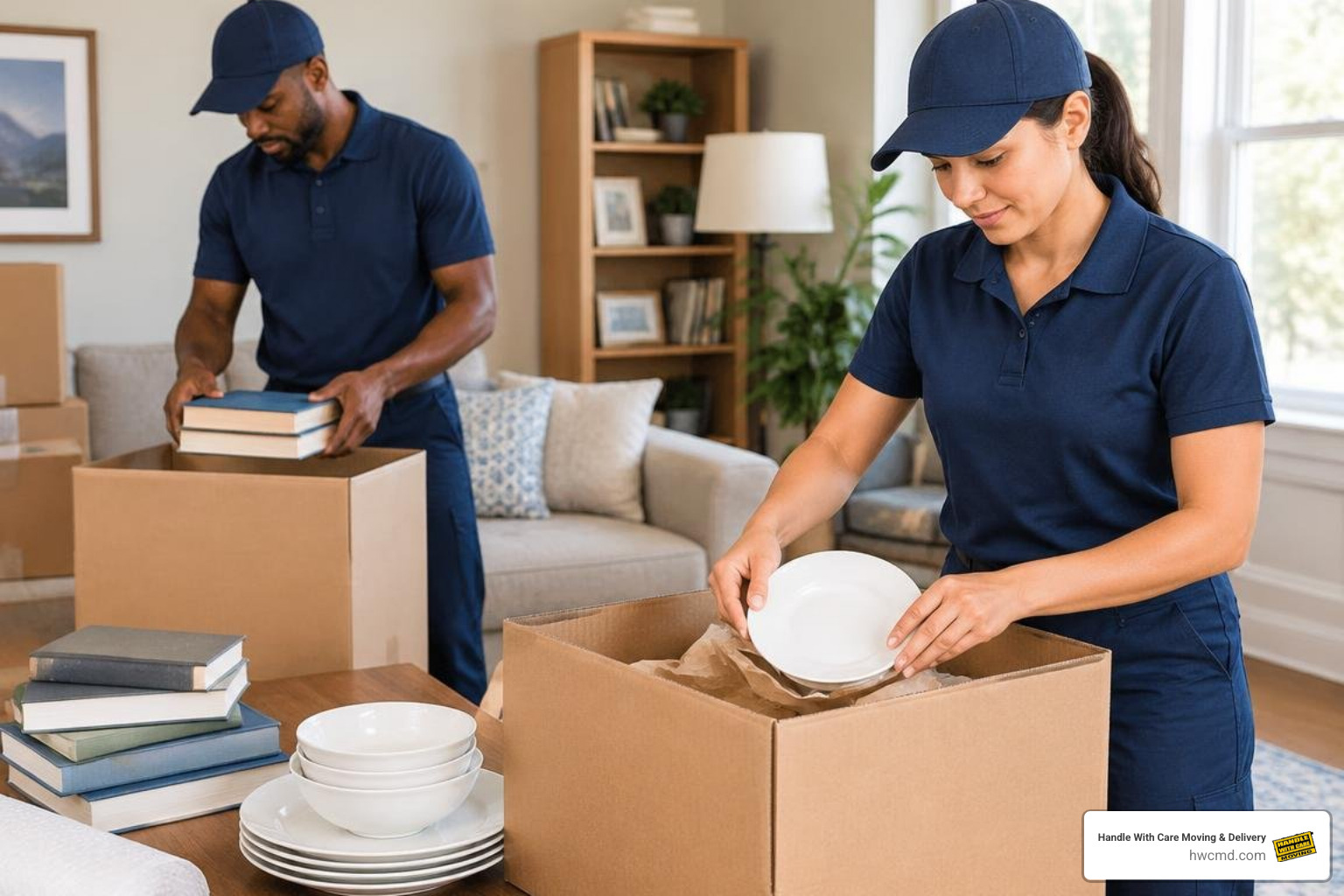
Household goods packing services come in three main forms: full packing for your entire home, partial packing for selected rooms, and specialty packing for fragile or awkward items. For a budget-conscious local move, packing everyday items yourself and getting help with breakables may be the best fit. Compare quotes by labor, materials, and the number of items to be packed. Ask how coverage applies to items you pack yourself before you decide.
I’m Anthony Denha, president of Handle With Care Moving & Delivery, where I oversee crews providing household goods packing services. I’ll walk you through what to ask, what to prepare, and how to choose the right level of help.

Household goods packing services terms at a glance:
Core Tiers of Household Goods Packing Services
When you evaluate different relocation options, understanding the spectrum of service tiers ensures you pay only for what you genuinely need. Professional moving crews do not treat every residence identically. Instead, services range from turn-key labor to targeted assistance for high-risk rooms.
Knowing what to expect when hiring movers who pack everything helps you balance your budget against your available time and physical energy.
| Service Tier | Best Suited For | What Is Included | Customer Responsibilities |
|---|---|---|---|
| Full Packing | Busy households, large homes, corporate or long-distance relocations | Every drawer, closet, cabinet, and decorative item packed and labeled | Decluttering, sorting personal paperwork, setting aside daily essentials |
| Partial Packing | Budget-conscious moves, renters, hands-on homeowners | Selected high-risk zones (e.g., kitchen, china cabinets, fragile decor) | Packing non-fragile bedrooms, linens, clothing, and everyday items |
| Specialty Crating & Packing | Homes with valuable collections, fine art, heavy antiques | Custom wooden crating, export wrapping, tailored foam stabilization | Providing item dimensions, provenance/appraisal details if needed |
| DIY Packing | Minimalist moves, tightest possible budget | Materials purchased by owner; loading/transit handled by movers | Sourcing supplies, boxing every possession, meeting the transport deadline |
Full-Service Packing vs Partial Packing Options
Full-service packing takes care of the entire packing cycle from start to finish. Our team arrives with cartons, paper, shrink wrap, and tape, systematically boxing your entire residence room by room. We wrap furniture, organize drawer contents into categorized cartons, and label every box with its destination space. Many homeowners also opt for destination unpacking services, where crews unbox items, place them onto flat surfaces, and haul away all discarded cardboard and packing paper. Learning how full service packers save sanity usually comes down to realizing you will not have to live out of half-packed boxes for weeks.
In contrast, partial packing targets specific areas where homeowners feel the greatest risk of breakage or fatigue. The kitchen is the most common candidate. A single kitchen often holds hundreds of delicate items: stemware, porcelain plates, ceramic bakeware, small appliances, and pantry goods. By booking crews solely for the kitchen, delicate displays, and framed wall art, you eliminate the hardest labor while keeping costs manageable by handling linens, clothing, and books yourself.
Specialty Household Goods Packing Services for High-Value Items
Certain possessions require engineering beyond standard cardboard boxes. Items like solid marble tabletops, oversized gilded mirrors, crystal chandeliers, bronze sculptures, and gallery-grade oil paintings cannot withstand transit without rigid, custom-built protective structures.
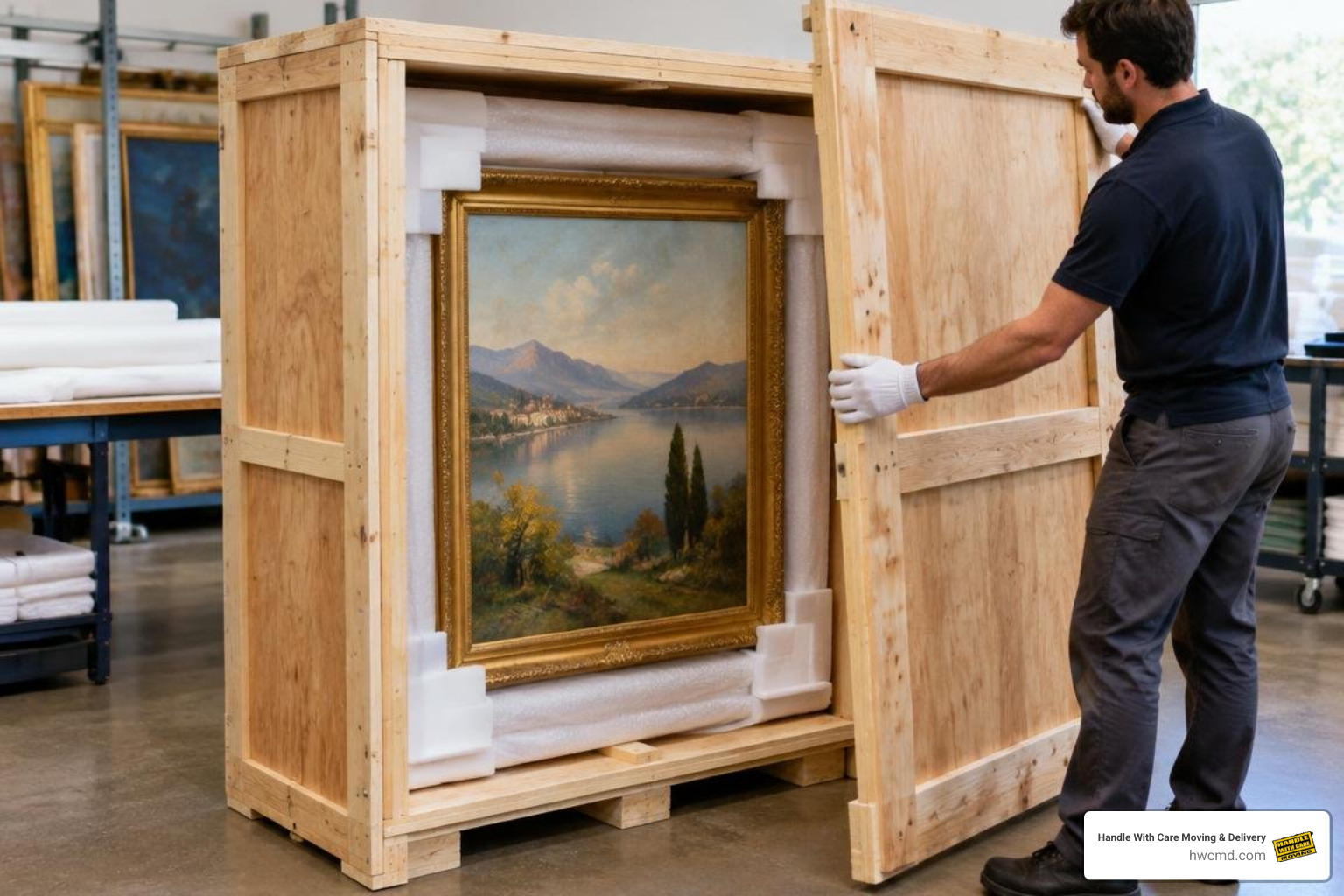
Specialized handling uses non-abrasive acid-free glassine paper, moisture barriers, foam blocking, and exterior wooden crates constructed precisely to the object’s dimensions. Understanding how custom crating services protect valuables allows collectors and designers to safeguard delicate pieces. For fragile canvases and sensitive mediums, consulting The Professional Artists Guide to Packaging and Crating Materials highlights why tailored timber encasements prevent impact, flexing, and pressure shifts during transport.
Professional Packing vs. DIY: Risk, Time, and Insurance
Choosing between packing on your own or delegating the job to a professional crew is fundamentally a balance of risk management, physical labor, and liability protection.
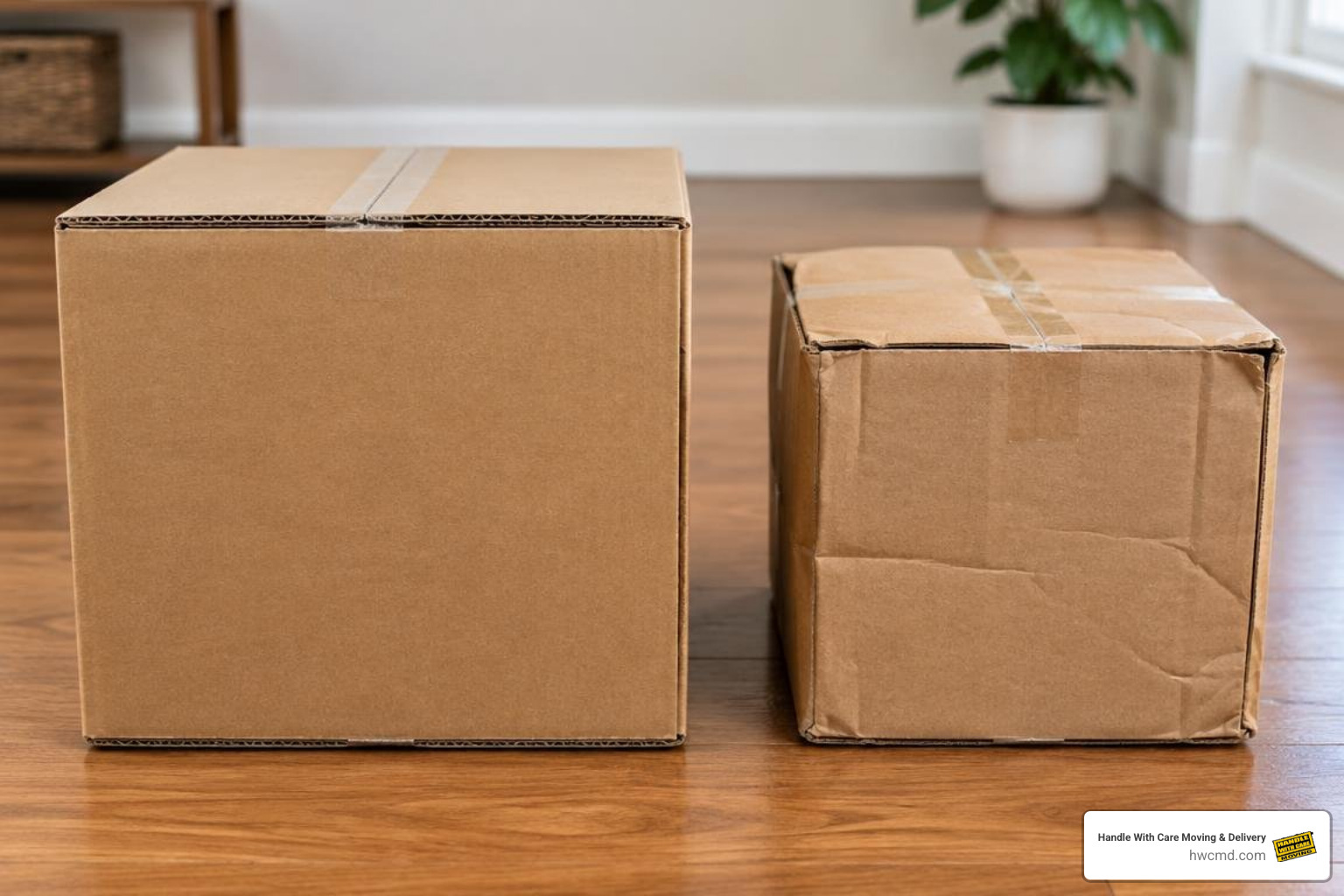
A common mistake is using worn grocery cartons or single-wall utility boxes for heavy, delicate goods. Reviewing a practical guide to packing materials options reveals that commercial-grade cartons feature specific burst-strength ratings designed to bear vertical weight inside a moving truck without collapsing.
Carrier Liability and Packed-by-Owner Insurance Restrictions
The most critical operational difference between self-packing and hiring a professional service is transit liability and cargo valuation coverage. Under standard transportation regulations, moving companies are not liable for internal breakage inside boxes packed by the customer—often marked on manifests as PBO (Packed by Owner).
When our crews pack your goods, our company assumes professional responsibility for the structural integrity of the packing job. If an item packed by our trained staff breaks during normal transit, it qualifies for carrier valuation claims. Conversely, if you pack your own heirloom crystal in newspaper inside a salvaged box and it arrives shattered, carriers will legally deny the claim unless there is obvious, catastrophic external crush damage to the carton itself.
Physical Labor Demands and Timeline Management
Packing a three-bedroom home independently often requires 40 to 60 hours of focused labor. That translates to working nights and weekends for nearly a month, leading to moving fatigue, disorganization, and rushed, inadequate packing on moving day.
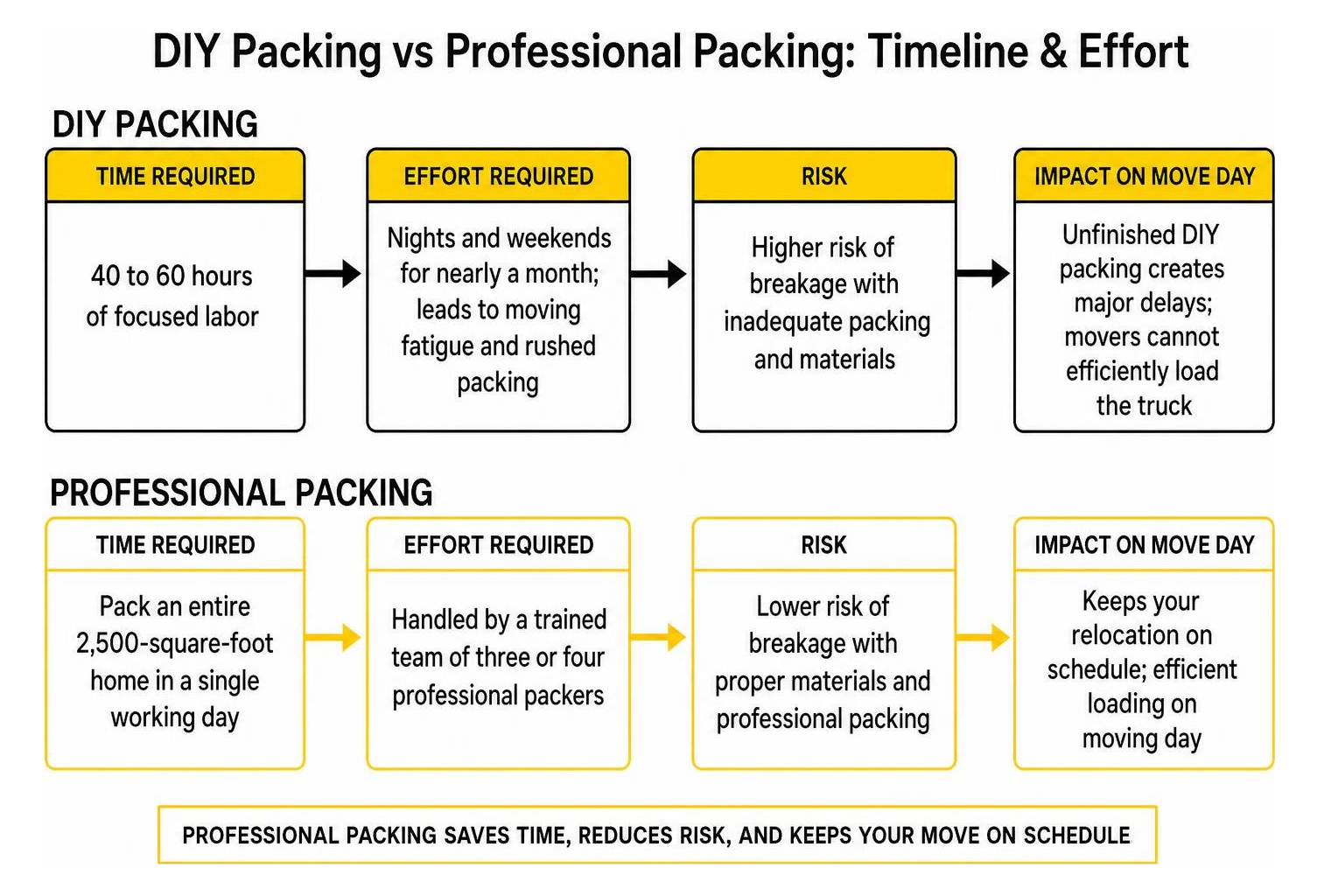
When schedules slip, unfinished DIY packing creates major delays on moving day. Movers cannot efficiently load a truck if they are stepping around open dressers and loose countertop items. Mastering packing 101 fundamentals means respecting your time limits. A trained team of three or four professional packers can systematically pack an entire 2,500-square-foot home in a single working day, keeping your relocation on schedule.
Essential Materials and Protective Packing Techniques
High-end packing is an applied skill that relies on specific physical principles: shock absorption, void filling, edge reinforcement, and surface protection. Reviewing a comprehensive guide to suitable packing materials demonstrates that professional movers use curated supplies rather than random store-bought wraps.
Professional materials and their practical uses include:
- Heavy-Duty Furniture Blankets: Thick woven pads that absorb kinetic shocks and shield polished wood or leather finishes from friction.
- Virgin Newsprint Paper: Unprinted, ink-free wrapping paper used to cushion dishware without transferring smudged ink onto porous ceramics.
- Polyethylene Stretch Wrap: Elastic plastic film that locks moving parts, keeps doors closed on dressers, and prevents moisture intrusion without leaving sticky adhesive residue.
- Triple-Wall Corrugated Cartons: Heavy-gauge boxes built specifically for books, records, tools, and heavy machinery parts.
- Telescoping Picture Cartons: Multi-part interlocking cardboard sleeves that adjust to fit framed artwork and large beveled mirrors securely.
For large furniture pieces, our crews follow proven furniture packing step-by-step protection, disassembling bed frames, wrapping table legs individually, and shielding high-wear corners with durable foam edges.
Securing Glassware, Antiques, and Sensitive Electronics
Kitchen and dining fragile items demand specialized dish-pack cartons. These containers feature double-thick corrugated walls and can be fitted with cellular divider sets that keep wine stems and tumblers physically isolated from one another.
When packing plates, our packers never lay pieces flat. Plates must be bundled in bundles of unprinted newsprint and placed vertically on their edges along a thick cushion of crumpled paper at the bottom of the carton. This edge-loading technique distributes vertical compression down the strongest axis of the plate rather than across its fragile center.
For sensitive home electronics, audio components, and computer towers, packers use anti-static bubble wrapping rather than standard plastic bubble sheeting. Standard bubble wrap generates electrostatic discharge (ESD) that can fry delicate circuit boards. Cords are coiled, labeled, and paired with their respective units to make setting things up at your new home straightforward.
International Export Standards vs Local Transit Protection
A local move across town involves one loading cycle and one delivery cycle. International relocations or long-haul domestic container moves, however, subject household goods to multiple handling points, port cranes, ocean moisture, barometric pressure shifts, and customs inspections.
Overseas transit demands export wrapping—a specialized technique combining non-abrasive inner paper wraps, multi-layer corrugated wrap, and sealed waterproof membranes. For international logistics, overseas movers and specialized packing companies in Dubai build certified heat-treated timber crates (ISPM-15 compliant) to clear global customs while defending high-value cargo against humidity, shifting ballast, and maritime turbulence.
Logistics, Inventory, and Moving Day Preparation
A smooth packing day relies on clear communication, structured organization, and a solid plan before the crew arrives on site. Reviewing practical packing services tips combined with federal guidelines like the official FMCSA Moving Checklist will help you stay organized throughout the process.
Preparing for Household Goods Packing Services and Site Surveys
Before packing starts, a professional moving company performs an in-home or virtual site survey. During this walkthrough, an estimator assesses your home’s total cubic footage, notes heavy or awkward furniture, checks access points, and identifies items requiring custom crates.
To prepare effectively for the crew:
- Declutter and Purge: Donate, sell, or discard unwanted items before the survey so you don’t pay to pack and move goods you no longer need.
- Establish a No-Pack Zone: Designate a spare bathroom or closet for personal luggage, overnight medications, passports, laptops, pet supplies, and immediate change of clothes. Tape the door shut with a sign reading “DO NOT PACK.”
- Unplug and Defrost Appliances: Disconnect desktop computers, defrost refrigerators at least 24 hours prior to transit, and drain lawn equipment of fuel.
- Organize Rooms: You do not need to box your items, but picking up loose laundry and clearing walking paths helps the crew work quickly and safely.
Using a structured local packing services guide will keep your household running smoothly during these crucial prep days.
Inventory Manifests and Customs Clearance Documentation
Clear documentation prevents lost boxes and simplifies unboxing. Professional crews apply color-coded room labels and itemized numbering systems to every packed carton.
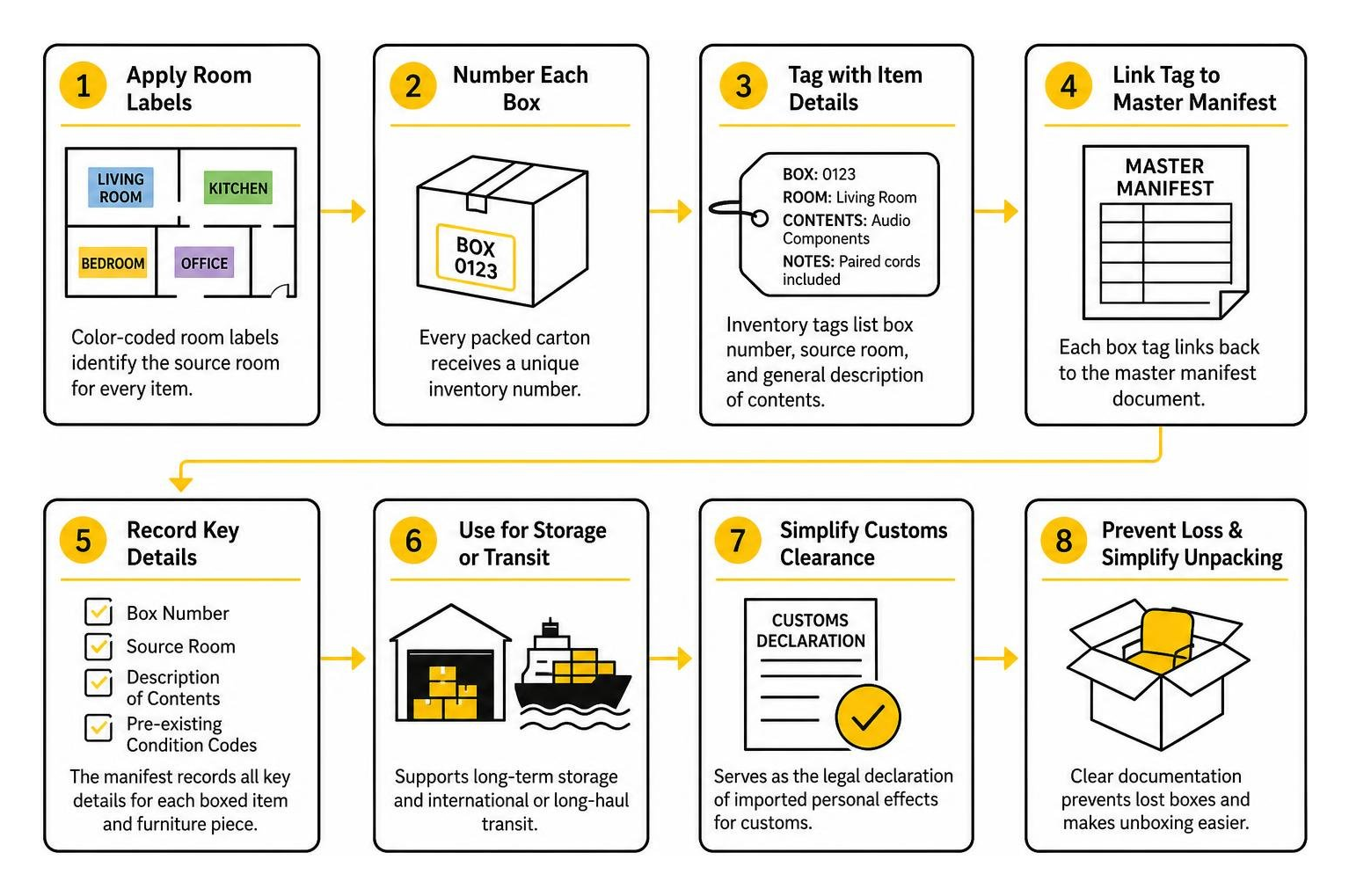
Each box receives an inventory tag linking back to a master manifest document. The manifest notes the box number, source room, general description of contents, and pre-existing condition codes for furniture. If your goods are bound for long-term storage or clearing international customs, this itemized manifest serves as your official legal declaration of imported personal effects.
Frequently Asked Questions About Household Goods Packing Services
When should I book packing services before my move date?
You should reserve professional packing services 4 to 6 weeks in advance for local relocations, and 6 to 8 weeks ahead for long-distance or international relocations. If your move is scheduled during peak season (between May and September), reaching out early ensures you secure your preferred dates on the crew’s schedule.
What items cannot be packed by professional household movers?
Professional movers cannot legally transport hazardous, flammable, or corrosive materials, including propane tanks, paint thinners, aerosol cans, lighter fluid, fireworks, motor fuel, and matches. Additionally, we strongly advise customers to personally transport sentimental valuables, passports, property deeds, cash, fine jewelry, and active prescription medications.
What primary factors influence the total cost of packing services?
The total cost depends on your home’s overall volume (measured in weight or cubic footage), the number of labor hours needed, and the quantity of packing supplies used (such as specialty dish packs, wardrobe cartons, and custom wooden crates). Complex, delicate items requiring custom carpentry will increase your material and labor costs.
Conclusion
Hiring professional packers turns what is often the most exhausting part of moving into an organized, efficient process. Whether you need full packing for your entire home or targeted help with fragile kitchenware and artwork, choosing the right service tier protects both your belongings and your peace of mind.
At Handle With Care Moving & Delivery, we believe in straightforward service with no hidden surprises. We operate with transparent 15-minute billing increments, zero minimum labor hours, and complimentary pad and shrink wrap protection on every move. We also offer discounted rates for students, seniors, and military veterans. If you are preparing for an upcoming move in Ann Arbor, Michigan, explore our comprehensive professional household goods packing services and materials to get an accurate estimate tailored to your home.
— Anthony Denha, President, Handle With Care Moving & Delivery