
A Comprehensive Guide to Finding Reliable Packing Services

How to Find Reliable Packing Services
To find reliable packing services, get a written estimate that lists what the crew will pack, what supplies are included, and how labor and travel are charged. Check recent reviews, verify the mover’s credentials for your move, and ask how the crew protects fragile items and handles damage. On a tight budget? Ask for a quote to pack only your breakables while you pack the rest.
I’m Anthony Denha, president of Handle With Care Moving & Delivery, where I oversee moves and packing services and materials. I pay close attention to how a crew wraps items, plans the work, and keeps customers informed; this guide will help you check those details before you book.
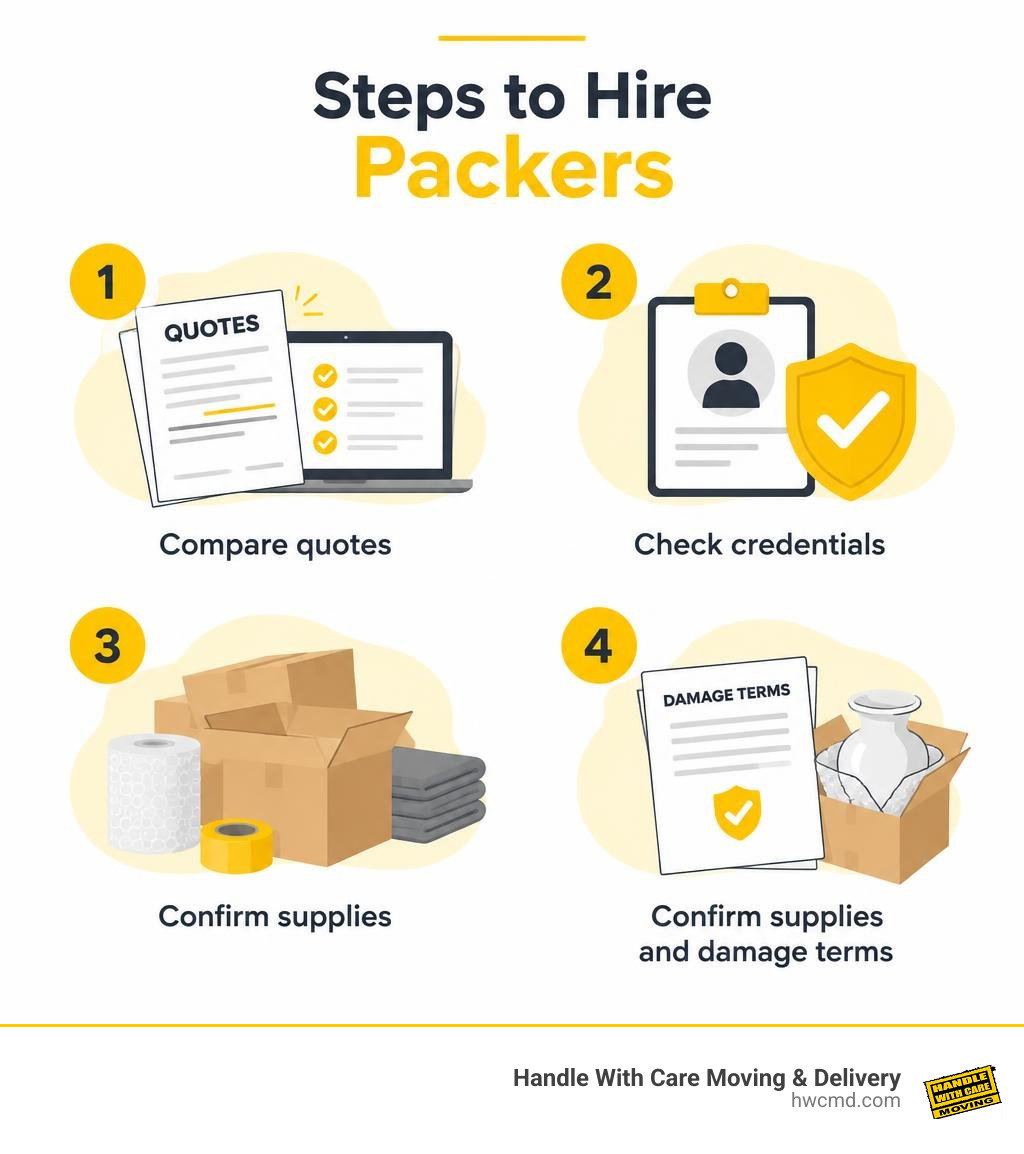
Packing services terminology:
Core Benefits of Hiring Professional Packing Services
Planning a relocation often feels like taking on a second full-time job. Between coordinating real estate logistics, changing utilities, and managing daily obligations, boxing up an entire household can quickly push anyone to their limit. Hiring a professional crew transforms this chaotic milestone into a streamlined, structured project.
The primary advantage of bringing in experts is risk mitigation combined with sheer labor efficiency. Professional crews handle everyday household goods as well as fragile artwork and fine dinnerware using systematic wrapping protocols. What might take an inexperienced homeowner three weekends of tedious labor can be completed by a skilled team in a single morning.
Timeline management is another significant benefit. When moving day arrives, having unsealed, haphazardly stacked boxes creates delays and increases the risk of transit damage. Professional teams arrive with the right protective materials, secure every carton systematically, and create clear room inventories that make unloading straightforward.
Evaluating DIY Moving vs Professional Packers
It is easy to underestimate the physical strain and mental exhaustion of self-packing. Packing often drags out over several weeks, leaving you living out of cardboard boxes, searching through tape rolls for misplaced essentials, and dealing with mounting DIY fatigue.
Beyond the physical toll, there is the question of moving damage. Improperly packed boxes often collapse when stacked inside a truck, or items shift and shatter over road bumps. While doing everything yourself might seem like a cost-saver up front, replacing broken heirloom china, damaged flat screens, or scuffed furniture can quickly erase those initial savings. Discovering how full-service packers save sanity helps clarify whether the trade-off of time, physical effort, and peace of mind makes hiring a crew the right choice for your household.
How Dedicated Packing Services Protect Fragile and High-Value Items
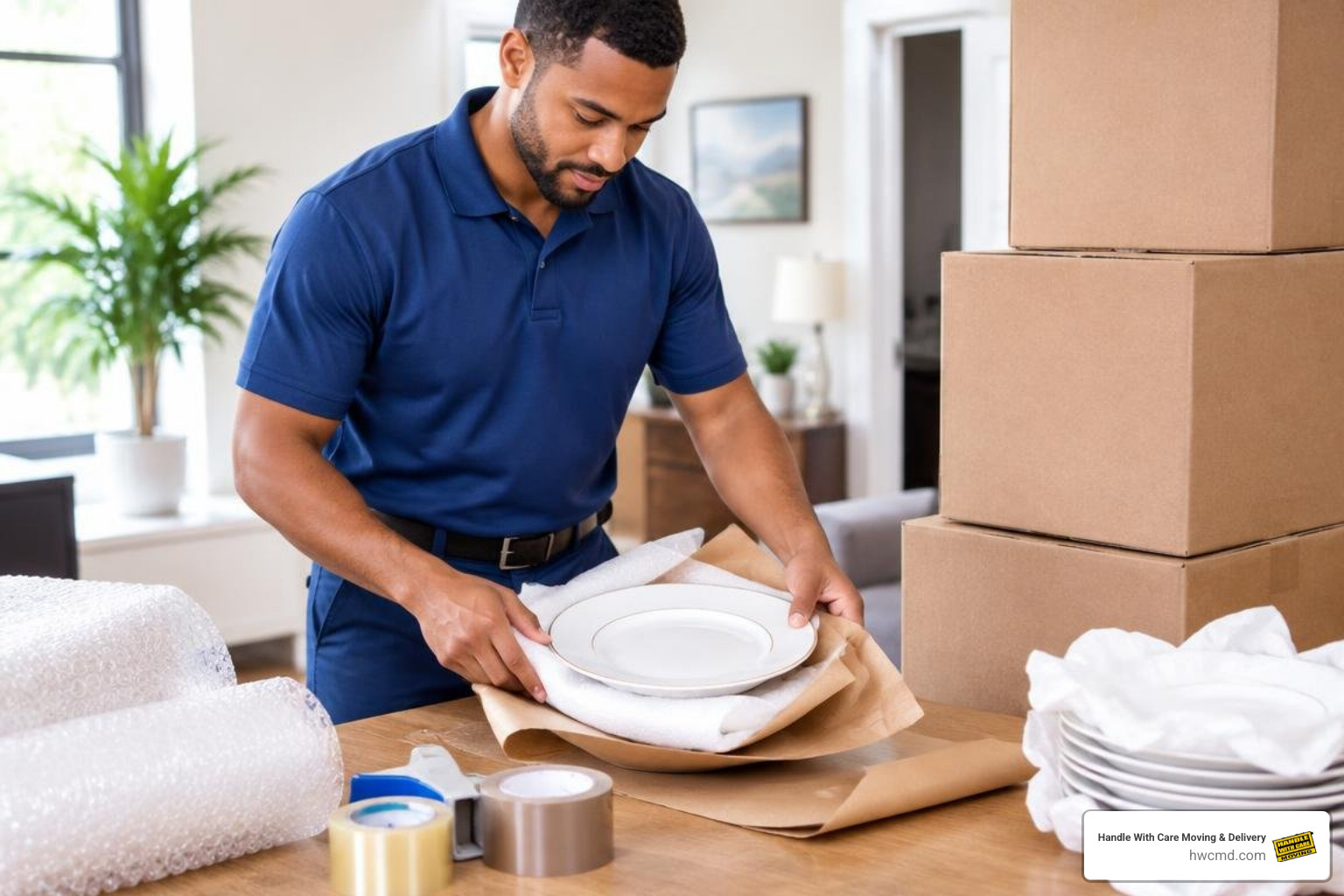
Safely transporting fragile items requires specialized supplies and tested techniques. Proper care involves far more than simply wrapping plates in old newspaper and hoping for the best.
When packing breakables, professional teams rely on proven methods:
- Dish-pack containers: Heavy-duty, double-walled corrugated boxes designed specifically to cushion fragile chinaware, stemware, and ceramics.
- Cell dividers and unprinted paper: Structured inserts keep glasses isolated from one another, while clean unprinted newsprint cushions items without leaving ink stains.
- Custom cushioning for electronics: Tailored wraps protect sensitive circuit boards, delicate screens, and audio gear from static and physical impacts.
- Museum-grade materials and custom crating: High-value antiques, framed oil paintings, and delicate glass tabletops receive tailored crating solutions. You can review our dedicated specialty packing and delivery options to see how custom crating safeguards irreplaceable pieces.
Professional teams also help you identify high-sentiment or personal items—such as family heirlooms, sensitive financial files, or fine jewelry—that are best kept in your personal vehicle rather than loaded into the main moving truck.
Professional Packing vs. Self-Packing for a Move
Every household operates on a unique budget and timeline. Exploring different relocation models allows you to select the right balance of hands-on effort and professional assistance, ensuring you find cost-effective relocation strategies that fit your needs.
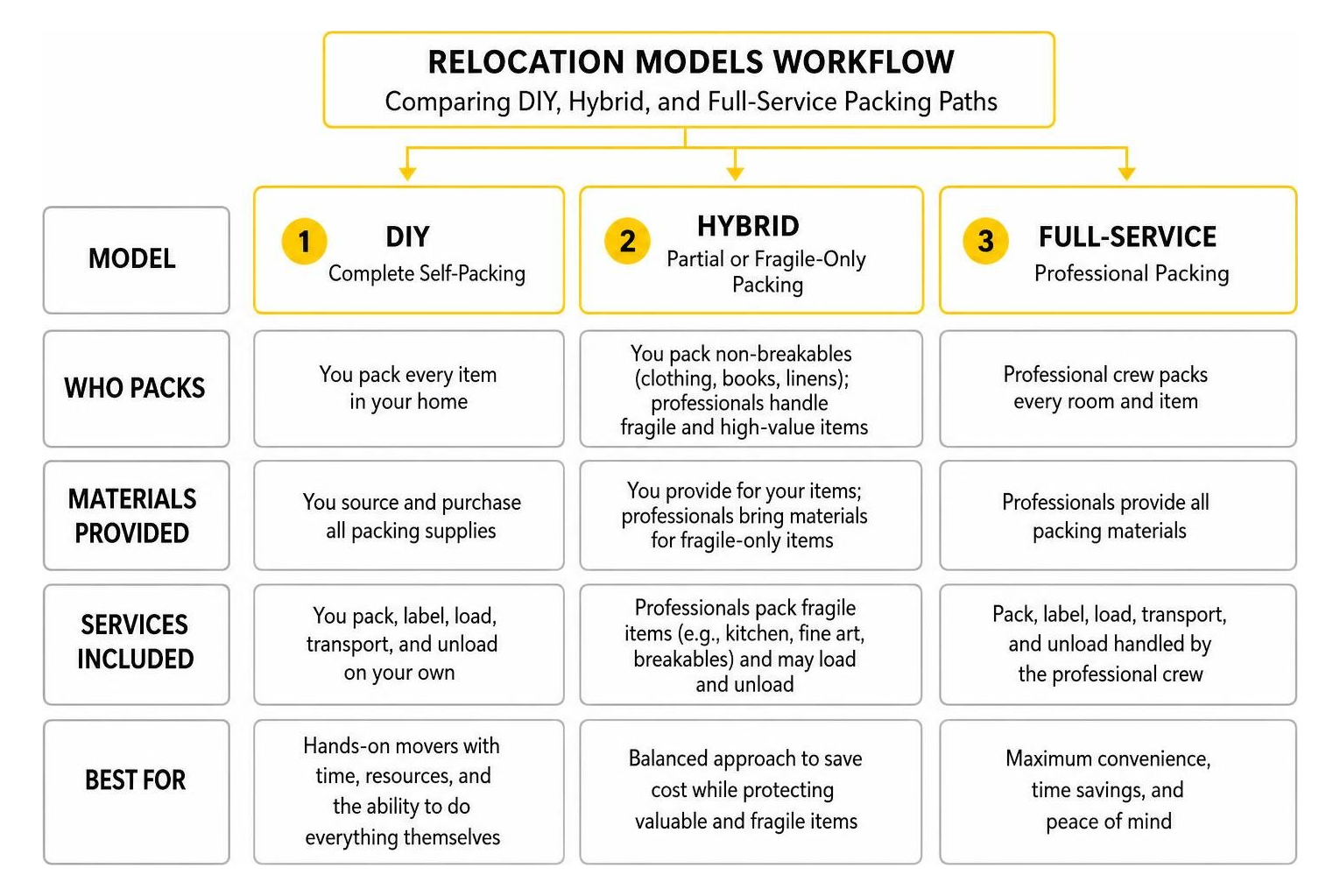
- Full-Service Professional Packing: The crew supplies all materials, packs every room, labels all cartons, loads the vehicle, and unloads at your new destination.
- Partial or Fragile-Only Packing: You box up non-breakable items like clothing, books, and linens, while hiring professionals to handle the kitchen, fine art, and breakables.
- Hybrid Relocation (Labor-Only Packing Assistance): You coordinate transportation independently while hiring a professional crew to wrap, pack, and secure your belongings. While self-packing can lower moving expenses, improper wrapping or loose packing can lead to transit damage. Bringing in professional packers to secure your goods prevents shifting while keeping overall costs manageable.
- Complete DIY: You source supplies, pack every carton, and transport everything yourself.
Comparing Professional Packing and Self-Packing
| Factor | Professional Packing | Self-Packing (DIY) | Hybrid Model (Self-Pack + Pro Labor) |
|---|---|---|---|
| Time Investment | Minimal (typically 1–2 days) | High (spread over 2–4 weeks) | Moderate (manage your own timeline) |
| Risk of Item Damage | Lowest (trained wrapping and packing) | Higher (improper padding or weak boxes) | Moderate to Low (crew handles heavy loading) |
| Material Sourcing | Handled by crew with commercial materials | Customer buys and transports all boxes | Customer sources or purchases from crew |
| Liability Coverage | Mover valuation coverage applies | Customer assumes risk for self-packed contents | Labor coverage applies to handling |
| Overall Cost | Higher upfront investment | Lowest out-of-pocket cost | Balanced, mid-range budget |
Pre-Move Decluttering and Organization Strategies
Packing presents an ideal opportunity to audit your belongings. Moving items you no longer use, want, or need adds unnecessary labor hours and packing material costs.
Adopting structured organizing techniques—such as sorting room-by-room into keep, donate, recycle, and discard piles—dramatically reduces shipment volume. Dedicating a few days to decluttering before moving ensures that when the packing crew arrives, every item placed into a carton is something you genuinely want in your new home. Coordinating local charity pickups ahead of time keeps your living space clear and ready for the crew to work efficiently.
How to Choose and Vet Reputable Relocation Crews
Not all moving crews follow the same standards. Protecting your home and personal property requires vetting potential providers thoroughly to avoid unexpected charges, unprofessional handling, or fraudulent operators.
When researching companies, always check their regional standing through trusted platforms like the Tri-State Moving Packing Services directory to confirm verified customer feedback, service offerings, and local operating histories.
Key Questions to Ask Before Booking Packing Services
Before signing an agreement or paying a deposit, ask prospective providers clear operational questions:
- How do you calculate your rates? Look for clear pricing models. For instance, billing in transparent 15-minute increments without arbitrary minimum labor windows provides clear value for smaller packing jobs.
- Are packing supplies included or billed separately? Ask whether protective materials like shrink wrap and moving pads are complimentary or added as separate line items.
- How do you schedule packing relative to loading day? For medium to large homes, packing is often completed the day prior to loading to keep moving day organized and efficient.
- What documentation do you provide upon completion? Reputable movers provide an itemized bill of lading and clear inventory counts.
For deeper insights into screening service teams, our guide on hiring movers who pack for you covers detailed provider checklists.
Identifying Red Flags, Licensing, and Damage Liability Policies
To safeguard your belongings, watch out for these common warning signs:
- Vague verbal quotes: Avoid any company that refuses to provide a written estimate detailing labor rates, travel fees, and material charges.
- Large cash-only deposits: Demanding full payment upfront before services are rendered is a standard red flag for fraudulent operators.
- Unclear licensing and insurance: Ensure the company holds active operating credentials and appropriate commercial liability insurance for your jurisdiction.
Make sure you understand your damage valuation options. Federal and state regulations generally mandate standard Released Value Protection (basic carrier liability calculated by weight), but reputable movers also offer Full Value Protection options or clear claim resolution policies for items damaged during packing or transit.
Understanding Relocation Costs, Supplies, and Move Logistics
Packing service costs depend on several clear variables: the overall volume of your household items, home square footage, specialty crating requirements, and travel logistics. Local services are generally structured around hourly crew rates paired with standard travel fees, while long-distance relocations factor in shipment weight and transit mileage.
Pricing Structures and Relocation Estimates
To maintain a realistic moving budget, consider how different service levels align with your home size:
- Studio to 1-Bedroom Apartment: Typically requires a 2-person crew for 2 to 4 hours.
- 2 to 3-Bedroom Home: Generally requires a 2 to 3-person crew working 4 to 8 hours.
- 4+ Bedroom Executive Home: Frequently requires a dedicated crew of 3 to 4 specialists over 1 to 2 full days, especially when handling extensive china, artwork, and outdoor equipment.
Transparent providers calculate local moves based on the active packing time plus a fixed travel rate, using detailed 15-minute intervals rather than rounding up to full hours.
Essential Supplies, Prohibited Items, and Family Transitions

Using the right materials is the foundation of secure packing. Selecting suitable packing materials—including uniform medium boxes, bankers boxes for heavy libraries, and sturdy wardrobe containers—prevents box collapse and speeds up stacking. Mastering fundamental packing techniques ensures that heavier items are placed at the bottom of containers, with all remaining voids filled with clean paper or soft goods to eliminate shifting.
However, moving regulations and safety standards prohibit professional crews from packing or transporting certain household items:
- Hazardous and flammable materials: Lighter fluid, propane tanks, paint thinner, motor oil, fireworks, and matches.
- Heat-producing devices and open fuels: Unemptied lawnmowers, kerosene heaters, and scented candles susceptible to melting.
- Corrosive chemicals and open cleaning solutions: Bleach, ammonia, and pool sanitizers.
- Living plants and perishables: Houseplants subject to agricultural restrictions or extreme temperature shifts in cargo holds, along with open or refrigerated food.
- Ammunition and explosives: Regulated firearms and explosive compounds.
When moving with children or pets, careful packing is especially important. Prepare a dedicated “Comfort Box” for each child containing favorite toys, books, electronics chargers, and familiar bedding for the first night. For pets, keep food dishes, leashes, medication, and comfort items accessible to maintain their normal routine throughout the transition.
Frequently Asked Questions About Move Preparation
What items are professional packers prohibited from handling?
Professional packing teams cannot pack hazardous, flammable, or combustible goods (such as propane tanks, paint thinners, aerosol cans, and ammunition), open perishable food, or live indoor plants. These safety protocols prevent fire risks, chemical leaks, and transit contamination.
What items should customers always pack and transport personally?
Customers should personally pack and carry daily prescription medications, valuable jewelry, passports, deeds, birth certificates, critical financial records, personal computing hard drives, and sentimental keepsakes.
How far in advance should I schedule moving and packing assistance?
We recommend scheduling your packing and moving services at least 2 to 4 weeks in advance. If you are moving during peak relocation season (between May and September), booking 4 to 6 weeks early ensures your preferred dates and crew size are secured.
Conclusion
Finding reliable packing services comes down to clear communication, verified credentials, and transparent pricing. Taking the time to declutter, gather written estimates, and review company policies ensures your household transition proceeds smoothly and without surprises.
At Handle With Care Moving & Delivery, located at 4260 Varsity Dr in Ann Arbor, our team is committed to providing careful, attentive handling for every home we pack. Local moves are billed hourly plus a travel rate, and lightly used boxes and recycled paper are available. Packing material delivery is free in most local cases.
Reach out to our team today to discuss your relocation plan, request an upfront estimate, and explore our full range of professional packing services and materials.
— Anthony Denha, President, Handle With Care Moving & Delivery