
Pack Dishes Like a Pro: Simple Steps for a Break-Free Move
An Easy Way to Pack Dishes for a Move
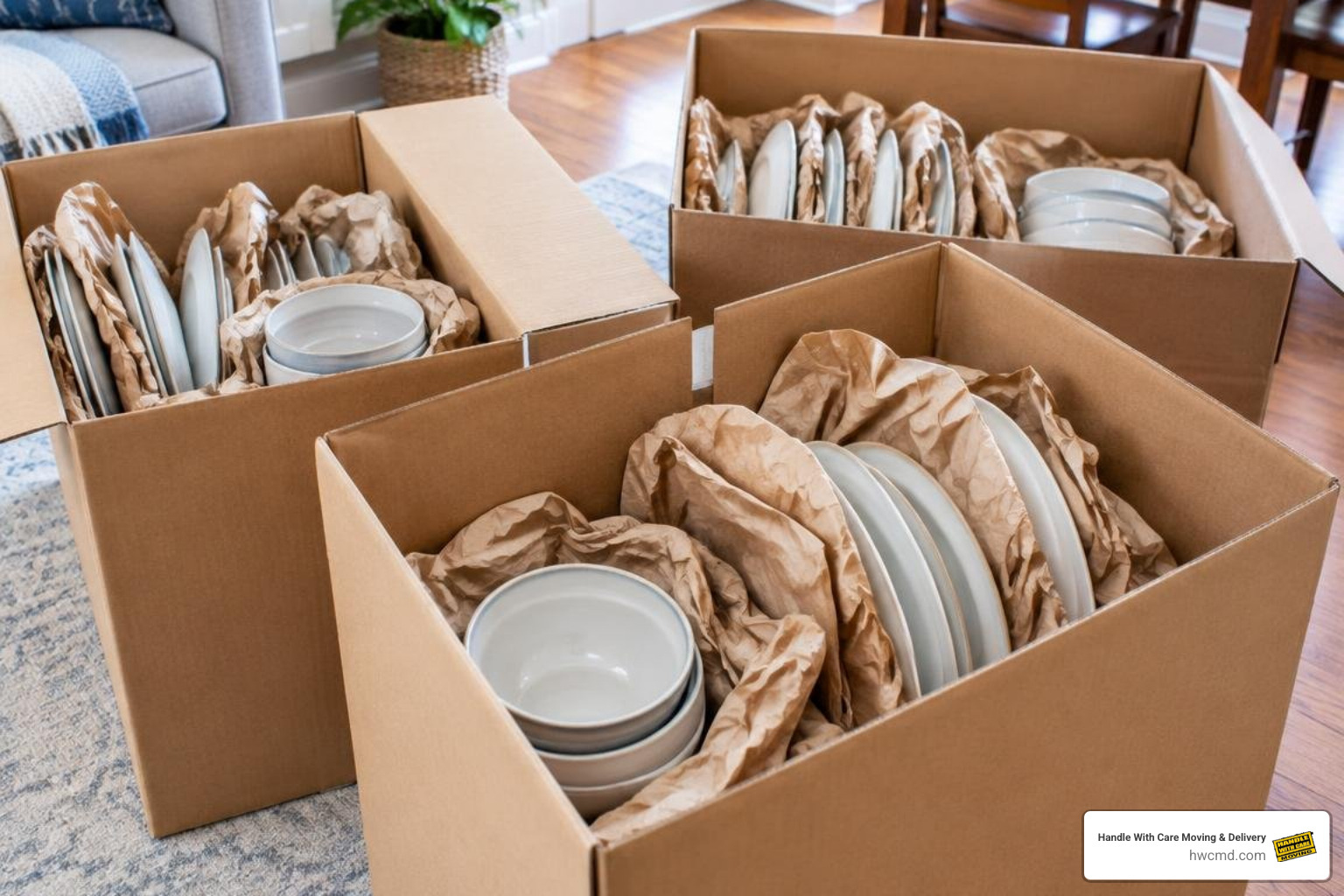
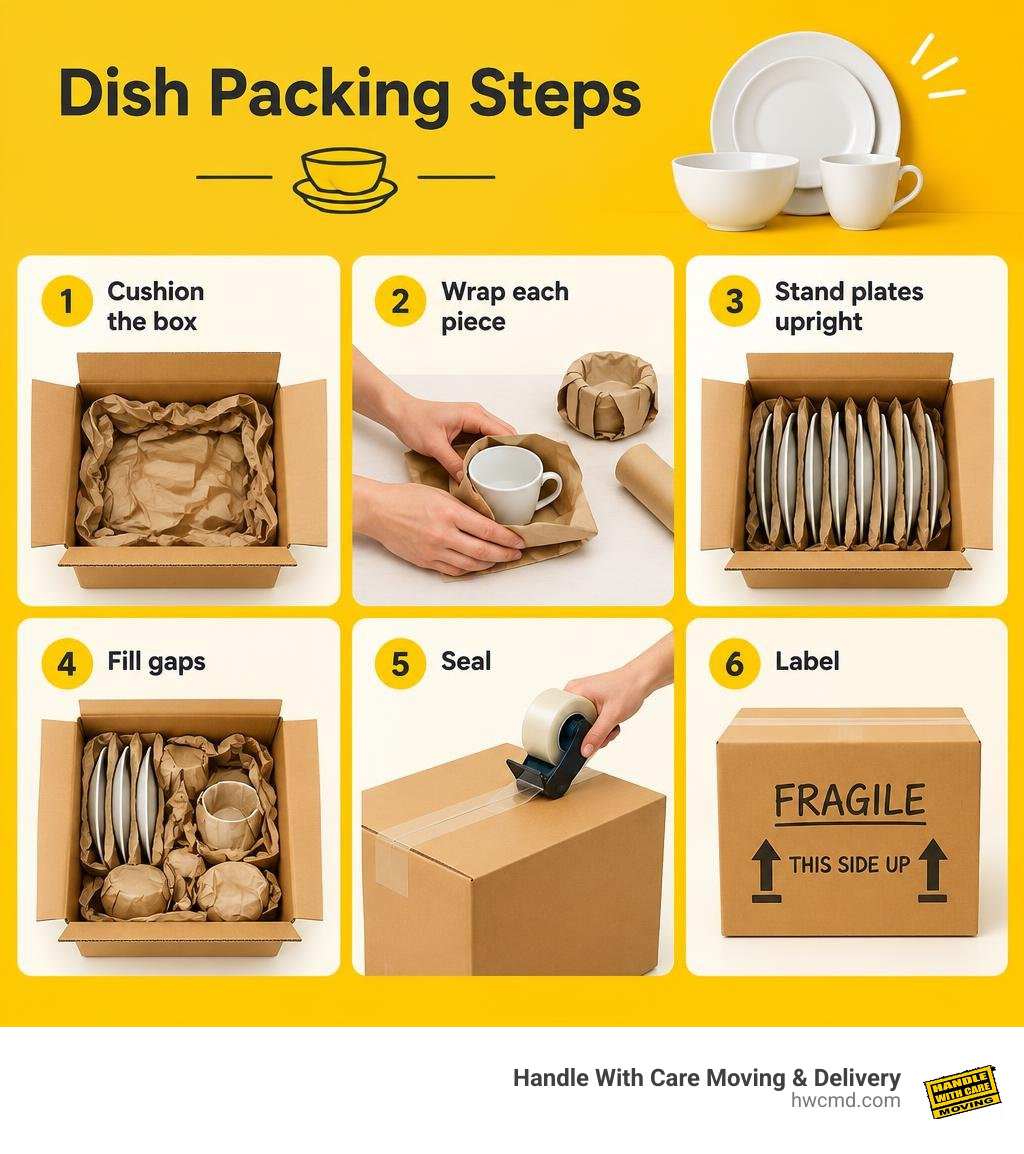
An easy way to pack dishes is to tape the bottom of a sturdy box, add a thick layer of crumpled packing paper, and wrap each piece separately. Stand plates on their edges rather than stacking them flat. Fill every gap so nothing shifts, keep the box under 40 pounds, and label it FRAGILE and THIS SIDE UP.
I’m Anthony Denha, president of Handle With Care Moving & Delivery, where I oversee the details of careful moves. In my experience, the easy way to pack dishes starts with the right box and padding, so let’s start there.
Easy way to pack dishes terms to learn:
Essential Supplies for Packing Fragile Kitchenware
Packing up a kitchen can easily induce moving day anxiety. Between delicate ceramic sets, sentimental porcelain, and heavy cookware, the sheer volume of fragile inventory is daunting. A smooth transition starts by gathering high-grade materials before you wrap a single plate. Reviewing a comprehensive guide to suitable packing materials helps ensure you do not compromise your fragile items with weak cartons or inadequate wrap.
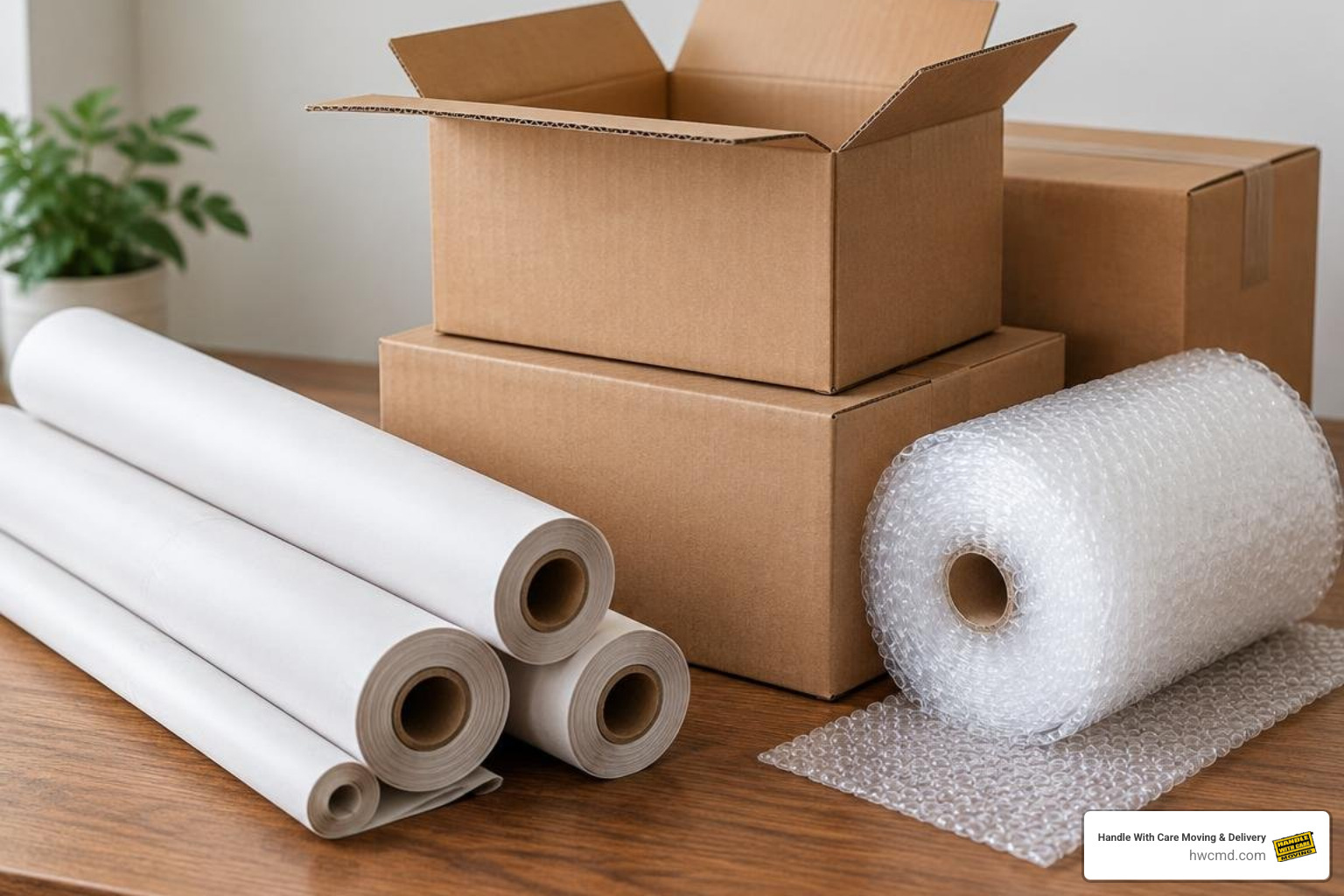
To protect your kitchen items, gather these essential supplies:
- Heavy-duty dish pack boxes: Also called dish barrels, these feature double-wall corrugated cardboard designed to absorb impacts and resist side compression.
- Unprinted packing paper: Clean newsprint paper provides dense cushioning without risking ink transfer onto your glazes.
- Bubble wrap: Ideal for wrapping fragile stemware, teapots, and odd-shaped decor.
- Cardboard cell dividers: Perfect for separating drinking glasses, mugs, and wine stems within a carton.
- Heavy-duty packing tape: Quality 2-inch or 3-inch pressure-sensitive shipping tape to seal bottom seams securely.
- Permanent markers: For labeling carton contents, room destinations, and directional arrows on multiple sides.
| Material | Best Used For | Pros | Cons |
|---|---|---|---|
| Unprinted Packing Paper | Plates, bowls, mugs, void filler | Clean, recyclable, easy to bundle, cost-effective | Compresses under extreme weight if un-crumpled |
| Bubble Wrap | Crystal stemware, fine china, delicate spouts | High shock absorption, excellent air cushioning | Not easily recyclable, bulkier to store |
| Printed Newspaper | Heavy metal pots, non-fragile tools | Readily available | Ink rubs off and stains porcelain, china, and ceramics |
Choosing the Right Boxes and Padding
Never pack heavy ceramic dinnerware into standard, single-wall grocery or utility boxes. A dedicated dish barrel offers twice the wall thickness, protecting brittle contents from external crushing if boxes shift in transit. For smaller items and glassware, utilizing cell partition kits inside your cartons keeps delicate pieces from knocking together.
Understanding the fundamentals in packing 101 will keep you from overloading cartons or skipping vital base padding. While bubble wrap provides unmatched shock relief for crystal, unprinted packing paper remains the undisputed champion for day-to-day dinnerware. Paper folds smoothly around irregular edges, is fully recyclable, and prevents the tedious chore of washing greasy newspaper ink off your dinnerware once you reach your new kitchen.
The Easy Way to Pack Dishes: Step-by-Step Guide
Packing fragile dinnerware does not need to feel complicated. By setting up a dedicated wrapping station—like a sturdy kitchen island or dining table—you can work through an entire cabinet set in just a couple of hours.
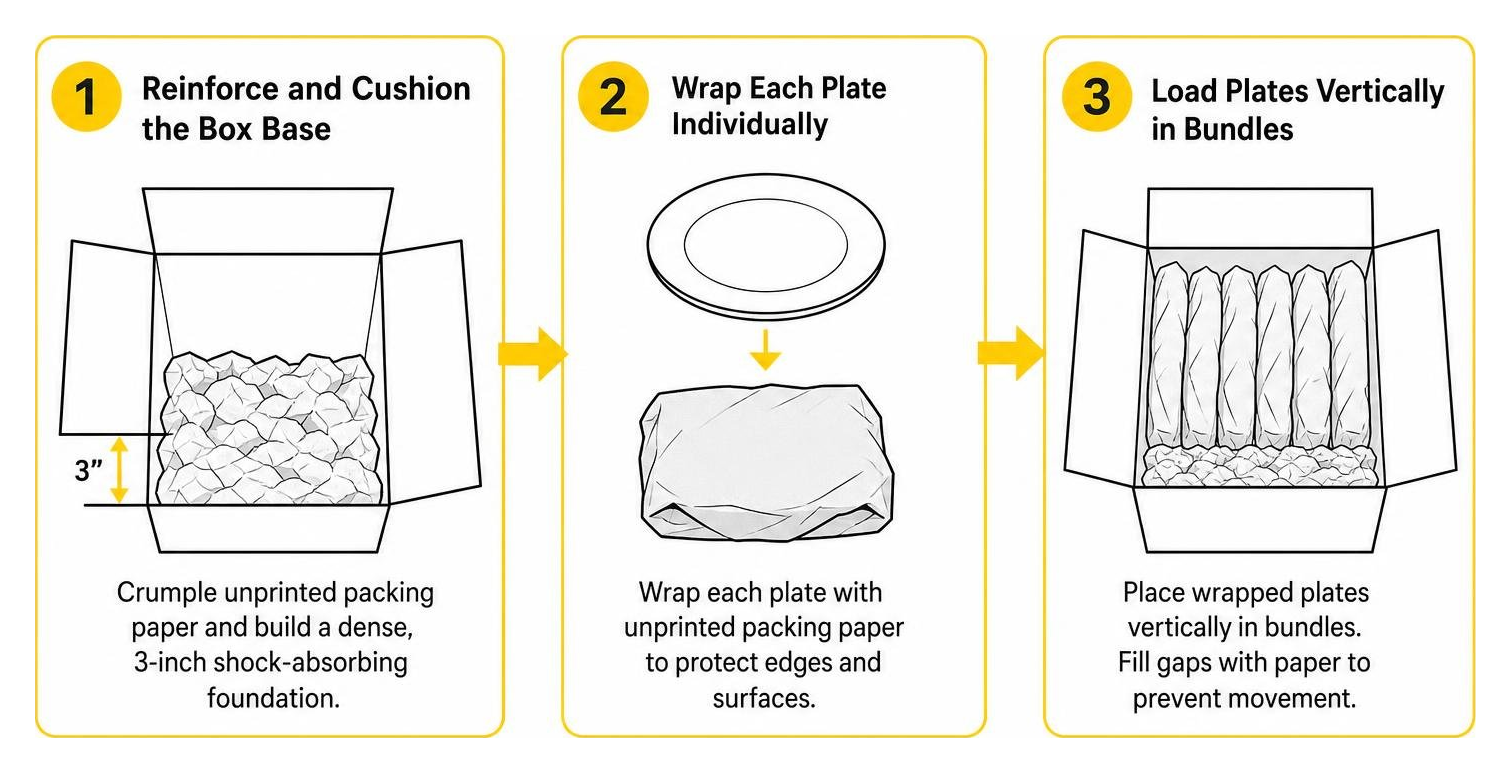
Step 1: Reinforce and Cushion the Box Base
A box is only as strong as its bottom seam. Begin by folding the bottom flaps of your dish pack carton and applying three overlapping strips of heavy-duty packing tape: one along the center seam and two across the perpendicular edges (the “H-tape” method).
Next, crumple several large sheets of unprinted packing paper into loose balls and spread them across the bottom of the carton. Build a dense, 3-inch shock-absorbing foundation. This pillow absorbs vibrations from road bumps and protects the lower edges of your dinnerware. Establishing this base is also central to the best way to pack dishes for storage without damage if your goods are headed to a storage vault before final move-in.
Step 2: Master the Easy Way to Pack Dishes and Bowls in Bundles
Do not attempt to pack bare plates together without an interleaving barrier. The fastest and safest approach is the multi-dish bundle.
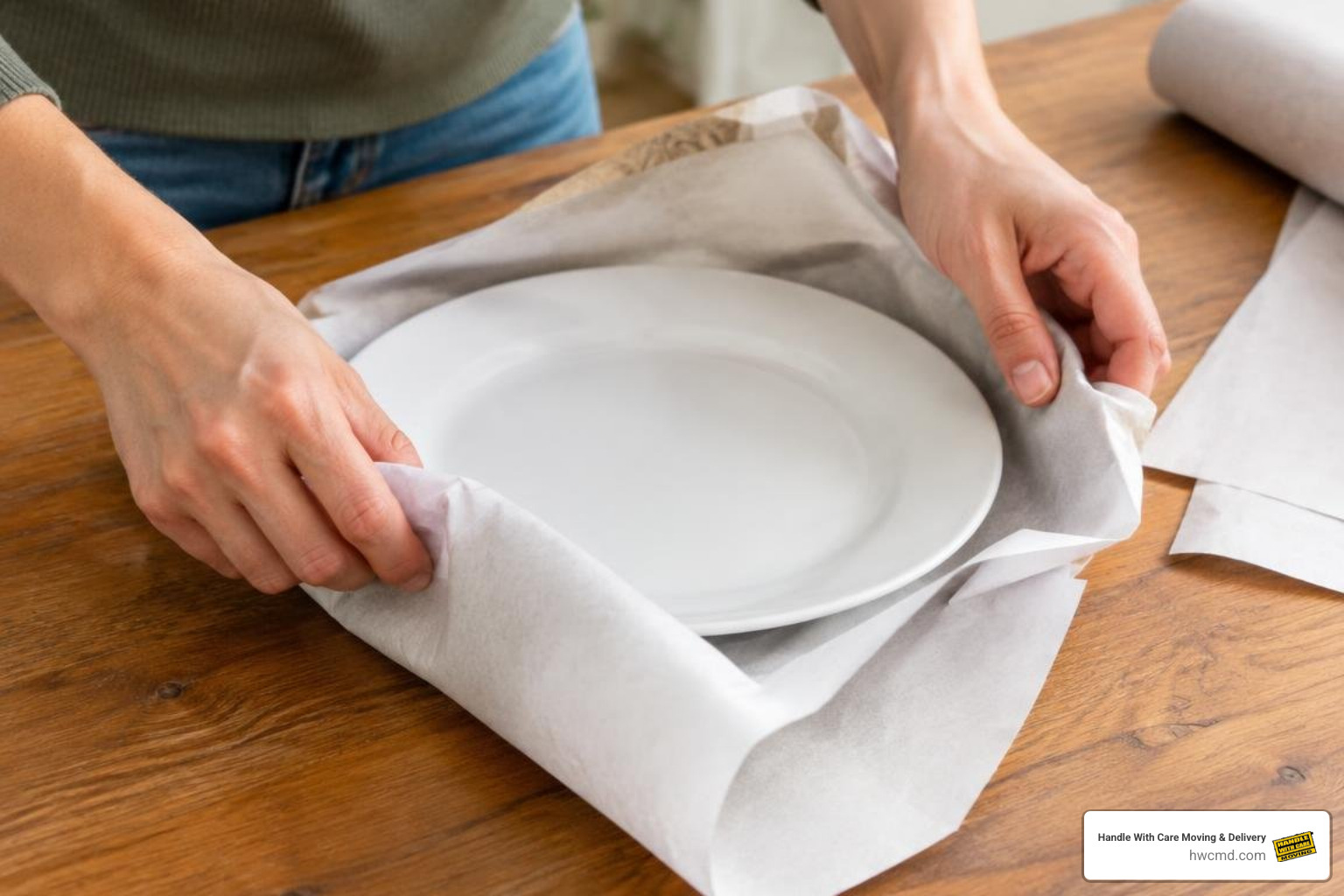
Place a stack of clean packing paper flat on your work surface:
- Place your first dinner plate in the center of the top sheet.
- Grasp two corners of the paper and fold them snugly across the plate toward the center.
- Place a second plate of the exact same size directly on top of that wrapped layer.
- Fold over the remaining two corners of the paper.
- Repeat this process until you have a bundle of three to four nested plates.
- Take an additional outer sheet of paper, wrap it completely around the entire 4-plate bundle, and secure the edges with a short piece of tape.
Adopting packing paper for moving dishes master the kitchen bundling technique turns multiple loose items into a single, cushioned, impact-resistant unit. Repeat this same grouping method for soup and cereal bowls of identical dimensions.
Step 3: An Easy Way to Pack Dishes Vertically for Maximum Strength
Once your bundles are wrapped, place them into the carton. The single most common mistake DIY movers make is stacking plates flat, one on top of the other like a tower of pancakes. When stacked flat, the bottom plate must bear the entire weight of the stack, leaving it vulnerable to cracking if the truck hits a bump.
Instead, pack plates and shallow bowls vertically on their edges, standing up side-by-side just as you load plates into a dishwasher rack. The edge rim possesses significantly greater structural integrity than the center of the plate, dispersing downward shock waves along the perimeter.
Pack your heaviest dinner plate bundles on the bottom tier. Once the row is firmly in place, insert crumpled paper between bundles to eliminate any lateral shifting. If space remains on top, lay a flat piece of corrugated cardboard over the lower layer, add another 2-inch paper cushion, and pack lighter items like bowls or saucers on edge above it. Learning how to pack dishes safely even when you dont feel like it comes down to sticking to these basic rules of vertical loading and tight void filling.
Finish the box by filling every remaining corner, gap, and top space with crumpled paper until nothing moves when the carton is gently shaken. When you close the flaps, there should be slight resistance from the paper cushion. Seal with heavy-duty tape and mark all four sides: FRAGILE – THIS SIDE UP. As we remind clients, knowing how dont crack under pressure how to pack dishes for a move ensures your favorite dinner sets survive transit intact.
How to Pack Glassware, Cookware, and Kitchen Extras
Your kitchen contains diverse shapes, sizes, and weights that require specific wrapping strategies.
Wrapping Glasses, Mugs, and Stemware
Drinking glasses and stemware require careful cavity support to resist crushing forces:
- Stuff the interior: Crumple a half-sheet of packing paper and tuck it into the bowl of the glass or mug to reinforce the interior walls.
- Wrap the exterior: Place the glass at the corner of a sheet of paper and roll diagonally, tucking the extra side flaps inward as you roll.
- Double-wrap stemware: For delicate wine stems, wrap a separate strip of bubble wrap or rolled paper around the narrow stem first to build up its diameter, then roll the entire glass in an outer sheet.
- Pack upright: Always place glasses and mugs upright on their sturdy base, never on their fragile rims or sides. If packing fine crystal, double-boxing—nesting a smaller packed box inside a larger, cushioned carton—provides maximum protection against drops.
Packing Pots, Pans, and Sharp Cutlery
Cookware and cutlery need distinct handling to prevent damage to surfaces or injury during unpacking:
- Nesting Cookware: Stack graduated saucepans and skillets inside one another, placing two sheets of packing paper or a layer of bubble wrap between nested surfaces to avoid scratching non-stick coatings. Wrap lids separately, flip them upside down over their respective pots, and tape them securely.
- Cast-Iron Pans: Because cast iron is extremely dense, distribute individual pieces across several different utility boxes rather than putting them all in one carton. Place them flat on the reinforced bottom of boxes containing lighter, non-fragile items.
- Knives and Cutlery: Wrap chef’s knives in sturdy cardboard sheaths or multiple layers of bubble wrap, taping the wrapping securely around the blade. Clearly mark the outer wrap with a red marker reading CAUTION: SHARP KNIVES. For odd pantry items or open food containers, utilizing 7 Ways to Use Zipper-Lock Bags or checking Are Silicone Bags Truly Leakproof? Sealing Tips for Soups, Travel, and Zero-Spill Packing keeps small accessories, oils, and loose flatware cleanly contained.
- Small Appliances: Clean and dry blenders, toasters, and mixers. Secure loose cords with twist-ties, wrap removable glass carafes separately, and pack each appliance snugly with ample crumpled paper buffers.
Frequently Asked Questions About Packing Dishes
Should plates be packed vertically or flat?
Plates should always be packed vertically on their edges. When plates are packed flat in horizontal stacks, the surface area in the middle of each dish bears direct compressive stress from the weight above it. A sharp jolt during transit can easily shatter flat-stacked plates across the center. Packing them vertically on their rims distributes weight and shock along the strongest structural edge of the ceramic, similar to how vinyl records are safely transported.
What is the maximum recommended weight for a dish box?
The maximum recommended weight for any dish pack box is 40 to 50 pounds. Cartons exceeding 50 pounds are far more likely to experience bottom seam failure, tear at handhold points, or be accidentally dropped during handling. Keeping fragile kitchen boxes near or under 40 pounds ensures easy lifting and keeps excessive pressure off the fragile pieces inside.
Can I use newspaper instead of packing paper for fine china?
You should avoid using printed newspaper for fine china, porcelain, or dishes with antique glazes. The petroleum-based inks used in daily newspapers easily rub off onto porous glazes, leaving dark smudges that often require heavy chemical scrubbing to remove—and in some cases, can permanently discolor delicate heirloom pieces. Stick to clean, unprinted white or kraft packing paper for all dinnerware surfaces.
Conclusion
Packing your kitchen dishes does not need to be an overwhelming ordeal. By securing proper double-wall cartons, using generous paper foundations, and always loading plates on their sturdy vertical rims, you can unpack your dinner sets at your new home without discovering cracked ceramics or chipped stems. For specialized long-distance shipping techniques and carrier crating methods, see our guide on the best way to pack dishes for shipping safely.
If you are planning an upcoming transition in our area, our team at Handle With Care Moving & Delivery is here to help. Headquartered at 4260 Varsity Dr in Ann Arbor, Michigan, we provide professional moving and packing services tailored to keep your delicate belongings safe. We offer transparent 15-minute-increment billing with no minimum labor hours, lightly used boxes, recycled paper options, free material delivery in most local situations, and complimentary protective pads and shrink wrap.
Reach out to Anthony Denha and our dedicated crew to arrange your moving estimate or gather the professional packing materials you need for a stress-free move.