
Smart Home Shifting Packing Ideas from Frequent Movers

Pre-Move Planning and Decluttering Strategies
The smartest home shifting packing ideas focus on early decluttering with the four-box method, using standardized alpha-numeric labeled boxes, packing fragile dishware vertically on edge, and packing a dedicated open-first essentials kit. Executing these strategies step by step prevents moving-day chaos, protects delicate valuables, and lowers overall relocation costs. Reviewing our 10 great moving tips to make your move efficient and easy will help you establish a seamless packing workflow well before moving day.
The 4-to-6-Week Preparation Timeline
A smooth relocation relies on a strict countdown. Starting 6 weeks out gives you a comfortable lead time to tackle administrative chores, sort belongings, and compare service quotes without turning your life upside down. While a small apartment shift can occasionally be managed in 2 to 3 weeks, larger single-family homes require deliberate pacing.
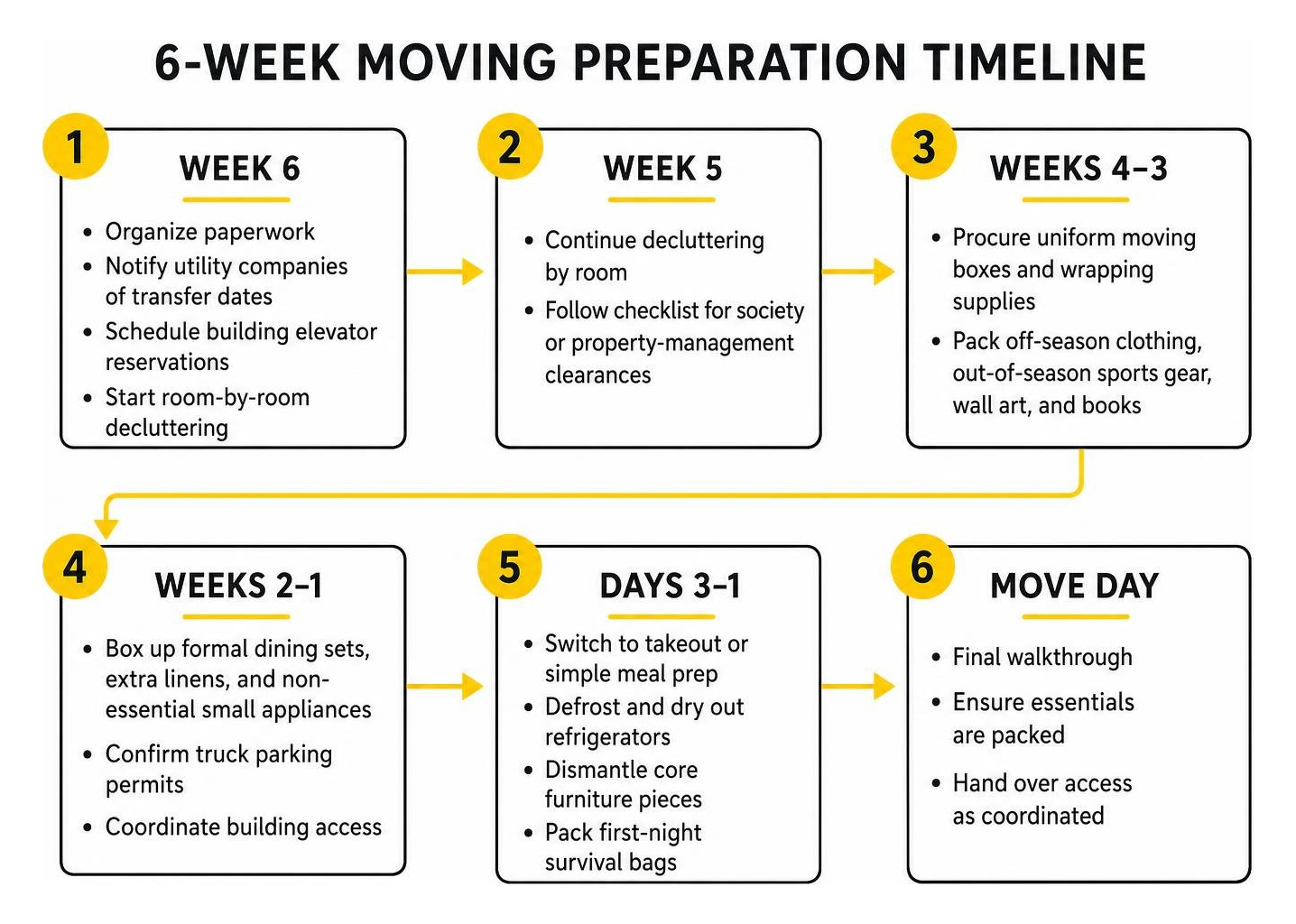
- Weeks 6 to 5: Begin organizing paperwork, notify utility companies of your transfer dates, schedule building elevator reservations, and initiate your room-by-room decluttering process. Refer to a structured Household shifting timeline checklist to verify society or property-management clearances.
- Weeks 4 to 3: Procure uniform moving boxes and wrapping supplies. Pack off-season clothing, out-of-season sports gear, wall art, and books.
- Weeks 2 to 1: Box up formal dining sets, extra linens, and non-essential small appliances. Confirm truck parking permits and coordinate building access.
- Days 3 to 1: Switch to takeout or simple meal prep, thoroughly defrost and dry out refrigerators, dismantle core furniture pieces, and set aside your first-night survival bags.
Decluttering Rules Before Boxing Anything
The golden rule of moving is simple: never pay labor or truck space to transport items you no longer want, use, or need. Moving estimates are directly tied to shipment volume and weight; decluttering before getting an on-site survey or finalizing your quote is the single biggest lever to lower your moving costs.
Use the Four-Box Method across every room:
- Keep: Items in active use that serve a clear aesthetic or functional role.
- Donate: Clean, functional items, toys, and clothing that you have not touched over the past 12 months.
- Sell: High-value furnishings, tools, or electronics that can generate extra moving cash via local marketplaces.
- Discard: Broken goods, expired pantry items, worn-out shoes, and non-recyclable clutter.
To overcome emotional hesitation, apply Chase’s Rule of Decluttering: if an item costs less than $20 to replace and you have not used it within the past year, donate or recycle it immediately. For sentimental items you feel conflicted about, place them inside a sealed Six-Month Maybe Box. Mark the container with the current date—if you never reopen it over the subsequent six months in your new home, donate the contents without looking back inside. Finally, slash heavy paper clutter by scanning old warranties, invoices, and bank statements into encrypted digital folders before discarding the physical copies.
Essential Home Shifting Packing Ideas for a Stress-Free Move
Packing efficiency depends entirely on your preparation and material quality. Reusing old grocery store boxes might seem economical, but worn-out, mismatched cartons collapse under stacking pressure and make truck loading inefficient. Securing professional-grade packing services materials safeguards your investments and keeps your moving day organized.
Smart Packing Supplies and Box Management
A standard two-bedroom home generally requires 25 to 35 corrugated boxes spanning various standard dimensions. Using purpose-built moving boxes ensures uniform dimensions that lock securely into place during transit:
- Small Boxes (1.5 cu. ft.): Built for heavy, dense goods like hardcovers, heavy tools, canned pantry goods, and compact electronics. Keep weight between 30 and 40 lbs.
- Medium Boxes (3.0 cu. ft.): Versatile workhorses for kitchen pots, small appliances, toys, and folded apparel. Keep weight under 50 lbs.
- Large Boxes (4.5 cu. ft.): Reserved strictly for bulky, lightweight items such as blankets, pillows, lampshades, and winter coats. Do not exceed 30 to 40 lbs.
- Wardrobe Boxes: Heavy-duty cartons fitted with metal hanging bars, allowing you to move up to 50 lbs of hanging clothes straight from the closet.
Equip yourself with unprinted newsprint packing paper instead of standard newspapers, as wet or pressurized ink easily bleeds into ceramics and upholstery. Pick up heavy-duty tape guns with 2-inch acrylic packaging tape, high-grade stretch wrap to secure loose parts, and zippered mattress bags to block road grime and moisture during transport. You can easily master your move with the best packaging materials by sourcing standardized cartons and cushioning rolls in advance.
Alpha-Numeric Labeling and Inventory Systems
Clear carton labeling eliminates moving-day chaos. Instead of writing vague descriptions like “Kitchen Stuff” on the top of cartons (which become unreadable once boxes are stacked), employ an alpha-numeric labeling framework:
- Assign Room Codes: Tag each room with a letter code (e.g., K = Kitchen, MB = Master Bedroom, LR = Living Room).
- Number Each Carton: Sequentially number every container (K1, K2, MB1, MB2).
- Mark the Sides: Write the room code, box number, and a brief summary of contents on at least two opposite sides of the carton in bold, waterproof marker.
- Color-Code Doors and Tape: Assign dedicated colored tape or stickers to each room (e.g., Blue for Master Bedroom, Red for Kitchen). Place a matching swatch of tape on the doorframe of each destination room in your new home so movers instantly know where to deposit each container.
- Log a Digital Smartphone Inventory: Keep a shared digital note or spreadsheet on your phone linking box numbers to their detailed contents. When searching for your coffee maker or internet router on arrival, a quick keyword search tells you precisely which box to open.
Room-by-Room Packing Strategies for Fragile and Heavy Items
Tackling an entire home at once is an easy way to burn out. Progress through your living space methodically, starting with low-traffic areas and non-essential items before moving into daily living spaces. Reviewing standard packing 101 rules will help you keep the momentum going without turning your main living areas into an obstacle course.
Room-by-Room Home Shifting Packing Ideas
Execute your room transitions using structured step-by-step moving checklists to maintain steady daily progress:
- The Staging Ground (Lofts, Attics, & Storage Closets): Pack out-of-season sports gear, holiday decorations, and rarely viewed photo albums first. These spaces generate instant momentum without disrupting daily routines.
- Home Office: Back up critical hard drives to cloud storage. Securely bag and label individual equipment cables. Store internal ink cartridges separately to prevent heat-related leaks during transport.
- Dining & Living Rooms: Dismantle entertainment consoles, wrap fragile wall art, and pack table leaves in padded blankets. Ensure small screws and shelf brackets stay attached to their main furniture pieces in labeled baggies.
- Kitchen & Pantry (Staged Shutdown): Begin packing specialty cookware, formal serving platters, and cookbooks two weeks early. Transition to simple meals or takeout during the final three days. Coil power cords, slip them into plastic zip-top bags, and stow them directly inside the cavity of the matching appliance (such as your blender or toaster) to keep cords organized.
- Bedrooms & Bathrooms: Pack guest bedrooms first. Prepare wardrobe bundles and pack decorative vanity items. Leave daily toiletries, towels, and one set of bedding per person for the final 24 hours.
Protecting Fragile Dishware and Delicate Glass
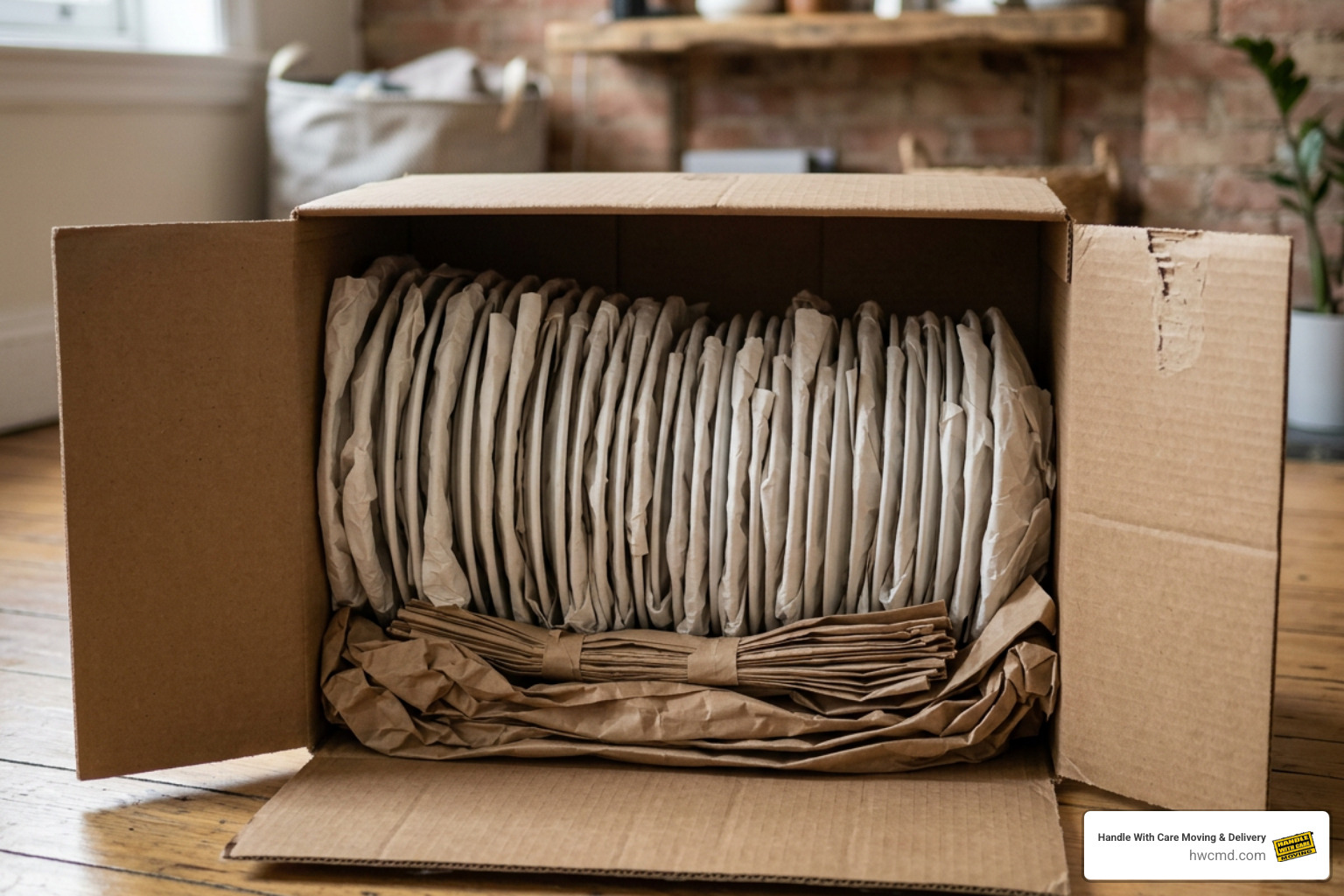
Fragile chinaware and stemware break when packed flat due to shock waves traveling through the center of plates during transit. You can find comprehensive protection advice in our guide on how to pack dishes for a move.
- Build a Crushed Paper Foundation: Crumple a dense, 3-inch layer of unprinted packing paper at the base of a heavy-duty dish barrel box to serve as a shock absorber.
- Pack Plates Vertically: Wrap every dish individually in packing paper. Place plates, saucers, and platters standing vertically on their edges inside the carton, mimicking a commercial dishwasher rack. Vertical alignment channels downward shock through the strongest perimeter of the ceramic rather than its fragile center.
- Nest and Cushion Cups: Wrap mugs and glasses individually, filling internal cavities with crumpled paper. Stand them upright on top of a cardboard divider placed over your plate layer. Clean, thick tube socks can also serve as effective secondary sleeves for everyday glassware.
- Eliminate Internal Voids: Shake the box lightly as you fill it. If any item shifts, pack additional crumpled paper into the gaps until the contents remain rigid. Finish with another 2-inch layer of crumpled paper before taping the box shut.
Safeguarding Electronics, Documents, and Valuables
Electronics and critical personal records require special attention during residential relocations:
- Document Wiring Configurations: Snap clear, well-lit photos of the back panel of your TV, desktop computer, and AV receiver before disconnecting a single cable. This saves hours of troubleshooting during reassembly.
- Label Cords Directly: Group cables with color-coded velcro ties or write labels with painter’s tape indicating their corresponding inputs.
- Personal Document Folder: Place birth certificates, passports, real estate deeds, medical files, vehicle titles, and insurance binders in an accordion folder. Never place vital documents or daily medications on the moving truck. Transport this folder personally in your private vehicle.
- Protect Climate-Sensitive Memorabilia: High-temperature variations inside moving vans can cause vintage photo prints, delicate canvas artwork, and sensitive electronic drives to warp or stick. Keep irreplaceable family albums and critical external hard drives in a climate-controlled vehicle.
Space-Saving Hacks for Awkward, Bulky, and Personal Items
Bulky items quickly consume moving truck floor space if not packed properly. Strategic packing techniques keep carton counts manageable while protecting your belongings against transit damage. Applying smart organization techniques—similar to how to master storage for camping gear in small spaces—ensures awkward gear fits cleanly into standard moving loads.
Space-Saving Home Shifting Packing Ideas for Clothes and Bulky Items
- The Trash Bag Wardrobe Hack: Group 10 to 15 garments on their hangers. Secure the hanger hooks together using a heavy-duty rubber band or zip tie. Pull a 30-to-45-gallon drawstring trash bag up over the clothes from the bottom, cinching the drawstring tightly around the metal necks. This creates an instant garment bag that hangs straight into your new closet upon arrival.
- Transport Dressers Loaded with Soft Goods: Leave lightweight clothing, socks, and pajamas inside your dresser drawers. Wrap the exterior of the entire dresser in heavy moving blankets and secure the drawers shut with multiple bands of stretch wrap. This eliminates the need for 3 to 4 extra boxes while keeping clothing organized.
- Tangle-Free Jewelry Storage: Thread delicate necklaces through paper drinking straws or cardboard toilet paper tubes before fastening the clasp. Press pairs of post earrings through the holes of oversized crafting buttons to prevent them from separating.
- Dual-Purpose Cushioning: Wrap framed photos in thick winter sweaters. Fill hollow boots and stiff shoes with rolled socks to maintain their shape while maximizing every square inch of container volume.
Packing Awkward Furniture and Heavy Household Goods
- The Painter’s Tape Glass “X”: Apply a large “X” across mirror faces and picture frame glass using low-tack blue painter’s tape. While this does not make the glass unbreakable, it absorbs structural vibration and holds broken shards together in the frame if an impact occurs.
- Rolling Luggage for Heavy Books: Never pack hardcovers into large boxes. Use rolling suitcases to transport heavy book collections, hand tools, and cast-iron cookware. The reinforced frame and heavy-duty wheels effortlessly support the weight without straining your back or ripping cardboard seams.
- Hardware Bag Attachment: When breaking down bed frames, tables, and desk legs, drop all bolts, washers, and dowels into a clear zip-top bag. Clearly write the furniture piece name on the bag with a permanent marker, and tape the bag directly to the underside of the main furniture frame.
- Patio and Outdoor Safety: Completely disconnect and remove propane tanks from outdoor grills (moving companies are legally prohibited from transporting pressurized tanks). Thoroughly clean out ash, grease traps, and residual fuel from barbecues and lawnmowers prior to transport.
Moving Day Logistics, First-Night Essentials, and Fast Unpacking
Once your items are boxed, success hinges on moving day coordination and your post-move unpacking strategy. Reviewing foundational moving information ensures you are fully prepared for loading logistics and the physical demands of move day.
Packing the Sacred “Open First” Essentials Box
There is nothing worse than arriving at your new residence completely exhausted, only to realize your toothbrush, bedding, and chargers are sealed deep inside an anonymous stack of cardboard. Prepare an “Open First” Essentials Kit for every family member:
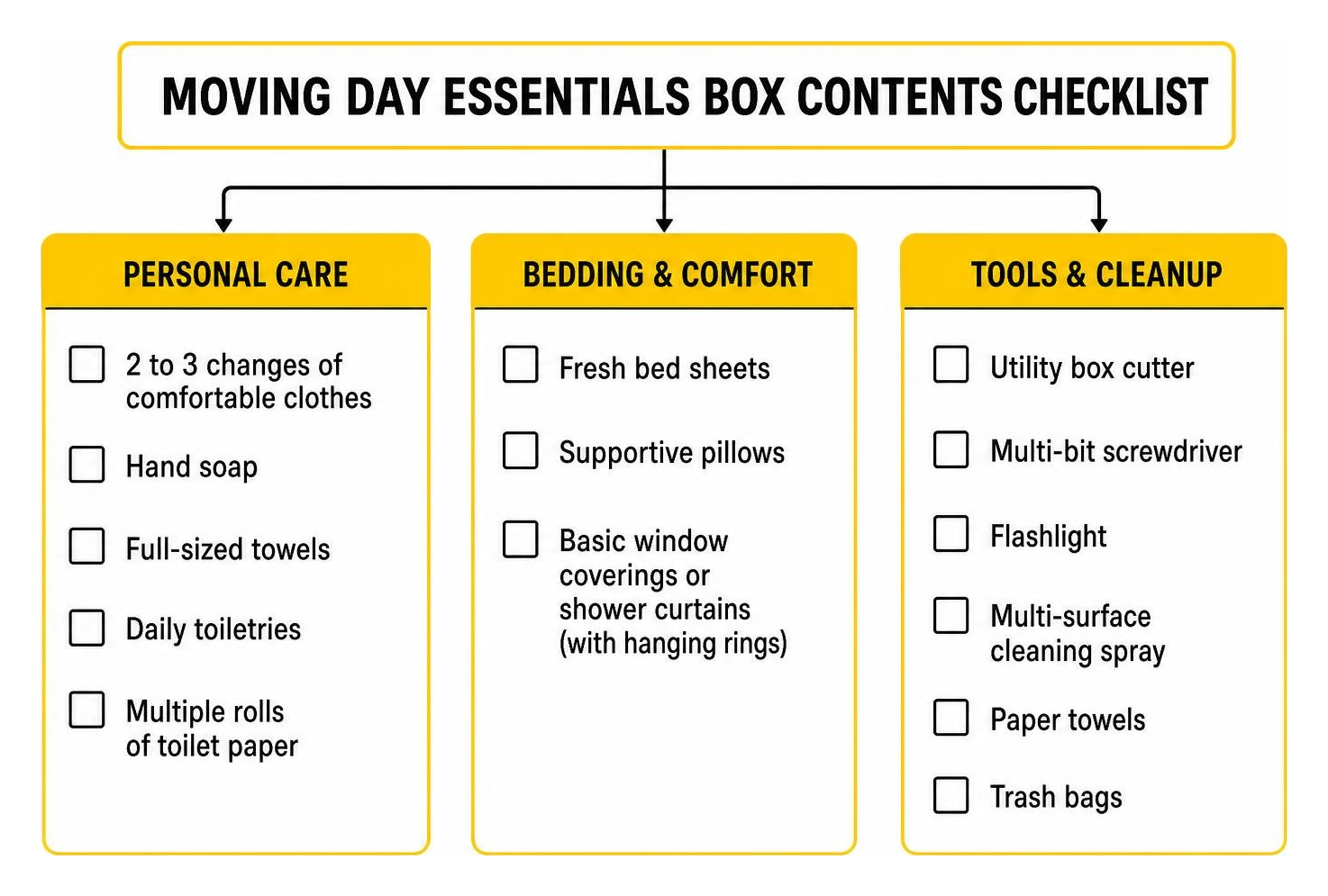
Pack these vital items into a clearly labeled, clear plastic tote or dedicated duffel bag that travels directly with you in your car:
- Personal Care: 2 to 3 changes of comfortable clothes, hand soap, full-sized towels, daily toiletries, and multiple rolls of toilet paper.
- Bedding & Comfort: Fresh bed sheets, supportive pillows, and basic window coverings or shower curtains (with hanging rings).
- Tools & Cleanup: Utility box cutter, multi-bit screwdriver, flashlight, multi-surface cleaning spray, paper towels, and trash bags.
- Tech & Sustenance: Phone chargers, power banks, basic kettle/coffee maker, instant coffee/tea, disposable cups, high-protein snacks, and water bottles.
- Pet Supplies: Pet food, bowls, leashes, waste bags/litter, comfort toys, and required veterinary vaccination certificates.
DIY vs. Full-Service Moving and Unpacking Order
Choosing between self-packing, full-service solutions, or a hybrid arrangement comes down to balancing your available time, physical capacity, and overall relocation budget:
| Relocation Option | Primary Advantages | Considerations & Trade-Offs | Best Suited For |
|---|---|---|---|
| DIY Moving | Lowest initial cash expense; complete control over daily pacing. | Significant physical strain; high risk of lifting injuries; equipment rental costs. | Small studio apartments, local single-room shifts, ultra-tight budgets. |
| Hybrid Packing | 20–30% savings compared to full service; delicate items receive expert care. | Requires personal time to pack general clothing, books, and non-breakables. | Budget-conscious 2–3 bedroom home moves; busy professionals. |
| Full-Service Relocation | Complete peace of mind; rapid execution; full carrier liability protection. | Higher overall financial investment. | Large homes, long-distance shifts, specialty items, tight moving windows. |
If you opt for full-service assistance, exploring how full service packers can save your sanity during a move can help you determine the right level of support. Carrier policies differentiate between Carrier Packed (CP) and Packed by Owner (PBO) cartons: professional movers generally assume internal damage liability only for containers packed by their own crews. If you are juggling heavy work schedules or have valuable heirlooms, sourcing local packing services near me provides guaranteed structural protection and saves days of intense labor.
Once your containers arrive at the destination, unpack in this strategic order:
- Primary Bedroom & Beds: Assemble bed frames, set up mattresses, and make the beds immediately so you have an inviting place to sleep the moment fatigue sets in.
- Primary Bathroom: Hang the shower curtain, set out hand towels, and stock toiletries.
- Kitchen Basics: Set up the refrigerator, coffee station, and everyday dishware for functional morning meals.
- Living Areas & Storage: Progress through living room furniture, wardrobes, home office setups, and decorative artwork over the subsequent 7 days.
Frequently Asked Questions About Packing for a Move
How far in advance should I start packing for a home shift?
You should begin preparing and packing non-essential household items 4 to 6 weeks before your scheduled moving day. Starting early gives you ample time to declutter unwanted goods, systematically organize rooms, and procure uniform supplies without unnecessary stress. Reserve everyday cooking utensils, daily electronics, and essential clothing for the final 3 days leading up to the move.
What items should never go into the moving truck?
Hazardous, combustible, or perishable goods are strictly prohibited from moving trucks by safety and transport regulations. Never pack propane tanks, lighter fluids, motor oils, paint thinners, fireworks, ammunition, aerosol cans, or automotive batteries. Additionally, you should personally transport high-value personal assets—including passports, deeds, birth certificates, fine jewelry, prescription medications, laptops, and live house pets.
How do I prevent moving boxes from breaking under heavy weight?
Prevent structural box failure by matching item density to the proper container size. Always pack heavy, dense items like books, tools, and canned goods into small (1.5 cu. ft.) cartons. Reinforce the bottom seams of every box using the “H-taping method”—applying tape along the center seam and across both exposed side edges. Never leave empty hollow space inside boxes; fill voids with crushed packing paper so the box does not crush under stacking weight.
Conclusion
A successful home move does not happen by accident—it is the direct result of starting early, decluttering ruthlessly, utilizing quality supplies, and maintaining a clear labeling system. By systematically packing non-essentials first, protecting fragile china with edge-loaded vertical stacking, and keeping your sacred first-night essentials bag close by, you can turn moving into an exciting, organized fresh start.
When you need a hand with the heavy lifting or want expert packing protection, Handle With Care Moving & Delivery is ready to assist. We deliver comprehensive, dependable professional moving services across Ann Arbor, Michigan, and the surrounding areas. Our dedicated crews provide transparent, 15-minute-increment billing with no hidden minimum labor charges, complimentary protective pad and stretch wrapping for your furnishings, and specialized discount programs for students, seniors, and military veterans. Reach out to our friendly team today to request your transparent moving quote!