
Keep It Under Wraps and Protect Your Furniture in Storage
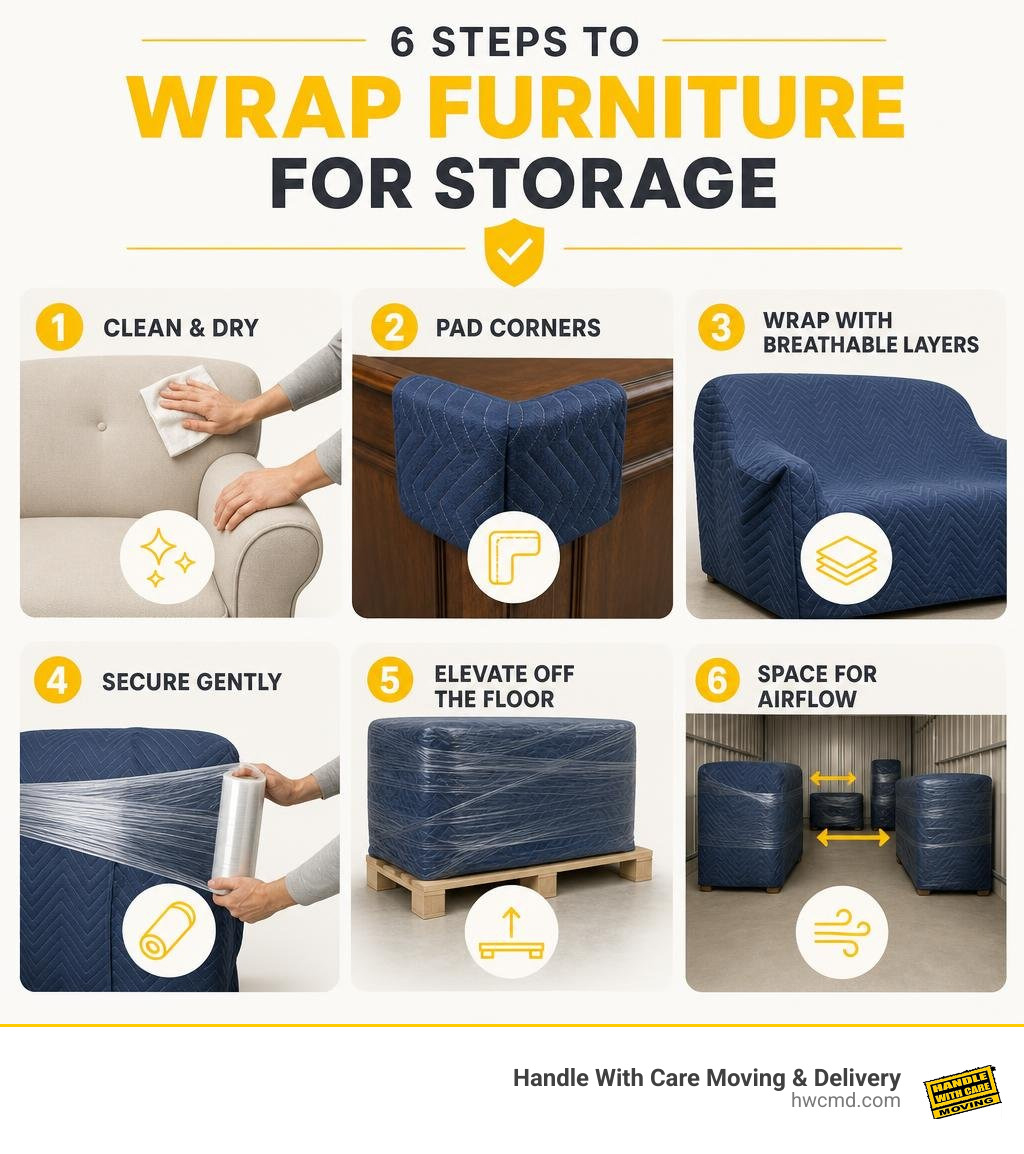
Wrap Furniture for Storage Without Trapping Moisture
For safe wrapping furniture for storage, clean and dry every piece first, protect corners with padding, cover wood and leather with breathable moving blankets or cotton sheets, and use stretch wrap over the protective layer to hold it in place. Keep furniture off the floor and leave small gaps between pieces so air can circulate.
Plastic stretch wrap is useful for securing blankets, cushions, drawers, and dust covers during a local move or short storage stay. But it should not sit tightly against wood, leather, or other finished surfaces for long periods. Airtight plastic can hold moisture against the furniture and raise the risk of mildew, warped wood, or finish damage.
The goal is simple: create a dust barrier, prevent scratches, and allow the furniture to breathe. A few careful steps now can help you avoid replacing a damaged sofa, table, or dresser later.
I am Anthony Denha, President of Handle With Care Moving & Delivery. My team and I plan and oversee moves where wrapping furniture for storage means protecting each piece with the right padding, secure handling, and practical attention to Michigan’s changing humidity.
Handy wrapping furniture for storage terms:
Choosing the Right Materials: Stretch Wrap, Blankets, and Padding
Protecting your household items requires selecting the right supplies for each specific material. Stretch film accounts for roughly 30% of all protective packaging shipments globally, but using it as a universal fix is a recipe for ruined finishes.
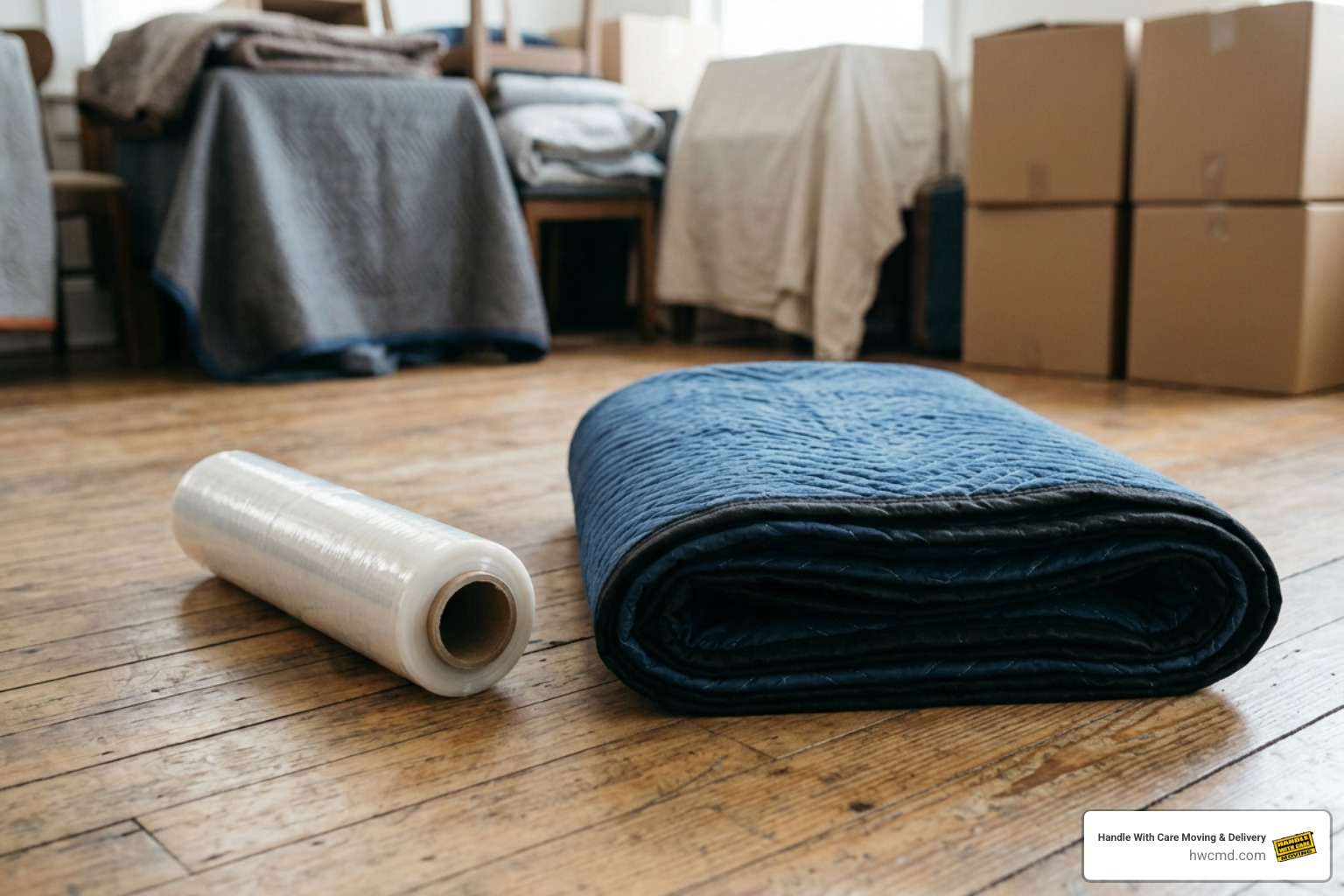
Stretch film is measured in gauge (thickness). For most household items:
- 60-gauge film: Standard lightweight wrap that holds blankets snugly against small chairs or nightstands.
- 80-gauge film: Industrial-strength, heavy-duty wrap designed for large sectionals, heavy dressers, and items with awkward contours. It resists punctures from sharp corners while offering up to 500% stretch ability.
Understanding your options makes a world of difference. Review A Practical Guide to Packing Services & Materials Options to decide what supplies match your specific inventory.
| Material Type | Best For | Direct Surface Contact Safe? | Breathability | Primary Function |
|---|---|---|---|---|
| Stretch Wrap | Securing moving pads, binding parts | No (causes sweat/plasticizer migration) | Non-breathable | Bundling, tension hold, outer seal |
| Shrink Wrap | Marine/industrial outdoor sealing | No (requires high heat gun) | Airtight | Complete weatherproofing |
| Moving Blankets | Wood, leather, polished metal, stone | Yes (quilted, soft surface) | High | Cushioning, scratch defense, airflow |
| Bubble Wrap | Glass, mirrors, delicate ceramics | Only with glass/metal (not raw wood) | Low | Shock absorption, impact protection |
| Cotton Sheets | Long-term antique storage | Yes | Very high | Dust barrier without heat buildup |
Essential Supplies for Wrapping Furniture for Storage
Before packing your unit, assemble professional-grade packing accessories. Following the fundamentals outlined in Packing 101 will keep your prep work organized and efficient.
- Pre-stretched film with built-in handles: Rolls measuring 15 to 18 inches wide with rolling handles reduce hand fatigue.
- Heavyweight textile moving pads: Thick, woven pads absorb physical impacts during transport and shield against dust during storage.
- Rigid cardboard corner guards: L-shaped edge protectors defend vulnerable veneer joints from chipping.
- Fitted plastic mattress and sofa covers: Excellent for shielding fabric upholstery from particulate dust.
- High-tack packing tape: Used strictly to tape blankets to other blankets—never directly to exposed furniture finishes!
- Zip-top bags and clear packing labels: Essential for keeping fasteners paired with their parent pieces.
- Soft cotton twine or moving rope: Useful for tying blanket bundles when minimizing plastic use.
Stretch Wrap vs. Shrink Wrap Differences
People often use the terms “stretch wrap” and “shrink wrap” interchangeably, but they are entirely different materials designed for distinct purposes:
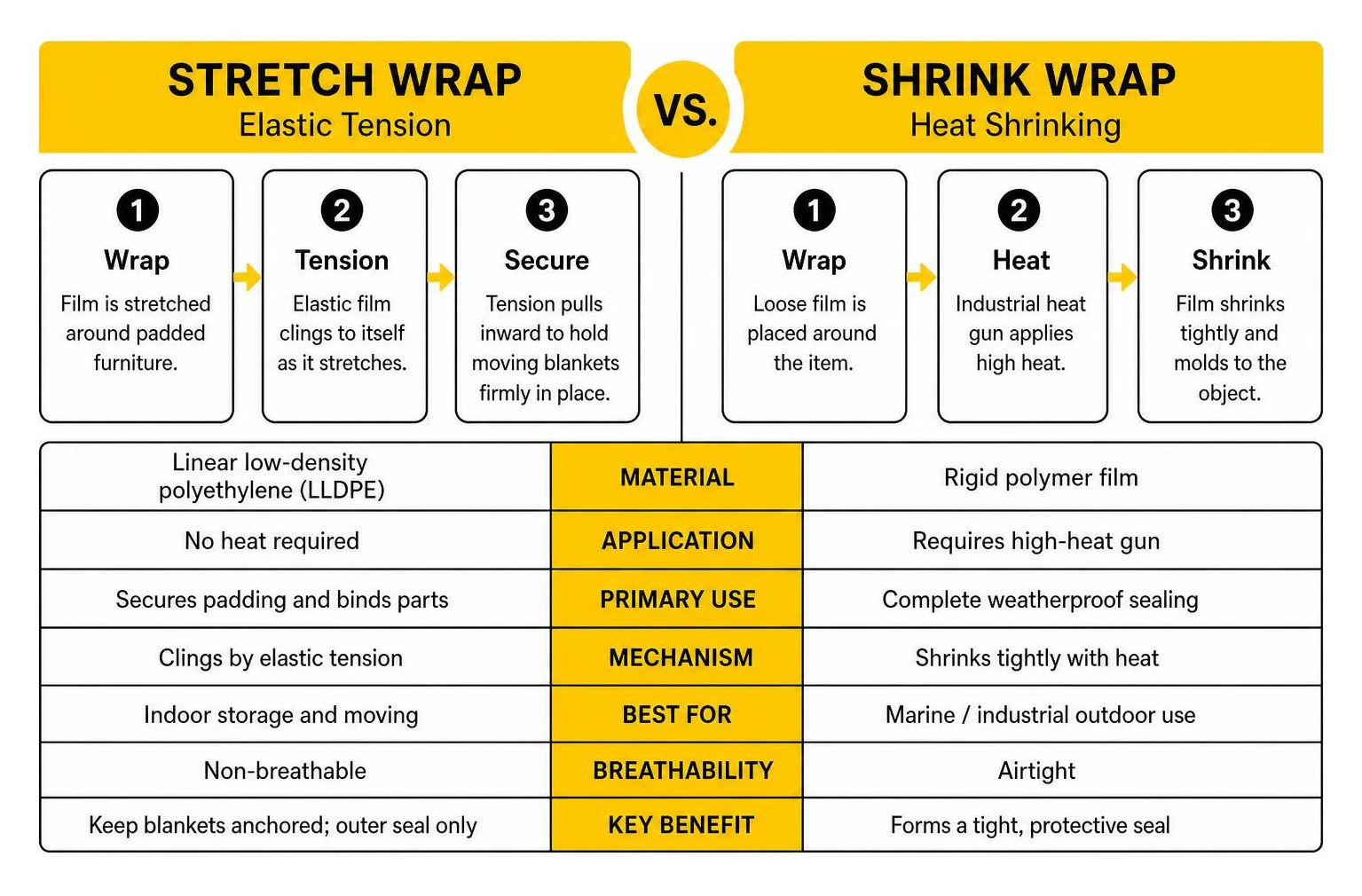
- Stretch Wrap: Manufactured from linear low-density polyethylene (LLDPE). It clings to itself using elastic tension without requiring heat. When stretched around furniture padding, it pulls inward, keeping moving blankets firmly anchored.
- Shrink Wrap: A rigid polymer film that stays loose until blasted with an industrial heat gun, causing it to shrink tightly around an object. It is standard for winterizing boats or sealing outdoor freight, but the excessive heat and airtight seal make it dangerous for indoor furniture storage.
When stretch film sits directly on polished timber or soft leather for months, the plasticizers in the film can leach into the finish. Trapped humidity accelerates mold growth. Always follow the golden rule of 7 Steps to Wrap Furniture for Storage – Meta Craftera: breathable materials touch the surface first; plastic wrap only goes on the outside.
Step-by-Step Guide to Wrapping Furniture for Storage
Proper packing is a methodical sequence. Skipping steps often leads to mold growth or scratched finishes.
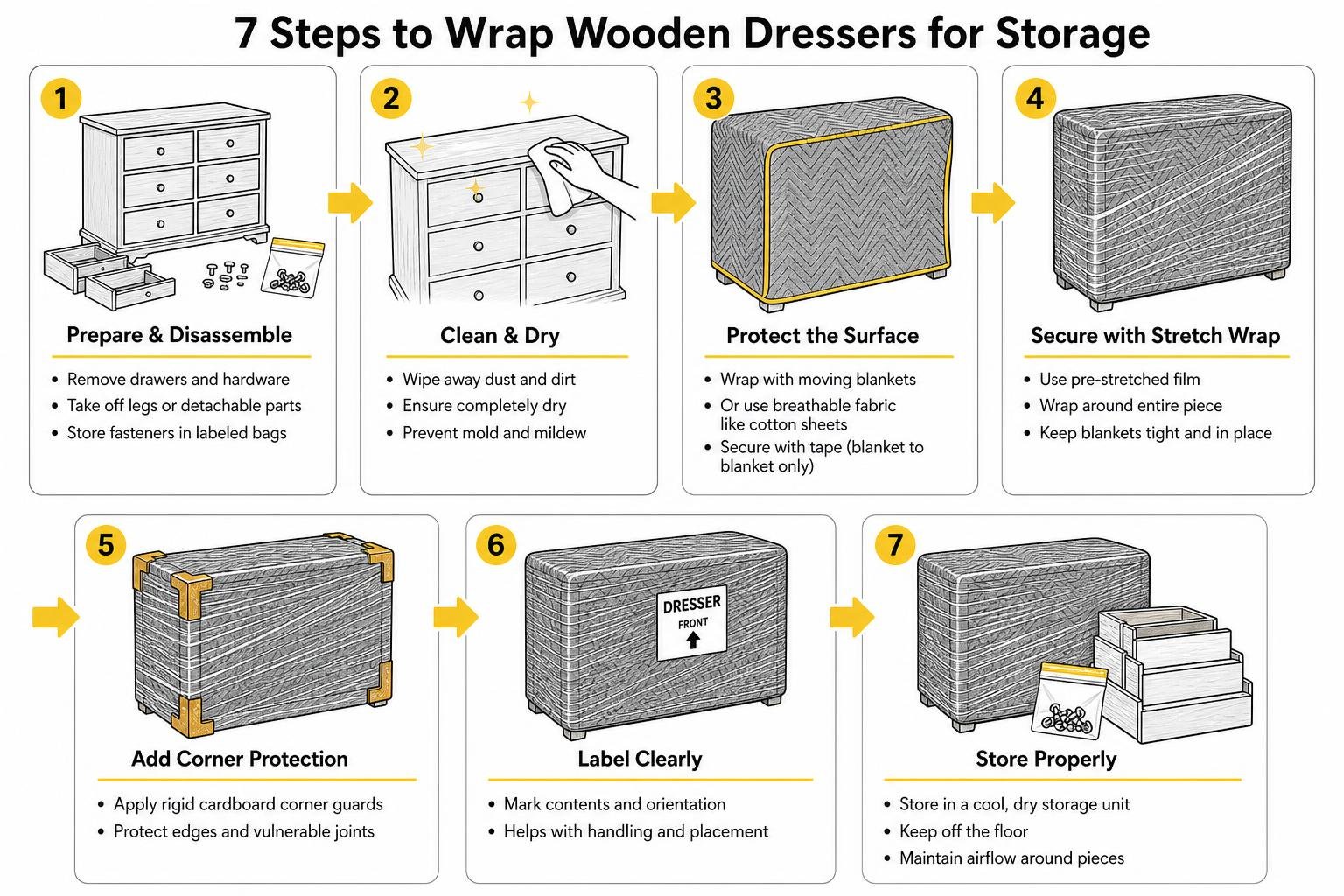
Before lifting a single roll of tape, incorporate these foundational principles alongside our 10 Great Moving Tips to Make Your Move Efficient and Easy.
Preparing and Disassembling Pieces Safely
Disassembly makes heavy items lighter, prevents structural strain on table legs, and maximizes usable space in your storage unit:
- Deep clean and dry completely: Wipe down wood surfaces with a specialized cleaner and dry them with microfiber cloths. Vacuum upholstery thoroughly. Lingering moisture under wrapping is the primary cause of mildew.
- Dismantle modular sectionals and bed frames: Unbolt headboards, remove modular couch connectors, and take the legs off dining tables.
- Bag and label all hardware: Place bolts, nuts, washers, and dowels in a clear zip-top bag. Label the bag with a permanent marker and tape it to the underside of the matching furniture piece.
- Take reference photos: Photograph connection points before disassembling intricate items to make reassembly seamless later.
Wrapping Techniques for Wood, Leather, and Fabric
Different furniture materials require customized protection to maintain their condition over time, as detailed in How to wrap furniture for storage: Everything you need to know – Ready Steady Store:
- Finished & Natural Wood: Never wrap bare wood in plastic. Cover the wood entirely with thick moving blankets or cotton drop cloths. Secure the blankets by wrapping stretch film around the exterior padding. Leave small ventilation openings along the bottom so the timber can adjust to ambient humidity.
- Leather Sofas & Chairs: Clean and condition leather with a quality leather preservative before storage. Wrap the piece in breathable cotton sheets or specialized furniture pads. Avoid sealing leather in airtight plastic, which causes the material to sweat, dry out, and crack.
- Fabric Upholstery: Slip a fitted slipcover or sofa bag over the fabric. If you use plastic covers, place moisture-absorbing silica packets inside the cushions and keep the bottom hem loosely taped to allow airflow.
Protecting Corners, Edges, and Glass Components
Corners and glass require focused impact defense:
- Edge and Corner Guards: Place pre-formed foam or corrugated cardboard corner guards over sharp points before wrapping the entire piece in moving blankets.
- Glass Tabletops and Mirrors: Tape a large “X” across the glass with painter’s tape to dampen vibrations. Sandwich the glass between two sheets of heavy corrugated cardboard, wrap it in dense bubble wrap with bubbles facing inward, and secure it with stretch film. For high-value art, marble, or delicate antiques, explore How Custom Crating Services Protect Your Most Valuable Items.
- The Figure-8 Wrapping Technique: Wrap your stretch film in a continuous crisscross figure-8 pattern over your moving blankets. This locks the top, center, and bottom padding together without applying uneven pressure to delicate legs.
Storing Wrapped Items to Prevent Moisture and Physical Damage
How you position wrapped items inside your unit is just as important as how you wrap them.
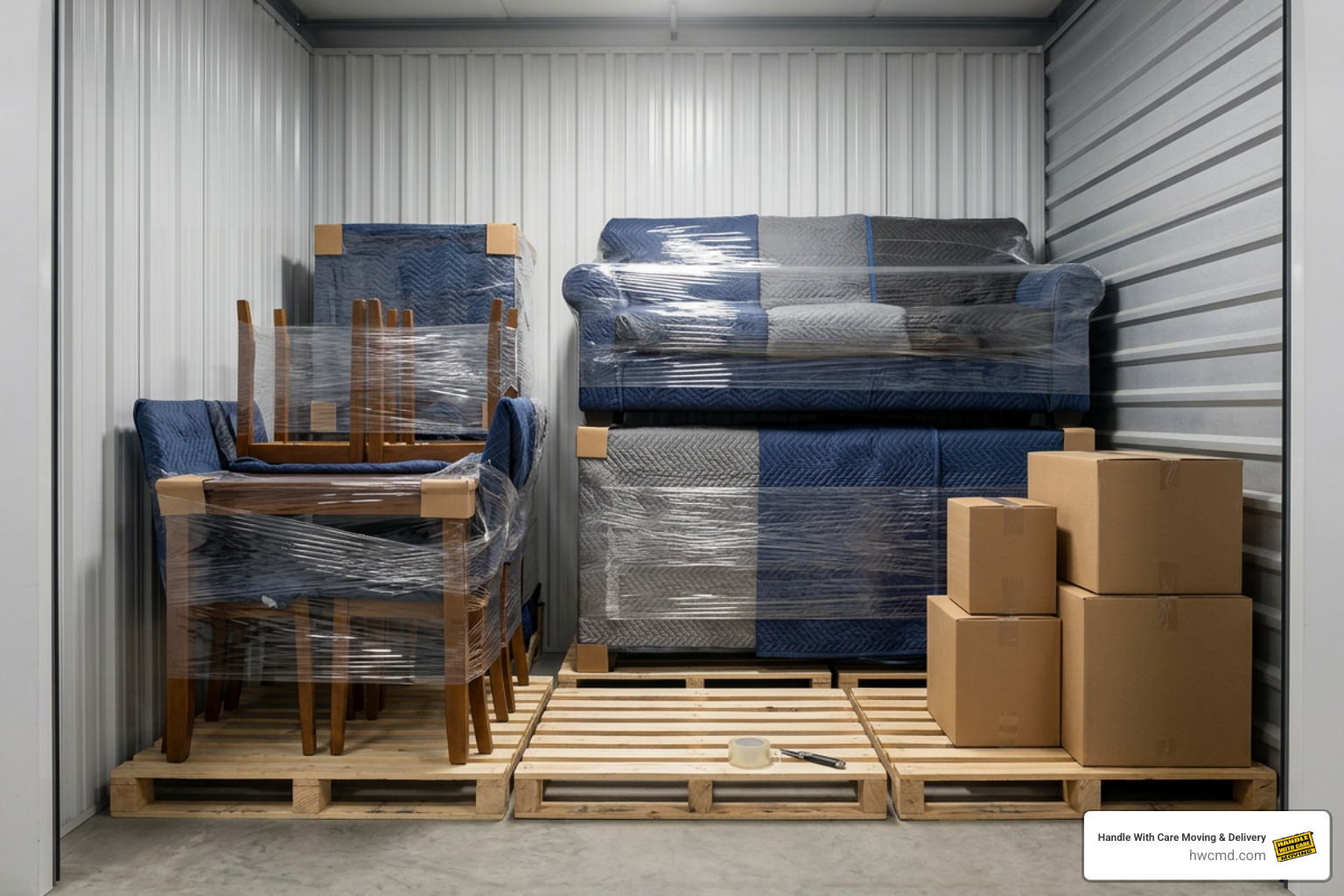
- Elevate off the floor: Concrete floors in storage units can pull moisture from the ground. Place wooden pallets, 2×4 lumber runners, or clean cinder blocks beneath your furniture to create a protective air gap.
- Maintain 5–10 cm perimeter spacing: Never press wrapped furniture flat against storage unit walls. Leave 2 to 4 inches of space between items and walls to promote airflow and prevent condensation buildup.
- Keep glass upright: Never store glass tabletops, large mirrors, or framed artwork flat on their sides. Store them vertically on their long edges, supported by rigid furniture.
- Organize access aisles: Arrange the heaviest, least-used items along the back and leave a central walkway so you can inspect your belongings without moving everything around. When planning your layout, choose a secure Storage space that suits your long-term storage needs.
Common Mistakes When Wrapping Furniture for Storage
Avoid these frequent mistakes when prepping furniture for storage:
- Applying plastic wrap directly to wood or leather: Traps ambient humidity and damages clear finishes.
- Sticking packing tape to bare surfaces: Tape adhesive bonds with varnishes, leaving sticky residue or peeling off paint upon removal.
- Wrapping damp furniture: Even slight dampness on upholstery can turn into mildew in an enclosed unit.
- Leaving drawers loose: Unsecured drawers slide open during handling, damaging drawer slides and hinges. Secure them by wrapping padded blankets tightly with tension wrap.
- Stacking heavy items on unprotected couches: Placing heavy boxes directly on couch cushions creates permanent foam impressions and can bend frame springs.
Frequently Asked Questions About Wrapping Furniture for Storage
Can I use plastic wrap directly on wooden or leather furniture for long-term storage?
No. Plastic wrap should never come into direct contact with wood or leather for long-term storage. Stretch film traps condensation, creating a humid microclimate that softens wood finishes, lifts veneer, and causes leather to mold or crack. Always apply a buffer layer of moving blankets, cotton sheets, or paper padding first, then use stretch wrap exclusively around the outside of the protective padding.
How much stretch wrap do I need for standard household furniture?
A standard 1-to-2-bedroom apartment typically requires two 15-to-18-inch rolls (1,000 feet per roll) of 80-gauge stretch film. For a 3-to-4-bedroom home, plan on three to four 1,000-foot rolls. When wrapping padded pieces, overlap each pass by roughly 50% to ensure even tension and total coverage. Purchasing multi-packs (such as 4-pack bundles) provides better value and ensures you do not run out mid-job.
What is the best way to keep drawers and cabinet doors closed during storage?
Never use adhesive tape across drawers or doors. Instead, remove drawer contents to reduce weight. You can either transport the drawers separately or slide them back in empty, cover the entire dresser with heavy moving blankets, and wrap 80-gauge stretch film tightly around the blanket layer. The elastic tension holds the drawers securely shut without letting adhesive touch the furniture.
Conclusion
Taking the time to clean, pad, and wrap your furniture protects your investment and ensures your belongings come out of storage in the same condition they went in. By pairing breathable moving blankets with heavy-duty stretch film and elevating your items off bare concrete, you prevent moisture damage, finish peeling, and crushed corners.
At Handle With Care Moving & Delivery, we treat your possessions with the highest level of care. We provide complimentary pad and shrink wrapping, straightforward 15-minute billing increments with no minimum labor hours, and dedicated discounts for students, seniors, and veterans across Ann Arbor and surrounding areas. When you are ready for a smooth, stress-free move, explore our full range of Packing Services & Materials and let our expert team do the heavy lifting for you!