
Smart Tips to Move Heavy Furniture Across the House Without Straining a Muscle
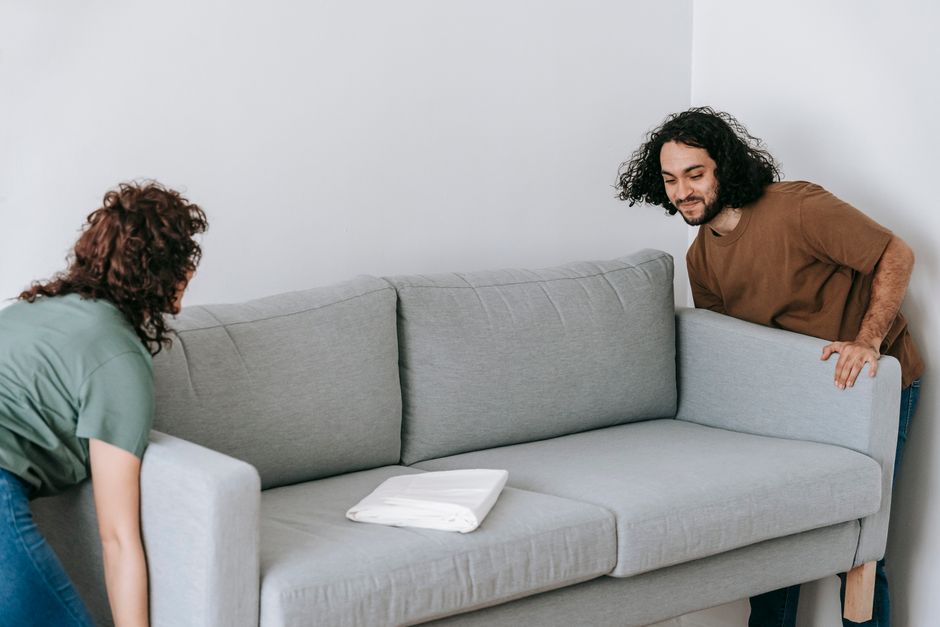
How to Move Heavy Furniture Within Your Home Safely
To move furniture within home spaces safely, clear the route, measure tight doorways, and empty drawers before lifting. Use furniture sliders on suitable floors, protect corners with moving pads, and have a second person help with heavy or awkward pieces. Never drag furniture across a new or unprotected floor.
A little planning can spare your back, your walls, and your budget. The same steps help whether you are rearranging a room or clearing it for new flooring.
I’m Anthony Denha, president of Handle With Care Moving & Delivery. My hands-on work planning routes and protecting furniture has taught me what matters most when people move furniture within home spaces: prepare the path before anyone picks up a piece.
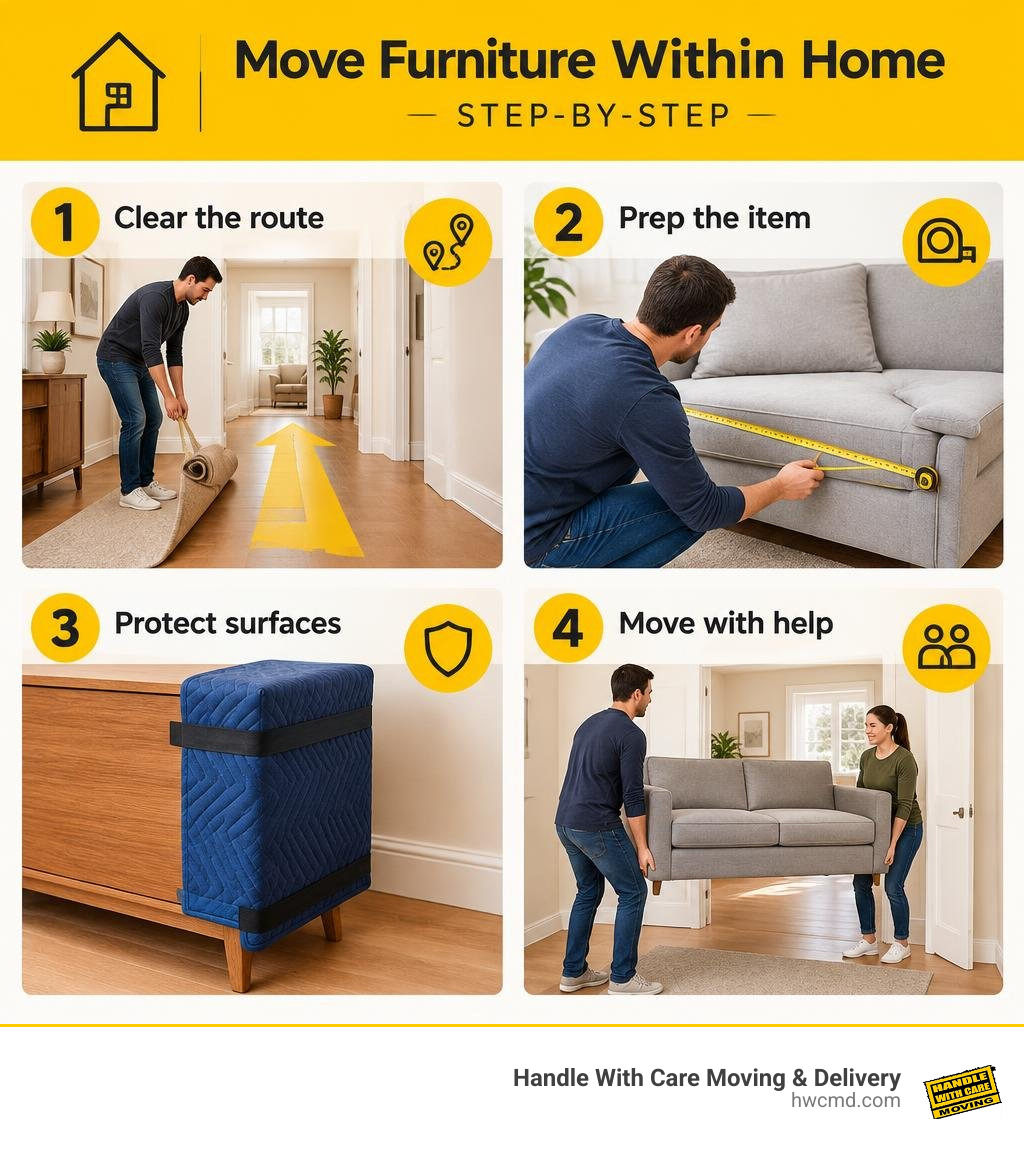
Move furniture within home terms simplified:
How to Move Furniture Within Home Layouts for Renovations and Flooring
Major home improvement projects, such as installing hardwood or plush carpet, demand significant room prep. Flooring crews are skilled craftsmen, but they are not logistical magicians or Tetris masters. When installers arrive at a job site and find rooms still full of heavy sectionals, dressers, and dining sets, work halts immediately. Clearing your rooms before the crew arrives prevents costly project delays, scheduling headaches, and accidental damage to your furnishings. Implementing smart pro moving hacks keeps your renovation on track and protects your household goods throughout the process.
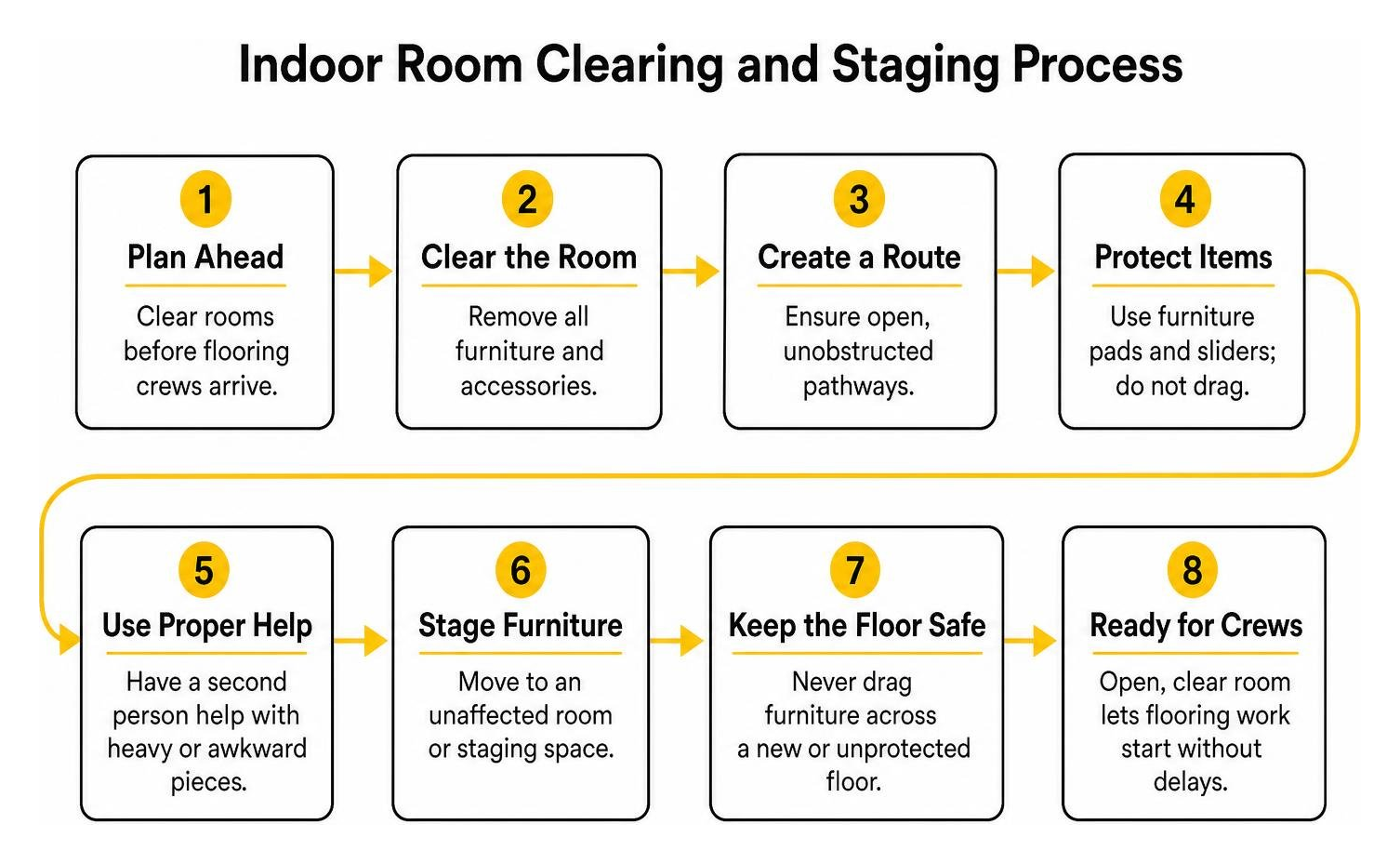
Why Clearing Rooms and Staging Matter
Flooring installers require open, unobstructed subfloors to lay underlayment, cut materials, and secure planks or tiles without constant interruptions. Shuffling a heavy sofa from one side of a room to the other while laying planks creates seams, slows production, and increases the likelihood that sawdust, adhesive, or dropped tools will ruin your upholstery.
Designating dedicated staging zones beforehand solves this problem. If your layout allows, relocate furnishings to an unaffected finished area of the house, like a spare bedroom or formal dining room. When whole-level flooring overhauls consume the entire main floor, leverage staging spaces such as:
- An attached garage (swept clean and laid with protective tarps)
- A dry, finished basement
- An on-site portable storage pod or enclosed utility trailer parked in the driveway
Clearing dedicated work zones gives contractors the physical space they need to complete installations efficiently while your belongings stay completely out of harm’s way.
Master the Two-Move Strategy to Move Furniture Within Home Renovations
The most reliable framework for any remodeling project is the “two-move” rule. This methodology splits intra-home relocation into two distinct operational phases: the pre-installation clearing phase and the post-cure return phase.
Many homeowners underestimate the time required to settle back in. In fact, waiting until the installation is complete to think about move-back logistics is the primary reason families end up living in a half-set-up house for an extra week. Treat the move-back with the exact same level of scheduling rigor as the move-out. Plan where every piece lands, verify curing timelines with your flooring contractor, and book your return labor before the installation crew even strikes their first board.
Packing Fragiles, Emptying Drawers, and Destination Labeling
Before you shift any major piece of wooden or upholstered furniture, strip away all loose contents. Solid wood credenzas, tall armoires, and multi-drawer dressers become significantly lighter and structurally safer to lift once completely empty. Follow these prep steps:
- Empty all drawers and cabinets: Pack the contents into sturdy, sealable bins or cartons. Never leave clothes, books, or heavy items inside a dresser during transit; shifting weight can warp drawer slides, blow out the back panel, or cause sudden imbalances that drop the piece on your toes.
- Pack and box fragile decor: Strip tabletops of lamps, picture frames, vases, and knick-knacks. Following simple steps to protect your furniture and packing small breakables first eliminates trip hazards and prevents shattered glass.
- Label destination rooms clearly: Affix easily removable painter’s tape or color-coded labels to each item indicating its final destination (e.g., “Primary Bed – East Wall” or “Family Room – North Corner”). This simple step ensures that anyone helping with the move-back sets the piece down in its correct spot on the first attempt, preventing unnecessary secondary repositioning.
Safe Lifting and Maneuvering Techniques for Heavy and Awkward Pieces
Lifting heavy, awkward furniture indoors is a skill rooted in body mechanics and physics, not raw brute strength. Improper lifting technique rapidly leads to strained spinal discs, torn lumbar muscles, and damaged property. When handling bulky furnishings, keep your spine neutral, widen your stance to maintain stability, bend at your knees and hips, and engage your core and leg muscles to drive the lift.
Always keep heavy items centered close to your body’s center of gravity rather than holding them out at arm’s length. Reviewing proven techniques for mastering heavy lifting ensures you don’t compromise your spine or overload your joints.
High-Low Carrying and Navigating Tight Doorways
Navigating a tall shelving unit, armoire, or long dresser down an interior hallway requires two people working in synchronized tandem using the “high-low” carry. One mover holds the top of the item tilted backward, while the bottom mover supports the lower base. This angles the center of mass, gives both carriers clear sightlines, and prevents tall items from swinging wildly or scraping low-hanging ceilings.
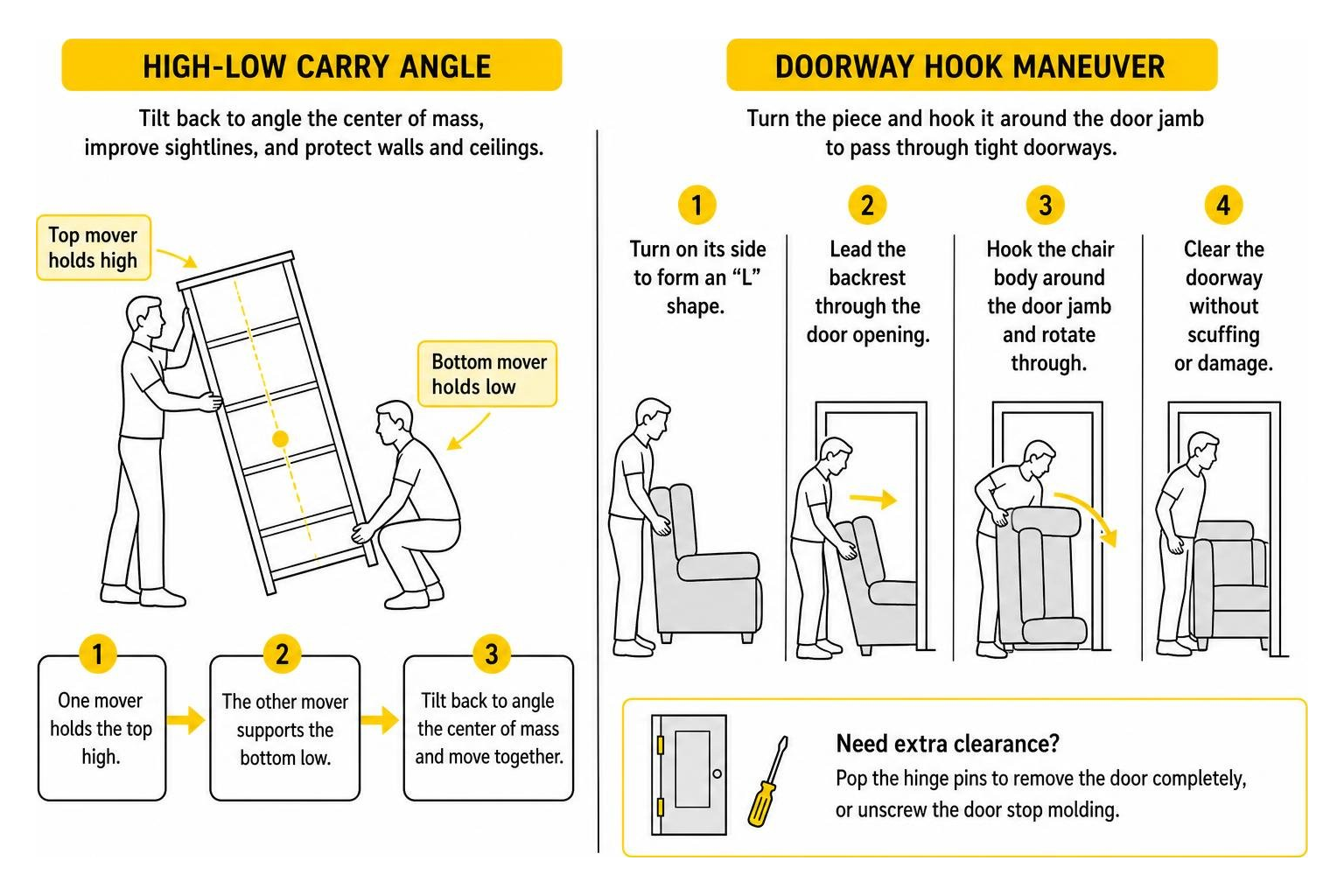
When wrestling a wide armchair through an interior doorway, avoid attempting a flat, square-on push. Instead, employ the “Hook Around” technique, which is one of the classic strategies highlighted in Family Handyman’s top furniture moving tips:
- Turn the armchair on its side so it forms an “L” shape.
- Lead the backrest through the door opening first.
- Rotate or “hook” the chair body around the door jamb, following its natural curve to slip it through without scuffing the frame.
- If you still need an extra inch of clearance, pop the hinge pins to remove the door completely, or unscrew the door stop molding.
Special Handling: Disassembling Recliners, Couches, and Dressers
Whenever an item can be disassembled, take it apart. Reducing an object’s overall dimensions and weight turns a high-risk lift into a straightforward walk.
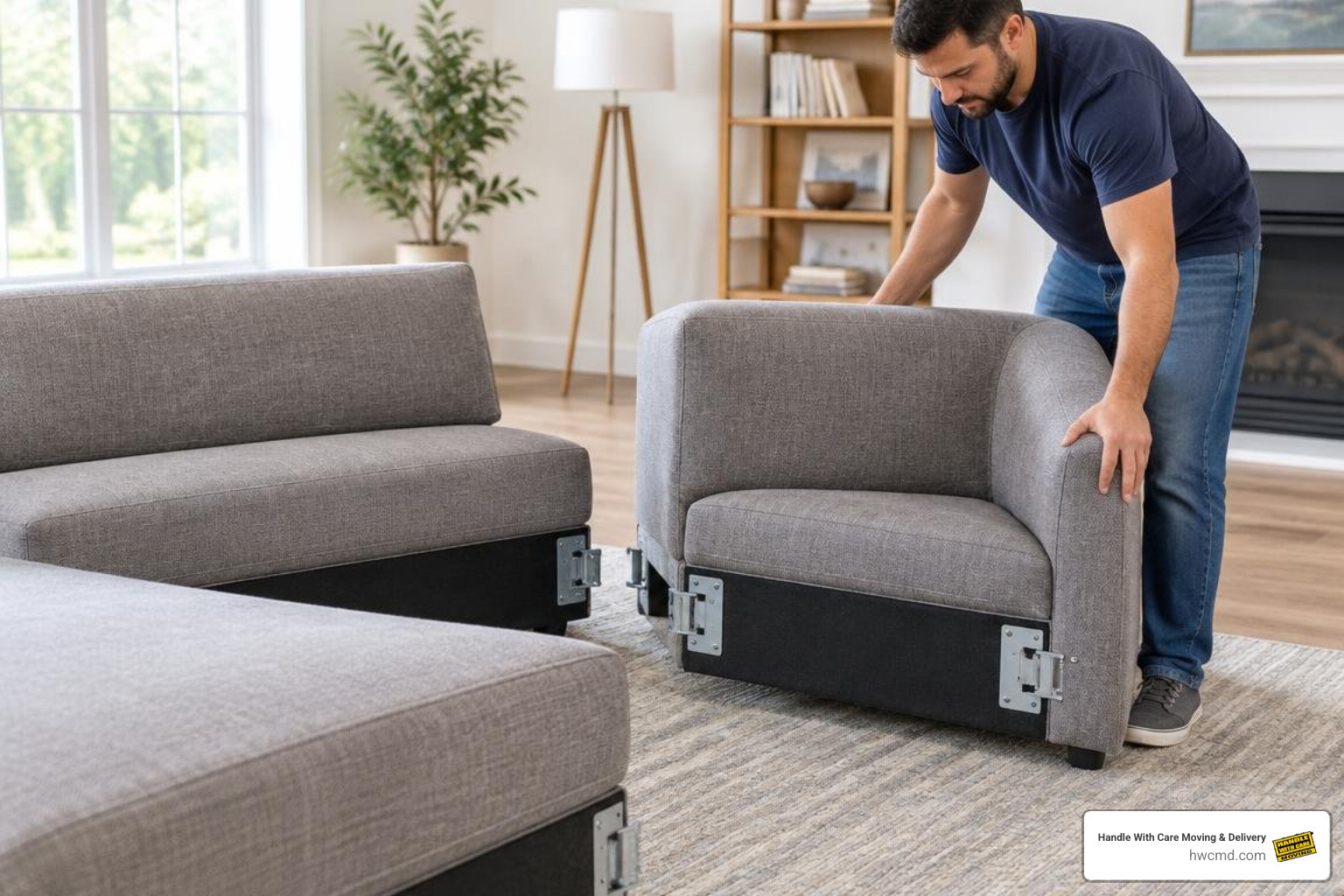
- Sectional Sofas: Unlock the interlocking brackets connecting sectional sofa segments. Move each module individually to prevent frame torsion and dropped segments.
- Recliners: Most modern recliners feature a hidden locking lever on the back brackets. Reach between the seat and back cushion, release the locking tabs on both sides, and slide the backrest straight up and off its track. This cuts the weight almost in half and lowers the profile dramatically.
- Mattresses and Box Springs: Floppy, heavy king or queen mattresses lack rigid handholds. Create a simple mattress sling by threading a heavy-duty strap or sturdy rope underneath the mattress and gripping the ends to walk it easily.
- Stair Navigation: When moving bulky items up or down multi-level floor plans, maintain open communication between carriers. For comprehensive bi-level safety, check our guide on moving furniture up stairs safely to protect your back and wall finishes.
Essential Tools to Protect Walls, Floors, and Your Back
The right moving equipment transforms what feels like an impossible physical strain into smooth, controlled rolling and sliding. Professional movers rarely rely solely on their hands; they leverage mechanical advantage and protective gear to preserve physical stamina and keep your home pristine.
Tools and Equipment to Safely Move Furniture Within Home Layouts
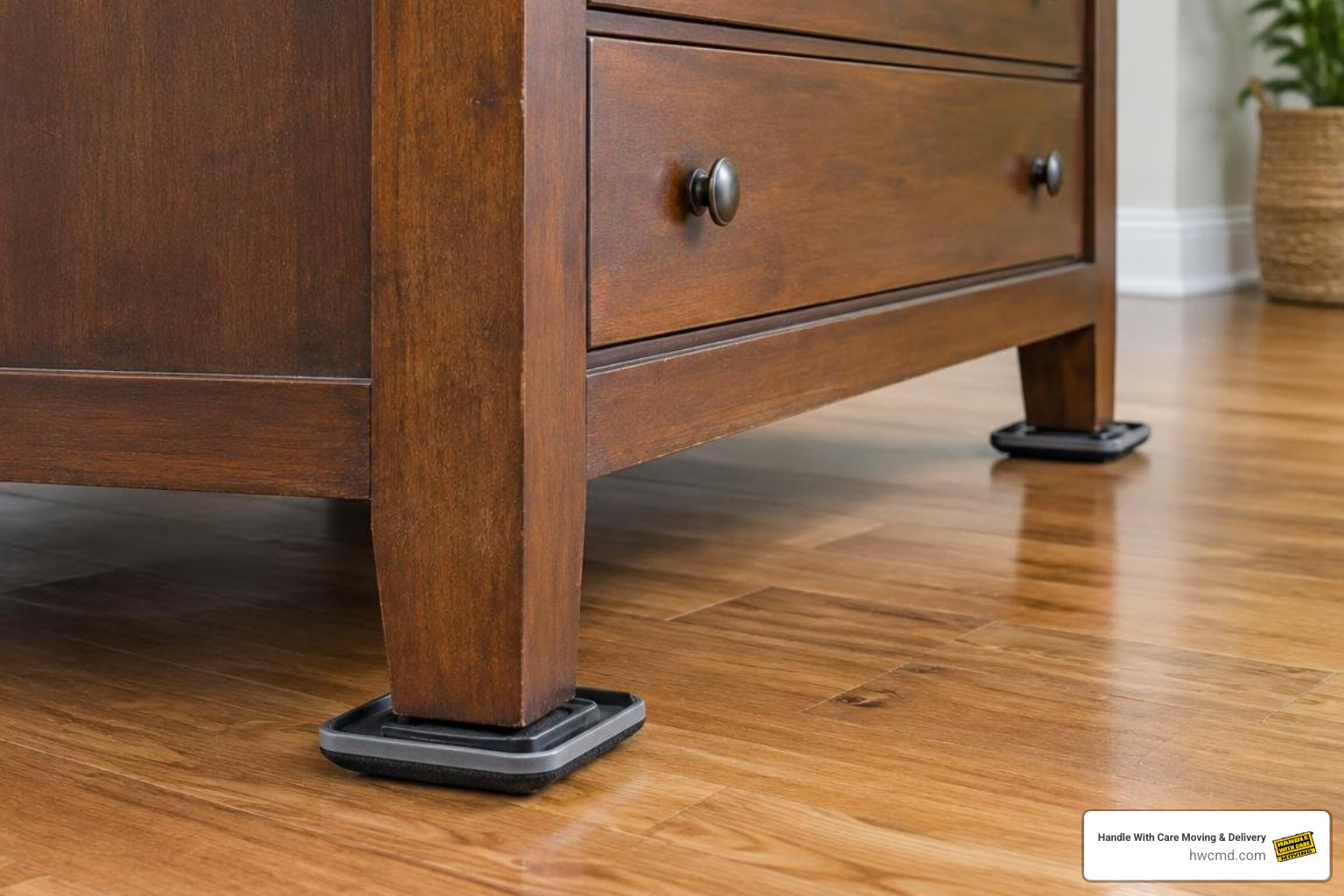
Equipping yourself with basic moving hardware makes indoor room transitions fast and risk-free:
- Furniture Sliders: These are essential for interior rearranging. Use smooth plastic sliders on carpeted surfaces to reduce friction, and switch to soft felt-bottom or rubber-backed sliders on hardwoods, laminate, or tile.
- Forearm Forklifts and Shoulder Dollies: These heavy-duty webbed harnesses use leverage to distribute an item’s mass across your larger muscle groups (shoulders and legs), freeing your hands to balance and guide the piece around corners.
- Four-Wheel Furniture Dollies (Pianos/H-Dollies): Flat, carpet-padded dollies are ideal for rolling heavy credenzas, large filing cabinets, and stacked bins across wide hallways without lifting.
- Hand Trucks: Use a two-wheel hand truck equipped with rubber pneumatic tires to transport tall, heavy appliances or dense vertical cabinets smoothly.
Wall, Trim, and Flooring Protection Strategies
Indoor moving takes place in tight, enclosed quarters where one wrong turn can gouge baseboards or dent drywall. Protecting these surfaces beforehand saves hundreds of dollars in drywall patching and paint touch-ups.
Secure heavy-duty quilted pads to finished wood items using self-adhering stretch film; avoid applying adhesive tape directly to wood finishes, as it can strip stains and varnishes. Layer high-traffic hallways and transitions with neoprene floor runners or overlapping sheets of heavy builder’s paper.
Snap temporary plastic corner guards onto tight 90-degree hallway corners where impacts commonly occur. Wrapping surfaces in durable moving pads creates a protective barrier that absorbs bumps against door jambs and narrow walls.
DIY vs. Hiring Pros: When to Call In-Home Moving Labor
While moving a lightweight nightstand or dining chair is an easy weekend DIY task, massive or delicate specialty items carry significant liability. Attempting to maneuver heavy items across rooms without proper training risks torn flooring, cracked door frames, and serious bodily injuries.
Specialty items like slate pool tables and acoustic pianos demand professional intervention:
- Pool Tables: Slate pool tables weigh between 600 and 1,000 pounds and feature precision-leveled slate beds. Shifting them without full disassembly ruins the level, bends internal frame bolts, and risks cracking the slate.
- Pianos: Uprights and grand pianos have delicate internal pin blocks, soundboards, and concentrated internal cast-iron plates that require specialized piano boards, heavy straps, and trained rigging skills.
| Feature / Factor | DIY Indoor Moving | Professional Intra-Home Labor |
|---|---|---|
| Typical Direct Cost | $20 – $60 (Tool rentals, sliders, straps) | $157 – $336 (National average for heavy item handling) |
| Time Required | High (Half-day to full weekend) | Low (1 to 2 hours of focused labor) |
| Physical Injury Risk | High (Back strains, crushed fingers, falls) | Minimal (Trained crews handle all heavy lifting) |
| Property Damage Risk | Moderate to High (Scuffed trim, gouged floors) | Minimal (Insured professionals provide wall/floor protection) |
| Specialized Equipment | Limited (Basic sliders or rented dollies) | Comprehensive (Harnesses, ramps, padded dollies, moving blankets) |
In-Home Furniture Moving Costs in 2026
When evaluating intra-home relocation, professional labor is often surprisingly affordable. As of 2026, the national average cost to move furniture and heavy items ranges from approximately $157 to $336. Small, single-item repositioning projects have a low-end cost around $94, while complex, whole-house staging or delicate multi-flight moves can reach $612.
Specialty items carry dedicated pricing:
- Moving a pool table ranges from $200 to $600, depending on slate disassembly needs.
- Moving an upright or baby grand piano averages between $175 to $500.
Navigational challenges directly influence labor time and pricing. Moving a bedroom set up a straightforward, single-flight staircase may take under 60 minutes and cost approximately $65. Moving that exact same bedroom set up a winding staircase with a narrow landing, tight turns, and low ceilings can take closer to two hours and cost $130.
If you are coordinating labor on a budget, consult our guide on finding affordable moving assistance to balance cost and safety.
How to Save Money on Intra-Home Moves
You can dramatically reduce your labor bill when hiring hourly movers by handling non-lifting preparation tasks yourself before the crew steps through your door:
- Disassemble Beds and Tables: Remove bed frames, unscrew dining table legs, and detach mirror mounts from dressers prior to the crew’s arrival.
- Consolidate Small Hardware: Place screws, washers, and dowels into labeled plastic bags and tape them securely to the corresponding furniture piece.
- Clear All Pathways: Prop open interior doors, clear hallway rugs, and relocate small decor so the movers have a clear, uninterrupted route from the moment they clock in.
- Consolidate Service Calls: Group all your in-home moving needs—such as basement decluttering, living room staging, and bedroom remodeling prep—into a single appointment to maximize minimum labor windows.
Frequently Asked Questions About Moving Furniture Indoors
When is it safe to move furniture back onto newly installed floors?
Timing depends on your specific flooring material and installation method:
- Floating Luxury Vinyl Plank (LVP) & Laminate: Furniture can generally be returned immediately after installation, as no wet glues or adhesives are used.
- Glue-Down Engineered Wood & Vinyl: Require a minimum cure time of 24 hours before supporting standard furniture weight.
- Site-Finished Hardwood (Polyurethane): Wait at least 24 to 48 hours for light foot traffic and furniture placement; wait a full 7 to 30 days before laying down large area rugs to allow finishes to cure fully.
- Always apply heavy-duty adhesive felt pads to the feet of all furniture returning to new hard surfaces.
How do you maneuver a large couch through a narrow hallway or corner?
When hallway width is restricted, stand the sofa vertically on its strongest end (the armrest end), with the seating surface facing inward. Drape a protective pad under the bottom arm to shield fabric or leather.
Slowly pivot and slide the sofa along the floor, twisting the top end through doorway openings and around tight corners. If clearance is still tight, unscrew the wooden or metal sofa legs to gain two to four crucial inches.
What is the average cost to hire movers to rearrange furniture within a house?
Most intra-home rearranging projects average between $150 and $300. Labor providers generally charge flat hourly rates with minimal time minimums. The final cost depends on the number of heavy pieces, staircase access, and whether specialty assembly or disassembly is required.
Conclusion
Successfully rearranging your home layout or clearing rooms for a major flooring update does not require risking your spinal health or scuffing fresh paint. By adopting the two-move strategy, using furniture sliders, disassembling bulky components, and taking advantage of leverage with lifting straps, you can protect both your home and your physical well-being.
When dealing with oversized armoires, multi-level stairs, or heavy specialty items like pianos, partnering with a dependable team makes all the difference. At Handle With Care Moving & Delivery, our experienced movers handle every intra-home transition with care. Operating from our local headquarters at 4260 Varsity Dr, Ann Arbor, we bill local moves transparently by the hour plus travel rate, providing free pad and shrink-wrap protection, no-minimum labor hours, and special discounts for seniors, students, and veterans. We even offer lightly used boxes, recycled packing paper, and free material delivery in most local cases.
Take the stress and heavy lifting out of your next indoor home renovation. Reach out to Anthony Denha and our team today for dedicated professional in-home moving services that treat your space with expert care!