
Smart Buyer’s Guide to Durable Furniture Pads for Moving
Which Furniture Pads for Moving Should You Buy?
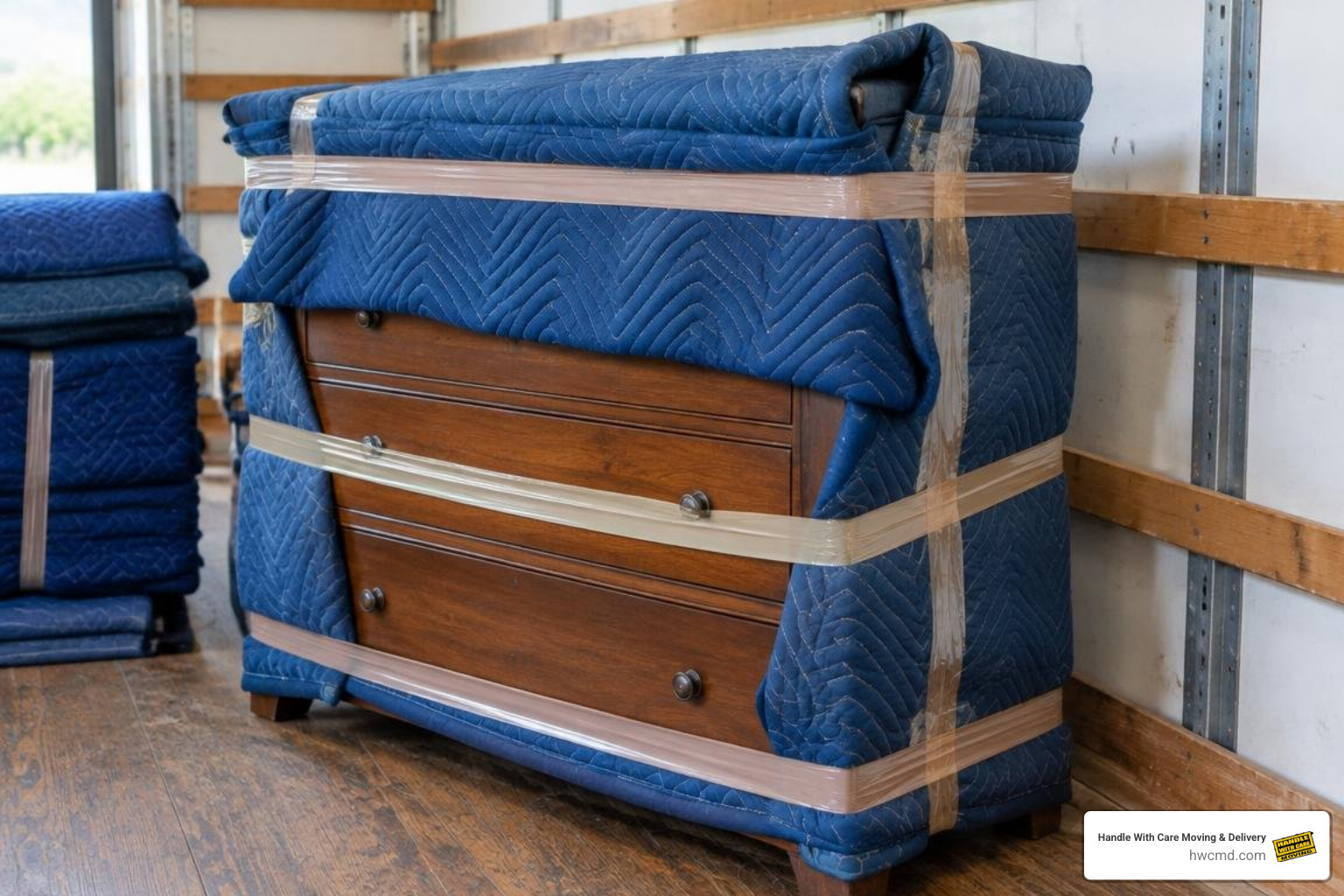
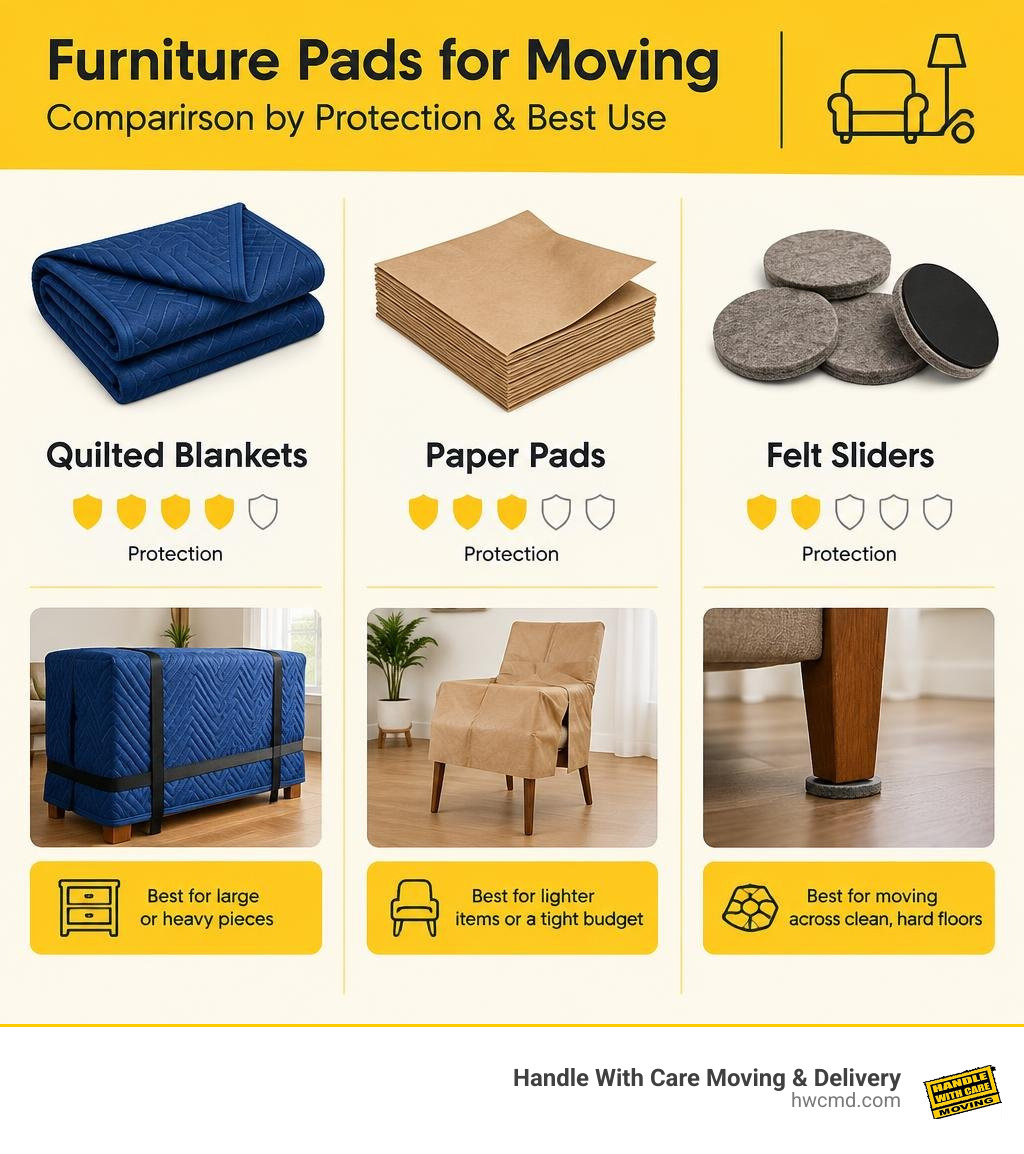
Buy quilted moving blankets for large or heavy pieces you need to cushion during transit. Choose multi-layer paper pads for lighter items or a one-time move on a tight budget. Add felt slider pads if you need to move furniture across a clean, hard floor; they protect the floor but do not replace a blanket around the furniture.
Check each pad’s size before buying, and plan on more than one blanket for large pieces or exposed corners. For glass, fragile edges, or delicate finishes, add the right layer of protection rather than relying on a pad alone.
I’m Anthony Denha, president of Handle With Care Moving & Delivery. I’ve seen how choosing and securing furniture pads for moving can help protect a piece, so this guide starts with what each type does best.
Furniture pads for moving terms simplified:
Types of Furniture Pads for Moving and How They Compare
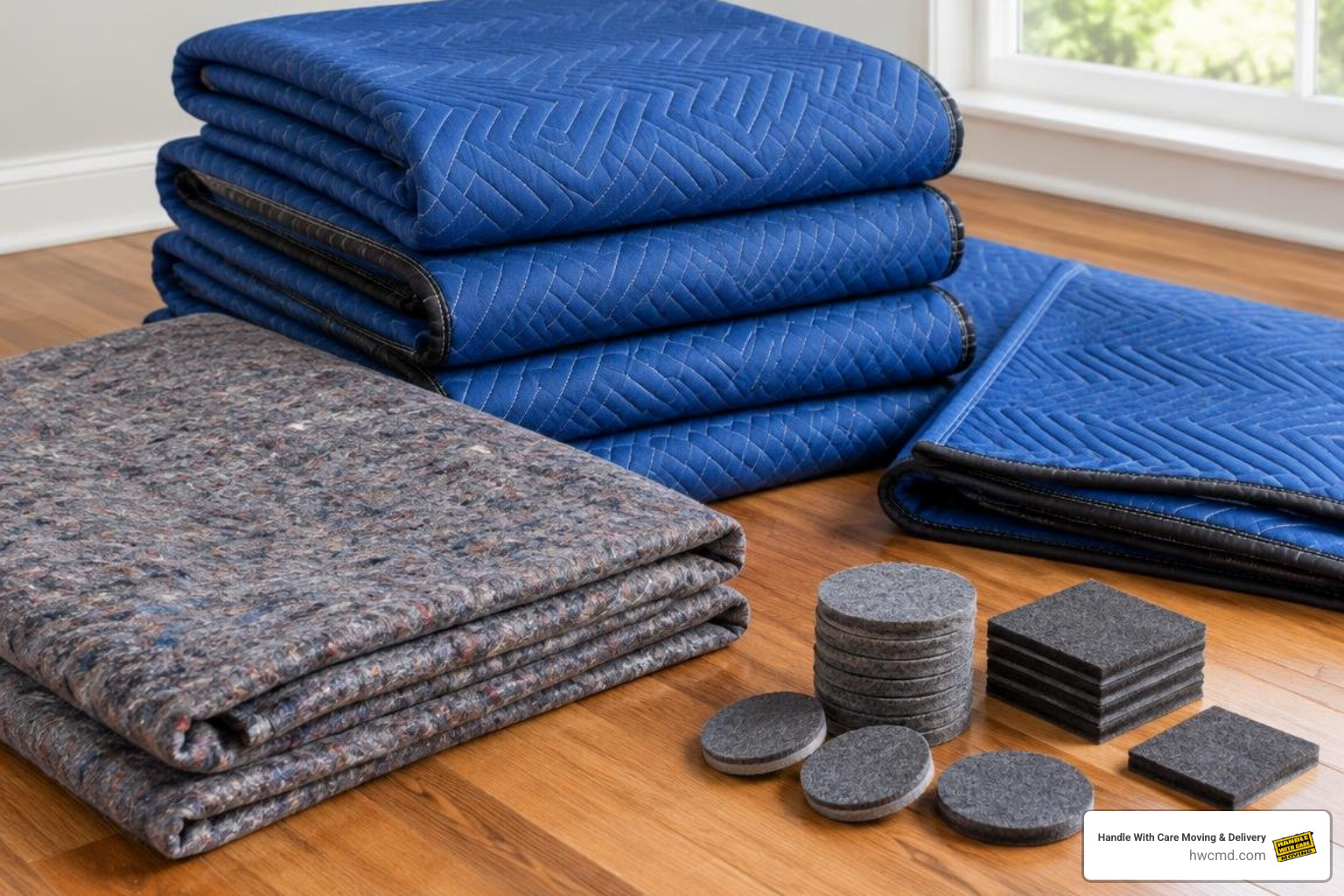
When preparing household goods for transport, selecting the right protective barrier is essential. Different pads serve distinct functions, from providing shock absorption inside a moving truck to easing physical strain across delicate flooring. Consulting a comprehensive guide to suitable packing materials helps ensure you match the exact density and material of your wrap to the fragility of your cargo.
| Pad Type | Primary Material | Cushioning Level | Reusability | Best For |
|---|---|---|---|---|
| Quilted Textile Blankets | Cotton/Poly Blend, Recycled Cotton | High (Shock-Absorbing) | High (Multi-Year Use) | Heavy wood, appliances, upholstered sofas |
| Multi-Layer Paper Pads | 3-Ply Recycled Kraft Paper | Moderate (Scratch/Dust) | Low to Medium (Recyclable) | Short trips, framed art, budget moves |
| Felt Floor Sliders | Dense Felt + Hard Plastic Shell | Specialized (Floor Shield) | High (Multi-Year Use) | Gliding dressers and tables across hard floors |
Heavy-Duty Textile Moving Blankets
Heavy-duty textile moving blankets represent the industry gold standard for transit protection. These blankets feature a dense cotton-polyester blend exterior with recycled cotton or synthetic batting on the inside, reinforced by structural zig-zag stitching. This quilted pattern prevents internal fibers from shifting, maintaining an even protective barrier across every square inch of your furniture.
For full-home relocations or high-value hardwood items, investing in durable packs like WEN 72 in. x 80 in. Heavy-Duty Padded Moving Blankets (12-Pack) ensures robust tear resistance against sharp edges, strap tension, and vehicle vibration. These multi-use blankets offer dependable, reusable cushioning for standard household loads and can withstand rigorous transport demands.
Multi-Layer Paper Pads
Multi-layer paper pads consist of three layers of resilient Kraft paper. Unlike standard packing paper, these pads offer an embossed, multi-ply construction that creates tiny pockets of air for surface protection and dust shielding.
Triple-layer paper moving pads are lightweight, cost-effective, and fully recyclable. While they lack the deep shock absorption of heavy textile pads, they excel at shielding flat wood finishes, mirrors, and medium-sized decor from abrasions during short-distance relocations.
Felt Floor Slider Pads
Felt floor slider pads are designed to protect interior flooring while maneuvering heavy furniture. Moving heavy credenzas, armoires, or dining tables across oak or tile flooring can result in deep gouges without proper weight distribution.
Using quality options like Shepherd Hardware reusable felt furniture mover pads combines a smooth felt base with a cushioned foam top. Placing one under each furniture foot allows a single person to glide substantial weight across hardwood, laminate, or tile smoothly without floor friction or strain.
Cloth Blankets vs. Paper Pads: Protection and Material Differences
Understanding the structural differences between cloth blankets and paper pads helps prevent transit damage. Textile blankets provide thick padding, high tensile strength, and multi-directional tear resistance. When secured tightly against sharp corners, cloth flexes without ripping, absorbing kinetic energy when items shift over bumps.
Paper pads provide a non-abrasive, static-free barrier ideal for short hauls, dust containment, and lightweight protection. However, paper lacks resistance to moisture and can tear under heavy friction. Reviewing the ultimate local guide to buying packing supplies makes it simple to balance material costs against the required level of transit protection.
How to Choose the Right Furniture Pads for Moving
Choosing the right pad depends on furniture finish, weight, transit duration, and climate conditions.
- Vulnerable Wood Veneers & Solid Hardwood: Use thick, breathable quilted cotton-poly blankets. Wood requires airflow to prevent moisture buildup while demanding structural padding against deep scratches.
- Upholstered Sofas & Armchairs: Wrap directly with quilted blankets before applying stretch wrap. Blankets shield delicate fabric from friction tears, while outer film prevents soil and moisture accumulation.
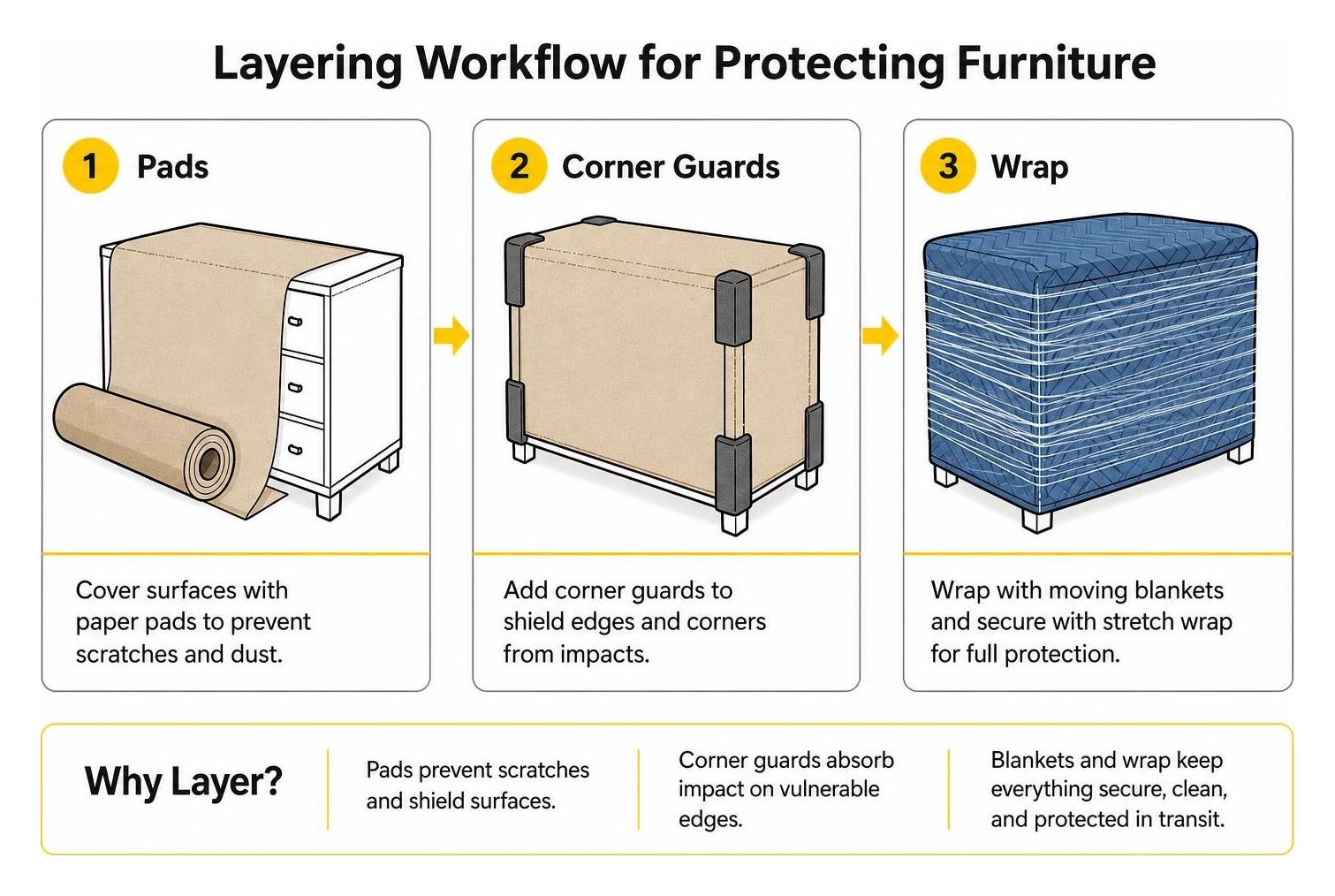
- Glass Tabletops & Mirrors: Combine materials. Place a non-abrasive paper pad or foam layer against the glass face, add corner protectors, wrap with a heavy quilted blanket, and finish with outer cardboard.
- Long-Term Storage Applications: Ensure you protect your furniture in storage by avoiding raw plastic wrapped directly against organic finishes, opting instead for breathable cloth pads.
Comparing Moving Pads to Bubble Wrap and Boxes
Moving pads fill a distinct protective role compared to corrugated boxes and bubble wrap. Bubble wrap offers excellent localized impact resistance for fragile decor, but wrapping large wood pieces entirely in bubble wrap traps heat and condensation, which can cloud lacquered finishes and soften delicate veneers.
When preparing substantial items, mastering the heavy lift for large furniture requires breathable, full-coverage blankets that absorb broad-surface impacts while allowing the underlying materials to breathe during transport.
Best Practices for Wrapping, Securing, and Maintaining Pads
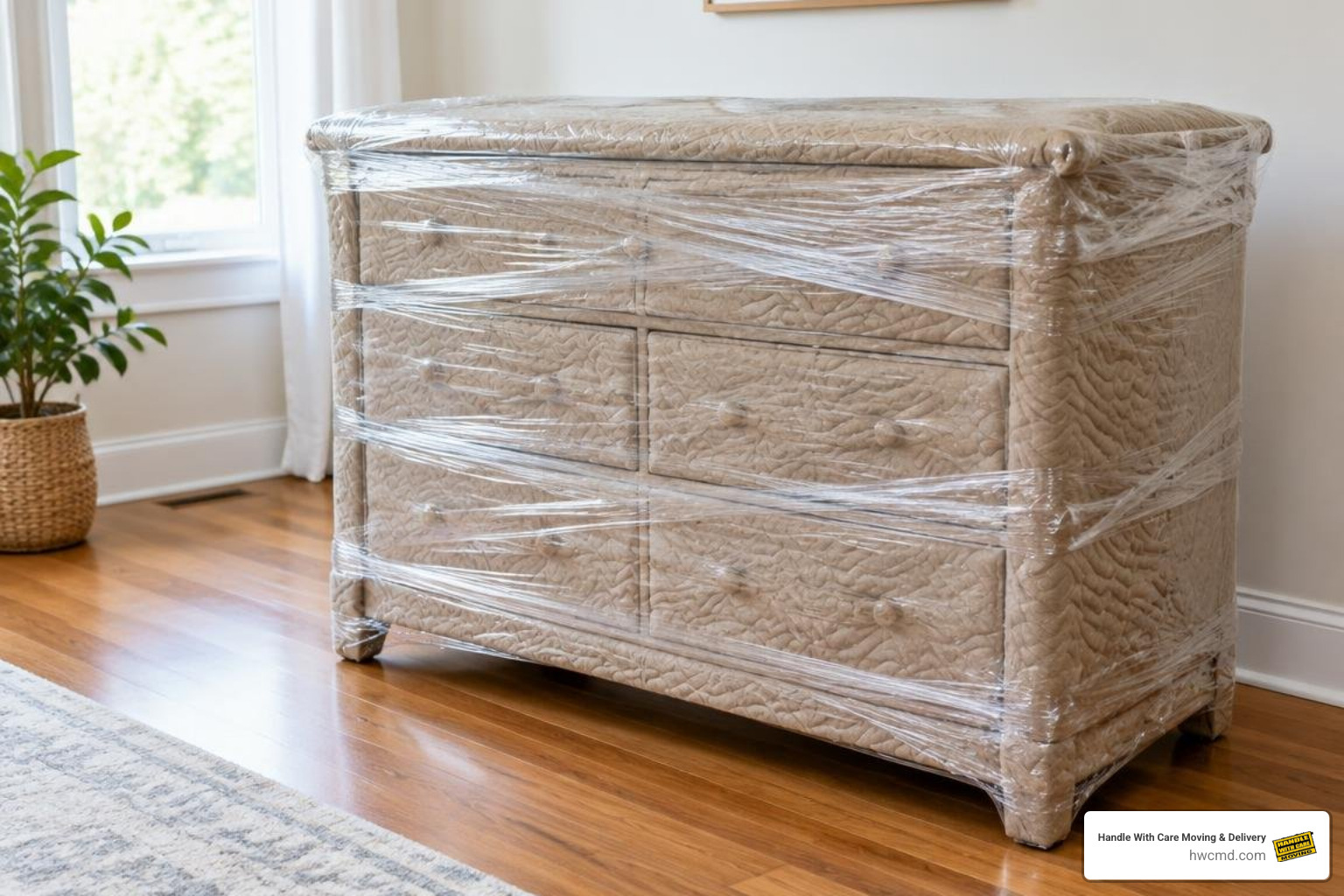
Proper technique ensures your furniture pads remain effective throughout transit:
- Pre-Clean Surfaces: Wipe away all grit and dust from the furniture surface before padding. Trapped grit under a tightly compressed blanket acts like sandpaper against fine finishes during transport.
- Drape and Fold Corners: Center the blanket over the item. Fold excess fabric tightly around corners, creating flat hospital corners that eliminate loose bunches and prevent snagging on door frames.
- Secure with Bands or Stretch Film: Use heavy-duty mover rubber bands to hold blankets firmly in place. When using stretch wrap, wrap only over the blanket—never apply adhesive tape or plastic wrap directly to wood or leather finishes.
- Pad the Base and Feet: Ensure blanket coverage extends completely past the lowest edges and feet of the piece to protect against floor contact, truck bed vibrations, and ramp friction.
- Layer Corner Guards for Fragile Edges: For ornate molding, marble edges, or delicate veneers, slip corrugated corner guards underneath or over the padded blanket for extra reinforced impact resistance.
How Many Furniture Pads for Moving Do You Need?
A standard moving blanket measures 72 inches by 80 inches. Larger household pieces often require multiple pads for comprehensive coverage:
- Large 3-Cushion Sofa: 2 to 3 blankets
- 6-Drawer Bedroom Dresser: 2 blankets
- Standard Dining Table + 6 Chairs: 4 to 6 blankets
- Refrigerators & Large Appliances: 2 heavy-duty blankets
- Nightstands & End Tables: 1 blanket each
- Sectional Couch Pieces: 1 to 2 blankets per modular section
Planning your inventory accurately alongside smart moving ideas to reduce costs prevents supply shortages on moving day. You can also explore ten moving tips for an efficient move to optimize your wrapping and packing process.
Frequently Asked Questions About Furniture Moving Pads
Can furniture pads be washed and reused for multiple moves?
Yes. High-quality quilted textile blankets are machine washable. Wash them on a gentle cycle using cold water and mild detergent, then hang them to air-dry. Avoid high heat in commercial dryers, which can degrade synthetic internal padding and shrink outer stitching.
Are moving pads safe for direct contact with wood, glass, and leather?
Quilted cotton and polyester pads are safe for direct contact with wood, glass, and leather. Their non-abrasive lining shields finishes without scratching, while breathable fabric weaves prevent moisture condensation that causes finish fogging.
Is it better to buy or rent moving blankets for a DIY move?
Renting moving blankets makes financial sense for a one-day, local relocation when you have immediate return access. However, purchasing a pack is often more economical for long-distance relocations, long-term storage, home renovations, or general workshop utility.
Conclusion
Selecting the right furniture pads protects your valuable household goods from scratches, dents, and transit wear. Investing in durable, high-density quilted blankets ensures reliable cushioning, while pairing them with felt sliders prevents scuffs on your floors.
At Handle With Care Moving & Delivery, based at 4260 Varsity Dr in Ann Arbor, our team delivers careful handling on every relocation. Local moves are billed hourly plus a travel rate, with lightly used boxes and recycled paper available, and material delivery is free in most cases. Whether you need full packing support or heavy lifting, explore our expert moving and packing services to get your relocation underway safely.
— Anthony Denha