
Smart Earth Friendly Packaging Materials to Wrap Your Goods Sustainably
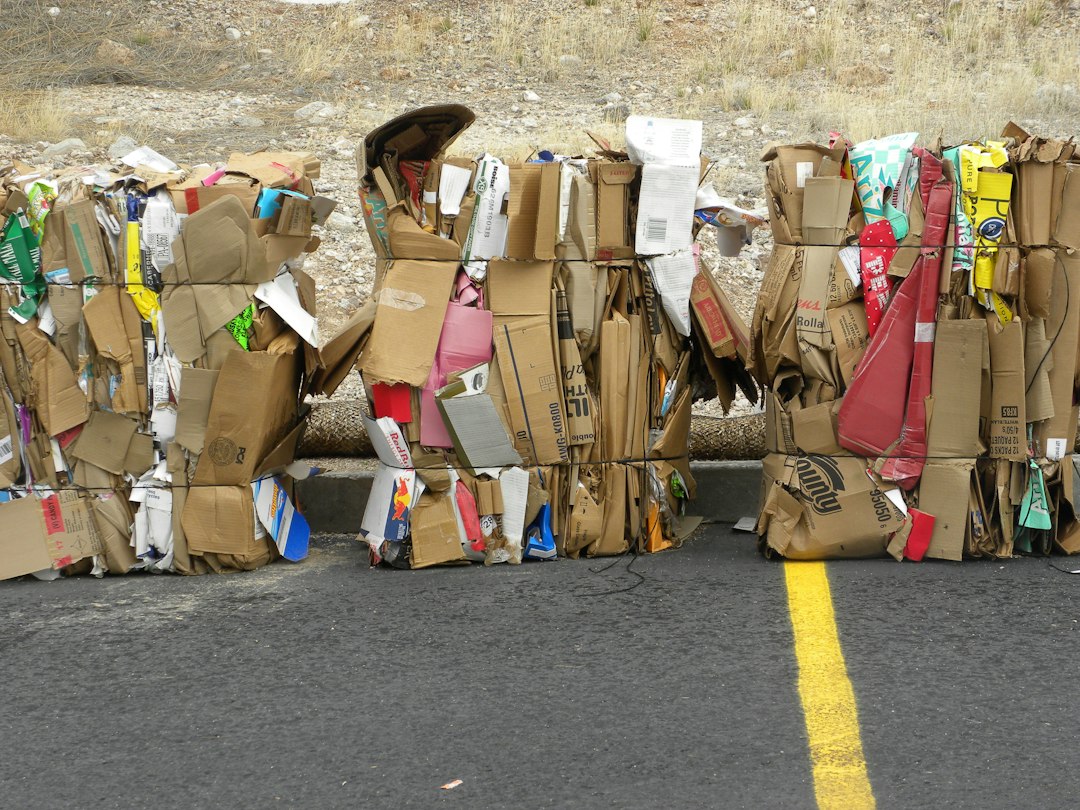
Earth Friendly Packaging Materials for a Lower-Waste Move
Earth friendly packaging materials include reused cardboard boxes, recycled paper, molded fiber, and reusable containers. For a move, start with boxes you can use again, then choose recycled paper to cushion items and fill empty space. Use only as much material as needed to keep your goods safe.
The best choice is not always the newest material. A sturdy box used twice may create less waste than a new box used once. Protection matters, too: damaged goods waste resources as well as money.
I’m Anthony Denha, president of Handle With Care Moving & Delivery in Ann Arbor. My hands-on work planning moves and protecting belongings shapes how I evaluate earth friendly packaging materials: they need to reduce waste and do the job.
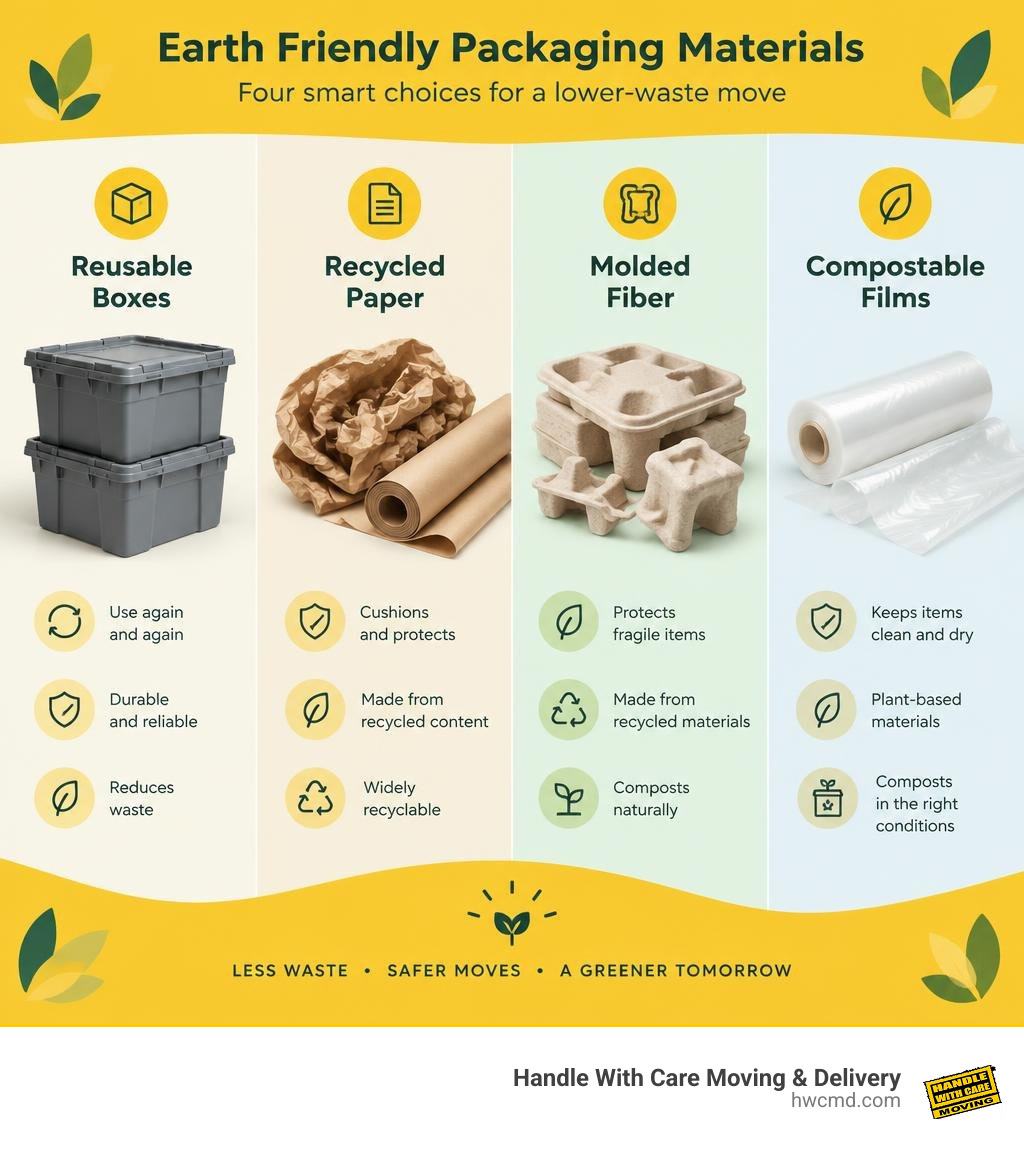
Earth friendly packaging materials terms explained:
Introduction
Every year, millions of tons of single-use plastic wrap, foam peanuts, and petroleum-based bubble cushioning head straight to local landfills. The packaging sector is the largest generator of single-use plastic waste across the globe, accounting for roughly 36% of all plastics produced. With global plastic production projected to jump by 70% by 2040—hitting 736 million tonnes—our current consumption habits require a serious rethink.
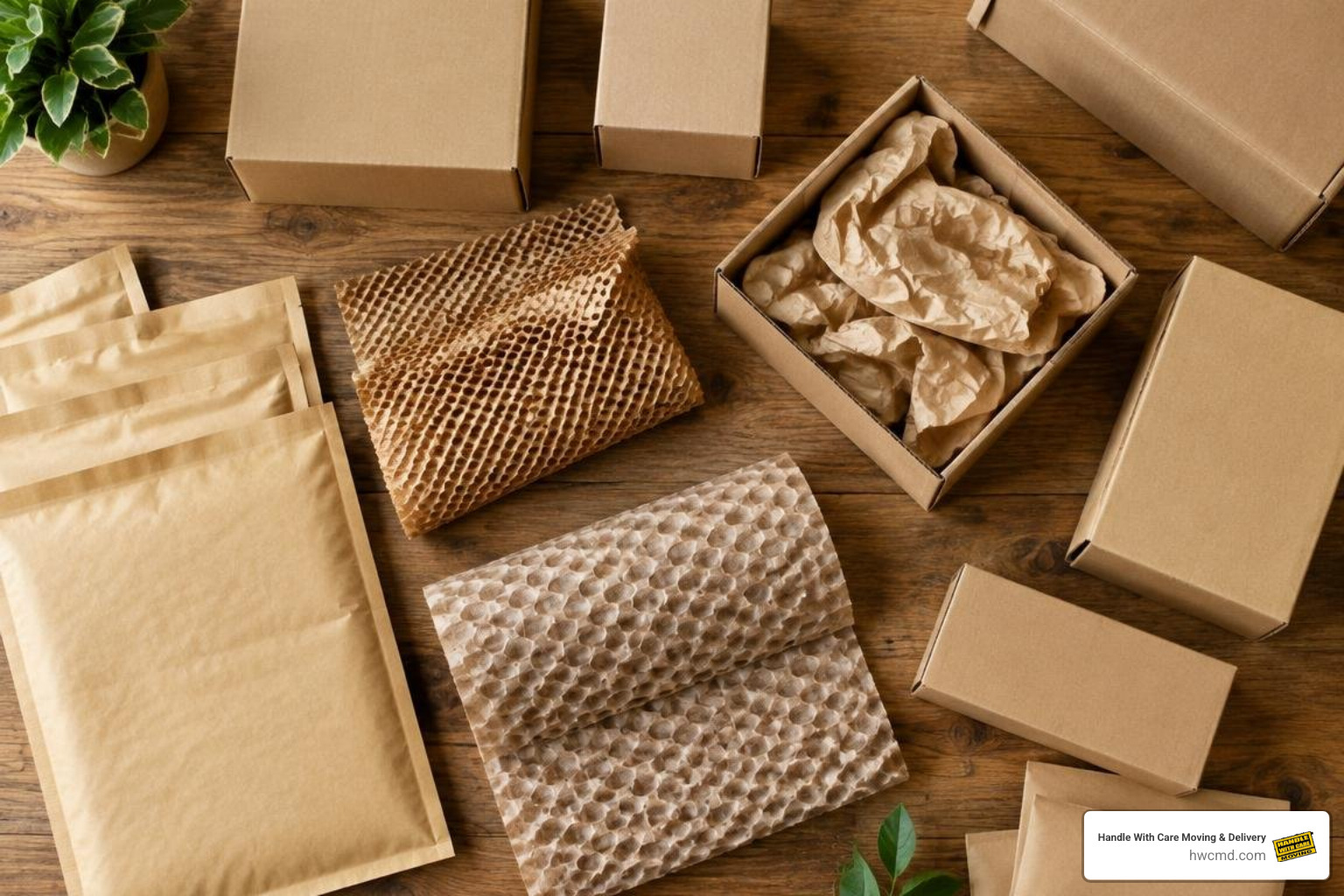
Shifting toward a circular economy means choosing materials that can be reused, reprocessed, or returned safely to the soil. Modern consumers and businesses are taking notice. Roughly 85% of consumers report that sustainable packaging actively influences their purchasing decisions, and 82% across all age demographics state they are willing to pay more for goods wrapped in responsible materials.
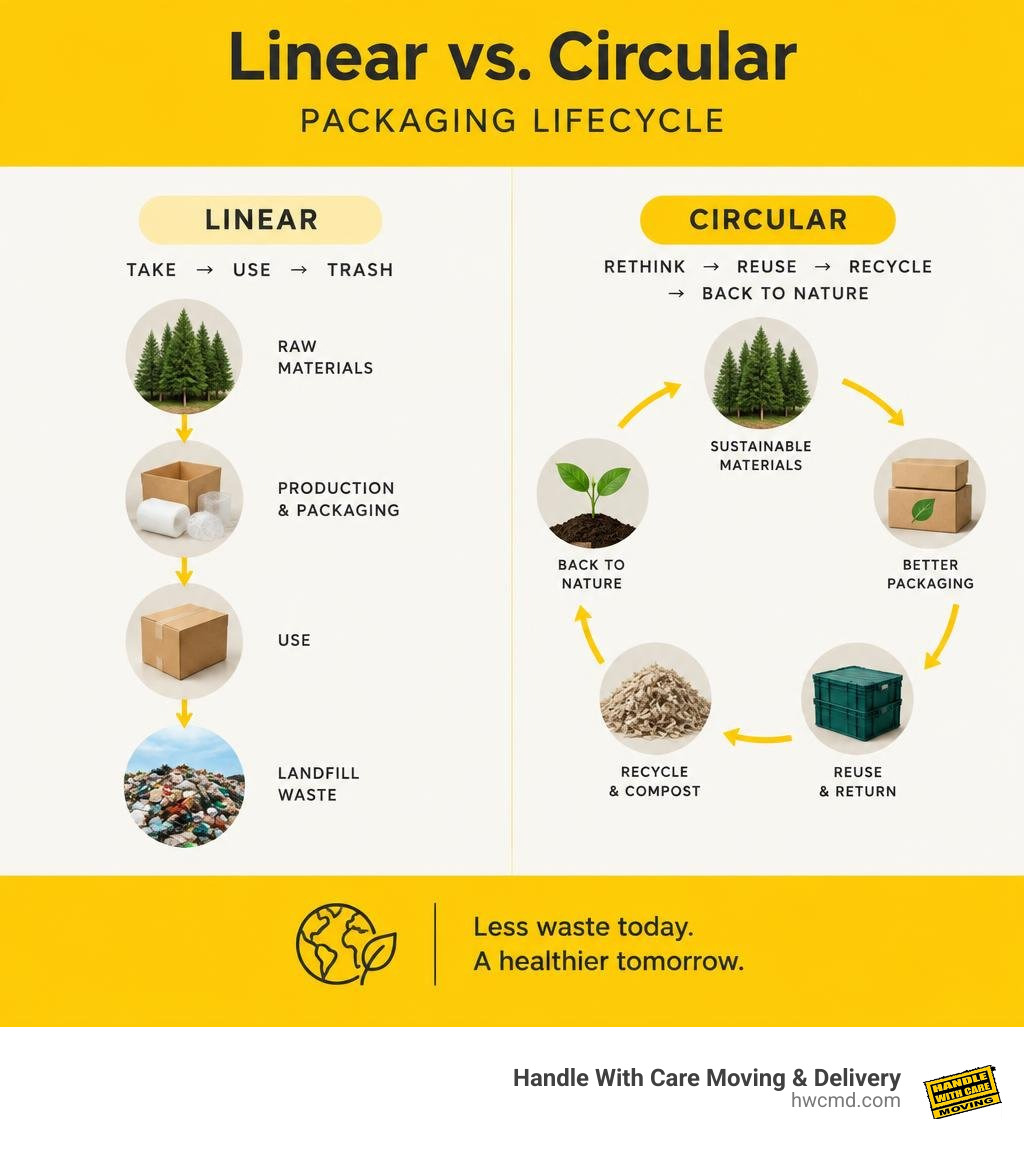
When we re-examine how we wrap, box, and protect cargo, we can divert mountains of trash from the waste stream while keeping our belongings perfectly secure.
Why Sustainable Wrapping and Packing Matters in 2026
The global sustainable packaging market is projected to reach $418.6 billion by 2027. This growth is driven by consumer demand, corporate sustainability goals, and stricter Extended Producer Responsibility (EPR) regulations that hold shippers accountable for product lifecycles. Shippers and businesses are taking a hard look at their Scope 3 greenhouse gas emissions, finding that sustainable wrapping reduces their overall environmental footprint.
Recycling paper, for instance, generates 74% less air pollution and consumes 50% less water than manufacturing virgin pulp. Choosing recycled fibers helps protect natural habitats, lowers industrial energy use, and eliminates petrochemicals that take centuries to break down.
| Environmental Metric | Virgin Petrochemical Plastics | Recycled Paper & Plant Fiber |
|---|---|---|
| Primary Raw Resource | Crude oil and natural gas | Post-consumer paper, agricultural waste |
| Air Pollution Impact | High greenhouse gas emissions | Up to 74% lower air emissions |
| Water Usage Impact | High chemical process footprint | 50% less water consumed in reprocessing |
| Landfill Persistence | 400 to 1,000+ years | Weeks to months (biodegradable/compostable) |
| End-of-Life Circularity | Low global recovery rates (<10%) | High municipal recovery rates (65–69%) |
Selecting the right supplies is the foundation of lower-impact logistics. To understand how various materials perform across real-world handling scenarios, explore A Comprehensive Guide to Suitable Packing Materials.
Core Categories of Earth Friendly Packaging Materials
Navigating sustainable packaging does not require an advanced degree in chemistry. Most sustainable supplies fall into three functional groups: traditional plant fibers, innovative bio-based polymers, and durable closed-loop containers.
Traditional Paper and Plant-Based Earth Friendly Packaging Materials
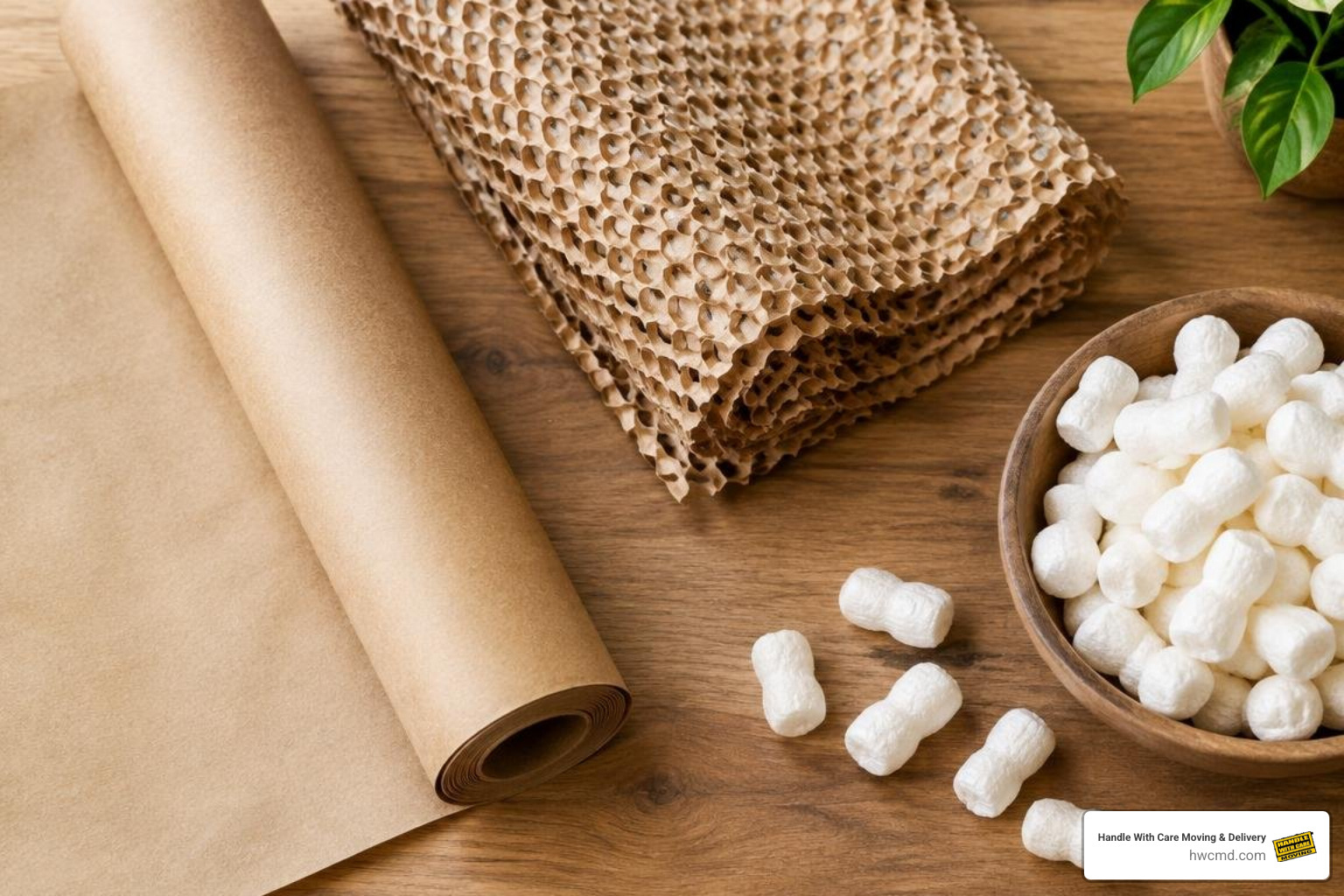
Paper-based solutions are the workhorses of green logistics. Unbleached kraft paper provides versatile cushioning, void-fill, and surface protection without synthetic coatings. Corrugated cardboard boxes deliver exceptional strength-to-weight ratios and are readily accepted by curbside recycling programs.
- Molded Pulp: Manufactured from recycled newsprint or sugarcane bagasse, molded fiber trays cradle fragile glassware, electronics, and small appliances.
- Glassine: Made from refined wood pulp, glassine is a smooth, translucent paper resistant to grease and air, serving as an effective plastic-free dust cover.
- Corrugated Paper Wrap: Slitted kraft paper that expands into an interlocking honeycomb structure replaces traditional plastic bubble wrap, offering shock absorption without petroleum films.
- Water-Activated Tape (Gummed Tape): Crafted from natural paper and cornstarch adhesive, this tape bonds directly with corrugated boxes, allowing the entire carton to be recycled without peeling off synthetic tape strips.
To make sure your boxes withstand stacking without buckling, read our insights on how to never crush a delivery again with superior carton boxes for packing.
Cutting-Edge Bio-Polymers and Compostable Innovations
When paper cannot deliver the required moisture or grease barrier, modern bio-based materials step in. These materials utilize renewable crops, marine life, and fungal networks to replicate the flexibility of plastics.
- Polylactic Acid (PLA): Sourced from fermented plant sugars like cornstarch or cassava, PLA creates clear films and rigid thermoformed containers that break down in commercial composting facilities.
- Polyhydroxyalkanoates (PHA): Synthesized naturally through bacterial fermentation of organic feedstocks, PHAs are marine-degradable and soil-compostable biopolyesters.
- Mushroom Mycelium: Grown using agricultural by-products and fungal roots, mycelium foam can be molded into custom protective corner blocks, offering an alternative to expanded polystyrene (Styrofoam).
- Seaweed Polymers & Algae Inks: Seaweed extracts form home-compostable thin polybags, while algae-based pigments create carbon-negative printing inks.
Recent scientific literature highlights significant progress in these biopolymers. A comprehensive review on bio-based packaging materials outlines how natural polyesters and cellulose blends can be engineered for industrial barrier performance. Furthermore, an analysis of biobased packaging solutions shows that bio-based plastics have the potential to save up to 315 million tons of CO2 equivalents each year.
Reusable and Circular Packing Systems
The greenest material is often the one already manufactured. Reusable packaging loops eliminate single-use waste entirely by circulating durable assets through multiple cycles.
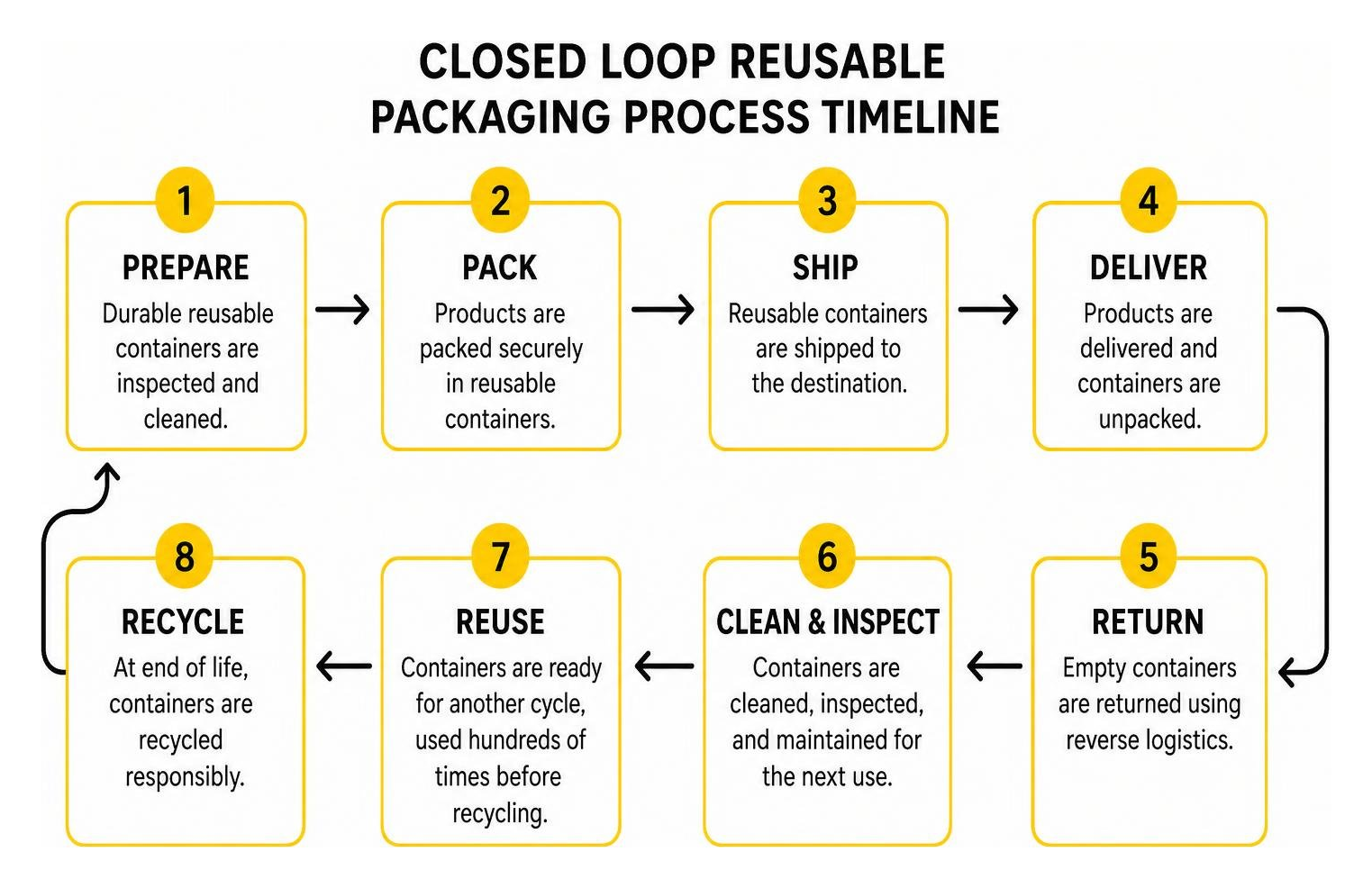
Heavy-duty polypropylene moving totes, collapsible plastic crates made from post-consumer recycled (PCR) resin, and thick textile moving blankets can be used hundreds of times before recycling. To streamline your container usage and maximize interior volume, check out the best easy packing ideas to save space and time.
Evaluating Material Performance, Life Cycle, and Certifications
A green label means little if the packaging fails and the product breaks. Selecting sustainable supplies requires evaluating full life-cycle assessments (LCA) alongside structural performance metrics.
When selecting paper and fiber products, look for recognized verification standards:
- Forest Stewardship Council (FSC): Guarantees wood fibers originate from responsibly managed forests that preserve biodiversity and respect local communities.
- Biodegradable Products Institute (BPI): Verifies that materials break down completely in commercial composting facilities without leaving toxic residues or microplastics.
- OK Compost Home: Confirms that bioplastics or papers decompose in lower-temperature home garden compost heaps.
- How2Recycle: Standardized labeling that informs end-users exactly how to prepare and sort packaging for municipal recycling streams.
To balance technical barrier needs against end-of-life recovery routes, consult the Sustainable Packaging Coalition Materials Matrix, which details sourcing, chemical safety, and recovery data across major material families.
Practical Implementation: Sourcing and Selecting Sustainable Supplies
Transitioning to earth-friendly supplies works best when focusing on efficiency first. Right-sizing cartons to match product dimensions reduces corrugated board use and prevents items from shifting in transit. Minimizing excess void space also reduces dimensional weight shipping fees and fuel consumption.
For fundamental techniques on wrapping breakables and building balanced boxes, review our core packing 101 guide.
How to Transition to Earth Friendly Packaging Materials for Moving or Shipping
Making the switch is straightforward when tackled step by step:
- Conduct a Packaging Waste Audit: Identify your highest-volume single-use items, such as stretch film, foam peanuts, and petroleum tape.
- Eliminate Unnecessary Layers: Remove redundant inner polybags and oversized boxes before testing new materials.
- Pilot Sustainable Alternatives: Test unbleached kraft paper, starch-based packing peanuts, or corrugated expanding wrap on real shipments.
- Train Your Team: Ensure staff understand proper void-fill densities and gummed tape activation to avoid over-consumption.
- Add Clear Disposal Instructions: Print simple labeling on cartons so recipients know whether to recycle curbside or place materials in home compost.
| Material Option | Primary Protective Use | Cost Comparison vs. Virgin | Environmental Recovery Path |
|---|---|---|---|
| Recycled Kraft Paper | Wrapping, void-fill, surface protection | Comparable to slightly lower | Curbside recyclable / Home compostable |
| Expanding Honeycomb Paper | Cushioning fragile goods | Slightly higher upfront | Curbside recyclable / Home compostable |
| Starch Loose-Fill Peanuts | Blocking and bracing light items | 10–20% premium | Water-soluble / Home compostable |
| Molded Pulp Trays | Corner blocks and structural bracing | Cost-effective in bulk | Curbside recyclable / Industrial compost |
| Reusable Poly Totes | Multi-trip moving and storage | Higher initial cost; low per-use | Closed-loop return / Multi-year reuse |
Frequently Asked Questions About Earth-Friendly Packaging
What is the difference between biodegradable and compostable packaging?
“Biodegradable” means a material can break down naturally via microorganisms over an unspecified period. “Compostable” packaging must meet strict, time-bound standards (typically breaking down into water, CO2, and nutrient-rich biomass within 90 to 180 days under managed conditions) without leaving synthetic residues or microplastics behind.
Are earth friendly packaging materials durable enough for heavy freight and moving?
Yes. Multi-wall corrugated cardboard, heavy basis-weight kraft paper, and molded pulp provide substantial edge crush resistance and burst strength. High-grade recycled fiber boxes match the stacking strength of virgin cardboard when properly sized and packed to prevent internal movement.
How do certifications like FSC verify eco-friendly claims?
Certifications like the Forest Stewardship Council use audited Chain of Custody (CoC) tracking from forest harvesting through manufacturing and distribution. Independent third-party auditors inspect supply chains to ensure no illegal timber enters the process and that forest regeneration practices are met.
Conclusion
Transitioning to earth friendly packaging materials is a practical way to lower waste, conserve resources, and protect our ecosystems without sacrificing cargo security. Simple swaps—like choosing recycled kraft paper over plastic bubble wrap and reusing sturdy cardboard cartons—reduce landfill waste with every box you pack.
At Handle With Care Moving & Delivery, our office at 4260 Varsity Dr in Ann Arbor is dedicated to sensible, lower-waste moving practices. We provide complimentary protective pad and shrink wrap, transparent 15-minute-increment billing, and no-minimum labor hours for local moves, which are billed hourly plus a travel rate. Lightly used boxes and recycled paper are available, and material delivery is free in most cases. If you are preparing for a relocation and want a smooth, sustainable process, explore our sustainable packing services and materials to get started.