
Packing Paper for Moving Dishes: Master the Kitchen Bundling Technique

Why Choosing the Right Packing Paper for Moving Dishes Matters
The best packing paper for moving dishes is unprinted newsprint: it is clean, ink-free, non-abrasive, and flexible enough to wrap plates, bowls, and glassware tightly. For everyday dishware, wrap each piece in one or two sheets, bundle four plates together, and load the bundle vertically on its rim over a 2- to 3-inch crumpled paper base. Heavy kraft paper works well for dense base cushioning and heavy stoneware, while honeycomb cushioning paper adds extra shock absorption for fine china and stemware.
The kitchen is universally acknowledged as the most demanding room in the house to pack. While packing an entire home takes patience, industry estimates show that packing an average kitchen alone takes between four and eight hours. When you consider that kitchen items and breakables account for roughly 30% of all moving damage claims, taking the time to understand your wrapping supplies pays off immediately.
Using the right materials serves two distinct protective functions: surface defense and kinetic shock absorption. Glazed ceramic, fine china, and tempered glass can easily scratch, scuff, or micro-fracture when rubbed against one another during transit. Specialized packing paper acts as an unyielding barrier against friction while compressing slightly under pressure to disperse external road shocks.
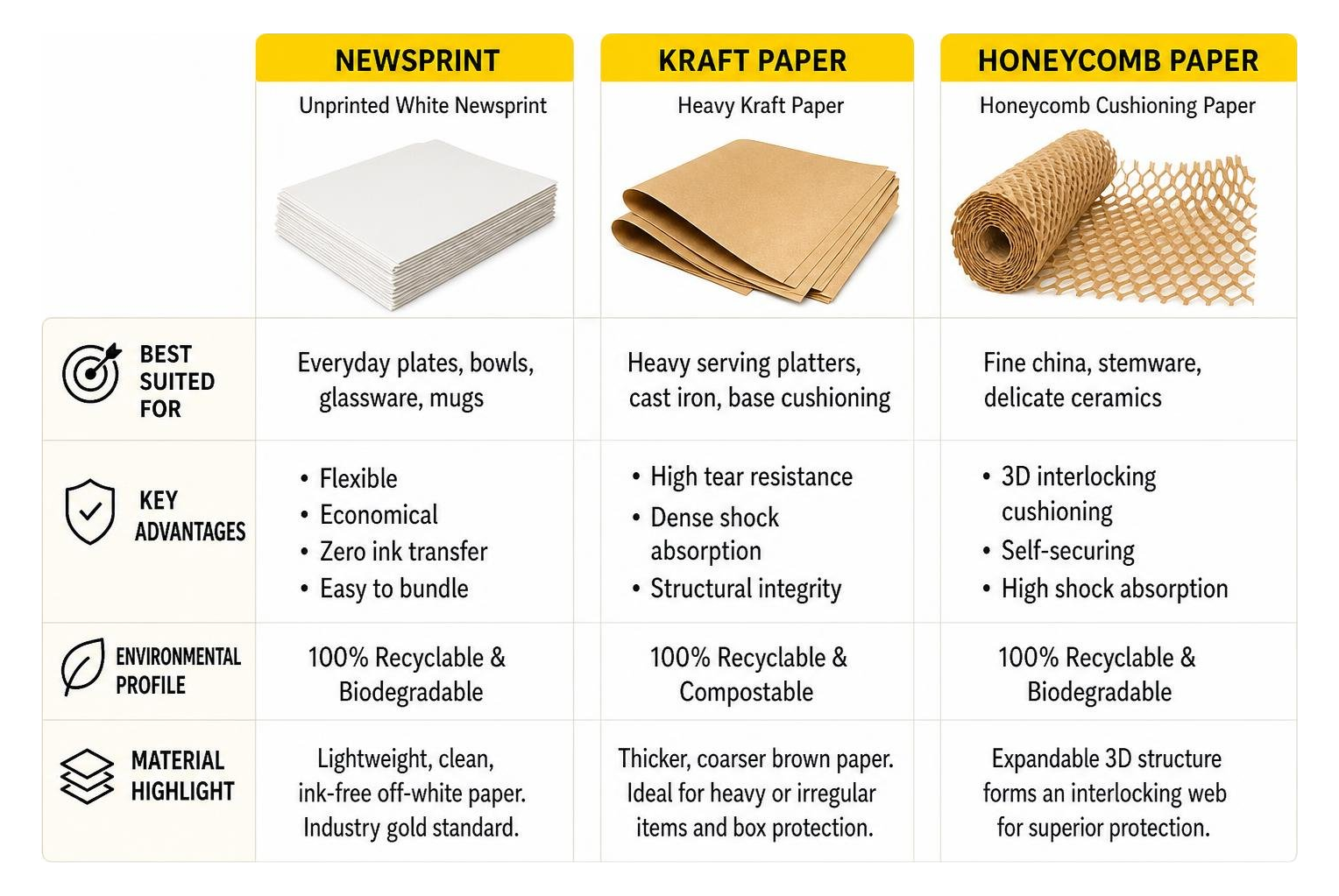
When selecting wrapping supplies, you will typically choose among three primary types:
- Unprinted Newsprint Sheets: The gold standard for professional movers. This clean, ink-free, lightweight off-white paper offers flexible wrapping dynamics, zero residue risk, and full recyclability. Products like Bryco Goods 10-lb newsprint sheets (carrying a 4.8/5-star rating across over 15,000 reviews) or Pen+Gear 24″ x 24″ white sheets highlight why this material remains an industry staple.
- Heavy Kraft Paper: Coarser and thicker than standard newsprint, brown kraft paper is exceptional for lining box bottoms, creating dense corner cushions, or wrapping heavy stone serveware and cast-iron lids. While slightly stiffer to fold tightly around delicate stemware, it provides unmatched structural integrity.
- Honeycomb Cushioning Paper: An innovative, expandable paper structure that stretches into an interlocking 3D web. Popularized by products like Scotch Cushion Lock Protective Wrap and 15″ expandable rolls, honeycomb paper provides an eco-friendly alternative to plastic bubble wrap. The hexagonal cells interlock securely, often eliminating the need for tape while offering superior shock absorption.
To understand how these options fit into a broader household strategy, consult our comprehensive guide to suitable packing materials.
| Paper Type | Best Suited For | Key Advantages | Environmental Profile |
|---|---|---|---|
| White Newsprint | Everyday plates, bowls, glassware, mugs | Flexible, economical, zero ink transfer, easy to bundle | 100% Recyclable & Biodegradable |
| Kraft Paper | Heavy serving platters, cast iron, base cushioning | High tear resistance, dense shock absorption | 100% Recyclable & Compostable |
| Honeycomb Paper | Fine china, stemware, delicate ceramics | 3D interlocking cushioning, self-securing, high shock absorption | 100% Recyclable & Biodegradable |
Calculating How Much Packing Paper for Moving Dishes You Need
Underestimating packing supplies is the most common reason people resort to improper packing methods midway through their kitchen. A single standard pack of 600 newsprint sheets typically supplies enough material to pack three to four specialized dish boxes.
To ensure seamless progress without emergency trips to the store, use these standard estimates based on your home size and kitchen inventory, incorporating expert-backed packing tips:
- Studio to 1-Bedroom Apartment (Light kitchenware): ~600 to 640 sheets (approx. 10 to 12 lbs of paper)
- 2-Bedroom Home (Standard kitchen, 4-6 place settings, moderate glassware): ~1,200 to 1,280 sheets (approx. 20 to 25 lbs of paper)
- 3+ Bedroom Home (Extensive dinnerware, formal china, stemware, small appliances): ~1,900 to 2,500 sheets (approx. 30 to 40 lbs of paper)
Packing paper serves double duty: you will use nearly a third of your total sheet count solely for crumpling into base pads, corner wedges, and top void fill.
Sheets vs. Rolls: Choosing Your Paper Format
Packing paper is sold primarily in pre-cut flat sheet bundles or continuous rolls. Selecting the best format comes down to packing speed and item dimensions:
- Pre-Cut Flat Sheets (24″ x 24″ or 27″ x 17″): The preferred choice for plates, bowls, and drinkware. Flat sheets lay ready on your packing table, allowing you to rapidly position dishes, wrap corners, and create uniform bundles without stopping to cut or tear.
- Continuous Paper Rolls (e.g., 30″ x 360′ rolls): Ideal for unusually long platters, large serving trays, or custom-wrapping kitchen small appliances. While continuous rolls allow tailored lengths, managing a roll on a crowded packing counter can slow down repetitive tasks like plate bundling.
For help sourcing the right quantities and dimensions locally, check out the ultimate local guide to buying packing supplies.
Essential Materials and Preparation for Kitchen Packing
Before wrapping your first plate, set up an organized packing station. Kitchen packing requires deliberate preparation to maintain structural rigidity inside every carton.
Gather these foundational supplies:
- Dish Pack Boxes (Dish Barrels): Always use double-walled corrugated cardboard boxes for fragile kitchenware. Dish packs are rated to support heavy vertical loads without buckling under the weight of stacked ceramics. Explore our insights on superior carton boxes for packing to understand box ratings and wall thickness.
- Cell Divider Kits: Corrugated dividers slip directly into dish barrels to isolate glasses, mugs, and stemware into dedicated compartments, preventing side-to-side collisions.
- Heavy-Duty Packing Tape: Use quality 2-inch or 3-inch pressure-sensitive packaging tape. Seal both the center seams and cross-edges of your boxes using the “H-tape” method on both top and bottom flaps.
- Crumpled Paper Base Cushioning: Every box requires a foundational shock-absorbing layer. Loosely crumple newsprint or kraft paper into firm balls and compress them along the bottom of the box to create a 2- to 3-inch mattress before adding any items.
The Master Bundling Technique for Plates, Bowls, and Glassware
Studies show that double-layer paper wrapping reduces ceramic breakage by up to 45% compared to packing with minimal or no protective barriers. To maximize both protection and space efficiency, professional movers rely on the master bundling technique.
Bundling binds multiple individually wrapped pieces into a solid, cohesive unit. This unit minimizes individual vibrations and prevents edge-on-edge impacts. When combined with proper practical steps to pack dishes for a move and guidance on safely wrapping fragile glassware, you can eliminate transit damage entirely.
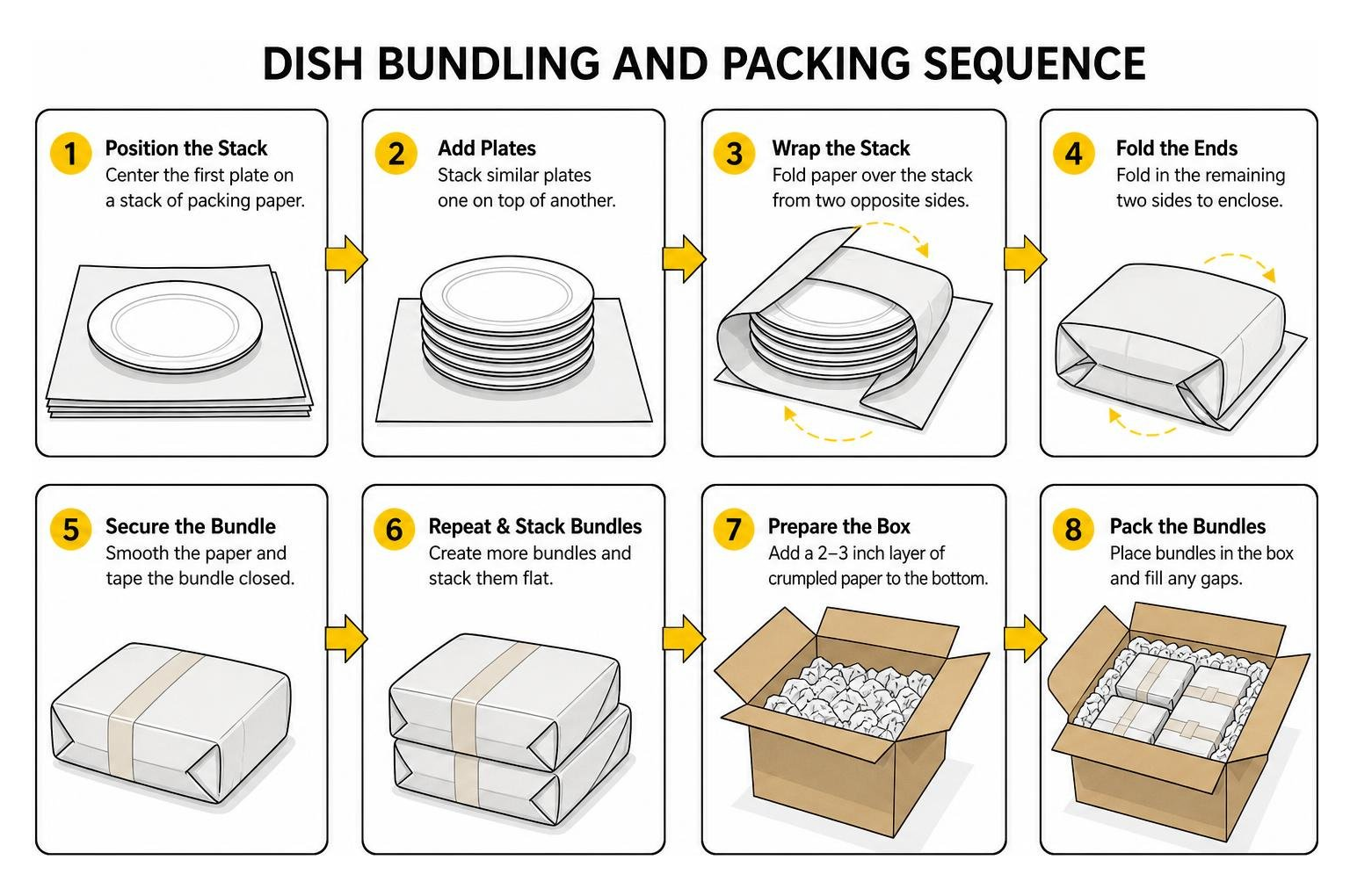
Step-by-Step Plate Bundling with Packing Paper for Moving Dishes
Follow these sequential steps to create rigid, impact-resistant plate bundles:
- Position the Stack: Place a generous stack of unprinted newsprint flat on your table. Center your first large dinner plate in the middle of the top sheet.
- Fold the First Corners: Take one corner of the top sheet and pull it completely across the plate to the opposite edge. Repeat with the remaining corners until the plate is completely enclosed.
- Layer the Next Plate: Place a second plate of identical size directly on top of the wrapped first plate.
- Wrap and Repeat: Grab the next sheet from your stack, folding the corners diagonally over the second plate. Repeat this process until you have a stack of four plates (limit bundles of heavy stoneware to three plates; fine porcelain can accommodate four to five).
- Secure the Outer Bundle: Take two fresh sheets of packing paper together and wrap the entire multi-plate bundle securely, tucking the outer corners tightly. Secure the bundle with a small strip of packing tape so it remains a solid unit.
- Load Vertically: Never lay plates flat inside a box. Place your secured plate bundle vertically on its rim over the 3-inch bottom cushion. Plates are structurally strongest along their outer perimeter and can easily crack across their centers if stacked horizontally.
Wrapping Bowls, Cups, and Stemware Securely
Hollowware presents unique pressure points that require internal reinforcement before outer wrapping:
- Bowls: Place a bowl in the center of a sheet. Stuff a crumpled half-sheet into the bowl’s interior cavity to resist inward compression. Fold paper corners over the top, place another bowl inside, and nest up to three bowls before applying an outer double-layer wrap. Pack nested bowls vertically or rim-down on top of your heavy plate layer.
- Mugs and Cups: Fill the interior cavity with a crumpled quarter-sheet of newsprint. Fold a sheet diagonally around the body, rolling the mug while tucking excess paper into the handle loop to pad that delicate joint.
- Wine Glasses and Stemware: Stemware is exceptionally fragile. First, roll a crumpled half-sheet of paper into a tight cord and wrap it entirely around the thin stem until the thickness matches the base and bowl diameter. Next, stuff the interior bowl loosely with paper. Finally, wrap the entire glass diagonally in two to three full sheets of newsprint or a layer of honeycomb wrap. Always load stemware standing upright on its base within divided cells—never pack stemware on its side.
For long-term preservation methods beyond standard transit, see our recommendations on the best way to pack dishes for storage.
Frequently Asked Questions About Packing Kitchen Dishes
Can I use printed newspaper instead of blank packing paper for dishes?
While printed newspaper provides decent raw cushioning, the petroleum- or soy-based inks readily transfer onto porous ceramics, stoneware, and unsealed china patterns. Washing ink residue off hundreds of dishes after a move is frustrating and can permanently ruin antique pieces. If you must use printed newspaper to save on costs, use clean, blank packing paper as the inner layer directly against the dishware, reserving printed newspaper strictly for outer bundling and void fill.
Should plates be packed vertically or stacked flat in moving boxes?
Plates should always be packed vertically on their edges, standing upright like vinyl records in a crate. Flat-stacked plates concentrate transit vibrations and vertical road impacts directly onto the broad, unsupported centers of the bottom dishes. Vertical orientation distributes downward force along the strongest structural edge of the ceramic rim, drastically reducing the risk of compression cracks.
Is bubble wrap better than packing paper for delicate china?
Neither material is universally “better”—they perform distinct jobs. Packing paper is unmatched for initial surface contact, clean folding, and preventing friction scratches. Bubble wrap excels as an outer secondary shock absorber. For everyday dishes, multi-layer packing paper alone provides outstanding protection. For irreplaceable heirloom china or delicate crystal, wrap the piece in a base layer of ink-free paper first, followed by a secondary layer of small-cell bubble wrap or honeycomb wrap for optimal protection.
Conclusion
A successful kitchen move comes down to using the right supplies and following proper bundling techniques. By investing in clean, unprinted packing paper, setting up reinforced dish pack cartons, and loading plates vertically, you can unpack your kitchenware in your new home without encountering cracked rims or shattered glasses.
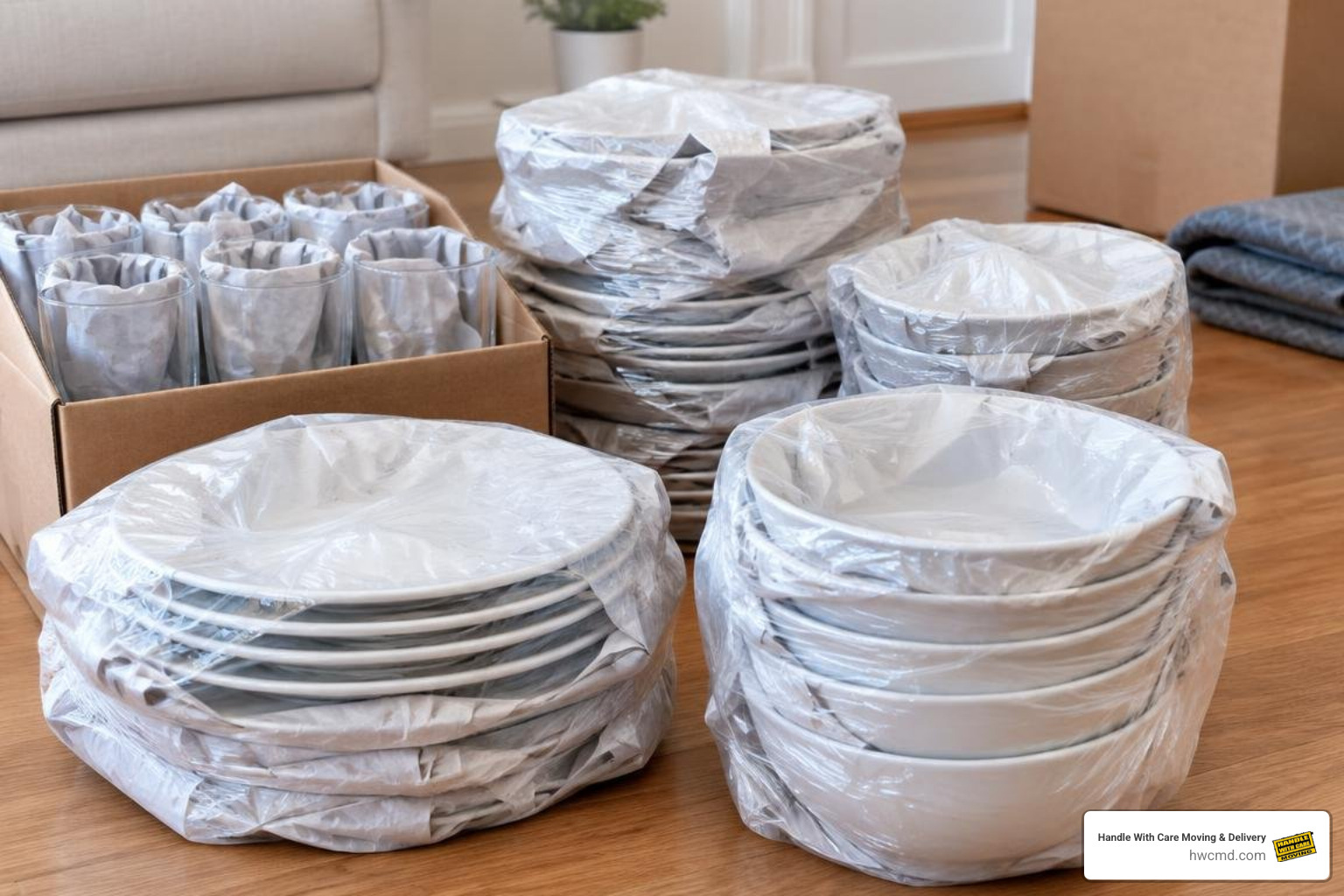
At Handle With Care Moving & Delivery, we know how much you value your household belongings. Based in Ann Arbor, Michigan, we bring meticulous care to every relocation, offering transparent 15-minute increment pricing, complimentary protective pad and shrink wrapping, no-minimum labor hours, and special discounts for students, seniors, and veterans.
Whether you need quality supplies or full-service packing support, explore our professional packing services and materials to make your next move effortless and damage-free.