
Invest in Proper China Packing Supplies and Move Fragile Plates Stress-Free
Which China Packing Supplies Are Worth Buying for a Move?
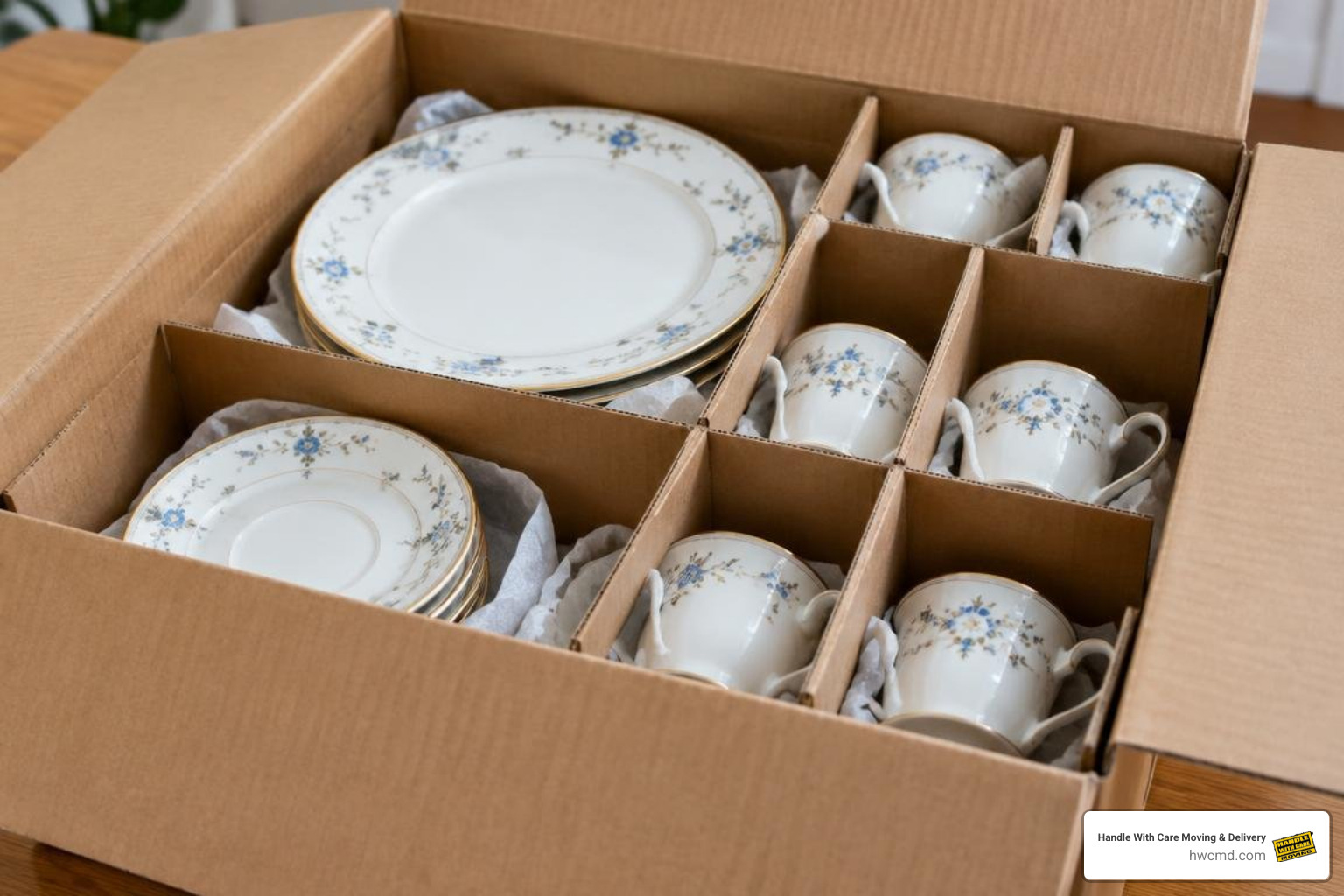
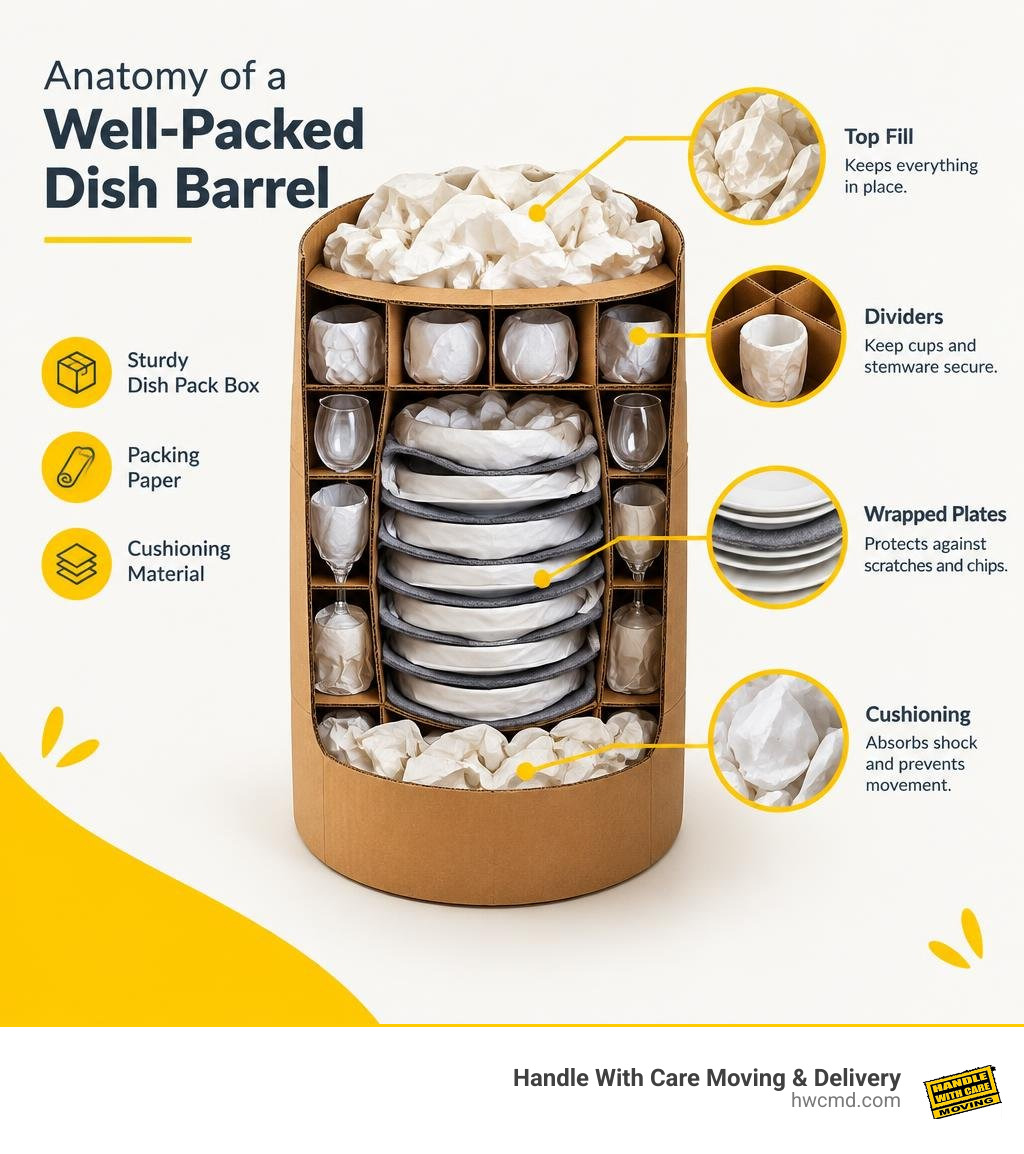
Start with a sturdy dish pack box, unprinted packing paper, and cushioning for each piece. Add cell dividers for cups and stemware, and choose foam pouches or felt separators to keep plates from touching. For heavy or delicate china, a double-wall box offers more protection than a standard moving box.
Buy for the dishes you own: a kit may suit a set of place settings, while large platters and odd-shaped serving pieces need room for extra padding. If you want help choosing materials or packing, see our packing services and materials and ask for a quote.
I’m Anthony Denha, president of Handle With Care Moving & Delivery, and I oversee the details that make careful packing possible. I’ll help you choose china packing supplies that protect your dishes without buying more than you need.
Essential china packing supplies terms:
What China Packing Supplies Do You Need for Fragile Dinnerware?
When preparing heirloom porcelain or daily stoneware for transit, generic containers simply do not cut it. China requires dedicated outer barriers, structural interior separation, and non-abrasive surface cushioning. Standard boxes flex when lifted, transmitting vibration straight into fragile rims and handles. Purpose-built dinnerware containers absorb external impact while immobilizing every item inside.
The right combination of suitable packing materials depends on whether you are executing a cross-town residential relocation, shipping individual family heirlooms, or placing delicate dinnerware into seasonal storage. Here is how the three primary container types compare:
| Container Type | Best Use Case | Protection Level | Reusability | Relative Cost |
|---|---|---|---|---|
| Double-Wall Corrugated Dish Pack | Heavy moving, truck transit, long-distance shipping | Maximum (High crush and puncture resistance) | Moderate (2–4 moves if kept dry) | Economical |
| Hard-Shell Storage Case | Moving and long-term closet/pantry storage | High (Rigid top, base, and walls with felt dividers) | High (Multi-year reusable) | Moderate |
| Quilted Microfiber Storage Bag | Short local moves, seasonal dust protection | Moderate (Soft padded fabric, requires careful handling) | High (Washable, multi-year reusable) | Low to Moderate |
Selecting suitable Packaging Supplies ensures that external pressure from stacked boxes never reaches your delicate porcelain.
Essential China Packing Supplies: Boxes, Dividers, and Cushioning
At the foundation of any delicate packing job is the heavy-duty dish barrel box. These specialized cartons measure 18″ x 18″ x 27″ with a volume of 5.2 cubic feet. Constructed from double-wall corrugated cardboard, they resist side punctures and top-load compression during transit.
To maximize the protective qualities of a dish pack, insert modular corrugated cell partitions. These multi-tier divider systems break the large internal volume into three vertical levels providing up to 42 isolated compartments. Isolating each piece prevents contact between porcelain items.
For surface-level defense, wrap individual pieces in 1/16-inch thick polyethylene foam pouches or place soft felt plate separators between stacked dish surfaces. These soft barriers prevent abrasive friction, surface scratching, and hairline edge chipping when items shift during transport.
Specialized China Packing Supplies for Stemware, Mugs, and Platters
Irregular tableware requires customized protection beyond basic square dividers:
- Stemware Dividers: Fragile crystal and wine glasses require 18-cell glassware kits featuring tall vertical channels (typically 4″ x 4″ x 11″). These prevent fragile stems from bearing lateral weight.
- Platter Storage Cases: Oversized oval turkey platters and round charger plates do not fit standard cell dividers. Use dedicated 17″ x 13″ x 6″ hard-shell platter cases lined with felt interleaving.
- Tension Wrap: Secure wrapped platters and lidded tureens with 80-gauge mini stretch wrap. Self-adhering plastic film locks protective paper around ornate pieces without leaving adhesive residue.
For delicate specialty collections or high-value pieces, consult our guide on protective packaging materials to ensure proper sourcing.
How Do Dish Pack Boxes Differ from Standard Moving Boxes?
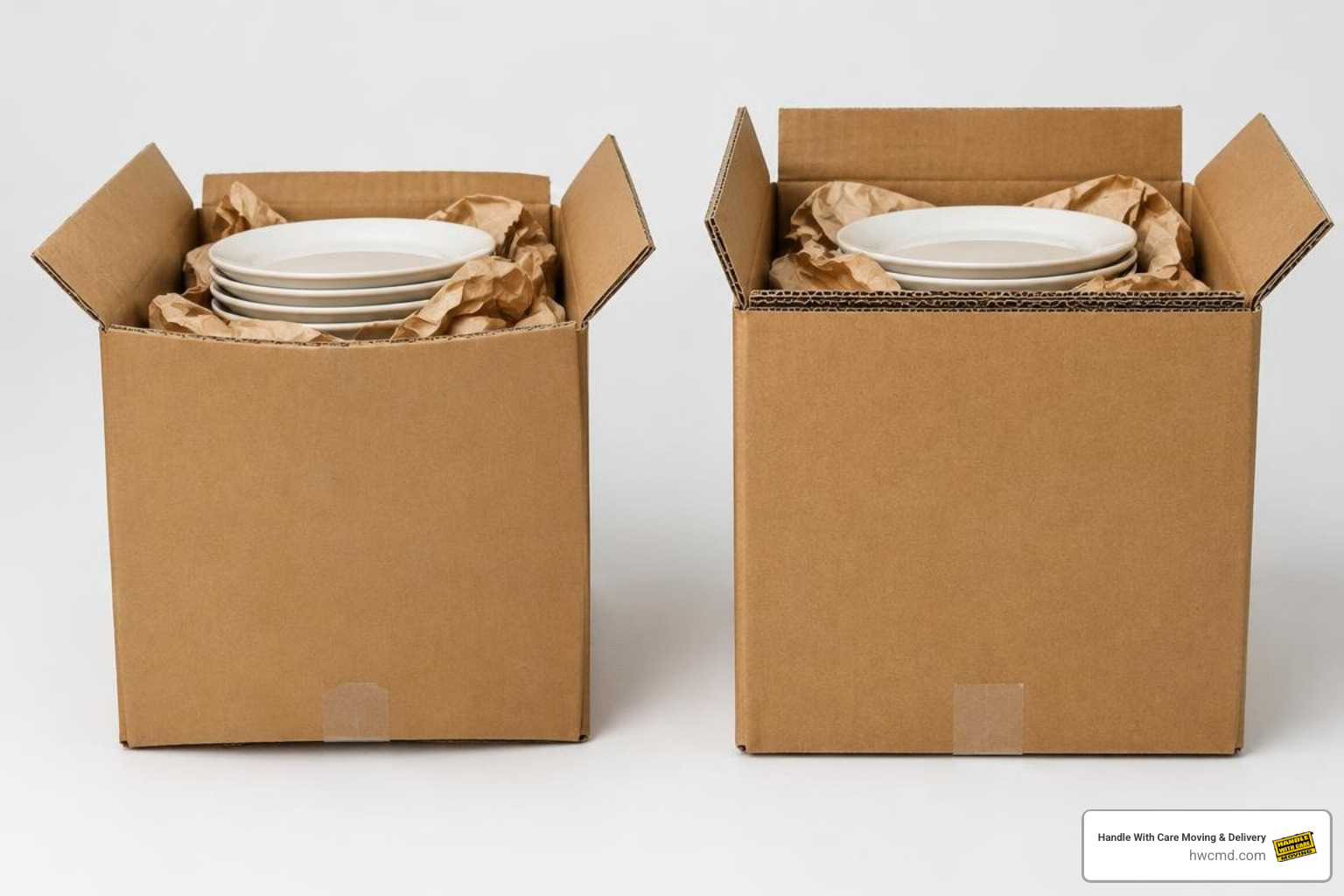
A standard cardboard carton uses single-wall corrugated construction, consisting of one fluted corrugated sheet glued between two flat linerboards. While suitable for folded clothing, bedding, and lightweight pantry goods, single-wall boxes easily bow when stacked.
In contrast, dedicated dish pack boxes feature double-wall construction—two layers of internal fluting sandwiched between three flat linerboards. This design provides structural advantages essential for heavy, fragile dinnerware:
- Weight Capacity: Standard boxes are rated for 30 to 40 lbs, whereas double-wall dish packs handle up to 65 lbs without base tearing or seam separation.
- Edge Crush Resistance: Dish barrels offer superior Edge Crush Test (ECT) ratings, preventing vertical collapse when loaded into moving trucks or storage units.
- Puncture and Shock Absorption: The dual-flute barrier acts as a shock absorber against sudden stops, road vibrations, and accidental side impacts.
Using heavy-duty carton boxes for packing ensures your fragile items have the necessary structural defense against heavy shifts.
How Should You Pack Fine China to Prevent Damage During a Move?
Packing fine china safely requires a systematic method based on basic physics. Plates possess high structural strength along their outer perimeter rims, but their flat center surfaces crack easily when subjected to vertical pressure.
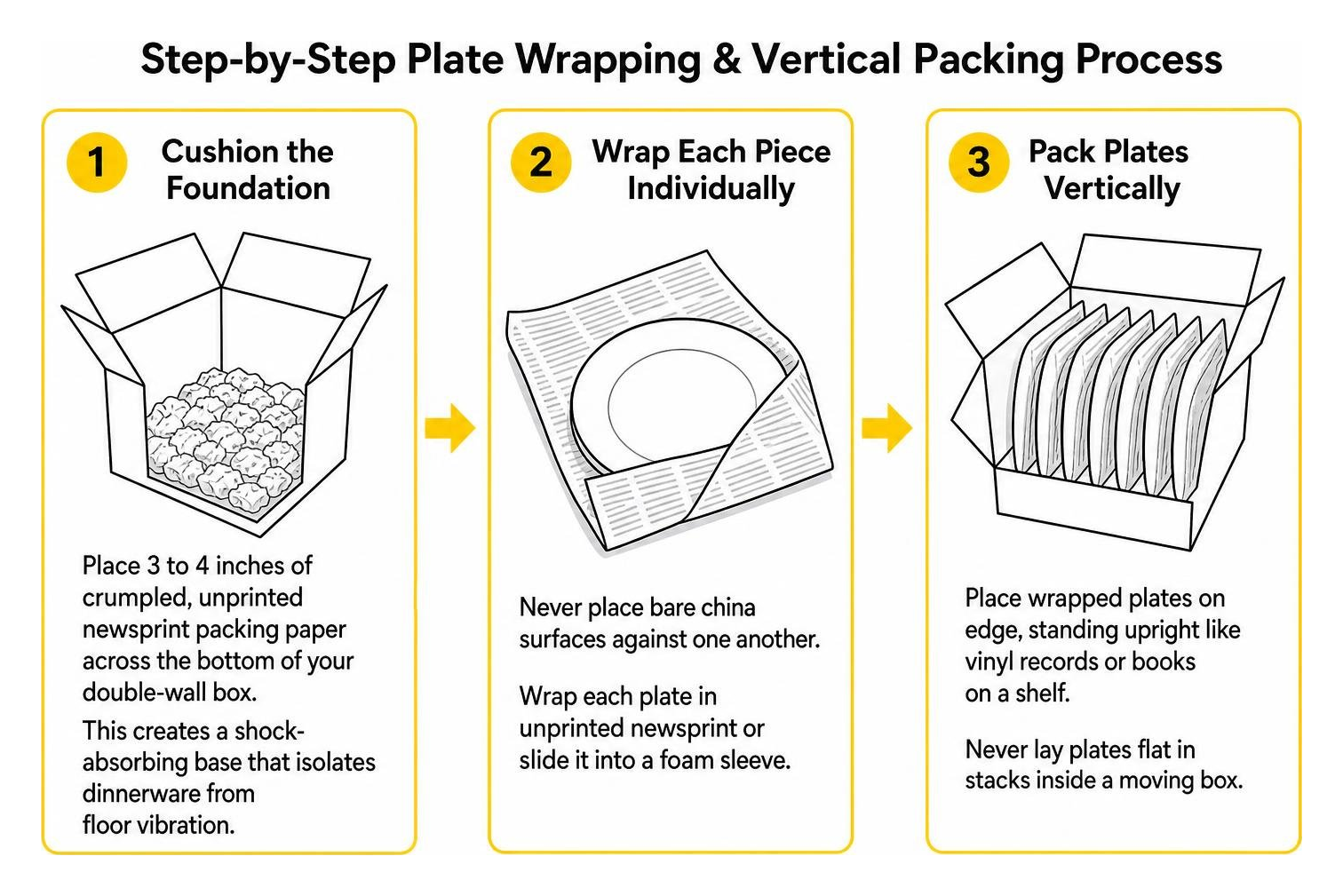
Mastering these essential packing techniques prevents the heartbreak of unboxing cracked porcelain:
- Cushion the Foundation: Place 3 to 4 inches of crumpled, unprinted newsprint packing paper across the bottom of your double-wall box. This creates a shock-absorbing base that isolates dinnerware from floor vibration.
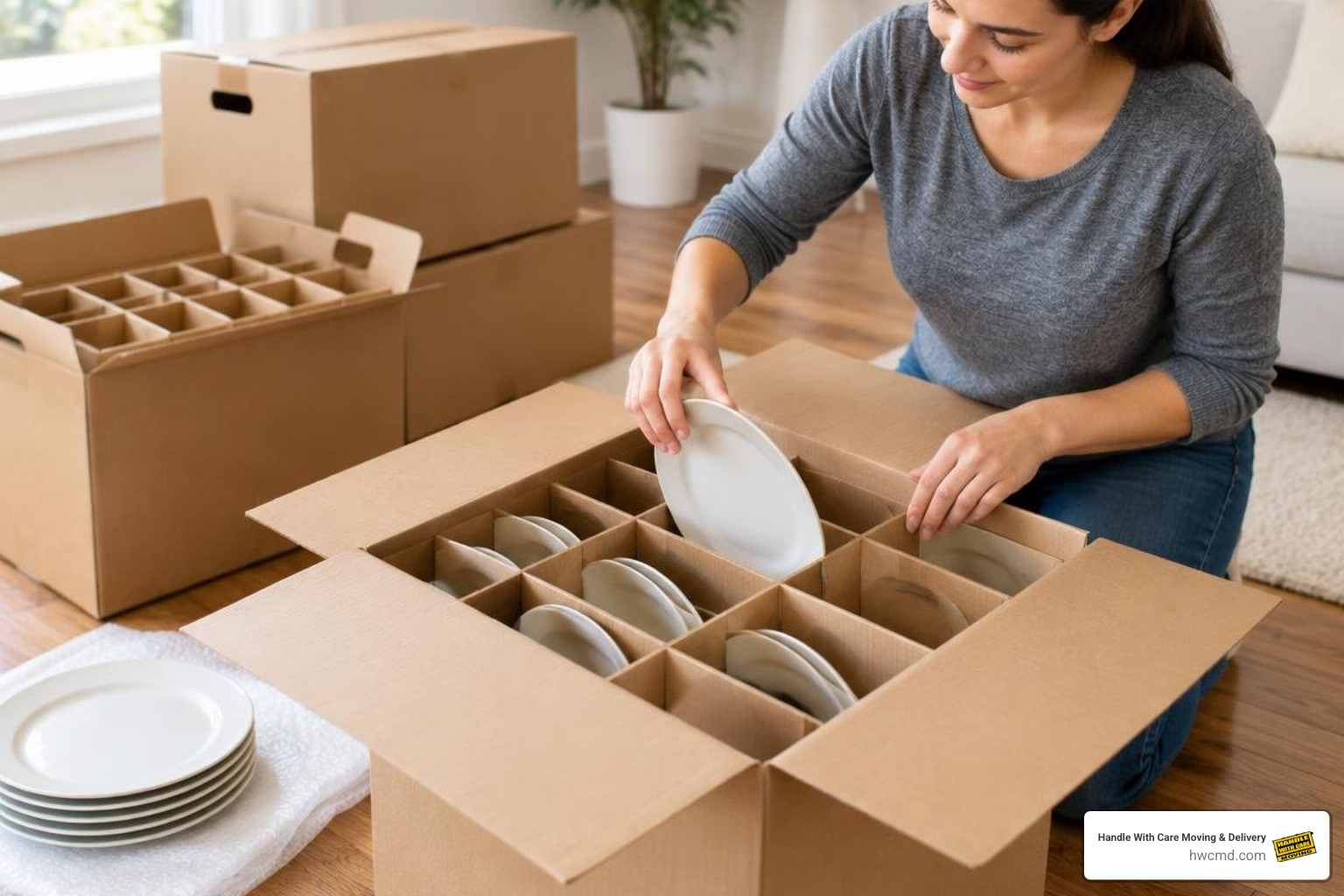
- Wrap Each Piece Individually: Never place bare china surfaces against one another. Wrap each plate in unprinted newsprint or slide it into a foam sleeve.
- Pack Plates Vertically: Place wrapped plates on edge, standing upright like vinyl records or books on a shelf. Never lay plates flat in stacks inside a moving box.
- Form Wrapped Bundles: Wrap 3 or 4 vertically oriented plates together in an outer layer of paper to form a cohesive, stable bundle.
- Fill All Interior Voids: Fill every empty pocket, corner, and gap with tightly crumpled paper. If you close the box and feel movement when gently shaking it, add more packing paper.
- Top Buffer and Seal: Add another 2 to 3 inches of crumpled paper across the top layer before closing the box flaps. Secure all bottom and top seams using the “H-tape” method with heavy-duty packing tape.
Step-by-Step Wrapping for Plates, Bowls, and Delicate Porcelain
Follow this wrapping procedure for individual place settings:
- Lay a stack of 12″ x 12″ or larger unprinted newsprint flat on your packing table.
- Place a plate in the center of the top sheet.
- Pull one corner of the paper over the plate so it covers the face completely.
- If nesting everyday bowls, place a second bowl directly into the paper-covered recess of the first, pull the opposite corner of paper over it, and repeat for up to three bowls. For fine, antique, or translucent bone china, avoid nesting altogether; wrap every bowl as a separate unit.
- Fold the remaining side corners over the items, roll the bundle forward, and tape the loose edge closed.
- Slide the wrapped item into an appropriately sized foam pouch for secondary shock absorption before placing it vertically in the box.
Securing Fragile Stemware and Handled Teacups
Stemware, gravy boats, and handled teacups have distinct stress points that snap under light lateral pressure.
To wrap a delicate wine glass, begin by crumpling a small piece of clean paper and gently tucking it inside the bowl cavity to support the rim from within. Next, roll a sheet of paper diagonally around the slender stem until the glass forms a uniform cylinder. Finally, wrap the entire glass in two full sheets of unprinted paper or slide it into a fitted foam sleeve.
When packing handled teacups, wrap crumpled paper around the handle first to bridge the empty space between the loop and the cup body. Once the handle is reinforced, wrap the entire cup and place it upright in a dedicated cell divider. Never lay stemware or cups on their sides.
Are All-in-One Dish Kits Better Than Buying Individual Supplies?
Pre-configured dish packing kits are popular because they eliminate guesswork. A standard dish saver kit includes a 24-1/8″ x 12″ x 11″ box, a cardboard cell divider unit, and 32 assorted foam pouches:
- (8) Small pouches: 7.25″ x 7.25″ (ideal for saucers and bread plates)
- (16) Medium pouches: 9.25″ x 9.25″ (ideal for salad plates and soup bowls)
- (8) Large pouches: 12.5″ x 12.5″ (ideal for dinner plates)
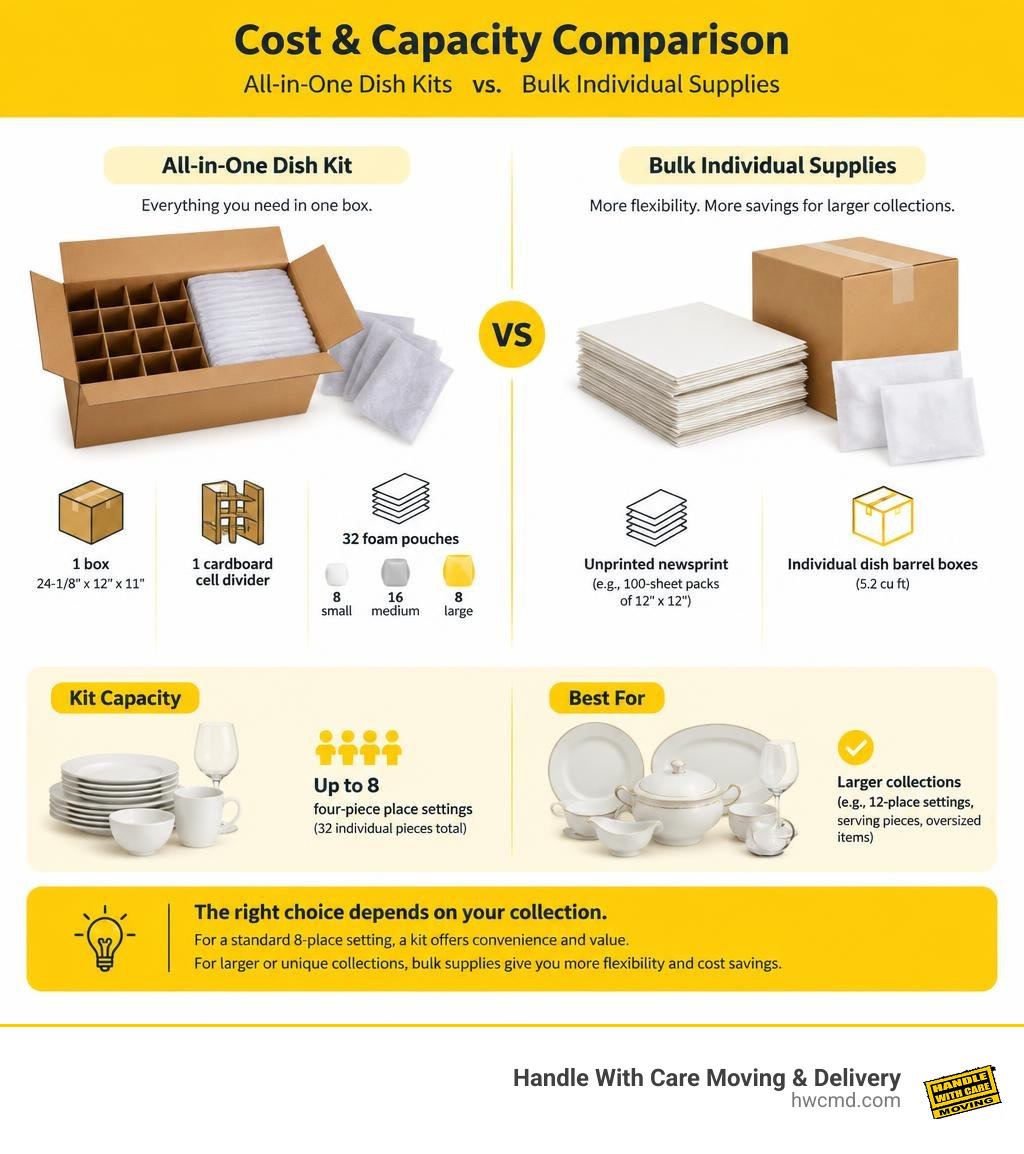
A single pre-configured dish kit easily accommodates up to 8 four-piece place settings (32 individual pieces total). If you have a standard service-for-8 dinnerware set, an all-in-one kit offers good value and convenience.
However, if you own an extensive 12-place setting antique collection with matching soup tureens, gravy boats, and large oval platters, buying individual bulk supplies is more cost-effective. Purchasing bulk bundles of unprinted newsprint (such as 100-sheet packs of 12″ x 12″ paper) alongside individual 5.2 cu ft dish barrel boxes gives you the flexibility to customize padding for oversized, irregular pieces.
To source individual materials locally or online, review our local guide to buying packing supplies.
Frequently Asked Questions About Packing Fine China
How many place settings fit inside a standard dish pack box?
A standard commercial dish pack box (measuring 24-1/8″ x 12″ x 11″ or roughly 1.85 cu ft) accommodates up to 8 four-piece place settings—a total of 32 dishware pieces including dinner plates, salad plates, saucers, and bowls.
Larger 5.2 cubic foot double-wall dish barrels can hold a full service for 12 plus accessory pieces when using a 3-tier cell divider system. Regardless of box volume, never exceed a total packed weight of 65 lbs to prevent carton failure.
Should china plates be packed flat or vertically on edge?
Always pack china plates vertically on their edges. Plates are molded to withstand substantial vertical pressure along their circular rims.
When stacked flat on top of one another, road bumps and transit vibrations focus downward force on the center of the bottom plates, frequently causing them to snap. Standing plates upright distributes shock evenly across the strongest part of the porcelain.
Can dish packing containers be reused for long-term storage?
Yes. High-quality hard-shell dish containers and quilted microfiber storage cases are designed specifically for ongoing seasonal storage between holidays. When storing fine china long-term:
- Ensure every plate has a felt separator or acid-free paper sheet between it and the next surface.
- Avoid standard newsprint with ink, as petroleum-based inks can transfer and permanently stain glazed porcelain over time.
- Store containers inside a climate-controlled environment to prevent extreme temperature swings and humidity from crazing delicate antique glazes.
Conclusion
Protecting fine china during a move comes down to using the right materials and techniques: double-wall corrugated dish packs, cell dividers, soft foam pouches, and vertical loading. Taking the time to cushion and isolate each piece ensures your heirloom dinnerware arrives intact.
If you are planning an upcoming relocation in the Ann Arbor area, our team at Handle With Care Moving & Delivery can handle the packing for you. We provide expert packing and delivery services, complete with complimentary protective materials like pad wrapping and shrink wrap. For larger estates or fragile items requiring specialized care, explore our specialty crating and packaging options or contact us directly to request an estimate for our packing services and materials.
— Anthony Denha, President, Handle With Care Moving & Delivery