
Top Food Delivery Driver Apps Ranked for Flexibility and Pay
Pay and Flexibility Comparison Across the Best Food Delivery Driver Apps
For drivers prioritizing hourly pay, Walmart Spark and Amazon Flex currently lead the major platforms, with median gross earnings around $21.74 to $22.57 per hour and $18.00 to $25.00 per hour respectively. If flexible on-demand scheduling matters more, Uber Eats and DoorDash let you go online anytime or work zone-based shifts, though their median gross pay is lower. The table below compares baseline hourly earnings, compensation formulas, tip ownership, and shift structures across leading delivery platforms.
The gig economy has surged beyond $674 billion, with more than 72 million Americans engaging in independent contract work. While marketing campaigns often boast boundless freedom, actual driver earnings depend on market volume, local tips, and order efficiency.
Gross payouts differ significantly across major platforms. Traditional restaurant couriers frequently experience rapid turnover and fluctuating tips, whereas retail and package delivery services often provide more stable block-based earnings.
| Delivery App | Median Gross Pay (Per Hour) | Compensation Structure | Tip Policy | Scheduling Flexibility |
|---|---|---|---|---|
| Walmart Spark | $21.74 – $22.57 | Base fee per order + size/distance incentives | 100% driver-retained | Scheduled offer windows & immediate dispatch |
| Amazon Flex | $18.00 – $25.00 | Block-based guaranteed flat rate | 100% retained (grocery/fresh only) | Reserved 2–5 hour shift blocks |
| Uber Eats | $14.07 – $15.03 | Base pickup/drop rate + time/distance + surge | 100% driver-retained | Complete open dispatch (go online anytime) |
| DoorDash | $11.26 – $11.63 | Base pay ($2–$10+) + Peak Pay promotions | 100% driver-retained | Zone shifts (open dispatch for Top Dashers) |
| Instacart | $12.21 – $20.00 | Batch pay based on items, weight & distance | 100% driver-retained | On-demand batch acceptance queue |
| Grubhub | $12.00 – $15.00 | Mileage + delivery time rate + bonus pay | 100% driver-retained | Scheduled blocks or toggle available online |
For drivers looking to navigate the full landscape of independent earnings, our comprehensive guide to gig delivery apps and earnings explores broader marketplace dynamics in greater depth.
Top-Tier Features in the Best Food Delivery Driver Apps
To make the most of your driving time, choose apps with solid technical features. Platforms that provide real-time information help you make faster, smarter decisions:
- Upfront Fare and Route Details: The best interfaces present transparent mileage, pickup destinations, drop-off neighborhoods, and estimated base-plus-tip earnings before you accept.
- Dynamic Heatmaps and Surge Zones: Real-time demand overlays highlight localized volume spikes, allowing you to position your vehicle near high-demand clusters during busy lunch and dinner hours.
- Immediate Earnings Access: Platforms featuring Instant Pay or daily cash-out options give contractors direct access to their capital without forcing them to wait for standard weekly bank transfers.
- Tip Protections and Guarantees: Select platforms, such as the Uber Driver platform, incorporate tip-protection policies to prevent customer tip-baiting after an order is safely delivered.
How to Choose the Best Food Delivery Driver Apps for Your Schedule
Choosing the right platform depends on your equipment, regional market characteristics, and preferred working hours.
If you prefer open schedules without pre-booking shifts, on-demand dispatch models allow you to sign on and off whenever you want. If you value guaranteed minimum pay, block-scheduled platforms like Amazon Flex lock in base earnings for designated time slots.
Vehicle flexibility also plays a critical role in high-density urban areas. Platforms supporting bike, scooter, and foot couriers remove the high fuel and maintenance costs of full-sized vehicles.
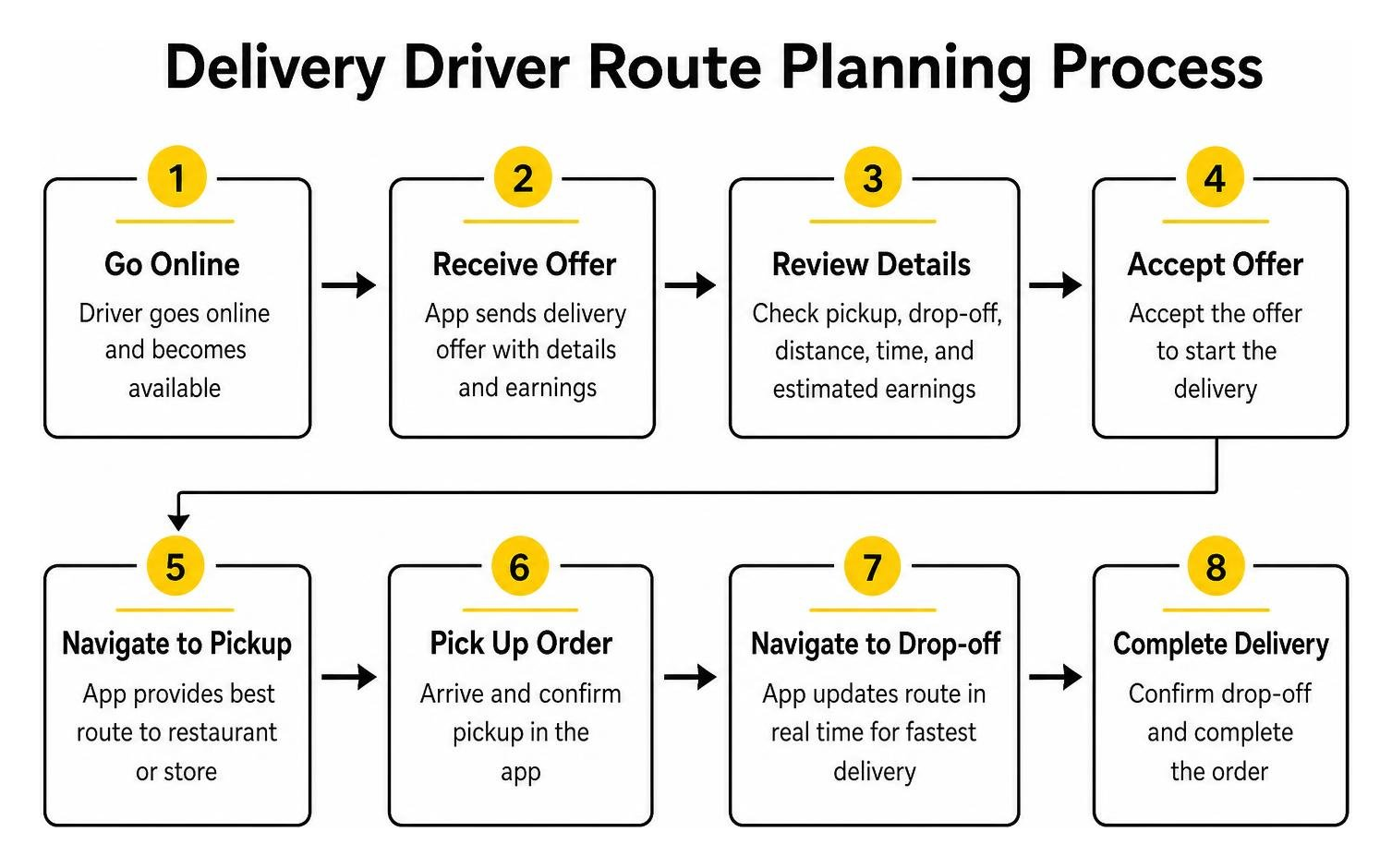
Drivers handling diverse commercial cargo or regional parcels can look to platforms like the Lalamove Driver app to move freight and medium-sized packages. Meanwhile, international networks like the Zomato delivery partner ecosystem show how regional platforms optimize per-drop incentives and equipment rentals to serve distinct local transit environments.
The Financial Reality: Hidden Costs and True Take-Home Earnings
Gross hourly figures can easily paint an overly optimistic financial picture. In the delivery business, what matters isn’t what you gross—it’s what you keep after real-world expenses. Single-app couriers earning a gross rate of $11 to $14 per hour often net only $6 to $8 per hour once operating costs are subtracted.
Evaluating net income requires accounting for several essential costs:
- Fuel Consumption: Urban stop-and-go driving burns significantly more fuel than highway cruising. Fuel expenses often consume 15% to 25% of a delivery driver’s daily gross earnings.
- Vehicle Depreciation and Maintenance: Frequent acceleration, short idling periods, and curb mounts cause rapid tire, brake, and engine wear. Every mile driven reduces your car’s resale value and increases repair costs.
- Self-Employment Taxes: Because 1099 contractors do not have taxes withheld automatically, you must set aside 15.3% for FICA (Medicare and Social Security) alongside state and federal income obligations.
- Commercial Auto Insurance: Personal auto policies rarely cover business deliveries. Securing a commercial policy endorsement is essential to protect against uncovered collision claims while on an active delivery.
- Deadhead Mileage: Unpaid miles traveled while returning from low-demand residential zones back to commercial centers burn fuel without generating income.
To protect their profit margins, independent couriers rely on federal tax write-offs. For the 2026 tax year, the IRS standard mileage rate is $0.725 per mile. Logging every business mile driven with a dedicated mileage app ensures you capture legitimate write-offs, lowering your taxable net profit.
Drivers seeking insight into regional residential transport models can consult our practical guide to local home delivery options to see how streamlined routing reduces deadhead miles.
Proven Multi-App Strategies to Maximize Hourly Income

Running two or three delivery platforms at the same time—commonly known as multi-apping—can increase hourly earnings by 20% to 40% compared to relying on a single app.
The strategy is simple: instead of sitting idle waiting for a single platform to send an order, you keep multiple dispatch queues active, accept the best-paying order, and immediately pause the others.
To multi-app safely and efficiently, follow these core practices:
- Select Compatible Hubs: Target commercial districts packed with participating restaurants and retail stores to ensure a steady stream of orders across all your active apps.
- Enforce Strict Per-Mile Minimums: Reject orders that pay less than $1.50 to $2.00 per mile. Taking low-paying offers usually means missing out on higher-paying deliveries that pop up moments later.
- Pause Secondary Queues: Once you accept a delivery on one app, pause the others right away. Trying to deliver mismatched orders from competing apps at the same time can cause delays, cold food, and customer complaints that put your account at risk.
- Target Core Peak Windows: Work during predictable, high-volume dining windows:
- Lunch Rush (11:00 AM – 1:30 PM): High-turnover office meal drops with compact delivery radiuses.
- Dinner Rush (5:00 PM – 8:30 PM): Higher average tickets, larger family orders, and better customer tips.
- Weekend Mornings (8:00 AM – 11:30 AM): Consistent breakfast and grocery delivery batches with low traffic congestion.
Professional transport businesses manage their schedules with the same kind of discipline. Our local Ann Arbor delivery operations follow structured route planning and time management to keep cargo moving efficiently across town.
Onboarding Requirements and Driver Performance Metrics
Getting started on most delivery platforms requires meeting standard onboarding criteria. While sign-up workflows are straightforward, maintaining healthy ratings is vital to keeping your account active:
- Age and Identification Requirements: Drivers must be at least 18 years old for general restaurant deliveries, and 21 or older for grocery, catering, or alcohol deliveries. A valid driver’s license and Social Security number are mandatory.
- Background and Driving Screenings: Platforms run automated background screenings to check your criminal history and clean driving record over the past three to seven years (flagging excessive moving violations or DUIs).
- Vehicle Verification: Drivers must provide current proof of state vehicle registration and an active personal auto insurance policy showing their name.
- Acceptance Rates (AR): On most platforms, you are free to decline unprofitable offers without direct penalty. However, platforms may reward higher acceptance rates with perks like priority order dispatching or open scheduling.
- Completion and Customer Ratings: Once you accept an order, platforms require you to maintain high completion rates (typically 90% or higher) and steady customer ratings (usually 4.5+ out of 5 stars) to prevent account deactivation.
- App Navigation Settings: In-app GPS routing can occasionally run into mapping errors, such as misidentifying one-way streets. Syncing your app with reliable external navigation tools helps prevent late deliveries and unneeded delays.
Frequently Asked Questions About Food Delivery Work
Which food delivery platform pays the highest hourly rate in 2026?
Walmart Spark reports the highest median gross pay among major retail delivery platforms at roughly $21.74 to $22.57 per hour. Amazon Flex delivers comparable earnings, with shifts paying $18.00 to $25.00 per hour.
Among traditional restaurant delivery apps, Uber Eats leads with a median hourly rate of roughly $14.07 to $15.03 including customer tips, while DoorDash medians average closer to $11.26 to $11.63 per hour.
Is it legal and practical to run multiple delivery apps simultaneously?
Yes. As an independent 1099 contractor, you have the legal right to work on multiple gig platforms at the same time.
The most effective, practical approach is to leave several apps online while waiting for an order, accept the most profitable offer that fits your route, and immediately pause or log off the other apps until that delivery is finished.
How do delivery drivers calculate vehicle tax deductions in 2026?
Delivery drivers can calculate vehicle expenses using the 2026 IRS standard mileage rate of $0.725 per business mile driven.
To claim this deduction, you must keep an accurate daily mileage log that tracks your business miles versus personal driving, your trip dates, and your starting and ending odometer readings. Couriers can also deduct business-related phone expenses, hot bags, and delivery equipment on their annual Schedule C tax forms.
Conclusion
Maximizing your earnings as a delivery courier takes more than just logging long hours on the road. Building a sustainable, profitable income means selecting platforms with strong market volume, tracking your real-world vehicle expenses, and using smart multi-apping strategies to minimize unpaid downtime.
At Handle With Care Moving & Delivery, we apply these same operational standards across all our professional moving, packing, and specialized transport services throughout Ann Arbor, Michigan. Whether providing students, seniors, and veterans with stress-free relocations or handling fragile cargo with complimentary pad-wrapping, we believe in transparent, 15-minute-increment pricing with zero hidden costs.
To plan your next move with a dedicated team of logistics professionals, connect directly with Handle With Care Moving & Delivery today.