
The Complete Guide to Finding Home Delivery Options

Find the Right Home Delivery Option for Your Needs
Home delivery brings items directly to your address, while pickup points require you to travel to a store, locker, or collection site. To choose the best option, compare four basics: what is being delivered, how fast you need it, the total fees, and whether someone must be home to receive it.
It can mean far more than a small parcel. Home delivery may include groceries, prepared restaurant meals, meal kits, charitable food boxes, appliances, furniture, and moving-related items. For large or fragile belongings, look beyond the advertised delivery fee and confirm the level of service: curbside drop-off, doorstep delivery, inside placement, protective handling, or assembly.
The convenience is real, but the final trip from a local hub to your door is often the hardest and costliest part of the process. Clear access instructions, realistic delivery windows, and prompt inspection of delivered goods can prevent many common problems.
I am Anthony Denha, President of Handle With Care Moving & Delivery. I have spent years planning local moves and home delivery services where careful wrapping, clear communication, and reliable scheduling matter as much as getting an item to the right address.
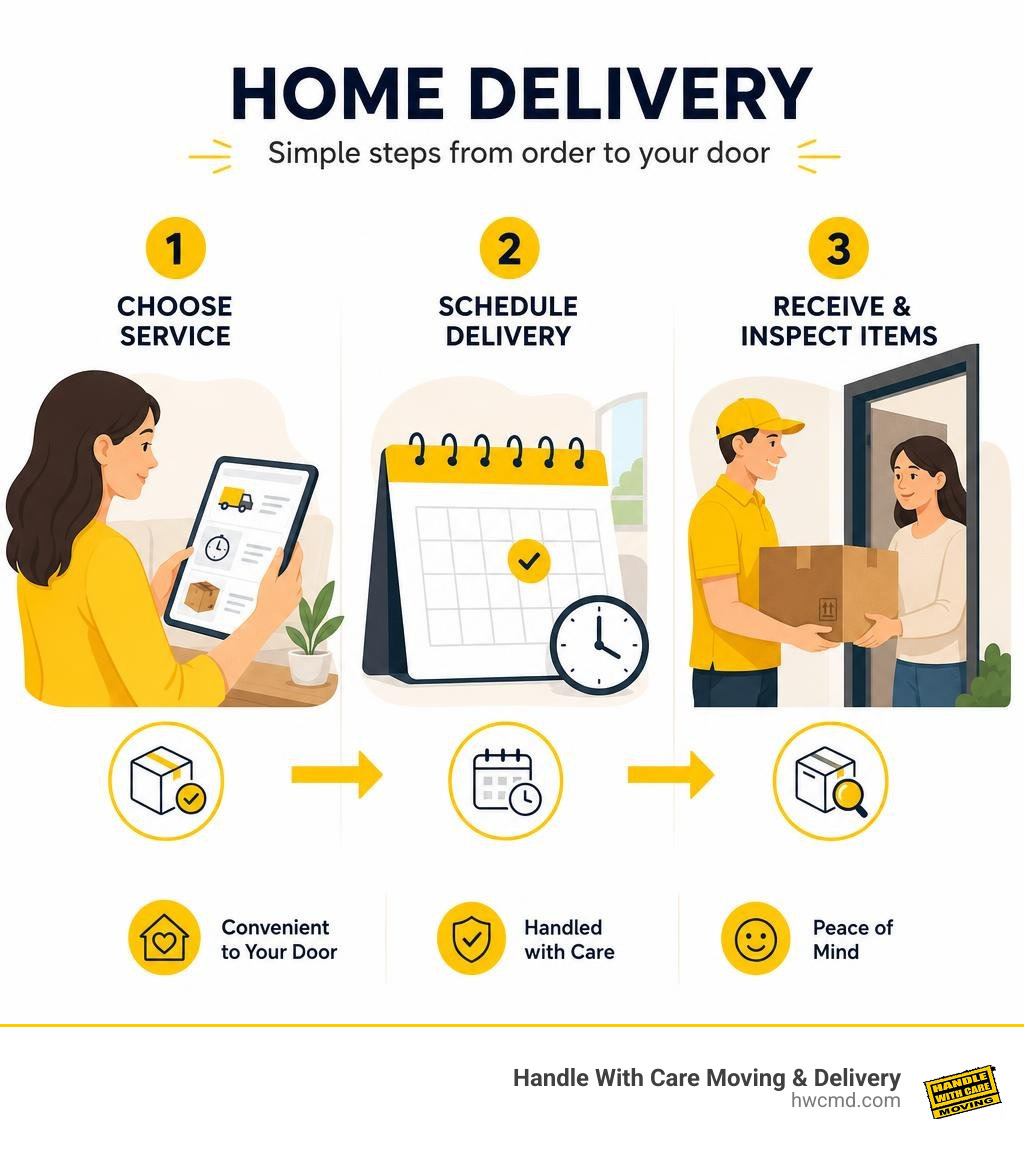
Understanding Home Delivery Models and Alternatives
Direct-to-consumer fulfillment has reshaped retail competition and customer expectations. For decades, brick-and-mortar shopping required consumers to shoulder the entire burden of transportation, vehicle fuel, and physical loading. Today, residential doorstep fulfillment serves as practically the only physical, formal touchpoint between a merchant and a buyer in digital commerce, making the quality of that final handoff vital for customer loyalty.
When organizing how you receive purchases, the primary structural decision comes down to direct residential drop-off versus centralized collection points (such as parcel lockers, retail counters, or curbside pickup). While collection points offer secure consolidation, they still require personal travel, physical lifting, and schedule coordination on your part.
| Fulfillment Feature | Direct Residential Delivery | Local Pickup Points / Lockers |
|---|---|---|
| Recipient Travel | Zero travel required; items arrive at doorstep | Requires driving or walking to an external location |
| Handling of Bulky Items | Managed entirely by specialized couriers and equipment | Limited by personal vehicle size and lifting capacity |
| Time Investment | Passive receipt; minimal scheduling disruption | Active transit, queueing, and manual retrieval |
| Security & Custody | Direct transfer or unattended porch drop-off | Secure, pin-protected lockers or staffed counters |
| Cost Profile | Variable delivery/service fees or subscription passes | Typically free or lower base service costs |
| Access Windows | Scheduled time slots or on-demand drop windows | Constrained by locker availability or store business hours |
For heavy freight, furniture, or large household orders, residential transport eliminates the risk of personal vehicle damage or physical strain. Modern delivery networks leverage specialized equipment to bridge the gap between regional distribution warehouses and residential properties.
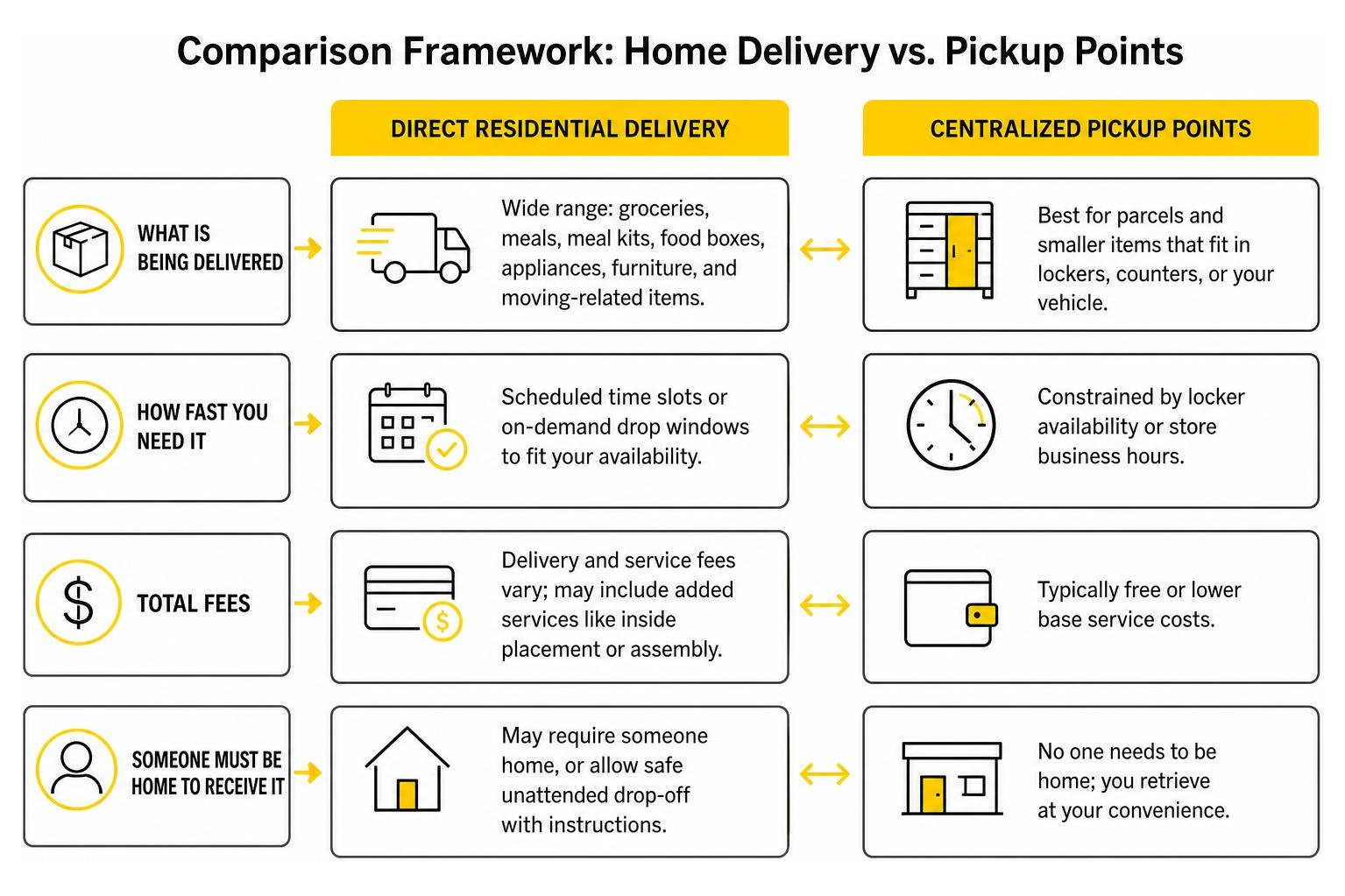
Comparing Key Categories of Doorstep Fulfillment
Doorstep logistics encompasses distinct sub-sectors, each operating under specialized handling protocols, vehicle requirements, and regulatory standards.
Grocery and Perishable Home Delivery Logistics
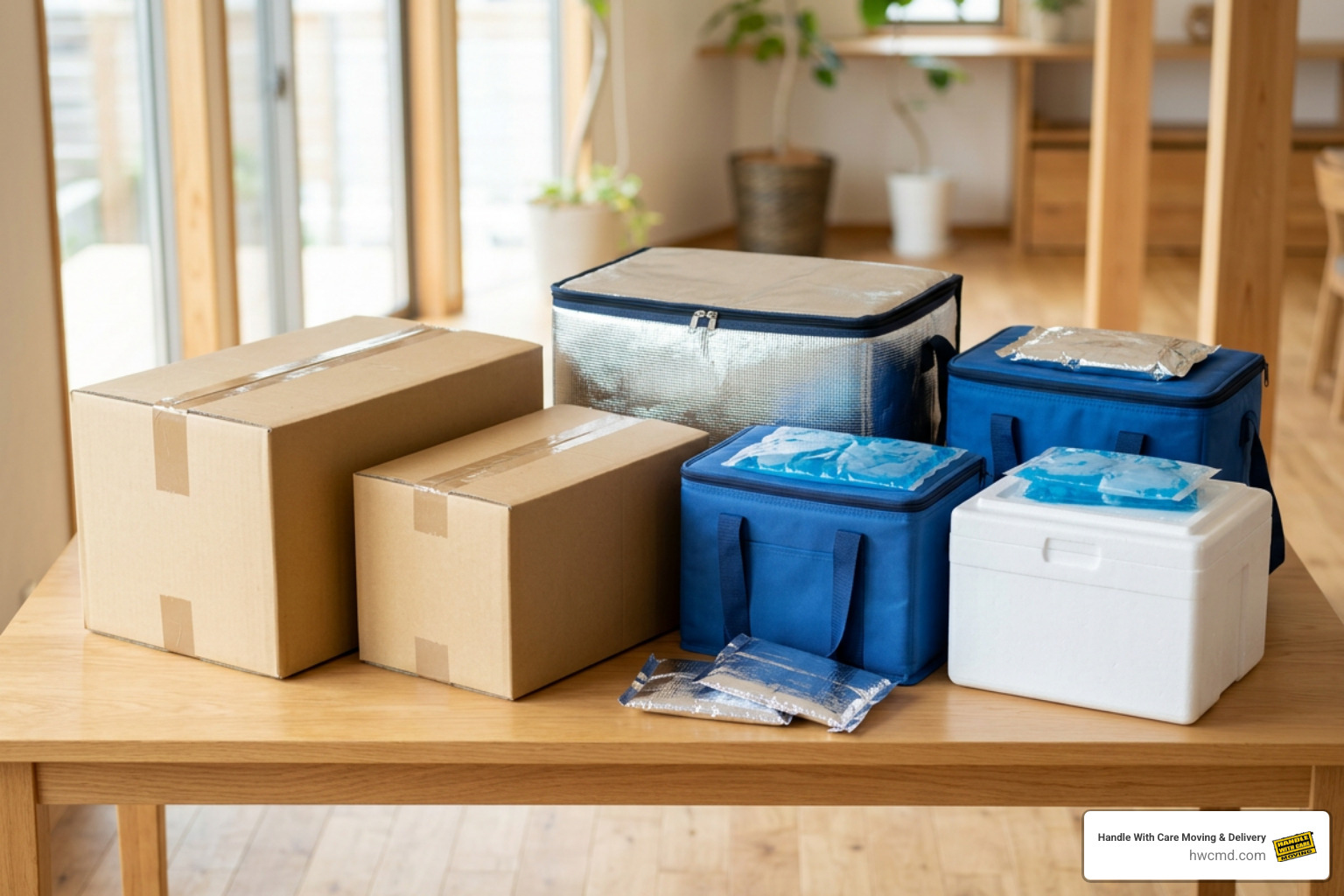
Transporting perishable groceries and chef-prepared foods requires an uninterrupted cold chain. Perishable shipments rely on insulated packaging, gel packs, or refrigerated transport vans to ensure items remain within food-safe temperature bands during transit.
On-demand networks fulfill same-day orders across sprawling merchant catalogs. For instance, platforms like Instacart aggregate over 1 billion products across 80,000 partner stores in 14,000 cities, offering rapid drop-offs in as little as one hour. Subscription meal models, such as Home Chef, streamline weeknight meal prep by delivering pre-portioned ingredients in temperature-regulated containers, having completed over 320 million meal deliveries with standard plans averaging $9.99 per serving.
Regional grocers and organic markets, including FreshDirect and Farmhouse Delivery, emphasize farm-fresh produce and heavy-item relief—letting couriers carry multi-gallon beverage cases and bulk dry goods directly up apartment stairwells.
Specialized and Assistance-Based Home Delivery Programs
Residential distribution also serves as vital community infrastructure. Assistance-based delivery programs support homebound seniors, individuals with short- or long-term disabilities, and families facing mobility barriers.
Nonprofit initiatives, such as the Tarrant Area Food Bank’s home delivery model, collaborate with commercial carriers like Amazon Delivery to fulfill recurring, unattended drop-offs of standardized nonperishable food parcels (often two 20-pound boxes monthly). These programs utilize structured enrollment cohorts and address verification within designated zip codes to ensure nutritional security for vulnerable residents without requiring physical travel to brick-and-mortar pantries.
Bulky Goods, Retail, and Furniture Drop-Off
Oversized retail freight, major appliances, and furniture require handling standards far beyond standard parcel drops. When shopping for home furnishings, knowing where to buy a comfy couch that delivers straight to your door solves only half the equation; you must also evaluate how that item will be transported from the curb into your living space.
Navigating freight networks requires evaluating service levels:
- Curbside Delivery: The driver unloads the freight onto the curb or driveway. The customer is responsible for carrying the item inside.
- Threshold / Doorstep Drop-Off: The package is placed just inside a garage or front doorway, sheltered from immediate weather.
- White-Glove In-Home Placement: Couriers transport the item into the designated room, unbox it, handle assembly, and haul away protective debris.
Understanding how to pick the best furniture delivery app for your next move prevents surprise charges and logistical headaches when managing bulky, heavy assets.
The Mechanics and Economics of Last-Mile Operations
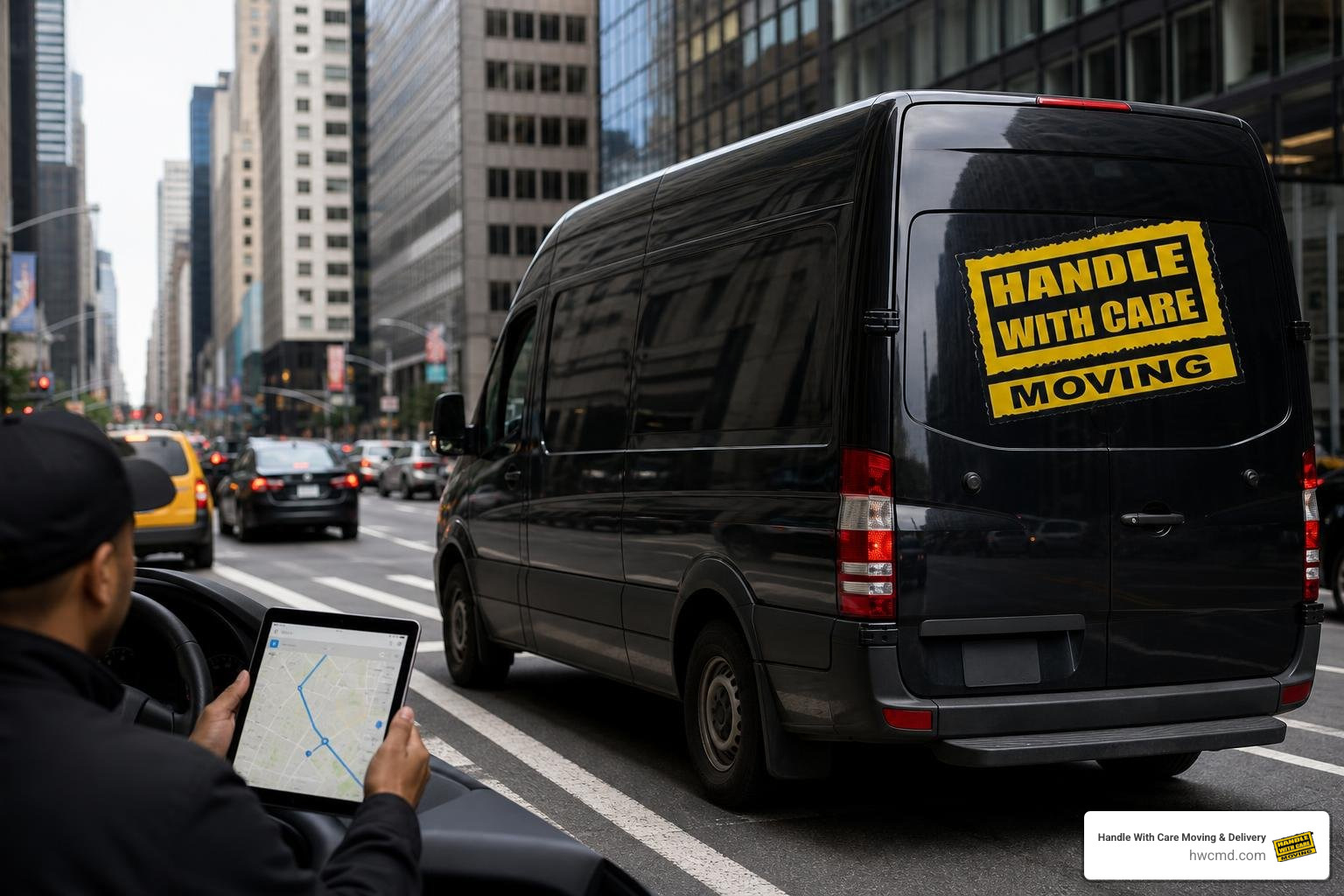
The “last mile”—the final movement of goods from a localized fulfillment hub to a residential doorstep—is the most complex and expensive phase of the entire supply chain. While long-haul freight benefits from massive economies of scale along predictable interstate corridors, last-mile couriers encounter unpredictable routing, stop-and-go driving, multi-story buildings, and individual delivery instructions.
On-demand aggregators and gig networks address this by deploying crowdsourced fleets. Reviewing the ultimate guide to gig delivery apps and earnings highlights how flexible dispatch routing matches localized driver supply with fluctuating residential order volumes. In regional hubs, specialized logistics operations show how local Ann Arbor delivery services keep the city moving through coordinated freight consolidation and dedicated local transport.
Urban Congestion and Environmental Footprint
Last-mile logistics carries a substantial environmental and municipal footprint. According to data from the French Strategic Analysis Committee, the last mile accounts for approximately 20% of urban traffic and generates 25% of transport-related greenhouse gas emissions.
To mitigate congestion and emissions, modern logistics networks are adopting:
- Logistic Urban Areas (LUAs): Micro-fulfillment hubs located within city cores that consolidate shipments to reduce long van routes.
- Fleet Electrification: Transitioning from combustion vans to zero-emission commercial electric vehicles and cargo bikes for dense urban cores.
- Dynamic Route Optimization: Advanced routing algorithms that group drop-offs geographically, eliminating redundant vehicle trips through residential neighborhoods.
Delivery Fees, Minimums, and Subscription Tiers
Platforms balance last-mile costs through tiered fee structures, basket minimums, and subscription passes. Base delivery fees often start at $3.99 for orders exceeding a $35 minimum, while small orders incur surcharges to cover dispatch costs.
Subscription programs (such as Shipt‘s $99/year membership or FreshDirect’s DeliveryPass) remove per-order delivery charges on baskets meeting set thresholds, incentivize customer retention, and offer priority timeslots. Customers should also account for driver gratuity, service fees, and specialized handling surcharges on regulated items like alcohol.
Managing Risk, Scheduling, and Delivery Exceptions
Smooth doorstep fulfillment depends on transparent scheduling, real-time communication, and clear handling procedures.
Damaged Goods and Legal Risk Transfer
Legally, the transfer of risk from merchant to consumer occurs the moment the buyer (or their representative) takes physical possession of the delivered goods. If an item arrives damaged:
- Inspect Before Signing: For freight and oversized items, thoroughly inspect exterior packaging and contents before signing any paper or digital delivery slip.
- Record Explicit Reservations: If damage is present, clearly note specific defects (e.g., “crushed corner,” “torn upholstery,” “punctured carton”) directly on the bill of lading or courier device.
- Refuse Damaged Cargo: If damage is severe, refuse acceptance of the shipment to invoke your consumer protection warranty rights.
- Document Immediately: Photograph damaged goods and packaging from multiple angles and submit a formal claim through the provider’s support channel within 24 hours.
Out-of-Stock Protocols and Communication Channels
For on-demand retail and grocery fulfillment, inventory discrepancies happen in real time. Modern delivery apps mitigate stockouts through dynamic replacement protocols:
- Pre-Selected Replacements: Setting explicit item backups (e.g., matching a preferred brand substitute or choosing “Refund Only”) prior to checkout.
- In-Aisle Shopper Chat: Two-way messaging allows personal shoppers to send real-time photos of shelf alternatives for immediate customer approval.
- Instant Digital Adjustments: Automated post-order billing reconciliations that immediately refund unavailable items or adjust weights for produce and meats.
Frequently Asked Questions About Residential Fulfillment
What is the difference between doorstep drop-off and pickup points?
Doorstep drop-off delivers goods directly to your private residential entrance, eliminating personal transit and handling requirements. Pickup points (such as parcel lockers or retail collection counters) transfer custody at a third-party site, requiring you to travel, transport, and physically load your items yourself.
How do delivery subscriptions lower overall household shipping costs?
Delivery subscriptions waive recurring delivery fees on orders that meet baseline minimums (typically $35). For households making two or more orders monthly, an annual membership (such as $99/year) significantly lowers the aggregate per-drop cost compared to paying standard $3.99 to $9.99 individual delivery fees, while also unlocking member-only promotions and preferred scheduling windows.
What should recipients do if a shipment arrives damaged?
If a freight or parcel delivery arrives damaged, take clear photographs of the packaging and item defects immediately. For freight requiring a signature, write detailed descriptions of the damage on the delivery slip before signing, or refuse the shipment entirely. Contact the merchant or carrier support portal promptly with your order documentation to request an immediate replacement or full refund.
Conclusion
Residential delivery convenience transforms modern household logistics, saving time and removing the physical strain of transporting bulky or recurring items. Maximizing these benefits requires understanding fulfillment tiers, verifying delivery instructions, and selecting providers that prioritize transit safety.
At Handle With Care Moving & Delivery, we apply this high standard of care to every piece of furniture, box, and specialty cargo we handle. With transparent 15-minute increment billing, no minimum labor hours, and complimentary protective wrap, our team ensures your items arrive safely. Discover how our residential delivery and moving services provide dependable, professional care across Ann Arbor and surrounding areas.