
How to Organize Smart Storage for Fishing Gear at Home
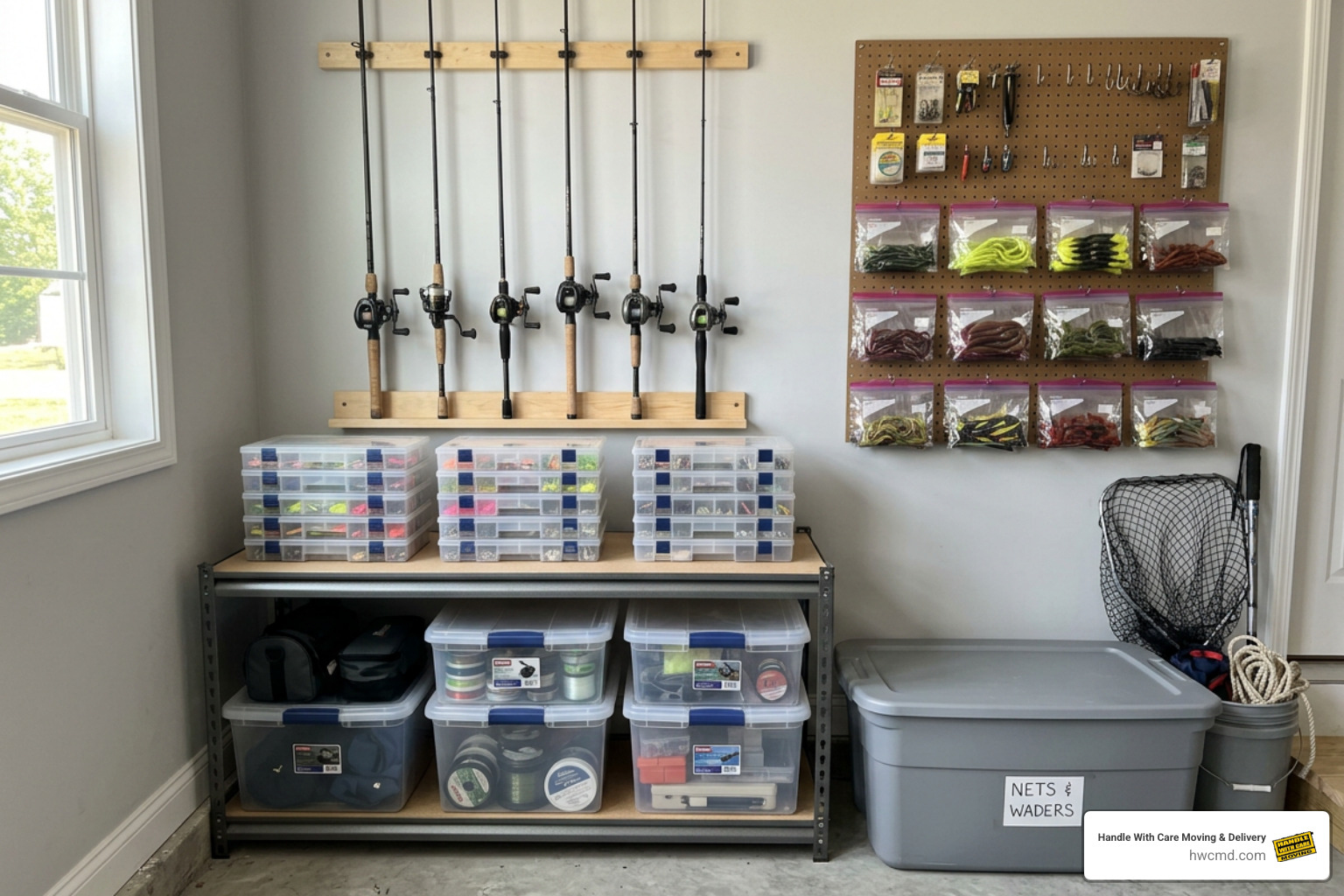
Smart Storage for Fishing Gear Starts at Home
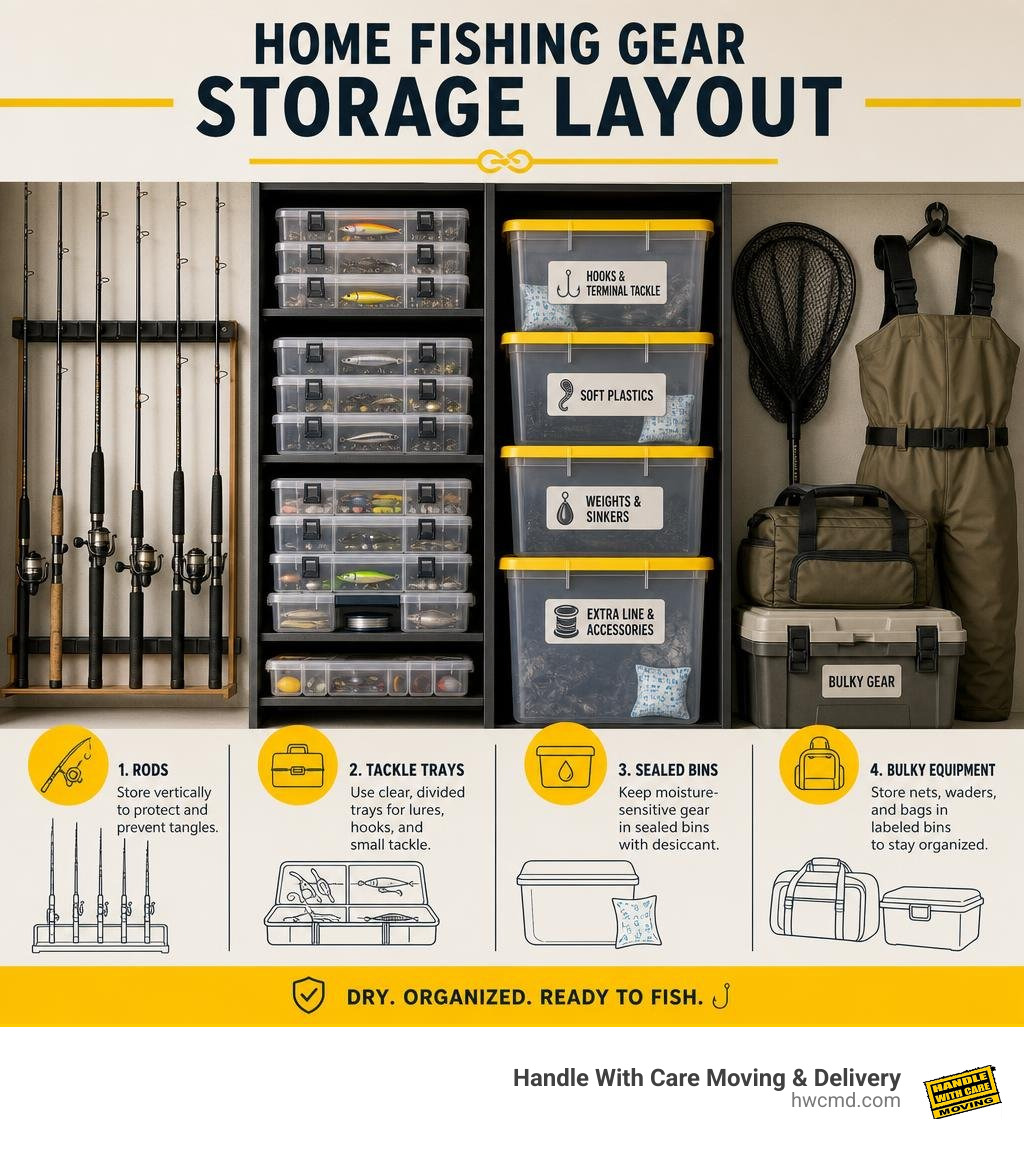
Storage for fishing gear works best when every item has a dry, labeled, easy-to-reach place. Start by sorting gear into four groups: rods and reels, lures and terminal tackle, soft plastics, and larger items such as nets, waders, and bags.
- Use clear, divided tackle trays for lures, hooks, weights, and swivels.
- Keep rods in a wall rack or freestanding holder so they cannot bend, tangle, or fall.
- Put moisture-sensitive tackle in sealed containers with a desiccant pack to help limit rust.
- Store bulky gear in labeled bins, cabinets, or a dry deck box rather than loose piles in the garage.
A good home setup saves time before every trip and helps protect the gear you already paid for. It also makes packing for a move much simpler: organized trays, secured rods, and clearly marked bins are safer to carry, load, and unpack.
I am Anthony Denha, President of Handle With Care Moving & Delivery, and my work centers on planning, packing, and protecting belongings during local moves. Those same careful habits apply to storage for fishing gear: group related items, prevent moisture and impact damage, and make every container easy to identify before it is moved or used.
Selecting the Best Home Storage for Fishing Gear
When setting up home storage for fishing gear, we always recommend matching your storage containers to the environments where your gear will live and how you plan to travel. Anglers often make the mistake of using a one-size-fits-all approach, tossing expensive crankbaits, delicate terminal tackle, and saltwater rigs into generic totes. However, taking time to match the storage container to the environment keeps your equipment organized and extends its lifespan.
Selecting standard container sizes—most notably the industry-standard 3600 (medium, around 11″ x 7.25″) and 3700 (large, around 14″ x 9″) tray footprints—allows you to effortlessly swap utility boxes between your home storage racks, soft-sided tackle bags, and boat lockers.
Another key decision is choosing between waterproof sealed boxes and breathable non-waterproof storage. Waterproof containers feature rubber O-ring gaskets and heavy-duty latches that lock out external moisture, sea spray, and rain. Non-waterproof boxes, on the other hand, rely on air circulation to dry out damp lures after a day on the lake. If you store non-waterproof boxes in humid basements or garages without ventilation, trapped moisture can quickly ruin fine wire hooks and split rings. Explore dedicated storage solutions to secure your household belongings alongside your recreational equipment.
| Storage Feature | Waterproof Sealed Boxes | Non-Waterproof Standard Trays |
|---|---|---|
| Primary Protection | Complete seal against water immersion & rain | Open airflow and quick drying |
| Best Environment | Kayaks, open boats, bank fishing in rain | Climate-controlled garages, dry basements |
| Rust Prevention | Blocks external moisture; needs desiccant inside | Relies on ambient air circulation |
| Typical Price Range | $14.00 – $55.00+ | $4.00 – $18.50 |
| Ideal Tackle Types | Terminal tackle, expensive hard baits, electronics | Soft plastic bags, bulk utility tools, floaters |
Essential Home Storage for Fishing Gear Systems
Building a versatile fishing equipment management system requires a mix of hard tackle boxes, soft bags, dry bags, and dedicated vertical rod racks. Hard-shell tackle boxes offer ultimate crush resistance for expensive lures, while soft-sided tackle bags allow hands-free mobility for stream or bank angling.
For anglers fishing from open vessels, kayaks, or wet shorelines, sealed tray protection is non-negotiable. Top-rated options like the KastKing HyperSeal Waterproof Tackle Box feature heavy-duty sealing gaskets and integrated desiccant slots to keep high-value hard baits and hooks dry and corrosion-free.
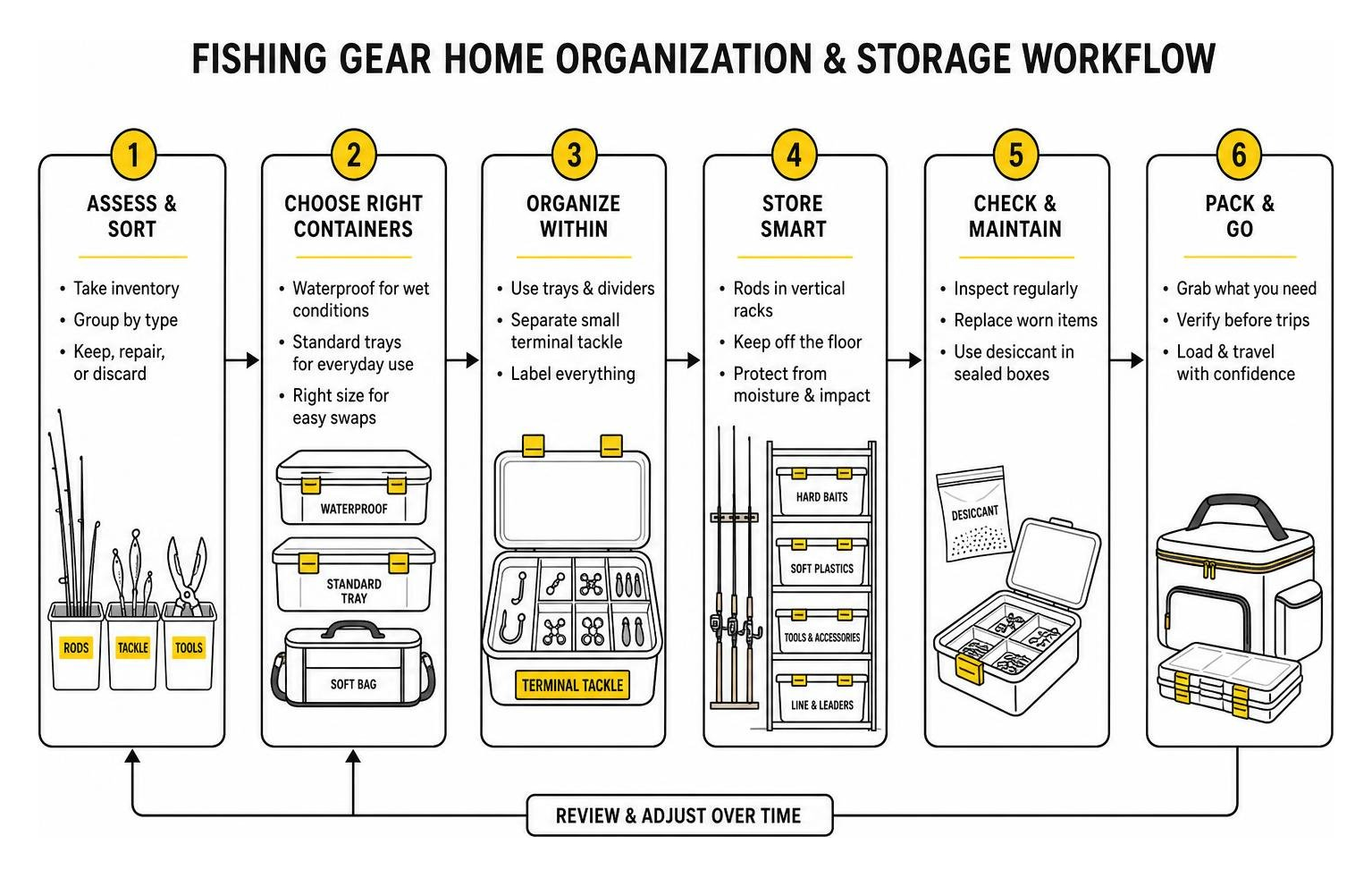
To simplify how you decide on the right storage setup for your home and fishing routine, follow this simple workflow:
Organizing Specific Tackle and Lures
Organizing lures and terminal tackle effectively requires separating small components like swivels, split shot, and hooks from larger hard baits and soft plastics. When left loose in open compartments, treble hooks tangle into frustrating nests, while metal weights can chip paint off custom crankbaits.
For terminal tackle, precision is key. High-end modular systems, such as the Terminal – Colony 28 Modular Tackle Box – BUZBE, utilize interlocking internal bins that prevent micro-hooks and swivels from migrating between compartments during transport. These boxes feature clear polycarbonate lids made from high-impact materials and built-in Vapor Corrosion Inhibitors (VCI) that coat metal tackle in a microscopic rust-preventative shield.
When organizing bulky lures or soft plastics, consider these targeted strategies:
- Vertical Hanging Cases: Deep boxes equipped with patent-pending hook slots or swimbait hangers (like the Sidekick Tackle Storage Box – Lakewood Products) keep long swimbaits and musky lures upright, preventing bent tails and tangled hooks.
- Deep Modular Bins: Larger deep boxes like the Colony 28D (Deep) Modular Tackle Box – BUZBE accommodate tall items like Texas Rig terminal components, line spools, and pre-packaged soft bait sleeves.
- Pre-Loaded Precision Kits: Specialty setups like the BKK OCD Tackle Storage System Fully Loaded – Tackle Warehouse organize up to 80 individual micro-boxes within a sealed, gasket-protected outer shell for complete hook organization.
- Breathable Mesh Pouch Bags: Mesh bags provide crucial ventilation for wet soft plastics, live well tools, and bottom bouncer rigs, preventing mildew growth.
Garage and Home Setup for Fishing Rods and Equipment
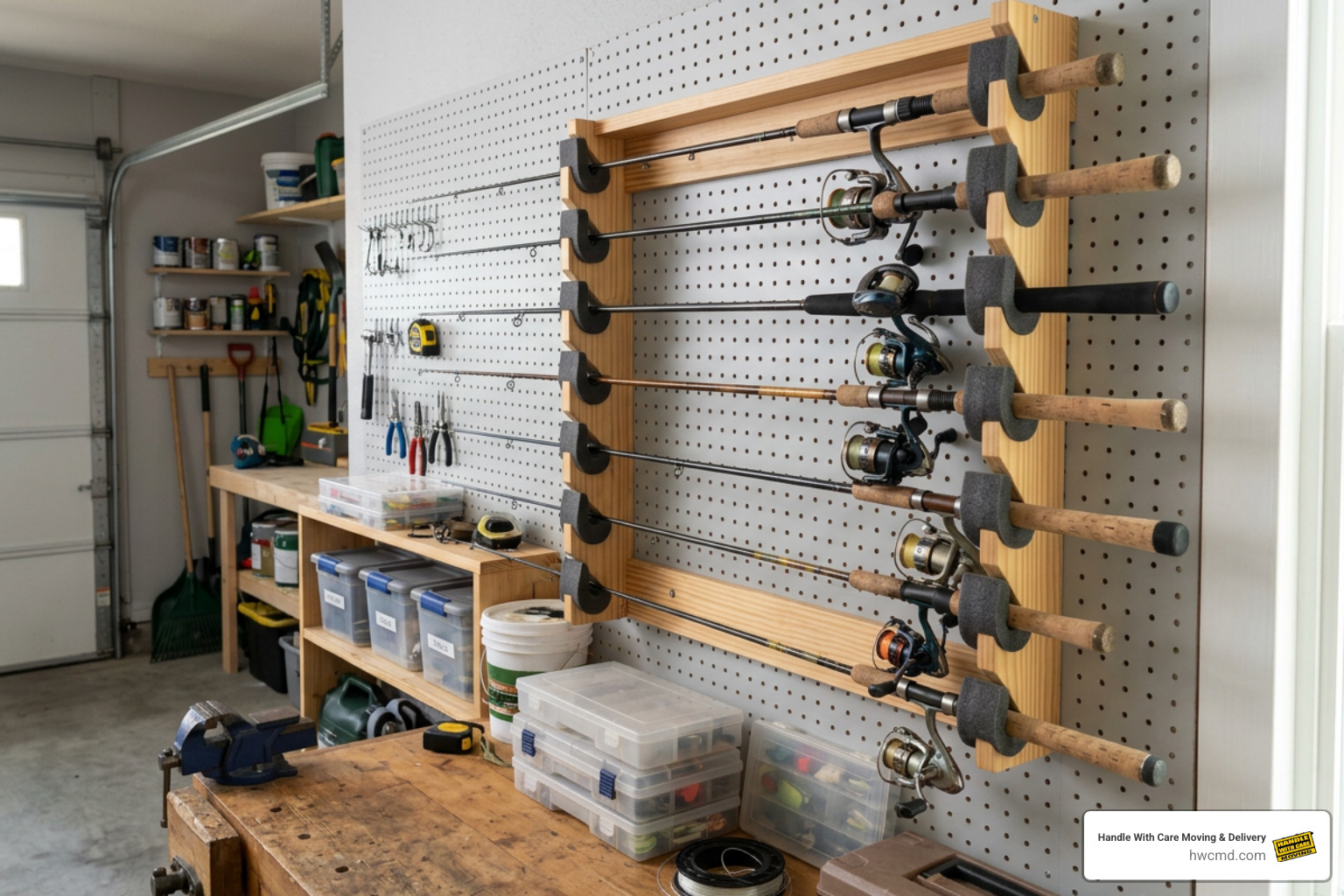
The garage or basement utility room is the operational heart of most home fishing setups. Keeping rods off the floor and out of dark corners protects fragile graphite tips from accidental snaps, door slams, or heavy objects leaning against them.
To maximize space, install wall-mounted or ceiling-mounted rod racks. Wall-mounted holders like Ghosthorn rod racks securely clamp up to 6 or 12 rod blanks in foam grooves, keeping them straight and organized vertically or horizontally. Rolling rod carts, such as the Old Cedar Outfitters Rolling Rod Cart or Rush Creek Creations 12-Rod Holder, allow you to conveniently wheel your entire rod setup directly to your vehicle for loading. If you are preparing for a home renovation or relocation, consult our complete Packing 101 guide for step-by-step instructions on securing fragile household gear.
Long-Term Rod and Reel Preservation
During the off-season, proper care ensures your rods and reels perform flawlessly when spring arrives. Before storing your rods for several months, clean the guide rings with freshwater and mild detergent to remove built-up lake algae, dirt, and salt crystals.
For reel maintenance and long-term care:
- Back Off the Drag: Unthread the drag star or knob on spinning and baitcasting reels to relieve pressure on internal carbon washers, preventing permanent compression.
- Protect Rod Blanks: Cover individual rods with protective neoprene or woven plastic rod sleeves to stop lines from tangling and prevent guide guide scratches.
- Inspect Line: Strip off worn fluorocarbon or monofilament line that has developed memory loops over the season.
- Reel Bags: Store individual reels in padded neoprene cases or soft cloth pouches inside closed cabinets to shield bearings from airborne dust and moisture.
Mobile vs. Permanent Home Organization
A great home organization system transitions seamlessly from permanent garage storage to mobile vehicle or boat loading. Pegboards installed above workbench areas offer a clear view of hanging tools, line spools, and lure wraps. Clear bins with labeled fronts allow you to pull specific gear without disturbing surrounding items.
When transitioning to mobile fishing:
- Kayak Crates: Modular crates like the YakAttack BlackPak Pro fit directly behind your kayak seat, holding up to four standard 3700 utility boxes alongside track-mounted rod holders and accessory pockets.
- Soft-Sided Tackle Systems: Portable bags such as the LUNKERBAG Tackle Storage System for Bass Anglers – MONSTERBASS store multiple 3700-size utility trays in a front-loading main compartment with non-slip rubber bottoms designed for boat decks.
- Shore & Stream Bags: Compact backpacks, tackle slings, and waist packs hold one or two 3600 utility trays, keeping your hands free for navigating steep bank paths.
Maximizing Efficiency with Modular and Smart Storage Solutions

Modular storage systems revolutionized how anglers organize tackle. By standardizing tray sizes and internal grid configurations, you can build a customized layout tailored to your targeted species, whether bass, walleye, musky, or trout.
Standard utility box sizing follows a universal numbering framework:
- 3500 Series: Compact footprint (approx. 9″ x 5″), perfect for kayak hatch pockets, small waist packs, and ultralight panfish gear.
- 3600 Series: Medium footprint (approx. 11″ x 7.25″), ideal for wade fishing backpacks, shore bags, and small boat storage compartments.
- 3700 Series: Full-size footprint (approx. 14″ x 9″), the benchmark standard for bass boat compartments, large soft bags, and home garage shelving.
Customizable grid systems—such as HEXLOK technology in BUZBE boxes or removable dividers in Plano StowAway and Flambeau boxes—let you alter compartment dimensions down to the fraction of an inch. Learn more about how we safeguard packed goods using our professional Packing Services Materials.
Budget vs. Premium Storage for Fishing Gear
Finding effective storage for fishing gear does not require spending hundreds of dollars per container. Budget-friendly options perform exceptionally well for home organization, while premium cases excel in extreme outdoor environments.
Budget utility trays (ranging from $4.00 to $18.50), such as Flambeau Outdoors 4510 boxes or basic Plano ProLatch StowAways, provide clear visual organization for indoor shelving and dry boat storage. For home workshop hardware and terminal tackle, clear plastic multi-drawer storage cabinets like the Akro-Mils 44-Drawer cabinet ($45.99) offer exceptional value for organizing swivels, split rings, and spare hooks on a garage desk.
At the premium level ($45.00 to $300.00+), heavy-duty cases like YETI LoadOut GoBoxes, BUZBE Colony boxes, and BKK OCD systems feature IP67 submersibility ratings, stainless steel hardware, UV protection, VCI rust inhibition, and indestructible polycarbonate construction. DIY anglers can also construct highly efficient home storage setups using budget pegboards, wire baskets, and heavy-duty 150-gallon outdoor deck boxes (like Keter resin deck boxes) for large items like waders, nets, and flotation vests.
Preparing Fishing Gear for Moving and Long-Term Storage
When preparing to move your home or put your fishing tackle into off-season storage, taking proper protective steps prevents expensive breakages and corrosion. Never pack fishing gear while damp, dirty, or unorganized. Read our list of 10 Great Moving Tips To Make Your Move Efficient And Easy to streamline your upcoming relocation.
Follow this step-by-step checklist to prepare your fishing collection for transport or long-term climate-controlled storage:
- Thoroughly Wash and Dry Equipment: Rinse all rods, reels, hard lures, and storage boxes with clean fresh water to strip away salt, lake grime, and fish slime. Let all items air-dry completely in a shaded area.
- Dismantle Multi-Piece Rods and Detach Reels: Remove reels from rod seats to prevent foot seat strain. Disassemble two-piece or multi-piece rods and pack them inside rigid PVC rod tubes or padded travel cases like the Guide Series Jumbo Rod Tube.
- Lock Down Terminal Bins: Ensure every utility tray latch is fully engaged. Place heavy rubber bands or hook-and-loop straps around utility boxes to keep lids from popping open inside moving boxes.
- Insert Moisture Control: Place fresh desiccant packs or silica gel packs inside every sealed tackle box to absorb ambient humidity trapped during packing.
- Protect Fragile Lures: Wrap high-end hard baits with soft foam wraps or place them in specialized lure sleeves to prevent treble hooks from tangling or gouging lure paint.
- Pack in Sturdy Outer Boxes: Line heavy-duty double-walled cardboard boxes or plastic moving totes with bubble wrap. Place heavier utility boxes at the bottom and lighter soft bags or reel cases on top.
If you are coordinating a relocation in Ann Arbor, Michigan, or the surrounding communities, our experienced moving crew at Handle With Care Moving & Delivery is ready to help. We provide complete professional packing, custom wrapping, and safe transport for sensitive specialty items, athletic equipment, and valuable household collections.
Frequently Asked Questions About Fishing Gear Storage
How do you prevent tackle rust during long-term storage?
Preventing tackle rust requires controlling internal humidity and eliminating salt or freshwater residue before storing your gear. Always ensure lures and hooks are 100% dry before closing tackle box lids.
To active protection against moisture, utilize containers infused with Vapor Corrosion Inhibitors (VCI), such as BUZBE Colony boxes, which release an invisible protective gas layer over metal components inside the box. Alternatively, add silica gel desiccant packs into standard boxes to trap humidity. Never store wet lures directly alongside dry terminal tackle.
What is the best way to store soft plastic baits at home?
Soft plastic baits should be stored in their original re-sealable manufacturer bags inside mesh zipper totes, specialized soft plastic storage binders, or labeled plastic totes.
Original packaging keeps essential scents and attractants contained while preventing plasticizers from bleeding out. Keep soft plastics away from extreme heat, direct sunlight, and hard plastic tackle surfaces, as chemical reactions between soft plastics and unapproved hard plastics can melt both materials into a sticky mess.
How should fishing rods be stored to avoid warping?
Fishing rods should be stored vertically in dedicated wall-mounted racks, ceiling mounts, or freestanding rod holders that support the rod blank at multiple contact points.
Avoid leaning rods at steep angles against garage walls for extended periods, as constant uneven pressure can cause graphite and fiberglass blanks to develop a permanent curve or warp. Always back off reel drags to release tension on the line and guides, and keep stored rods away from heat sources, water heaters, and direct sunlight.
Conclusion
Organizing your home storage for fishing gear protects your financial investment in tackle, rods, and outdoor equipment while making every fishing trip smoother and more enjoyable. By grouping tackle into standardized 3600 or 3700 utility boxes, utilizing vertical rod storage, protecting metal components with VCI technology and desiccant packs, and keeping soft plastics neatly cataloged, you create an efficient gear management system that lasts for years.
When it comes time to move your home, garage, or specialty collection across town, let our expert team handle the heavy lifting. Handle With Care Moving & Delivery brings years of careful handling experience, transparent 15-minute increment pricing, complimentary pad and shrink wrapping, and dedicated customer service to every job. Explore our flexible professional storage services or contact us today to request a free, accurate estimate for your next move!