
The Best Way to Pack Dishes for Storage Without Damage
Essential Supplies for the Best Way to Pack Dishes for Storage
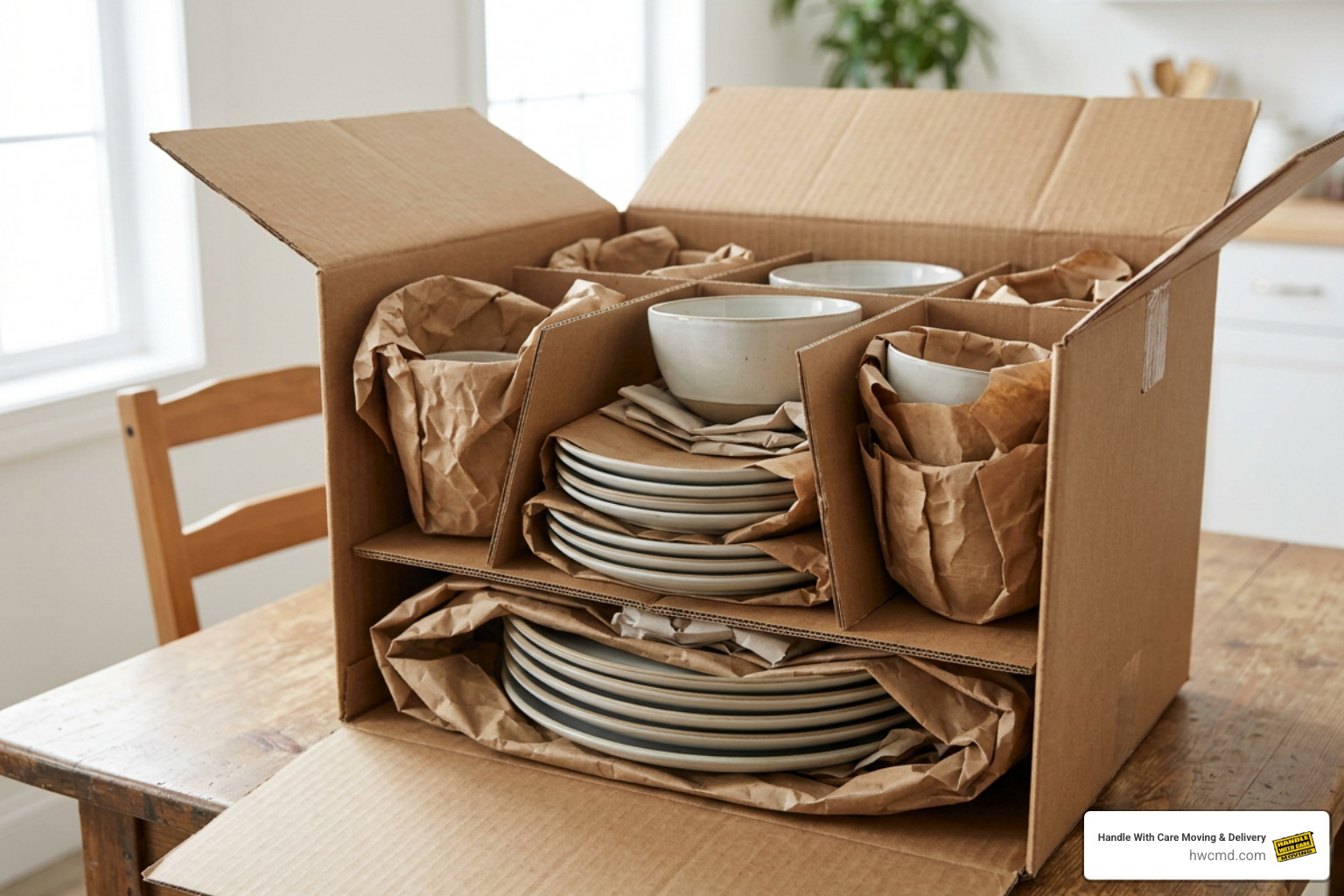
When preparing fragile kitchenware for long-term storage, standard single-wall moving boxes simply will not cut it. The kitchen is notoriously the single hardest room to pack—taking most people at least eight hours to wrap and box up completely. Since dishes are statistically the single most-broken item during moves and storage transitions, using proper high-grade materials is your first line of defense.
At Handle With Care Moving & Delivery, we always recommend building a strong foundation with commercial-grade supplies. If you need specialized materials, explore our Packing Services Materials guide for expert recommendations.
Here are the essential packing materials you need:
- Dish Barrels (Dish Packs): These heavy-duty boxes feature double-wall corrugated cardboard construction. They are engineered to resist crushing when stacked and absorb downward static pressure inside a storage unit.
- Unprinted Packing Paper: Clean, unprinted paper is the industry standard for wrapping porcelain, stoneware, and fine china. Unlike standard newsprint, plain packing paper will not stain delicate glazes or leave dark ink smudges that require deep scrubbing later.
- Bubble Wrap: Ideal for high-value heirlooms, delicate crystal, and fragile stemware. Bubble wrap provides dynamic shock absorption, though it should generally be applied over an initial layer of packing paper.
- Cell Packs (Cardboard Dividers): Adjustable grid inserts designed to fit inside dish boxes. They isolate individual glasses, mugs, and stemware, preventing glass-on-glass friction and impact damage.
- Heavy-Duty Packing Tape: Secure the bottom seams of every box using heavy-duty acrylic or hot-melt tape. Never use duct tape or masking tape, which dry out, lose adhesion, and drop box bottoms over time.
| Packing Material | Best Used For | Primary Benefit | Potential Drawback |
|---|---|---|---|
| Unprinted Packing Paper | Plates, bowls, everyday dishware | Excellent friction, zero ink transfer, cost-effective | Offers lower impact protection for extreme delicate items |
| Bubble Wrap | Stemware, crystal, fragile heirlooms | Maximum dynamic shock absorption | Higher cost; can trap moisture directly against surfaces |
| Cell Pack Dividers | Wine glasses, coffee mugs, tumblers | Prevents glass-on-glass collision | Takes up fixed interior box dimensions |
| Double-Wall Dish Boxes | All heavy and breakable kitchenware | Superior structural strength and crush resistance | Slightly heavier than standard single-wall boxes |
Step-by-Step Guide: How to Wrap Kitchenware Safely
Wrapping each piece individually is critical to protecting kitchenware against physical shock, micro-vibrations, and dynamic friction during transit and storage. Before wrapping a single plate, prepare your dish box by taping the bottom seam in an double “H” pattern—applying strips along the main flap join and across both side edges. Next, create a shock-absorbing base layer by placing 3 to 6 inches of densely crumpled packing paper or bubble wrap at the very bottom of the box.
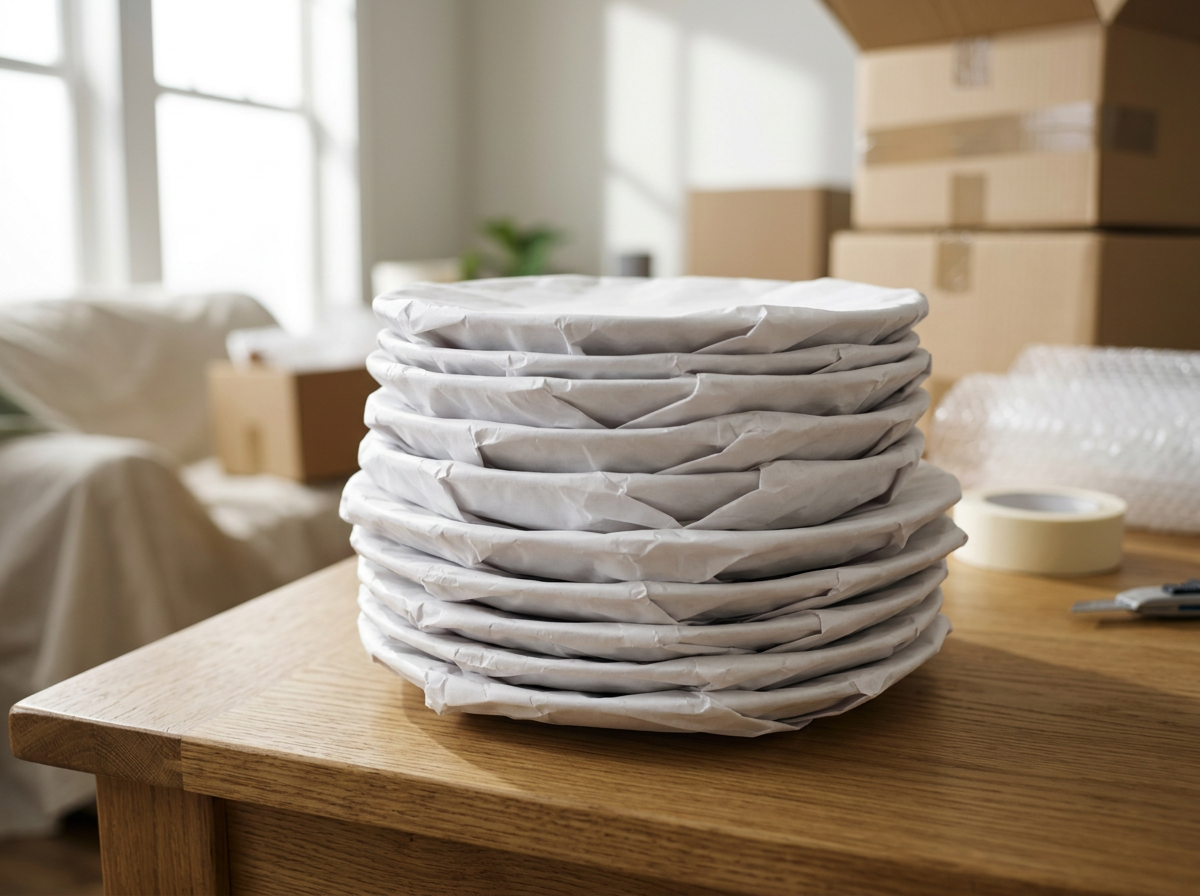
When wrapping individual items, lay a clean sheet of packing paper on a flat surface. Place the plate or bowl in the center, pull one corner over the top, and roll the item diagonally while tucking in the sides. For added safety, wrap two to four plates individually and then bundle them together into a secure, paper-wrapped unit before placing them into the box. To learn more about specialized wrapping routines, check out this guide on How to Pack Dishes for Moving.

The Best Way to Pack Dishes for Storage: Vertical Plate Stacking
The structural design of plates makes them exceptionally vulnerable when laid flat. When plates are stacked horizontally, top-down pressure concentrates force directly on the flat face of the bottom dish. A single bump or heavy load on top can easily crack an entire horizontal stack like a pile of fragile cookies.
The best way to pack dishes for storage is to stand plates vertically on their edges inside the padded box, similar to how vinyl records are organized in a crate or how plates sit in a dishwasher.
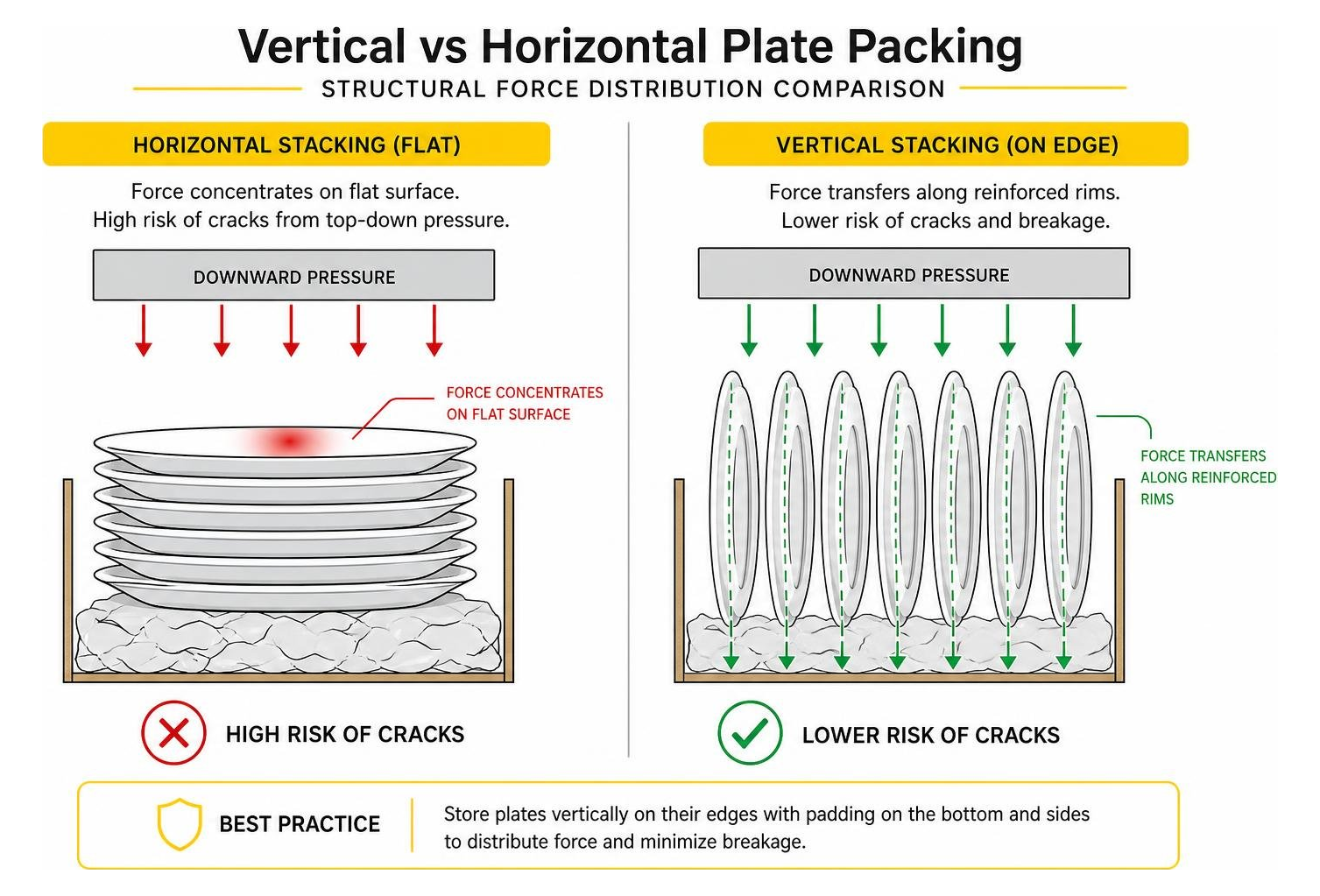
When positioned on their edges, plates redirect downward static force along their structurally reinforced outer rims. Place your bundled vertical plates directly on top of the bottom paper cushion. Ensure heavy dinner plates sit toward the outer walls or bottom load zones of the box, while smaller salad plates and saucers fill adjacent rows. For a step-by-step breakdown of edge-packing methods, review these instructions on How to Pack Dishes Step-by-Step.
The Best Way to Pack Dishes for Storage: Glasses and Stemware
Glassware requires a completely different approach than ceramic dishware. Because glasses are hollow, external pressure can cause their delicate walls to collapse inward if left unsupported.
- Stuff the Interior: Lightly wad crumpled packing paper inside the hollow core of every cup, glass, and mug. This internal bracing reinforces the glass walls against lateral pressure.
- Wrap the Exterior: Roll the stuffed glass in two to three layers of packing paper, tucking excess paper into the open rim and around the base.
- Protect Delicate Stems: Wine glasses and crystal stemware have fragile failure points along the stem. Wrap extra crumpled paper around the narrow stem to equal the thickness of the bowl before wrapping the entire piece in bubble wrap.
- Position Rim-Down or Upright: Always stand stemware upright on its foot, or place sturdy mugs and tumblers rim-down on a cushioned paper layer. Never lay glassware flat on its side.
- Use Double-Boxing for High-Value Crystal: For antique crystal or delicate stemware, double-boxing offers maximum protection. Pack the wrapped glasses securely inside a small divider-lined box, then suspend that smaller box inside a larger container lined with three inches of dense padding on all sides.
For additional expert insights on protecting fragile items, explore our comprehensive Packing 101 resource.
Loading, Weight Distribution, and Labeling Dish Boxes
Proper weight distribution keeps your storage boxes manageable and prevents structural box failures. Overfilled or heavy boxes weighing more than 40 to 50 pounds are far more likely to tear at the seams, break from the bottom, or be dropped during handling.

Always build your box architecture from heavy to light:
- Primary Load Zone (Bottom): Heavy stoneware, large ceramic platters, and thick dinner plates.
- Secondary Load Zone (Middle/Top): Lighter bowls, saucers, side plates, and padded glassware.
- Void Elimination Layer: Once all dishes are loaded, fill every remaining nook, cranny, and gap with crumpled packing paper, cloth napkins, or clean kitchen linens.
Before sealing the top flaps with tape, perform the Shake Test: close the box flaps and gently shake the container. If you feel or hear anything shifting, open the box and stuff more paper into the empty spaces until the contents are completely silent and rigid.
Once sealed, line the top with a final 2-inch cushion layer of paper and apply bold labels using a permanent marker on at least three sides.
- Mark all sides clearly with
FRAGILE - HANDLE WITH CARE. - Include clear orientation indicators:
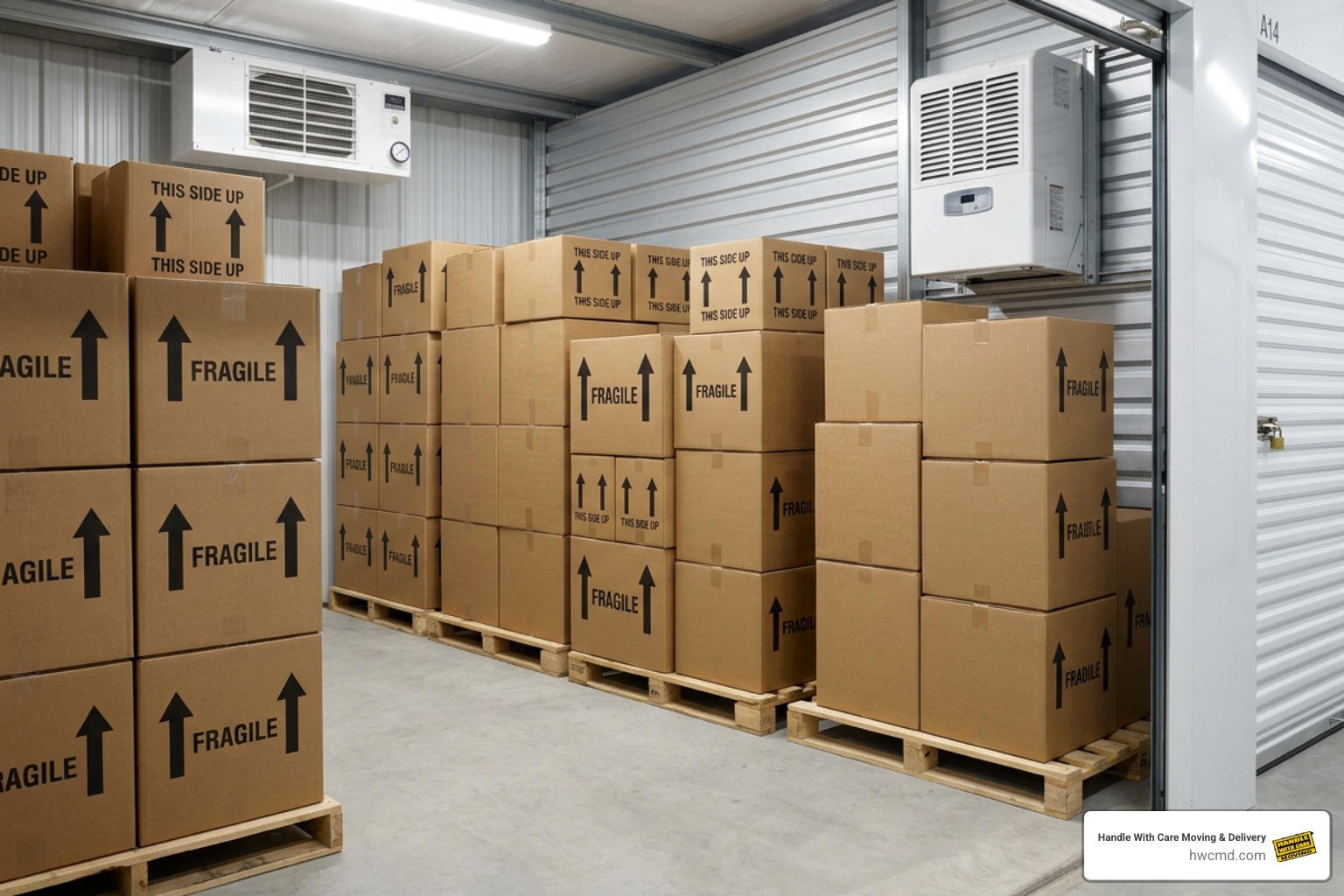
THIS SIDE UPwith vertical directional arrows. - List exact contents (e.g., “Kitchen – Fine China Plates & Saucers”) to make unboxing easy.
- Label boxes with destination rooms or color-coded stickers for seamless retrieval.
Long-Term Storage Considerations: Climate Control and Stacking
When storing dishes for several months or years, environmental conditions become just as critical as your wrapping technique. Standard non-climate-controlled storage units expose items to extreme seasonal temperature shifts and fluctuating humidity levels. Rapid changes in relative humidity can cause condensation inside sealed cardboard boxes, weakening the structural integrity of the box walls, breeding mold on paper, and causing micro-fractures or glaze crazing in antique porcelain and fine china.
To protect your kitchenware long-term, consider the following environmental controls:
- Opt for Climate Control: Maintain a storage environment between 55°F and 80°F with controlled humidity levels under 50% to prevent condensation and moisture buildup.
- Elevate Off the Floor: Always place dish boxes on wooden pallets, plastic shelving, or heavy furniture rather than directly on concrete storage unit floors, which can leach ground moisture up into cardboard.
- Pest Prevention Measures: Food residues attract insects and rodents that easily chew through cardboard and packing paper. Thoroughly wash and dry all kitchenware before packing. Never use leftover food boxes (like grocery store produce boxes) to store breakables.
- Proper Unit Stacking: Position heavy dish boxes at the bottom of stacks on sturdy surfaces, or place them near the top of sturdy furniture items where they won’t be crushed. Never stack more than two to three packed dish barrels on top of one another. Position breakable items toward the back wall of your unit if you do not need immediate access, ensuring they sit well out of high-traffic walkways.
If you are planning an upcoming relocation or need secure long-term holding options, learn more about our dedicated Storage Services solutions.
Frequently Asked Questions About Packing Dishes
Should dishes be stored vertically or flat in boxes?
Dishes, especially plates, saucers, and platters, should always be stored vertically on their edges rather than laid flat. Flat-stacked dishes expose their weakest surface area to static downward weight, making them susceptible to cracking from minor shocks or stacked box pressure. Storing plates on edge distributes weight along their thickest structural rim, absorbing vibrations and shock far more effectively.
How heavy should a dish storage box be?
A packed dish storage box should weigh no more than 40 pounds (and absolute maximum 50 pounds). Overweight boxes strain cardboard seams, increase the probability of bottom failure, and make lifting unsafe for movers. Stopping based on total box weight rather than physical volume ensures the container stays sturdy, easy to manage, and safe to stack.
Do dishes need a climate-controlled storage unit?
Yes, climate-controlled storage is strongly recommended for long-term dish storage—especially for heirloom china, crystal, porcelain, and ceramic items with delicate glazes. Climate control regulates ambient temperature and humidity, preventing condensation, mold growth on paper padding, and thermal stress that causes hairline cracks in fine glazes.
Conclusion
Finding the best way to pack dishes for storage comes down to using double-wall dish boxes, wrapping items individually in clean paper, placing plates vertically on their edges, and filling every void space to eliminate internal movement. When combined with a climate-controlled environment and safe weight limits under 40 pounds, your kitchenware will remain completely protected for months or years to come.
If you prefer to leave the heavy lifting and meticulous wrapping to the experts, our professional team at Handle With Care Moving & Delivery is here to help. Serving Ann Arbor, Michigan, we offer transparent 15-minute increment pricing, free protective pad and shrink wrapping, and careful handling tailored to your needs. Discover how our professional Moving Services can simplify your next move, or visit our HWCMD Blog for more expert moving guides and packing strategies!