
The Science Behind Sweet Success and Temperature Controlled Chocolate Wraps

How to Choose Chocolate Packing Material
Choose chocolate packing material in layers. Use food-safe foil or barrier film around the chocolate to limit moisture, oxygen, and light exposure. Add a snug box or tray to prevent damage. For a move or delivery, keep the package cool and away from direct sun; wrapping alone cannot prevent melting in a hot vehicle.
I’m Anthony Denha, President of Handle With Care Moving & Delivery. My hands-on experience packing and handling delicate items shapes how I assess chocolate packing material: each layer needs a clear job, from protecting the product to keeping it secure in transit.
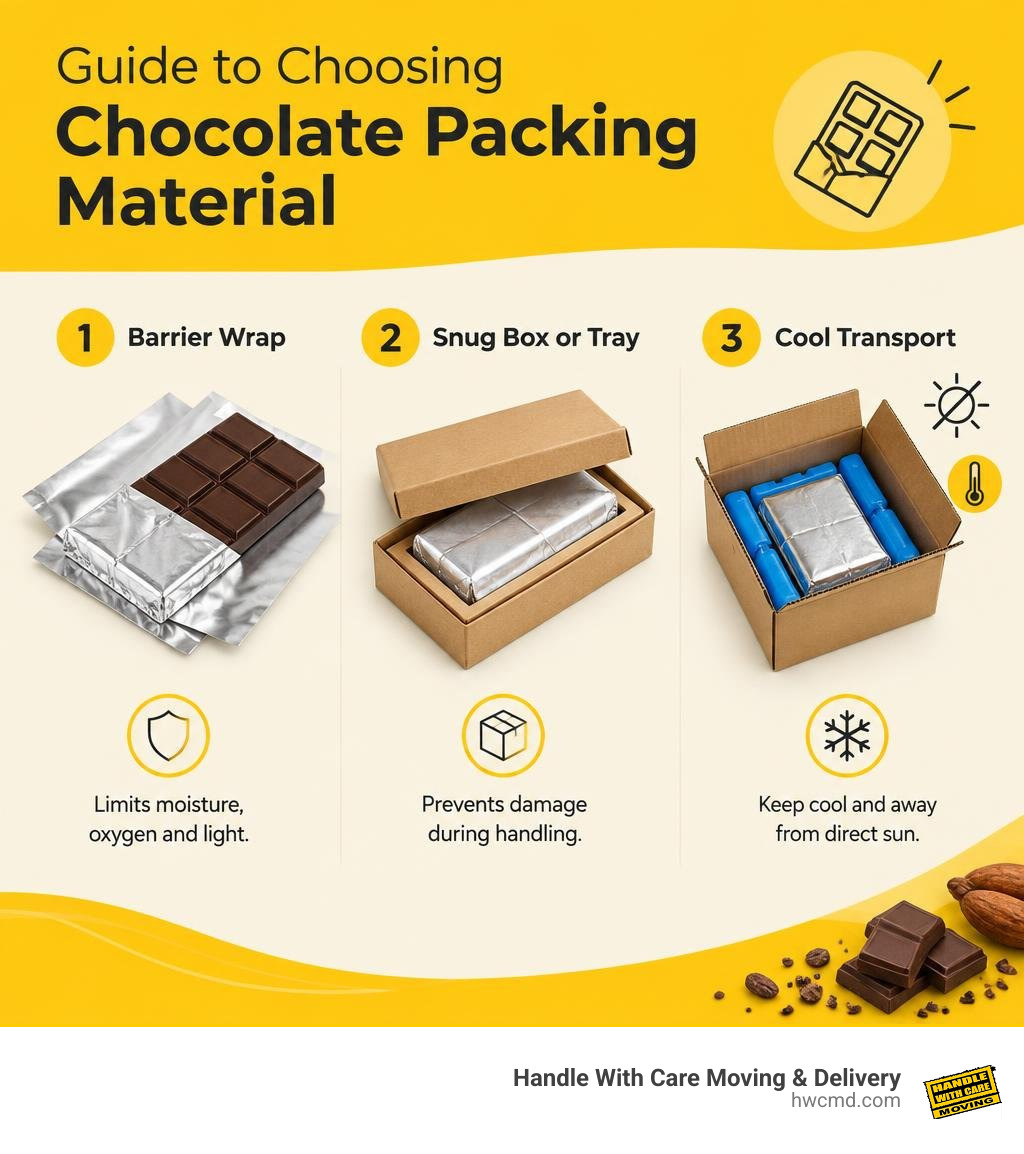
Chocolate packing material vocab to learn:
The Functional Science Behind Chocolate Packing Material
Confectionery is one of the most chemically sensitive foods in the world. When you select a wrapper, container, or shipping carton, you are not merely picking a decorative shell; you are engineering a barrier against environmental degradation. Chocolate consists of cocoa solids, sugar, milk fats, and cocoa butter. Cocoa butter is a polymorphic fat, meaning it can crystallize into multiple physical forms. To maintain a glossy sheen and a clean snap, chocolate must stay in its stable Form V crystalline structure.
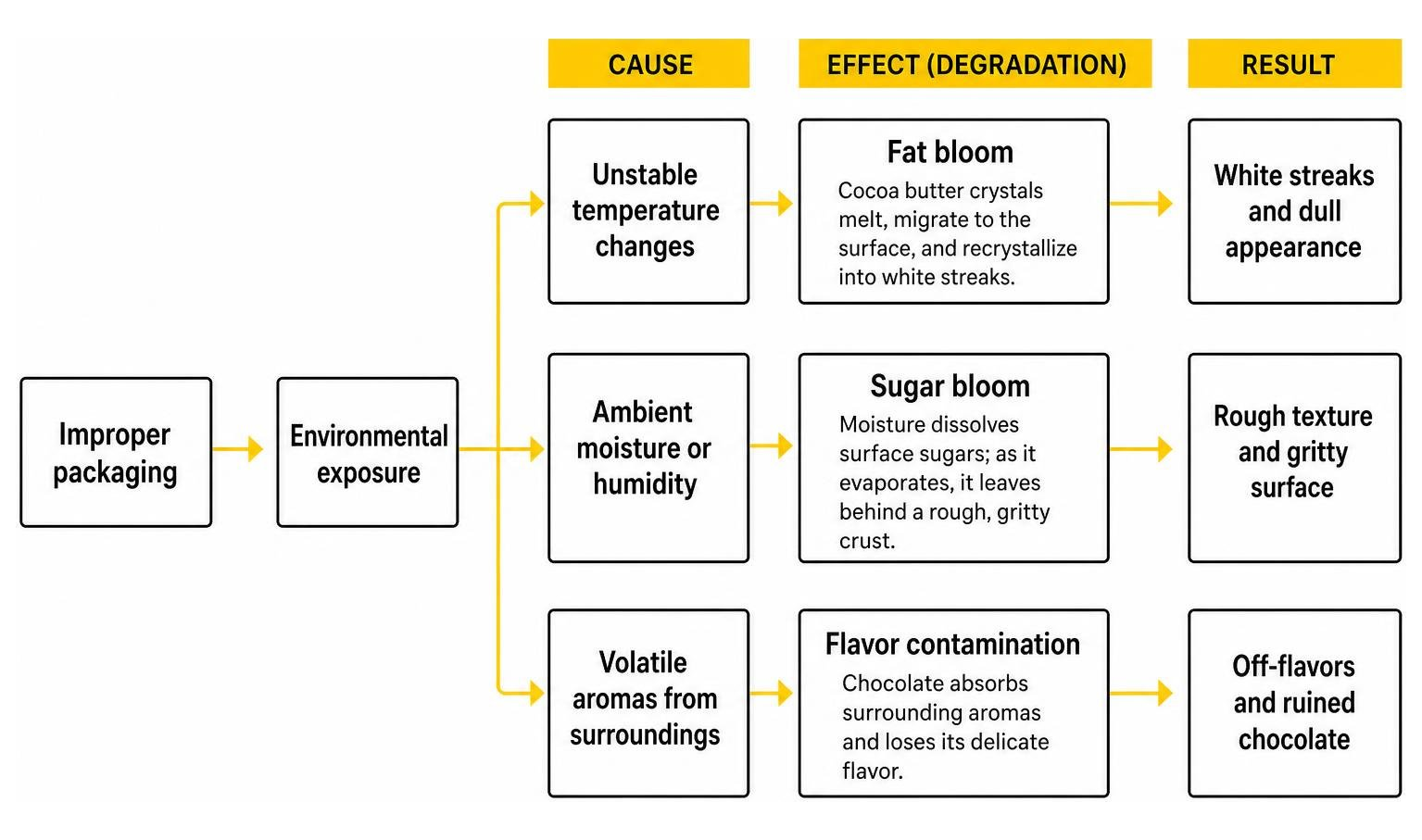
Improper packaging accelerates two major defects: fat bloom and sugar bloom.
- Fat bloom occurs when unstable temperature changes cause cocoa butter crystals to melt, migrate to the surface, and recrystallize into unappealing white streaks.
- Sugar bloom happens when ambient moisture or humidity dissolves the surface sugars; as the moisture evaporates, it leaves behind a rough, gritty crust.
Beyond blooming, chocolate readily absorbs volatile aromas from its surroundings because of its high fat content. Storing unwrapped dark chocolate near pungent items will permanently ruin its delicate flavor profile. Selecting the proper components from a comprehensive guide to suitable packing materials ensures your confections arrive in pristine, shelf-stable condition.
Thermal Insulation and Temperature Fluctuation Control
The melting point of cocoa butter sits between 86°F and 93°F (30°C to 34°C). However, structural softening begins at much lower ambient temperatures, around 75°F. Maintaining product integrity during transport requires strict thermal management.
While thin primary wrappers reflect radiant light, long-distance transit or local deliveries during warmer months require secondary thermal packaging. Utilizing insulated box liners, metalized bubble wraps, and phase-change gel packs helps maintain a stable internal climate between 55°F and 65°F. When transporting high-value or fragile confections, pairing active temperature management with specialty crating and packaging options creates an impenetrable defense against sudden climate swings.
Barrier Protection Against Moisture, Light, and Odor Absorption
To maintain freshness over months of retail storage, packaging must deliver specific barrier properties:
- Low Oxygen Transmission Rate (OTR): Oxygen exposure causes lipid oxidation, making milk fats turn rancid.
- Low Water Vapor Transmission Rate (WVTR): Keeping relative humidity below 50% prevents sugar bloom and mold formation.
- UV and Visible Light Blockers: Light accelerates photo-oxidation, degrading natural pigments and destroying volatile top notes.
- Hermetic Sealing: Tight, pinhole-free closures prevent external odors from penetrating the chocolate.
Primary Wrapping Formats: Foils, Films, and Eco-Wraps
Primary packaging comes into direct contact with the confectionery. It must be non-toxic, chemically inert, greaseproof, and compliant with direct food-contact regulations.
| Material Type | Typical Thickness / Gauge | Barrier Performance | Best Use Case |
|---|---|---|---|
| Aluminum Foil | 9 to 50 microns (or 7µm foil on 25–40 gsm paper) | Total block against light, oxygen, moisture, and odors | Premium solid chocolate bars, molded seasonal shapes |
| BOPP / Polymer Flow Wrap | 20 to 40 microns | High moisture barrier, moderate gas barrier, heat-sealable | Mass-market snack bars, high-speed automated lines |
| Compostable PLA & Kraft Paper | 30 to 60 microns (with bio-coatings) | Moderate moisture barrier, renewable, biodegradable | Artisanal and eco-conscious organic confectionery |
Why Aluminum Foil Serves as a Vital Chocolate Packing Material
Aluminum foil remains the gold standard for artisanal and premium chocolate wrapping. One of its greatest mechanical advantages is “dead-fold” capability—the foil creases cleanly around crisp corners without springing back, eliminating the immediate need for chemical adhesives near the chocolate.
Manufacturers frequently use alloy 8011 or 1235 in thicknesses ranging from 9 to 50 microns. For high-speed lines, using a colored chocolate candy aluminum foil wrapper in roll type allows rapid wrapping while offering a high-gloss canvas for branding. For distinctive visual presentation, specialty options like food grade colorful chocolate corrugated aluminum foil provide texture, light deflection, and greaseproof properties.

Choosing an Eco-Friendly and Recyclable Chocolate Packing Material
As environmental regulations evolve, brands are shifting toward sustainable materials:
- Polylactic Acid (PLA) Films: Derived from plant starches like corn or sugarcane, PLA provides clear visibility and fair moisture protection while remaining industrially compostable.
- Bio-Wax Coated Kraft Paper: Unbleached paper treated with vegetable-based waxes resists grease migration and breaks down naturally.
- Water-Based Inks: Non-toxic printing inks prevent volatile organic compound (VOC) emissions and eliminate heavy metal contamination risks.
- Mono-Material Laminates: Flexible pouches made entirely from pure polyethylene (PE) or polypropylene (PP) can enter standard recycling streams without complex separation processes.
Structural Outer Containers: Rigid Boxes vs. Flexible Pouches
Secondary packaging provides structural support, prevents physical crushing, and delivers retail shelf appeal.
Premium Rigid Setup Boxes and Weight-Based Dimensioning
Rigid candy boxes are the most upscale outer containers available for high-end chocolates. Constructed from thick, dense chipboard wrapped in specialty paper, they resist side-impact crushing during transport. Most rigid chocolate boxes sold in North America are sized by traditional candy weight standards:
- 1/4 lb Box: Ideal for 4 to 6 bite-sized artisan bonbons.
- 1/2 lb Box: Designed for 8 to 12 filled chocolates or truffles.
- 1 lb Box: Standard format for 16 to 24 layered assortments.
For delicate confections, choosing a low-profile artisan box prevents items from bouncing inside the cavity. Matching your products to practical packing services materials options ensures boxes are neither overfilled (causing scuffing) nor underfilled (causing transit shifting).
High-Speed Flow Wraps and Resealable Stand-Up Pouches
Flexible pouches and horizontal flow wraps dominate high-volume confectionery lines:
- Automated Efficiency: Flow-wrap machines can wrap hundreds of bars per minute using continuous film webs.
- Resealability: Stand-up pouches with integrated press-to-close zippers are perfect for chocolate-covered nuts, drops, or bite-sized snack portions.
- Space Savings: Pouches ship flat to packaging facilities, cutting inbound freight footprints.
Protective Internal Components: Inserts, Layer Pads, and Trays
Even the strongest exterior carton will fail if delicate truffles rattle against one another. Internal protective components absorb vibration and isolate individual pieces.
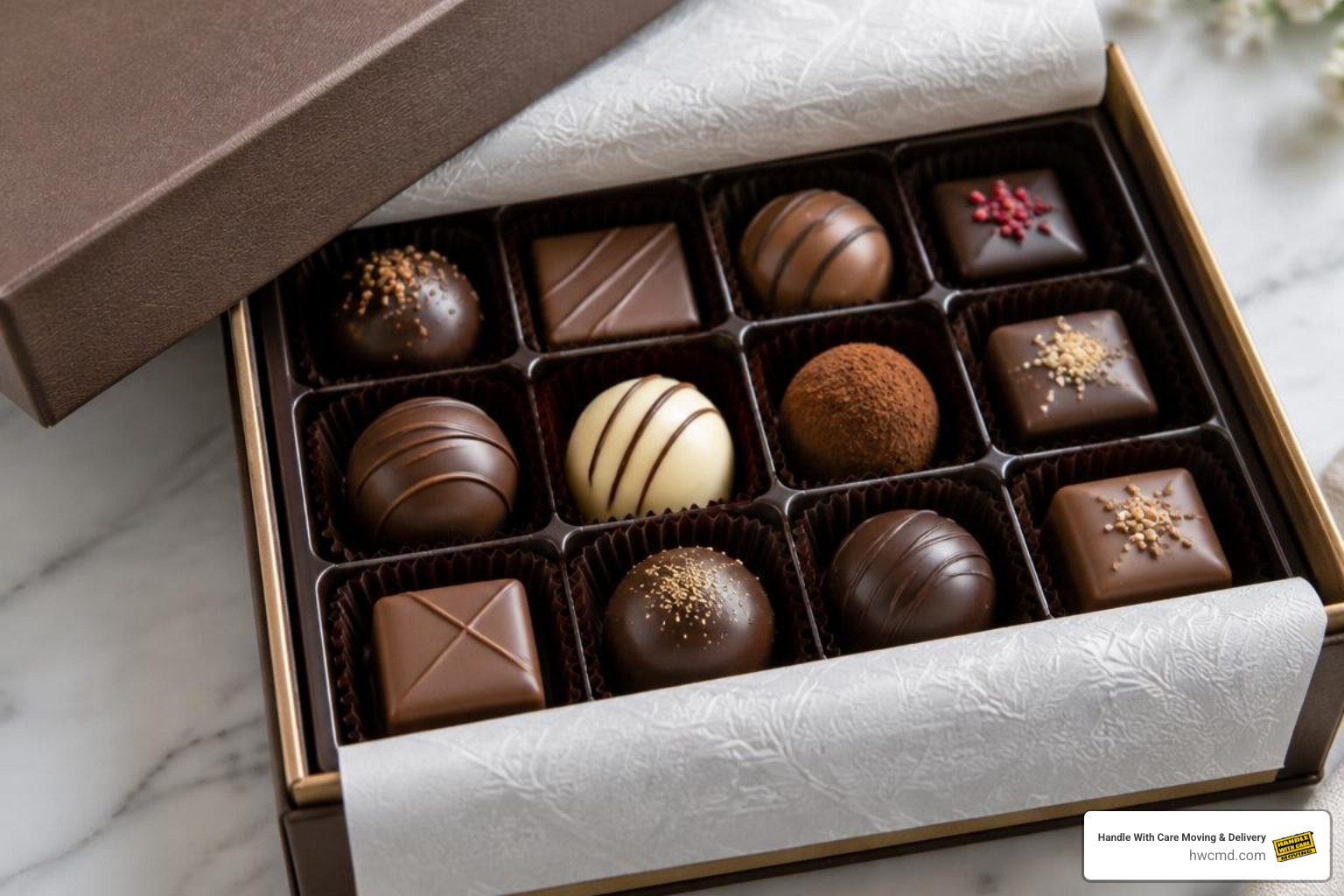
Greaseproof Paper Cushion Pads for Layered Assortments
Multi-ply paper pads sit directly between chocolate layers in multi-tier boxes or decorative metal tins. Adding a custom color greaseproof paper chocolate cushion pad provides several structural benefits:
- Shock Cushioning: Embossed, multi-ply glassine papers absorb drop shocks during shipping.
- Fat Barrier: Greaseproof formulations prevent cocoa butter oils from staining paper layers.
- Aesthetic Refinement: Custom colors and embossed patterns frame the confection as a luxury gift.
Thermoformed Food-Grade Cavity Trays
Thermoformed blister trays hold molded chocolates in fixed positions, preventing scuff marks and impact fractures. A gold 8-cell PET chocolate tray food grade packaging is an FDA-compliant, 100% recyclable insert that pairs structural stability with an upscale gold finish. These trays have low moisture absorption (around 0.1%) and high impact resistance (30 to 60 kJ/m²), protecting chocolates from handling stress.
Custom Luxury Finishes and Regulatory Food Safety
High-end packaging must balance attractive branding with strict food safety standards.
High-End Decorative Enhancements and Window Patching
To stand out on crowded retail shelves, brands rely on tactile and visual print finishes:
- Hot Foil Stamping & Spot Gloss UV: Adds metallic accents and contrasting reflective textures to logos.
- Soft-Touch Laminations: Gives paperboard boxes a velvety feel while resisting scuffs.
- Clear Window Patching: Rigid boxes with clear cello windows let shoppers inspect artisan designs without opening the protective seal.
- Magnetic Snap Closures: Delivers a satisfying tactile unboxing experience for luxury gift assortments.
Integrating these decorative boxes with protective packing services and materials safeguards specialty finishes from scuffs and abrasions during transport.
Food Safety Compliance, FDA, and Migration Standards
Every material touching chocolate must satisfy rigorous food-contact standards:
- FDA Compliance (21 CFR): Ensures paperboards, adhesives, inks, and plastics do not leach toxic substances into food.
- SGS and ISO Certifications: Verifies purity and safety for food-grade aluminum alloys and barrier films.
- Low-Migration Inks: Water-based and vegetable/soy-based inks prevent mineral oil hydrocarbons (MOSH/MOAH) from passing through paper fibers into fat-rich chocolate.
Frequently Asked Questions About Chocolate Packaging
How do you choose the right box size for chocolates sold by weight?
Confectionery density varies depending on fillings (such as heavy caramel versus airy ganache). However, standardized candy boxes correspond to specific piece counts and average weights:
- 1/4 lb: Fits 4 to 6 pieces (box dimensions approximately 4″ × 3″ × 1.25″)
- 1/2 lb: Fits 8 to 12 pieces (box dimensions approximately 6.5″ × 3.8″ × 1.25″)
- 1 lb: Fits 16 to 24 pieces (box dimensions approximately 8.5″ × 5.5″ × 1.25″)
Always test-pack your heaviest and lightest recipes to ensure individual cavities hold pieces snugly without crushing delicate decorative tops.
Why is chocolate wrapped in aluminum foil instead of bare plastic?
Aluminum foil provides a total barrier against light, oxygen, and external odors, whereas single-layer plastic films allow gas and light transmission over time. Additionally, aluminum foil features dead-fold mechanics that keep it wrapped tightly around the product without requiring heat seals or glues directly against the chocolate.
What is the most effective sustainable wrap for high-fat chocolates?
The best sustainable wrap for high-fat chocolates is greaseproof glassine paper or cellulose film coated with a bio-wax barrier. These materials resist oil migration from cocoa butter while remaining biodegradable and compostable.
Conclusion
Protecting confections requires balancing food chemistry, barrier materials, structural design, and temperature management. Choosing the right primary wrap, shock-absorbing cushion pads, and rigid outer boxes ensures that every chocolate bar and artisan bonbon reaches its destination with its original gloss, snap, and flavor intact.
At Handle With Care Moving & Delivery, we know that handling delicate, temperature-sensitive, and high-value goods requires attention to detail. Operating from our central facility at 4260 Varsity Dr in Ann Arbor, our team applies expert handling techniques to every move, delivery, and packing assignment. We bill local moves hourly with a travel rate, maintain no-minimum labor hours, offer free pad and shrink wrapping, and provide lightly used boxes, recycled paper, and free material delivery in most cases. Whether you need help with fragile residential items or specialized delivery logistics, discover our proven methods for packing delicate goods safely to ensure your items arrive safely every time.
— Anthony Denha, President, Handle With Care Moving & Delivery