
Everything You Need to Know About Double Walled Dish Pack Boxes for Moving

What Are Double Walled Dish Pack Boxes and Why Do They Matter?
When preparing fragile kitchenware for transport, standard single-wall cardboard simply cannot handle the extreme pressure. Kitchen items are dense, heavy, and notoriously brittle. Plates, bowls, mugs, and fine crystal generate concentrated weight points while remaining vulnerable to external shock. This is where double-walled dish pack boxes become necessary.
A double-wall carton is manufactured by fusing two corrugated fluted mediums between three flat linerboards. This multi-layered construction delivers roughly twice the crush resistance of standard residential cartons. In practical transit conditions, moving trucks encounter bumps, sudden stops, and shifting loads. Double-wall containers resist sidewall buckling and absorb lateral kinetic energy before it reaches delicate porcelain or glassware.
Two primary metrics define the strength of these industrial-grade cartons:
- Mullen Burst Test (350# Rating): Measures the hydraulic pressure required to puncture or rupture the box face. A 350-pound burst rating ensures the container will not blow out from the inside when loaded with heavy stacks of ceramic plates.
- Edge Crush Test (51 ECT Rating): Measures the vertical compressive strength along the box walls. A 51 ECT rating indicates exceptional top-to-bottom load-bearing capacity, allowing multiple packed cartons to be safely stacked on top of one another without the bottom tier caving in.
Investing in superior carton boxes for packing ensures that valuable kitchen inventory remains safe from ambient transit stress. High-grade double-wall boxes often conform to standard ASTM specifications for corrugated shipping containers, guaranteeing precise board calibration and reliable structural integrity under real-world moving conditions.
Structural Engineering and Flute Types in Double Walled Dish Pack Boxes
The protective power of a heavy-duty carton lies in its fluting profile—the wave-like architectural arches sandwiched between the linerboards. Most dish packs utilize a B/C flute combination:
- B-Flute: Features smaller, closely spaced arches (approx. 1/8-inch thickness) that provide superior puncture resistance, a rigid exterior face, and excellent surface printability.
- C-Flute: Features larger arches (approx. 11/64-inch thickness) that provide optimal vertical stacking strength and act as a built-in shock absorber.
When combined into a single sheet, B/C flute board spans roughly 2 mm to 5 mm in total thickness. The exterior B-flute deflects outside impacts, while the interior C-flute cushions against vibrations.
| Feature / Metric | Standard Single-Wall Carton | Heavy-Duty Double-Wall Dish Pack |
|---|---|---|
| Board Construction | 1 Flute Layer (3 Plies total) | 2 Flute Layers (5 Plies total) |
| Typical Fluting | C-Flute or B-Flute | Combined B/C Flute |
| Mullen Burst Strength | 200# Burst | 350# Burst |
| Edge Crush Test (ECT) | 32 ECT | 48 to 51 ECT |
| Crush & Puncture Resistance | Moderate (prone to corner denting) | Maximum (deflects direct side impacts) |
| Recommended Load for Fragiles | Under 30 lbs | Up to 65–70 lbs (safely managed) |
| Vertical Stacking Stability | Low (flutes compress under weight) | High (supports heavy upper tiers) |
Standard Dimensions and Capacity Variations
Double-walled cartons come in several standardized configurations to accommodate different kitchenware collections:
- The Industry Standard (18 x 18 x 28 inches): Offering roughly 5.2 to 5.21 cubic feet of interior space, this tall, barrel-style footprint accommodates multi-tier partition grids. It holds around 30 to 40 dinner plates on the lower tier while leaving ample room for stemware, mugs, and bowls above. The empty box has an approximate tare weight of 4.95 lbs.
- The Wide Plate Kit (26 x 14 x 12 inches): Designed with a lower center of gravity, this horizontal layout holds two side-by-side stacks of 11-inch diameter dinner plates separated by a center divider. With a tare weight of 3.78 lbs, it is easier to carry for individuals who want to avoid lifting tall, top-heavy cartons.
Selecting the right dimensions prevents box overfilling while ensuring you have enough space for interior cushioning. To learn more about proper box sizing across your entire home, review our guide to suitable packing materials.
Essential Dividers, Partitions, and Custom Inserts for Fragile Packing
While a double-wall box provides a rugged outer shell, unsegmented dishes packed loose inside can still rattle and break. Custom cell dividers and horizontal layer pads transform the open cavity into a fortified, organized grid.
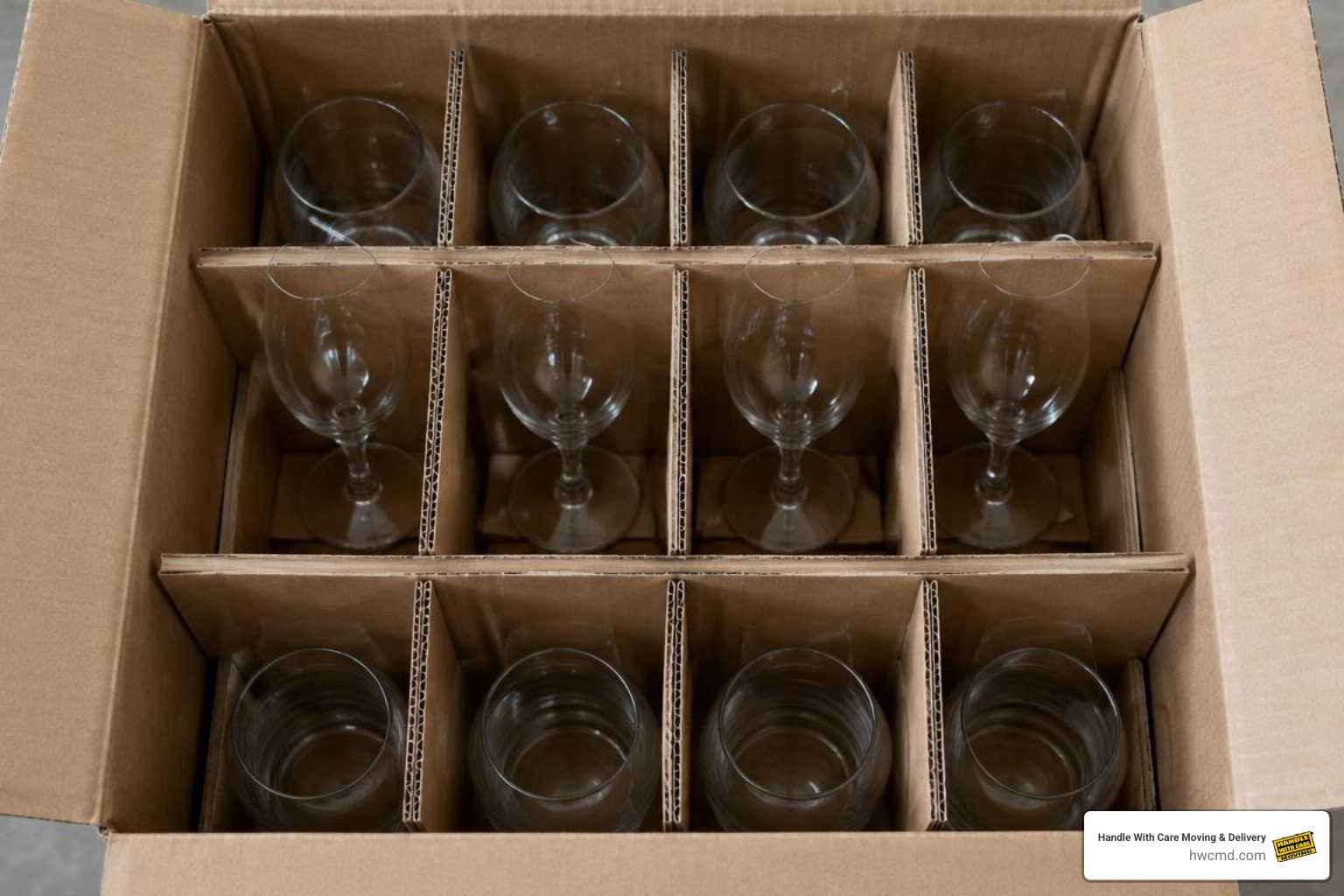
A full partition assembly for an 18 x 18 x 28-inch carton typically includes:
- Three Interlocking Partition Sets: Slotted corrugated strips that slide together to create individual vertical cells (often 4 to 6 cells per level for cups, mugs, and stemware).
- Two Corrugated Layer Pads: Flat, heavy-duty sheets placed between levels to establish firm, level false floors that distribute downward weight evenly across the entire surface.
Using a specialized double wall dish pack box with partition system isolates each glass piece, preventing glass-on-glass friction and absorbing road vibrations during transit.
Selecting the Right Inserts for Glassware and China
Different kitchen items require tailored internal cushioning:
- Corrugated Cell Dividers: Ideal for standard coffee mugs, everyday tumblers, and condiment jars. They are lightweight, rigid, and 100% recyclable.
- Molded Pulp Trays: Excellent for nested shallow bowls and plate rims, offering pre-formed contouring that cradles ceramic curves.
- Foam & EVA Sleeves: Ideal for ultra-fragile crystal wine stems and delicate china. Closed-cell foam wraps prevent surface scratching on painted rims and absorb high-frequency vibrations.
When preparing heirloom pieces, review our detailed walkthrough on how to pack dishes for a move to ensure every piece is properly buffered.
Custom Branding, Printing, and Handling Features
High-grade moving boxes include practical exterior features that make moving day safer and more organized:
- Pre-Printed Room Locator Panels: Checkboxes on the exterior allow you to quickly tag cartons by room (e.g., Kitchen, Dining Room, Pantry) and assign specific inventory notes.
- Side-Up Orientation Arrows: Printed universal symbols prompt handlers to keep the box upright, ensuring plates stay resting vertically on their edges.
- Hinged Hand Holes: Reinforced, die-cut carry handles integrated into the sidewalls allow for ergonomic lifting without compromising the wall’s structural rating.
- Fragile Caution Labels: Bold warning blocks notify movers to avoid placing heavy furniture items on top of the carton.
Step-by-Step Packing Guide for Fragile Kitchenware
Packing dishes correctly requires a disciplined, layered approach. Use the following framework to load your cartons securely:
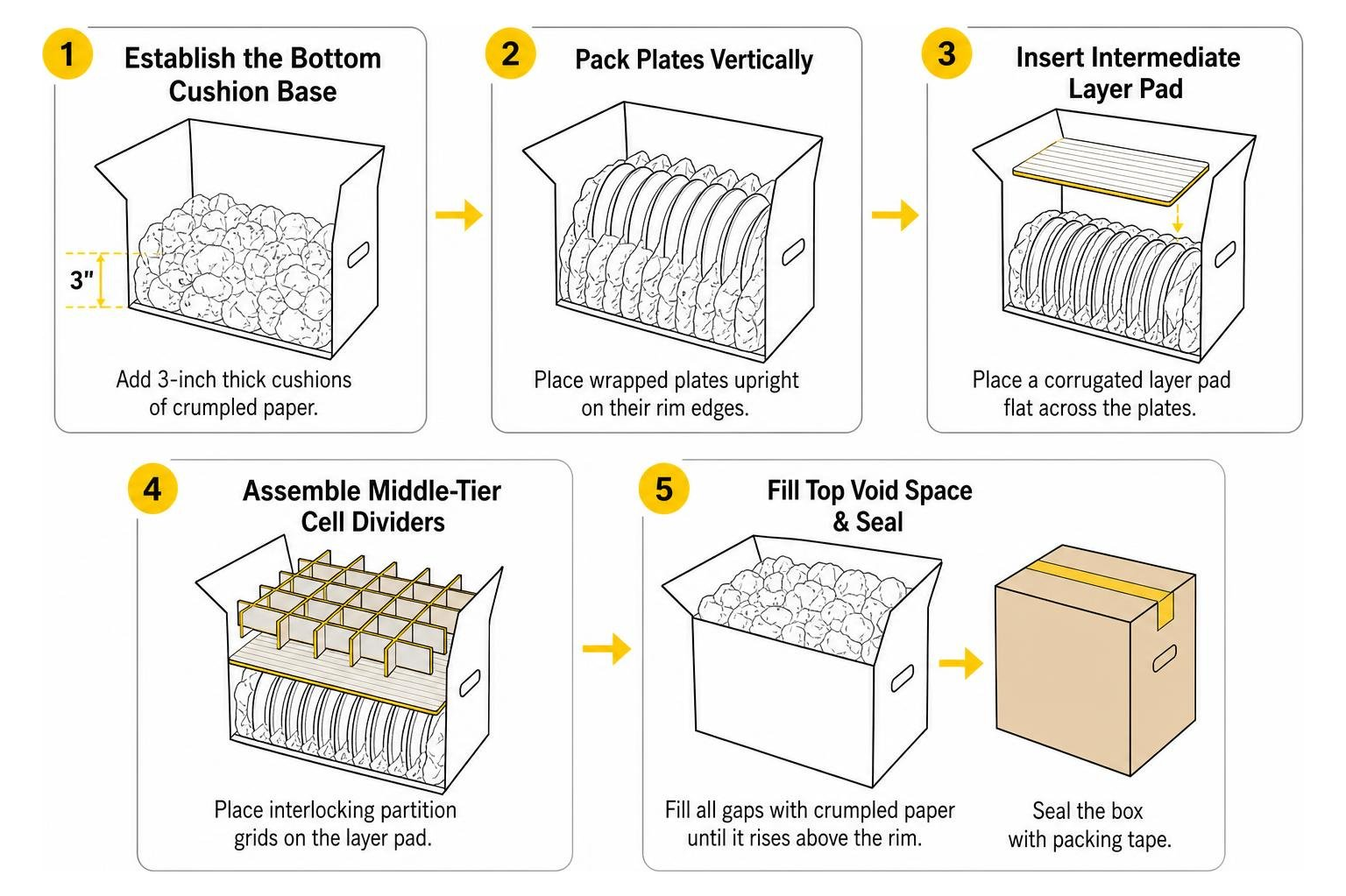
- Establish the Bottom Cushion Base: Crumple dense unprinted newsprint into 3-inch thick pillows and place them across the bottom of the box. This initial shock layer absorbs bumps from floor impacts.
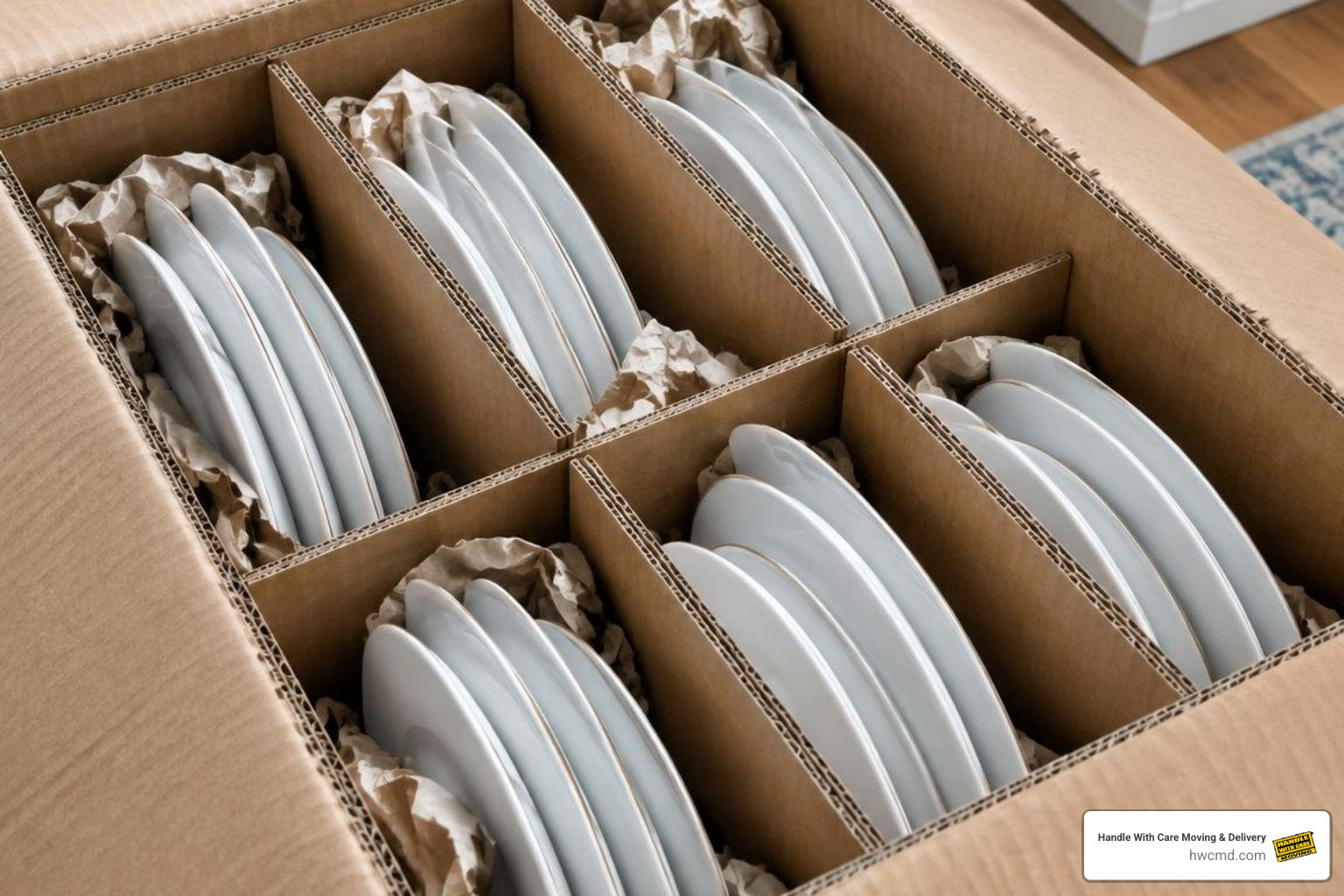
- Pack Flatware and Plates Vertically: Never pack plates flat. Place wrapped plates upright on their rim edges, similar to how they sit in a dishwasher rack. The edge of a plate can bear significantly more vertical weight than its flat center.
- Insert Intermediate Layer Pads: Once the bottom level is full, place a corrugated layer pad flat across the plate edges to create a new, level base.
- Assemble Middle-Tier Cell Dividers: Place interlocking partition grids on top of the divider pad to hold wrapped glassware, mugs, and bowls.
- Fill Top Void Space: Fill all remaining gaps with crumpled paper until the packing material rises slightly above the box rim. The carton should feel firm and solid when you press down on the top flaps.
For items headed into seasonal storage, check out our guide on the best way to pack dishes for storage without damage.
Mastering Kitchen Bundling and Cushioning Techniques
Wrapping kitchenware requires clean, unprinted newsprint rather than standard newspaper, as old print ink can permanently stain porous ceramic glazes.
To bundle plates:
- Place a sheet flat on your table.
- Set the first plate in the center and fold one corner over it.
- Place a second plate on top, fold the next corner over, and repeat for up to four plates.
- Wrap the remaining paper tightly around the entire bundle and tape it securely.
For more packing tips, explore our guide on using packing paper for moving dishes.
Sealing, Stacking, and Securing Double Walled Dish Pack Boxes
Proper sealing preserves the box’s structural integrity:
- Use the “H-Tape” Method: Apply 2-inch or 3-inch heavy-duty packing tape along the center seam where the box flaps meet, then tape down both exposed side edges to form an “H” shape. This seals out moisture and keeps the flaps from shifting.
- Truck Placement: Double-wall dish cartons should always be placed on the truck floor or stacked directly on top of heavy, flat wooden furniture. Never place loose, heavy oddities on top of a dish pack.
For a broader look at organizing your entire move, review our foundational guide on packing 101.
Sourcing, Pricing, and Bulk Purchasing Considerations
When buying double-wall dish cartons, pricing varies based on purchase volume and accessories:
- Individual Boxes: Single 18 x 18 x 28-inch cartons typically cost between $7.65 and $11.89 per unit, depending on board strength ratings (e.g., 275# vs. 350#).
- Partition Kits: Pre-cut, three-tier divider kits with layer pads are usually sold separately for $16.00 to $17.70 per kit.
- Bundles & Bales: For larger moves or commercial operations, boxes are sold in bundles of 5 or 25, while full pallets (bales) generally contain 75 flat-packed units. Buying in bulk helps lower the cost per box.
All modern corrugated dish packs are 100% recyclable, making them an environmentally sound choice that can be repurposed or recycled after your move. To find quality supplies nearby, visit our local guide to buying packing supplies.
Frequently Asked Questions About Double Wall Dish Packing
How much weight can a standard double-wall dish pack box hold safely?
Although a 350# / 51 ECT double-wall box has a maximum theoretical gross weight limit of 80 to 100 lbs, we recommend keeping the total packed weight under 60 to 65 lbs. Keeping the weight manageable protects both your delicate items and the person lifting the box.
Do I really need cell dividers if I wrap each dish in bubble wrap?
Cell dividers are not strictly required if every piece is generously wrapped, but they make packing much safer. Dividers isolate items in individual compartments, preventing them from colliding and shifting during transit.
Can double-wall dish pack boxes be reused for long-term storage?
Yes. Thanks to their heavy B/C fluting, clean double-wall boxes can be collapsed flat and reused multiple times. When storing dishes long term, keep the cartons in a climate-controlled room away from damp concrete floors to prevent moisture from weakening the cardboard. If you need help packing or storing specialty items, take a look at our full range of packing services and materials.
Conclusion
Double-walled dish pack boxes provide the strength, puncture resistance, and crush protection needed to transport valuable kitchenware safely. When paired with proper divider kits and good wrapping techniques, these heavy-duty cartons keep your plates, bowls, and glassware safe from the bumps and vibrations of moving day.
At Handle With Care Moving & Delivery, we treat your fragile belongings with the attention and care they deserve. Whether you are moving locally around Ann Arbor or preparing kitchenware for transit, we make the process smooth and straightforward. We provide lightly used boxes and recycled paper to help reduce waste. For local moves, we charge an hourly rate plus travel, and material delivery is free in most cases.
To learn more about our packing techniques, read our complete guide to safe dish packing and shipping practices or reach out to our team at 4260 Varsity Dr, Ann Arbor, to get your move started right.