
A Practical Sourcing Guide to Carton Boxes for House Shifting

Where to Get Carton Boxes for House Shifting
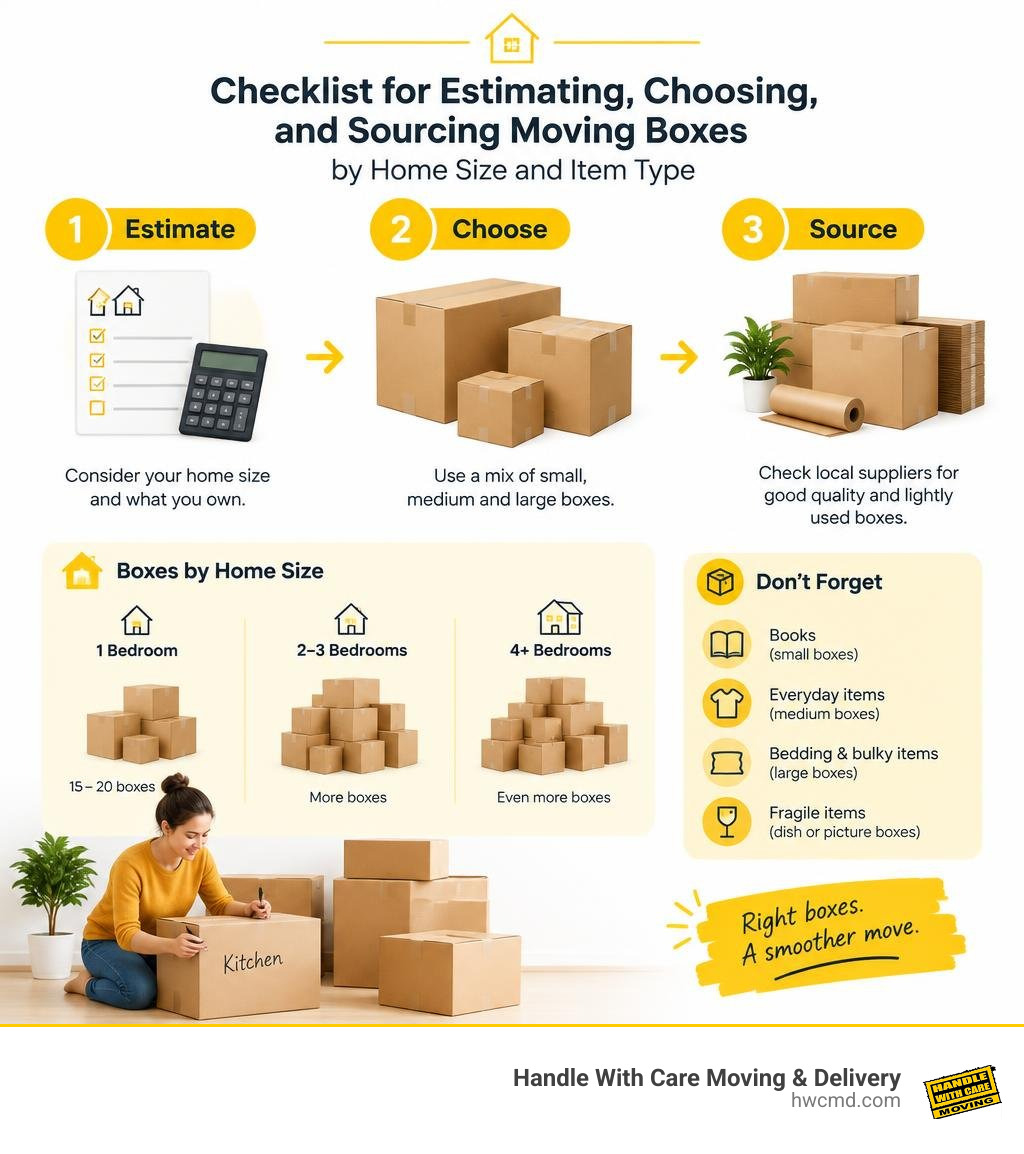
Start with a mix of small, medium, and large corrugated boxes. Use small boxes for books, medium boxes for most household items, and large boxes for light, bulky things like bedding. Add sturdy dish or picture boxes for fragile items. A one-bedroom home may need around 15 to 20 boxes, but take stock of what you own before ordering. Ask local suppliers about lightly used boxes, and check each one for crushed corners or moisture damage.
At Handle With Care Moving & Delivery, we have lightly used boxes and recycled packing paper available. I’m Anthony Denha, and my hands-on work planning moves has taught me that sourcing the right carton boxes for house shifting makes packing safer and moving day easier.
Discover more about carton boxes for house shifting:
How to Choose Carton Boxes for House Shifting by Size and Type

Choosing the right containers is the foundation of a successful relocation. Packing is not just about fitting items into a container; it is about weight distribution, structural integrity, and ease of handling on moving day. Before you purchase random bundles of cardboard, selecting suitable packing materials tailored to your specific household inventory will save hours of frustration and prevent broken belongings.
Each container size has an engineered purpose. Standard corrugated containers come in single-wall and double-wall configurations with distinct weight limits and internal volumes. Putting heavy cookware in an oversized container almost guarantees a bottom blowout, while stuffing fragile decor into flimsy grocery containers creates stacking hazards inside the moving truck.
Standard Box Sizing from Small to Extra-Large
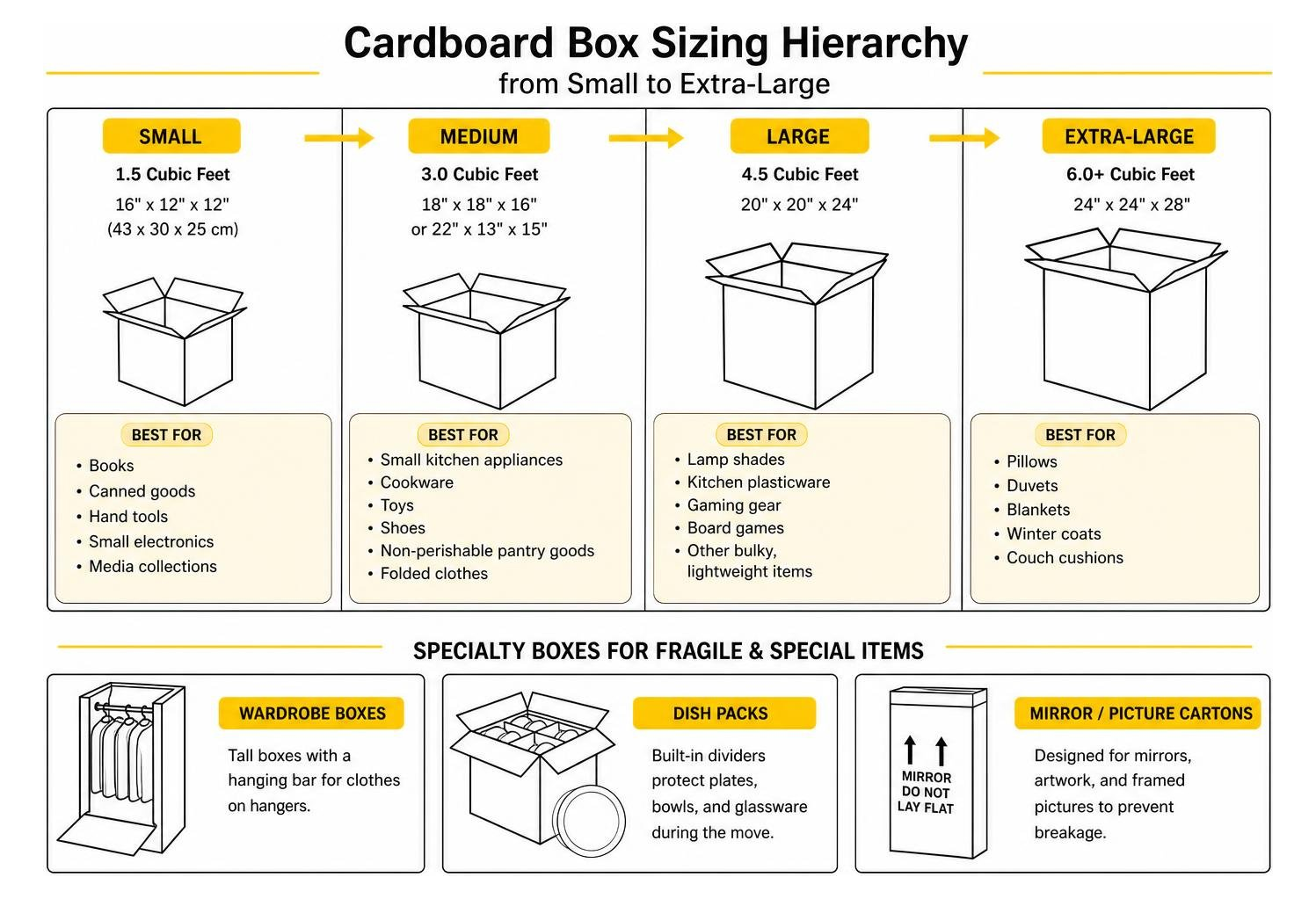
Standard cardboard moving cartons fall into four primary dimensions:
- Small Cartons (1.5 Cubic Feet / Approx. 16″ x 12″ x 12″ or 43 x 30 x 25 cm): These are the workhorses for dense, heavy items. They are ideal for books, canned goods, hand tools, small electronics, and media collections. Keeping dense goods in small containers caps the total weight around 30 to 40 pounds, making them easy to carry.
- Medium Cartons (3.0 Cubic Feet / Approx. 18″ x 18″ x 16″ or 22″ x 13″ x 15″): The most versatile option for home moves. Use medium cartons for small kitchen appliances, cookware, toys, shoes, non-perishable pantry goods, and folded clothes.
- Large Cartons (4.5 Cubic Feet / Approx. 20″ x 20″ x 24″): Designed for bulkier, lightweight goods like lamp shades, kitchen plasticware, gaming gear, and board games. Using space-saving packing methods within these cartons ensures you fill the volume without exceeding manageable lifting weights.
- Extra-Large Cartons (6.0+ Cubic Feet / Approx. 24″ x 24″ x 28″): Strictly reserved for lightweight, fluffy goods such as pillows, duvets, blankets, winter coats, and couch cushions.
Specialty Options: Wardrobe Boxes, Dish Packs, and Mirror Cartons
Standard utility cartons cannot safely hold every household item. Specialized containers offer tailored protection for your most delicate and high-value possessions:
- Wardrobe Boxes: Tall, heavy-duty cartons equipped with a metal hanging bar across the top. They let you transfer clothing directly from your closet on their original hangers, preventing wrinkles and speeding up unpacking.
- Dish Pack Boxes: Heavy-duty, double-walled containers designed specifically for kitchen breakables. Using double-walled dish pack boxes for moving paired with cardboard cell dividers keeps stemware, porcelain plates, and fragile mugs isolated and crush-proof.
- Mirror and Picture Cartons: Flat, telescoping cardboard containers designed to slide over framed artwork, large wall mirrors, and flat-screen televisions. Many feature adjustable corner protectors to absorb transit shock.
Calculating Box Quantities and Estimating Relocation Costs
Underestimating the number of cartons you need is one of the most common moving mistakes. Running out of containers at 9:00 PM the night before moving day forces rushed packing and poor container choices. Planning your supplies in advance keeps you organized and lets you implement affordable home shifting ideas rather than making emergency retail runs.
| Home Size / Living Space | Estimated Box Count | Small Boxes | Medium Boxes | Large & XL Boxes | Specialty Boxes |
|---|---|---|---|---|---|
| Studio / Dorm (<40 m²) | 10–20 boxes | 6–10 | 4–8 | 2–4 | 1–2 |
| 1-Bedroom Apartment (50 m²) | 20–30 boxes | 10–15 | 8–12 | 4–6 | 2–3 |
| 2-Bedroom Home (80 m²) | 40–50 boxes | 15–20 | 15–20 | 8–10 | 4–5 |
| 3-Bedroom Home (100–120 m²) | 60–80 boxes | 25–35 | 20–30 | 12–16 | 6–8 |
| 4+ Bedroom Home (>150 m²) | 80–120+ boxes | 35–50 | 30–45 | 15–25 | 8–12 |
Estimating Box Needs by Room Count and Square Footage
A compact 50 m² (approx. 540 sq ft) flat typically requires 20 to 30 cartons. An 80 m² (approx. 860 sq ft) home averages 40 to 50 cartons, while homes over 100 m² (approx. 1,075 sq ft) require between 60 and 80 containers or more.
When reviewing practical packing services materials options, account for your storage areas. Garages, attics, and walk-in closets can easily add 15 to 20 extra cartons to your estimate due to accumulated tools, seasonal decor, and sporting equipment.
Sourcing Recycled vs. New Carton Boxes for House Shifting
You do not always need to buy brand-new packaging for every room. Sourcing once-used or recycled corrugated boxes can cut your packing budget while keeping cardboard out of landfills. However, you must inspect used cartons carefully before packing your belongings:
- Check Corner Rigidity: If the vertical corners are bent or crushed, the carton has lost up to 50% of its stacking strength.
- Inspect for Moisture or Oil: Water stains, damp spots, or chemical smells weaken paper fibers permanently.
- Remove Old Tape: Peel off thick layers of old tape or apply fresh tape directly over sound cardboard to ensure a secure bond.
- Avoid Grocery Produce Boxes: Grocery store banana or apple boxes often carry food odors, pest residue, and structural cutouts that leave your items exposed.
Opting for superior carton boxes for packing for heavy breakables—while utilizing sound, recycled cartons for linens—strikes an ideal balance between cost and security.
Single-Wall vs. Double-Wall Corrugated Cartons
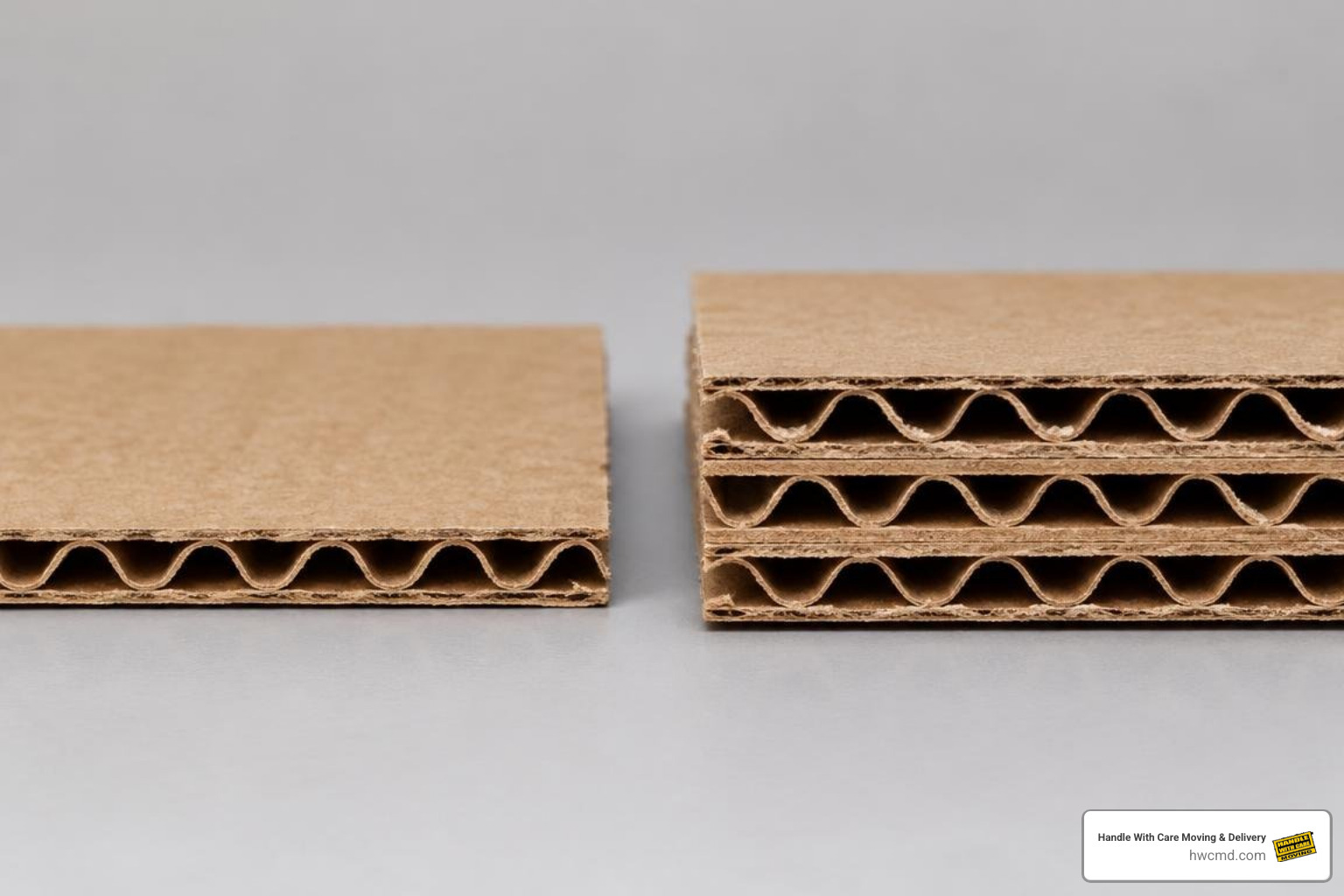
Corrugated cardboard is engineered with fluted paper arches sandwiched between flat linerboards. The number of walls determines how much weight the container can hold and how many boxes you can stack on top of it.
For standard household goods, single-wall cardboard works well. However, standard double-wall cardboard specifications feature two layers of fluting and three flat liners, offering the crush resistance needed for heavy loads and multi-tier truck stacks.
Corrugated Wall Strength and Edge Crush Test Ratings
Carton strength is measured by the Edge Crush Test (ECT), which evaluates top-to-bottom compression strength:
- Single-Wall (32 ECT): Rated for loads up to 30–35 lbs (14–16 kg). Perfect for clothing, linens, plastics, toys, and light household goods.
- Double-Wall (44–48 ECT): Rated for loads up to 60–80 lbs (27–36 kg). Essential for dense book collections, fragile dinnerware, small appliances, and porcelain.
- Heavy-Duty Double-Wall (51+ ECT): Designed for heavy transit loads, wardrobe containers, and large mirrors requiring maximum puncture resistance.
When coordinating furniture packing and protection, double-wall boxes are vital because they resist lateral impacts when tied down alongside larger dressers and tables.
Reusing, Recycling, and Storing Cardboard Moving Boxes
| Option | Cost Impact | Durability & Safety | Convenience | Best Used For |
|---|---|---|---|---|
| New Cartons | Moderate ($1.50–$4.50/box) | Maximum (Full structural integrity, uncrushed fluting) | High (Standardized sizes, clean surfaces) | Fragile goods, long-distance moves, heavy items |
| Lightly Used Boxes | Low to Free | Good (Requires inspection of seams and corners) | Moderate (Sizes vary, requires sorting) | Local shifts, linens, clothing, books, pantry |
| Flat-Pack Storage | Zero (Preserves existing assets) | Retained (Must be stored flat in a dry space) | High (Reusable for future moves or garage storage) | Seasonal storage, future home relocations |
To store used boxes for future moves, slice the tape along the seams with a utility knife, fold them flat, and store them off damp concrete floors in a dry, ventilated area.
Packing Strategies, Essential Supplies, and Mistakes to Avoid
A high-grade corrugated box is only as reliable as the packing technique used to assemble it. Learning foundational packing 101 principles ensures that your boxes maintain their square shape, protect their contents, and stack neatly inside the truck.
Essential Packing Accessories to Pair with Carton Boxes for House Shifting
Before you assemble your first container, gather the right packing supplies:
- Heavy-Duty Packaging Tape: Use 2-inch or 3-inch wide acrylic or hot-melt packing tape. Avoid standard masking tape, painter’s tape, or cellophane tape, which peel off cardboard under humidity and tension.
- Tape Gun Dispenser: Speeds up box assembly and applies consistent tension across the flaps.
- Unprinted Newsprint Packing Paper: The best first-layer wrapping for dishes, glassware, and decor. Unlike newspaper, clean packing paper leaves no black ink stains on your items.
- Bubble Wrap & Foam Cushioning: Essential for isolating delicate collectibles and filling voids around porcelain.
- Color-Coded Labels and Permanent Markers: Clearly label the top and at least two sides of every box with the destination room and a brief summary of the contents.
When buying local packing supplies, buying tape and paper in bulk bundles often yields substantial per-unit savings.
Packing Heavy vs. Fragile Items Safely
Follow these rules for packing heavy and fragile goods:
- The Small Box Rule: Always place heavy items like books, weights, and tools in small containers. If you cannot comfortably lift the box with two hands, it is overpacked.
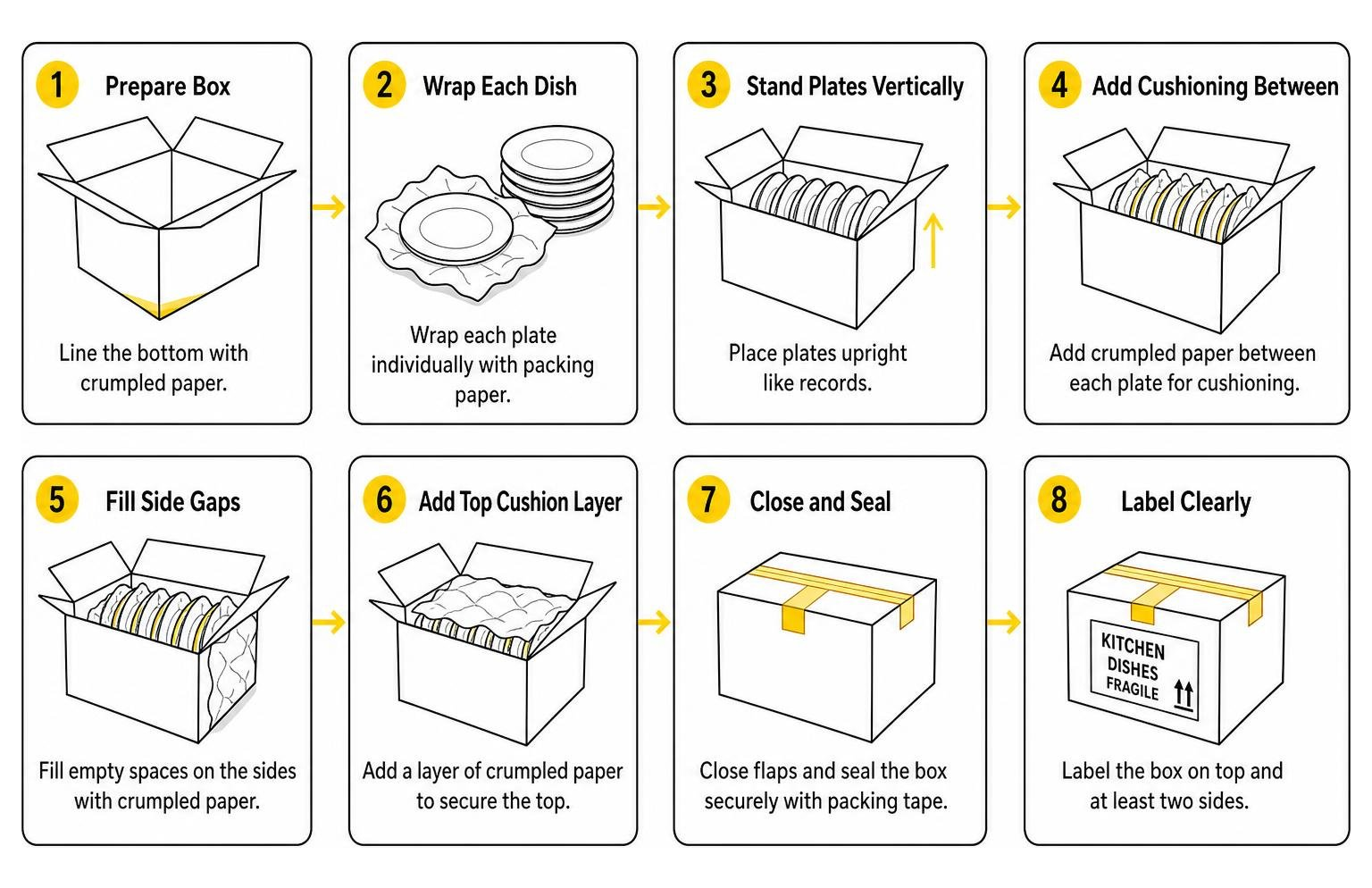
- Vertical Plate Loading: Pack dinner plates vertically on their edges like vinyl records, never flat. Plates are far stronger along their edges and are much less likely to crack when the truck encounters road bumps.
- Eliminate Internal Voids: Empty space is the enemy of cardboard strength. Fill all gaps with crumpled paper or air pillows so the contents cannot shift during transit. Use these smart home shifting packing ideas to keep items locked firmly in place.
Common Moving Box Mistakes and Weight Limit Traps
Avoid these common packing pitfalls on your move:
- Interlocking Box Flaps: Folding box flaps over one another in a pinwheel pattern compromises the box’s structural integrity. Flaps must meet flat edge-to-edge and be secured across the center seam with heavy-duty tape.
- Overfilling and Bulging: Round, bulging tops prevent boxes from stacking squarely. Bulging boxes wobble and cause stacks to tip over during transit.
- Underfilling and Sagging: Leaving the top two inches of a box empty allows the box above it to crush down through the lid. Always fill boxes completely to the top edge with crumpled paper.
- Ignoring Box Weight Limits: Stay within the manufacturer’s weight limit printed on the box maker’s certificate on the bottom flap.
Applying these efficient moving tips keeps your boxes sturdy, stackable, and safe to carry.
Frequently Asked Questions about Carton Boxes for House Shifting
How many carton boxes are typically needed for a 2-bedroom home?
A standard two-bedroom home typically requires between 40 and 50 boxes. This usually breaks down into roughly 15 to 20 small boxes, 15 to 20 medium boxes, 8 to 10 large boxes, and 4 to 5 specialty containers for mirrors, televisions, and hanging clothes.
When should I choose double-wall over single-wall cardboard boxes?
Choose double-wall cardboard whenever you are packing items that weigh over 30 pounds, fragile kitchenware, valuable electronics, or items intended for long-distance transport. Double-wall boxes are also essential for bottom-tier containers that must support heavy stacks inside a moving truck.
What is the best way to tape and reinforce the bottom of a moving box?
Use the “H-Tape” method. Seal the center seam where the two major flaps meet, extending the tape at least 3 inches up the vertical sides. Then, apply two additional strips of tape along the exposed perpendicular edges on both ends, forming the letter “H”. For heavy book cartons, add an extra strip straight down the center seam for added reinforcement.
Conclusion
Sourcing the right moving cartons is the first and most critical step in protecting your household belongings during a move. By selecting the correct container sizes, matching box strength to your items’ weight, and pairing sturdy double-wall boxes with quality packing accessories, you ensure your transition is smooth and damage-free. Master safe techniques to pack fragile dishes for moving and assemble every carton with care.
At Handle With Care Moving & Delivery, our office at 4260 Varsity Dr, Ann Arbor offers professional local moving services billed hourly plus a travel rate. We make preparing for your move straightforward with free material delivery in most cases, as well as lightly used boxes and recycled paper. Whether you need hands-on packing help or guidance on sourcing the right supplies, reach out to our team today to get your move started on the right foot.
— Anthony Denha